Developing logical thinking Addition Worksheets for Ages 3-9
4 filtered results
-
From - To
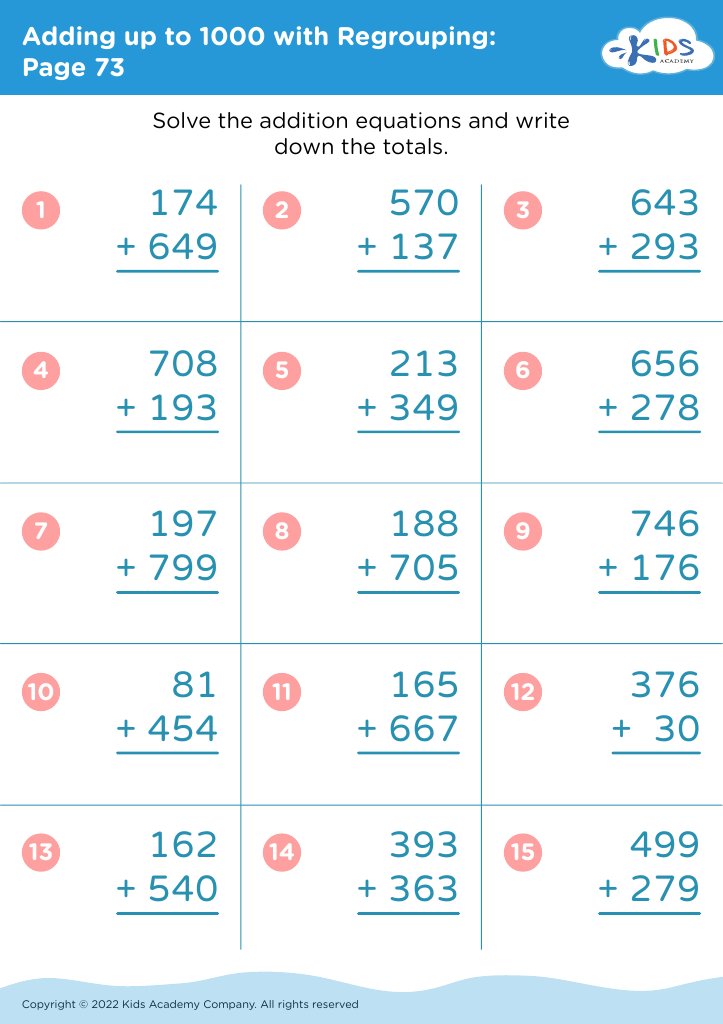
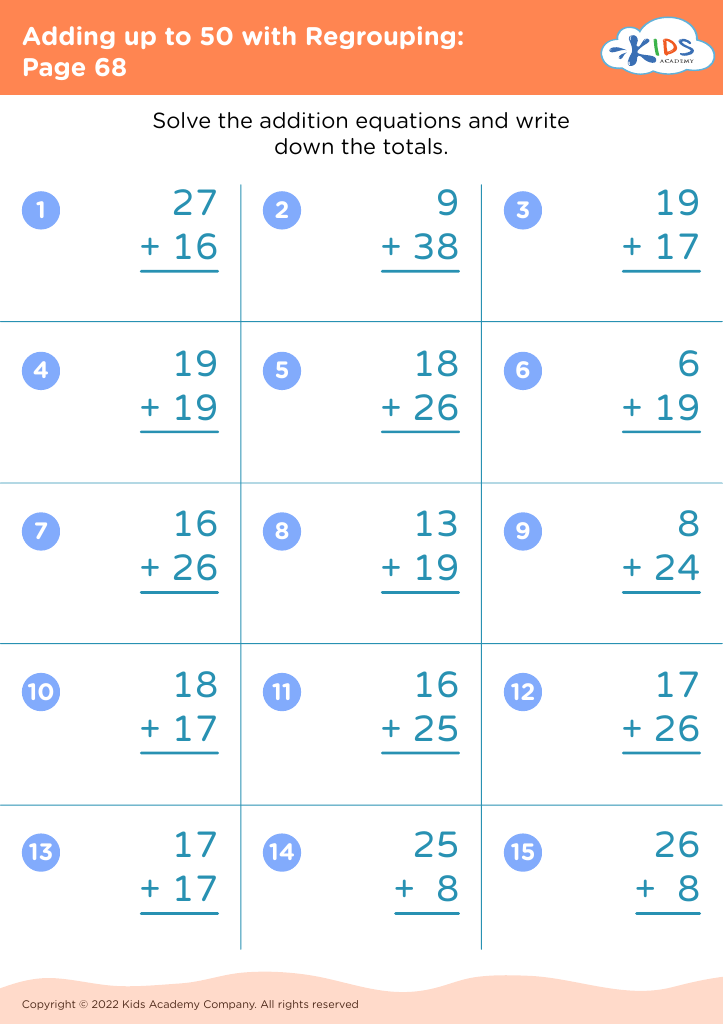
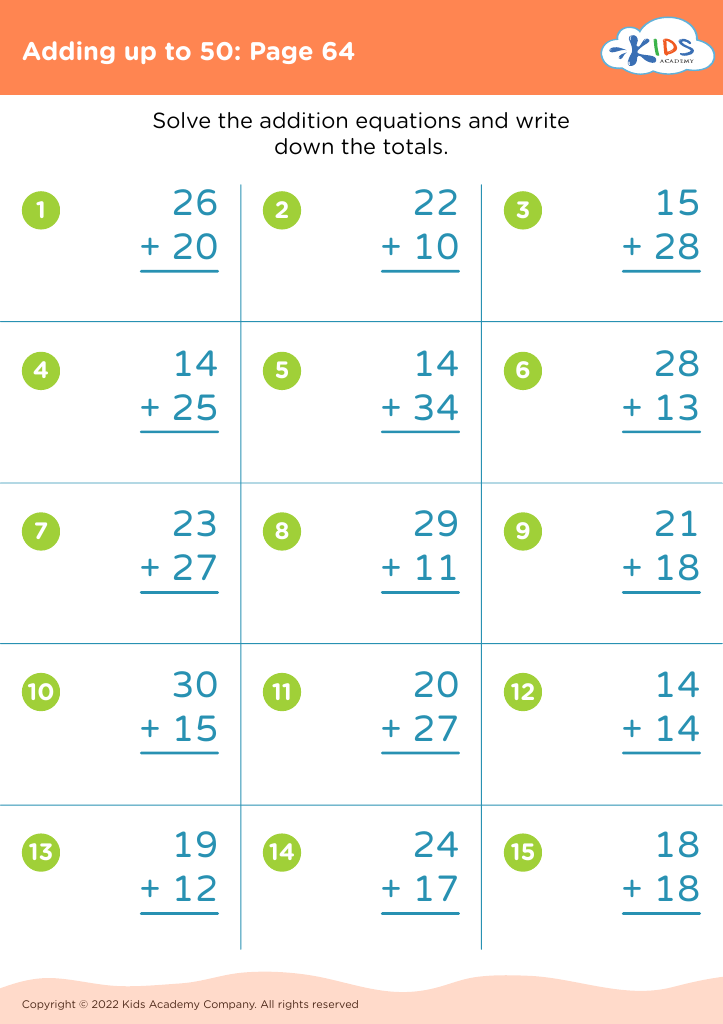
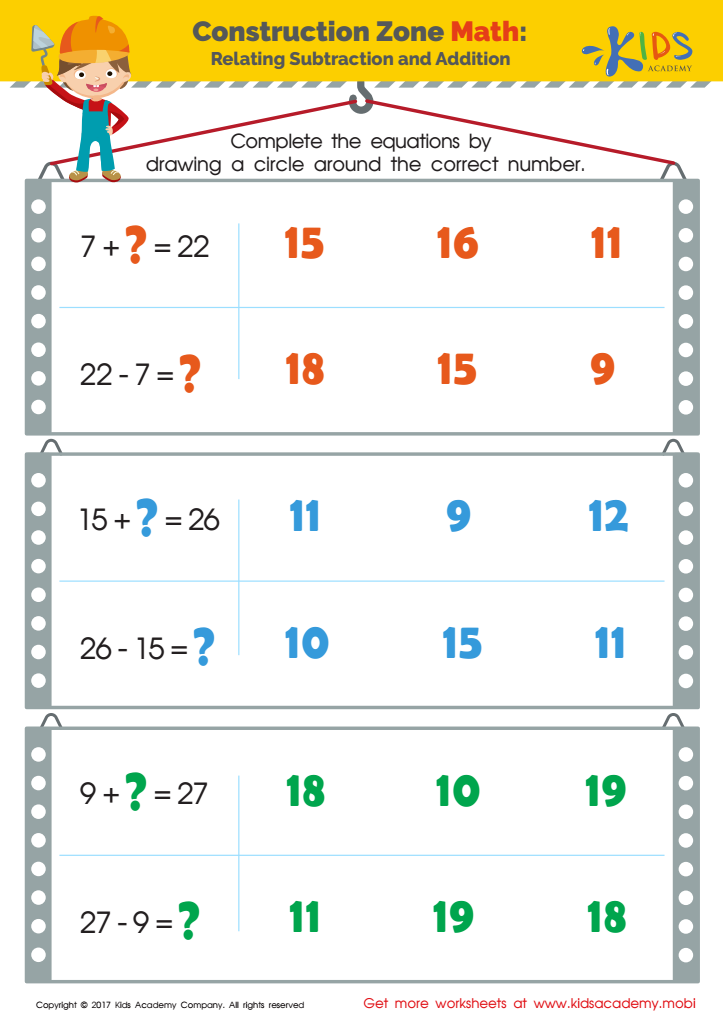
Unlock your child's potential with our "Developing Logical Thinking Addition Worksheets" designed for ages 3-9. These engaging worksheets help children master addition while fostering critical thinking skills. Each activity is crafted to challenge young minds and encourage problem-solving as they explore numbers and patterns. With colorful visuals and interactive exercises, your child will enjoy the learning process, building a strong mathematical foundation. Perfect for at-home learning or classroom use, our worksheets are suitable for various learning styles and promote confidence in math capabilities. Join us on this fun journey and watch your child's logical thinking and addition skills flourish!
Related Addition and Subtraction Facts Worksheet
 Assign to My Students








Developing logical thinking in children, especially during the formative ages of 3-9, is crucial as it lays the groundwork for their future learning and problem-solving abilities. Logical thinking fosters critical reasoning skills, enabling children to analyze situations, make connections, and draw conclusions based on evidence. This cognitive development aids in understanding mathematical concepts like addition, which is foundational for all further math learning.
When children grasp the principles of addition through logical thinking, they gain confidence in tackling more complex problems. It encourages them to explore various strategies for solving arithmetic challenges, enhancing their ability to think creatively and independently. Moreover, logical reasoning contributes to a child's overall academic success, as it is not limited to mathematics but extends to subjects such as science and literacy.
For parents and teachers, nurturing logical thinking skills enhances a child's ability to interact with the world meaningfully. Engaging activities that promote reasoning can lead to better emotional intelligence and social skills, as children learn to articulate their thoughts and understand diverse perspectives. Overall, encouraging logical thinking in early education shapes well-rounded individuals who are equipped with the skills necessary for lifelong learning and adaptability in an increasingly complex world.








