Enhance problem-solving abilities Addition Worksheets for Ages 3-9
5 filtered results
-
From - To
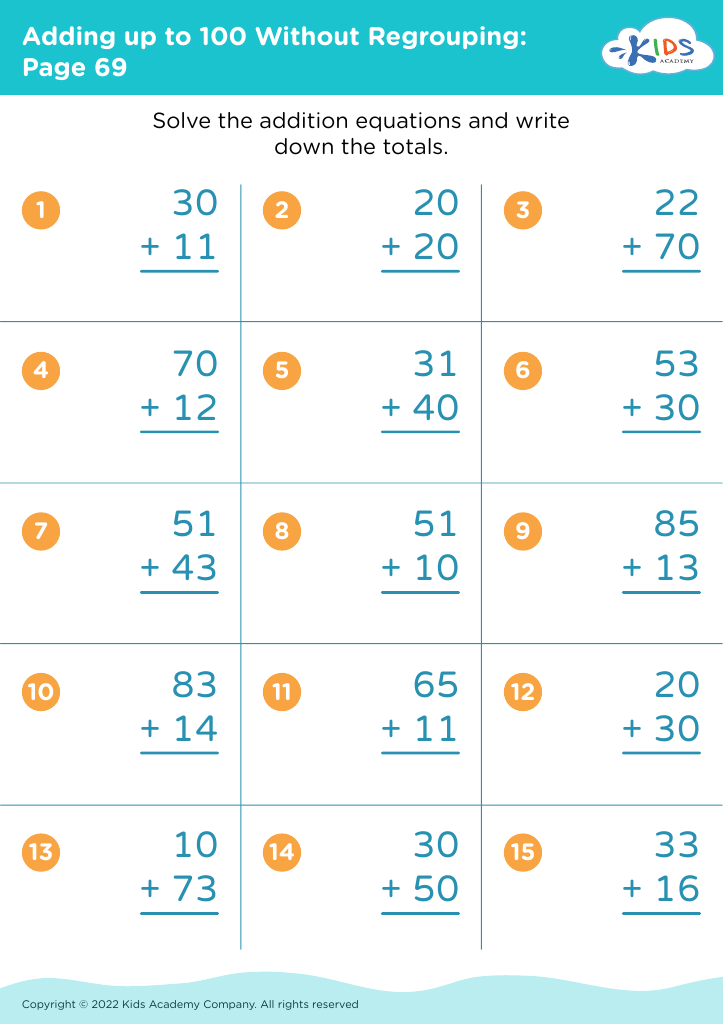
Enhance problem-solving abilities with our engaging Addition Worksheets designed for children aged 3-9. These worksheets provide a fun and interactive approach to mastering addition concepts while fostering critical thinking skills. Tailored for early learners, each worksheet encourages exploration and creativity as children practice solving addition problems with colorful illustrations and various activities. Parents and educators can easily incorporate these resources to support both classroom learning and at-home practice. Discover a perfect balance of fun and education that empowers children to build confidence in their math skills. Foster a love for learning through exciting challenges that promote essential problem-solving abilities today!
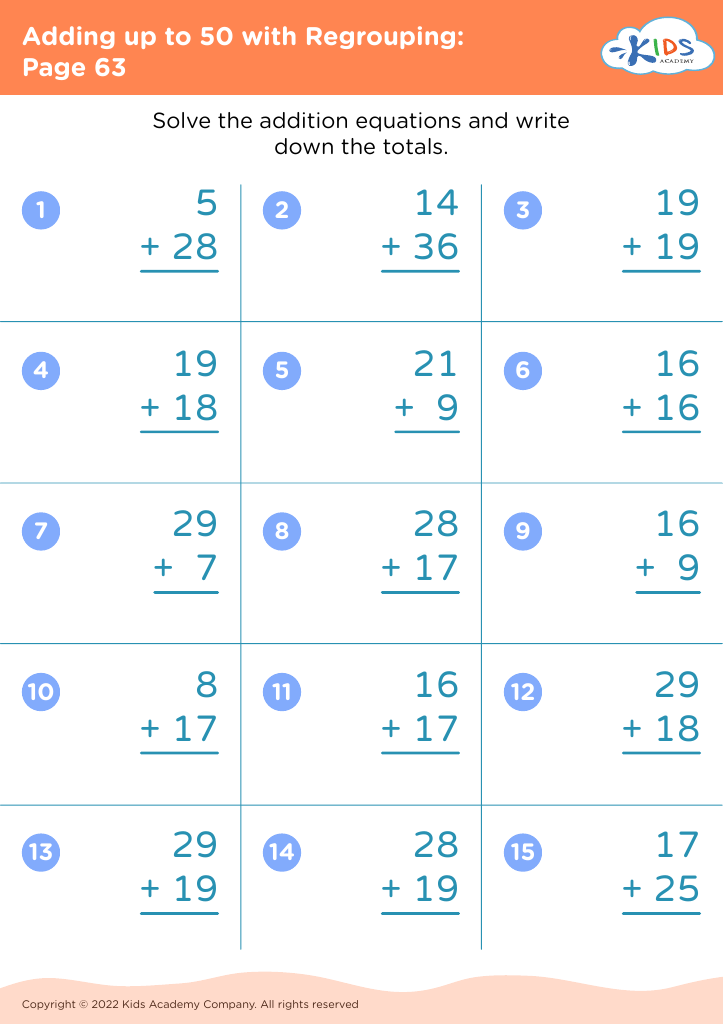
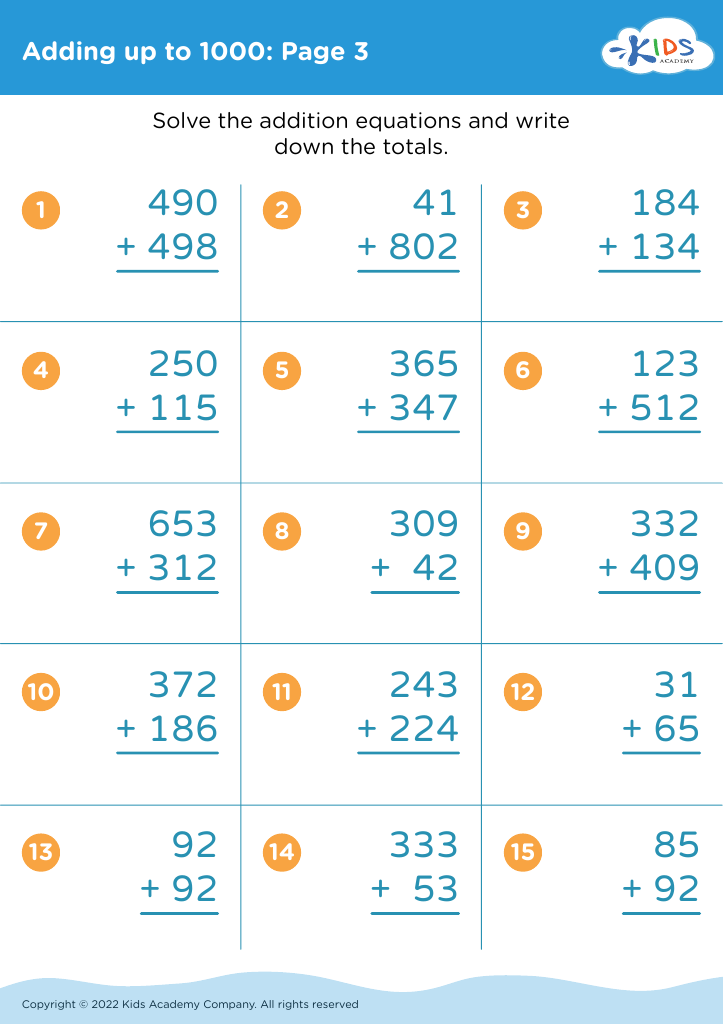
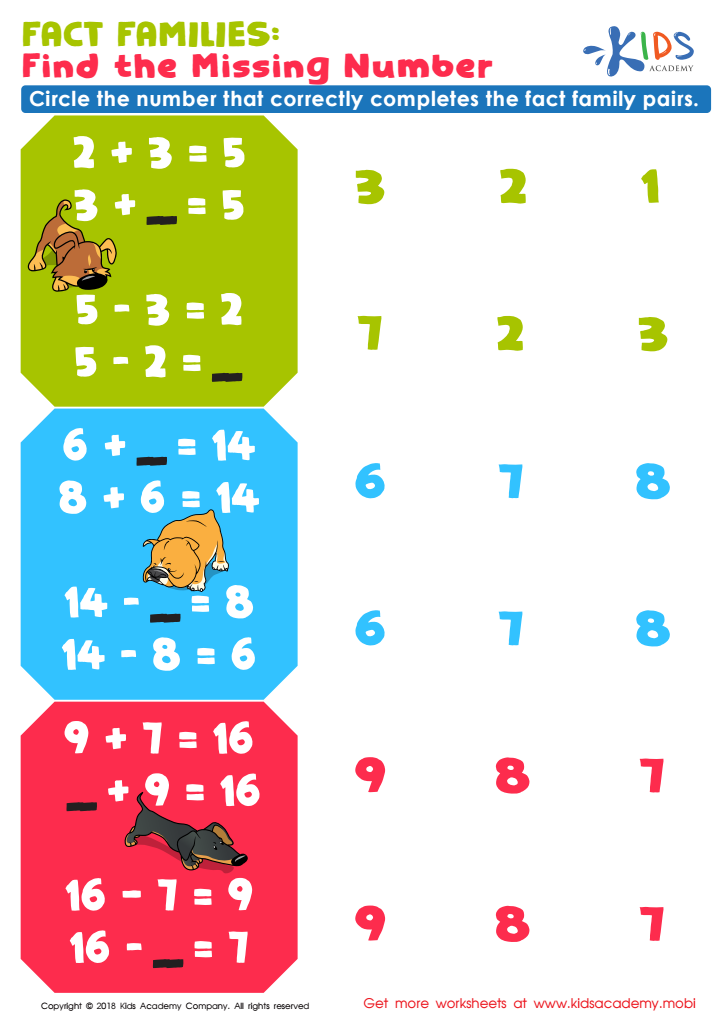
Fact Families: Find Missing Number Worksheet
 Assign to My Students
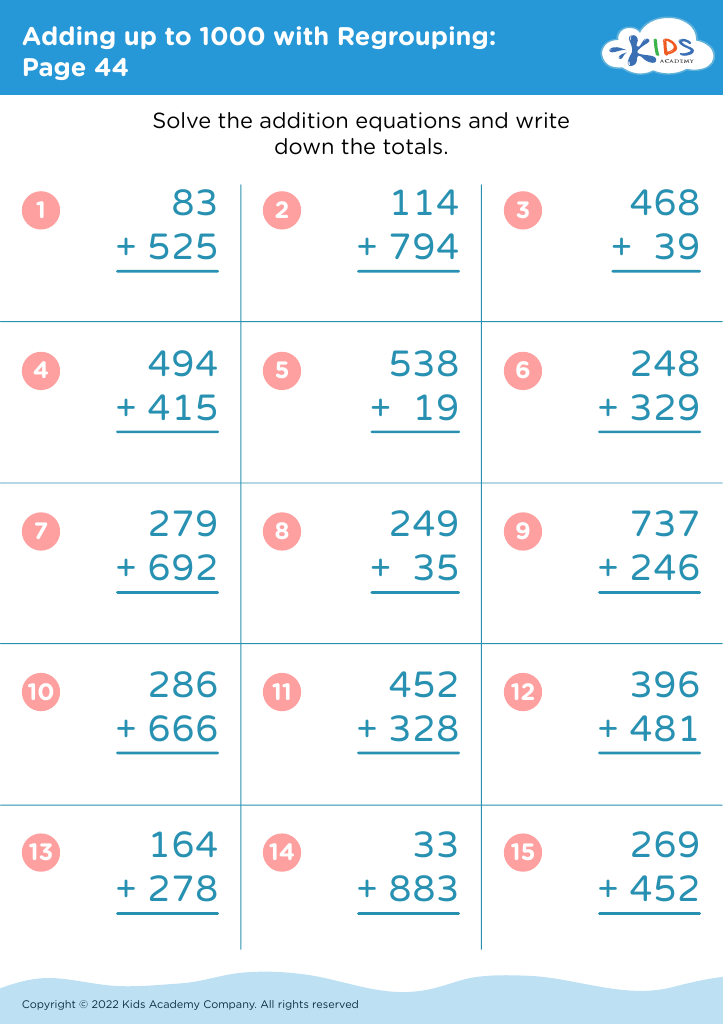








Enhancing problem-solving abilities, particularly in addition for children ages 3-9, is crucial for several reasons. First, this formative period lays the groundwork for future mathematical success. Early exposure to problem-solving in addition helps children develop a strong numerical foundation, which is vital as they progress through their education. It nurtures critical thinking skills and cognitive flexibility, enabling kids to approach not just math challenges but also daily life situations with a constructive mindset.
Furthermore, mastering addition through engaging and practical problem-solving activities promotes confidence and a positive attitude toward learning. It encourages children to be persistent and resilient; they learn to accept setbacks as part of the problem-solving process. This emotional growth is just as important as academic achievement.
Parents and teachers play a key role in this development. By cultivating an environment where children feel safe to explore and make mistakes, adults can empower them to tackle increasingly complex challenges. Enhancing addition problem-solving abilities not only prepares children for future academic endeavors but also equips them with essential life skills, such as logical reasoning, collaboration, and creativity. Ultimately, this foundational skill set will serve them well throughout their educational journey and beyond.








