Enhances number recognition Addition Worksheets for Ages 3-9
4 filtered results
-
From - To
Unlock your child's math potential with our "Enhances Number Recognition Addition Worksheets" designed for ages 3-9. These worksheets are crafted to blend fun and learning, helping young learners improve their number recognition and addition skills simultaneously. Engaging activities include colorful illustrations and interactive exercises that encourage hand-eye coordination and cognitive development. Each worksheet targets key concepts crucial for early math success, ensuring a solid foundation for future learning. Perfect for at-home practice or classroom use, these resources make math enjoyable. Foster a love for numbers while enhancing essential skills—download your free worksheets today and watch your child thrive!
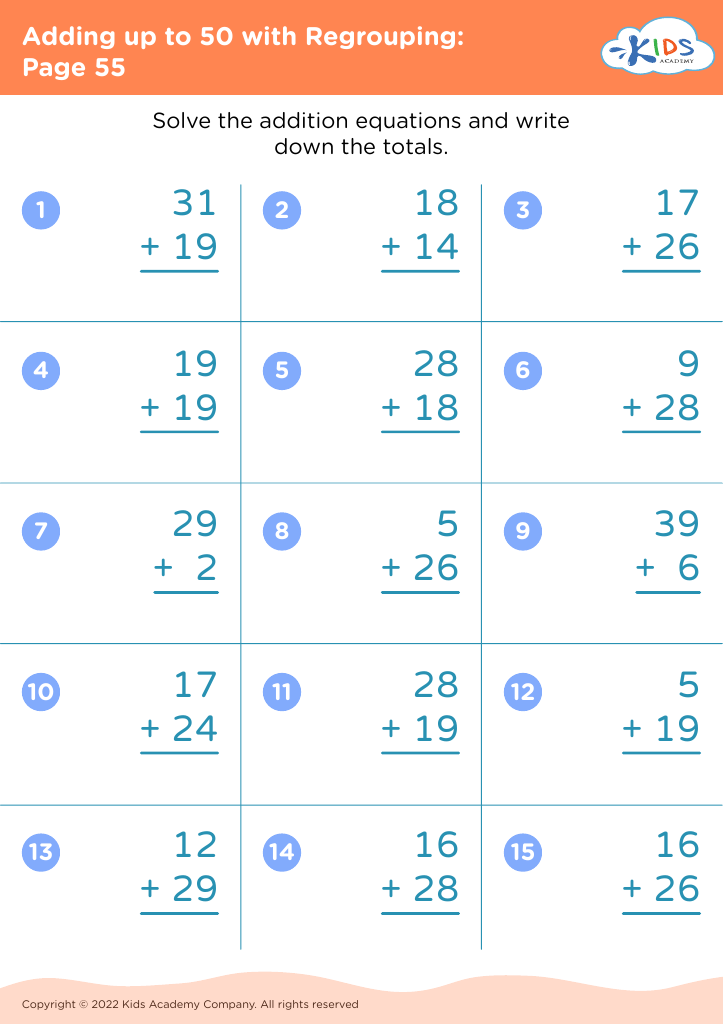
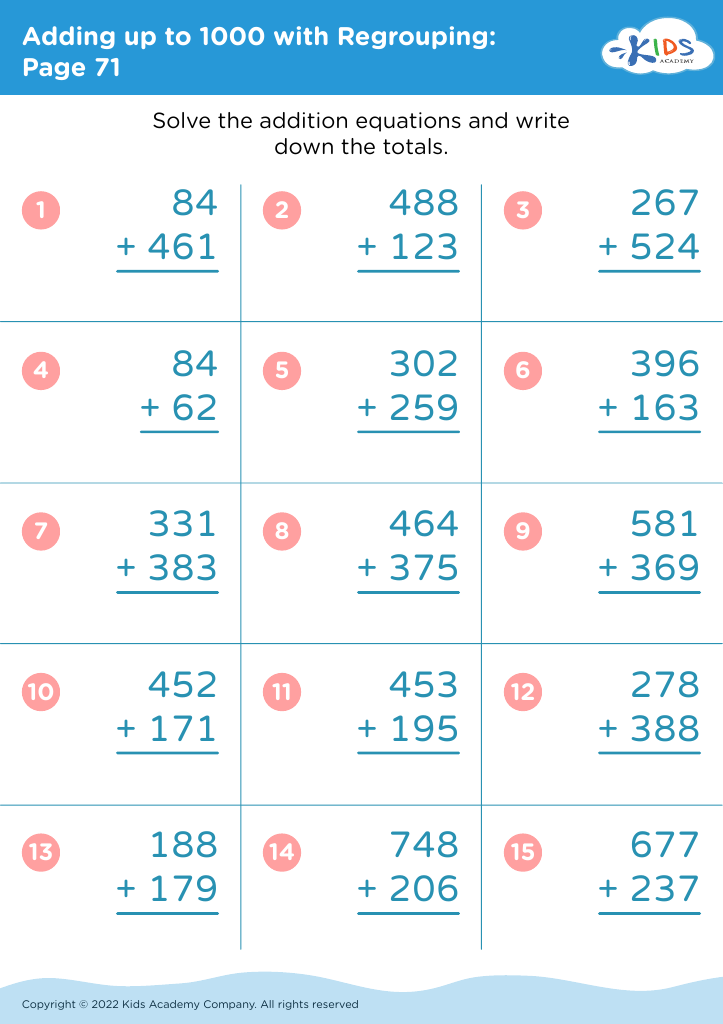
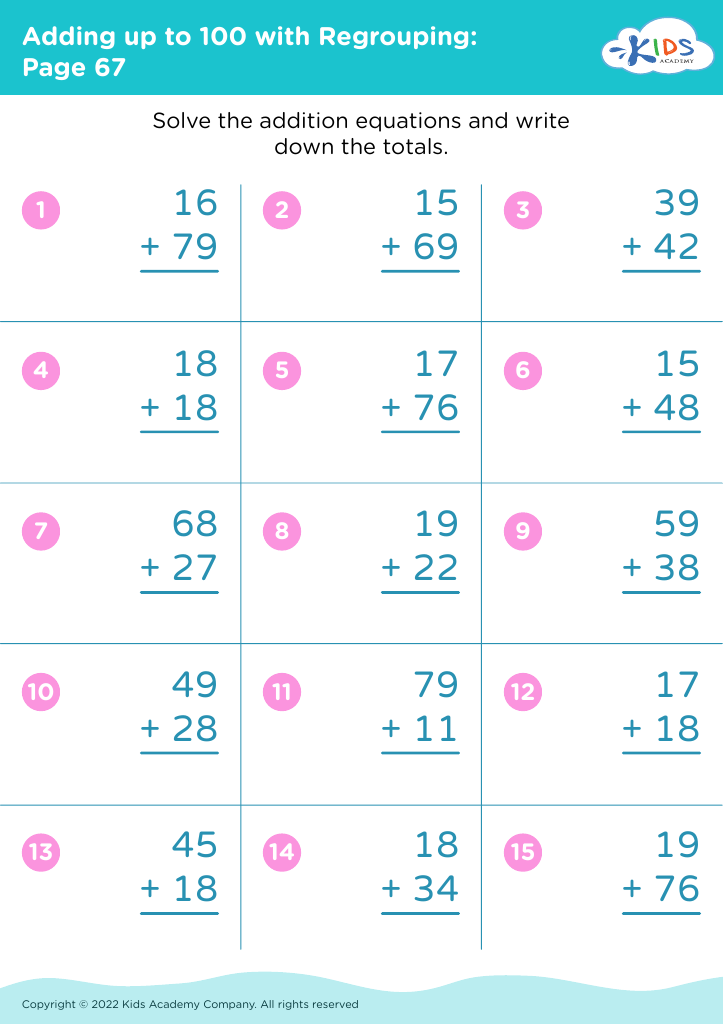
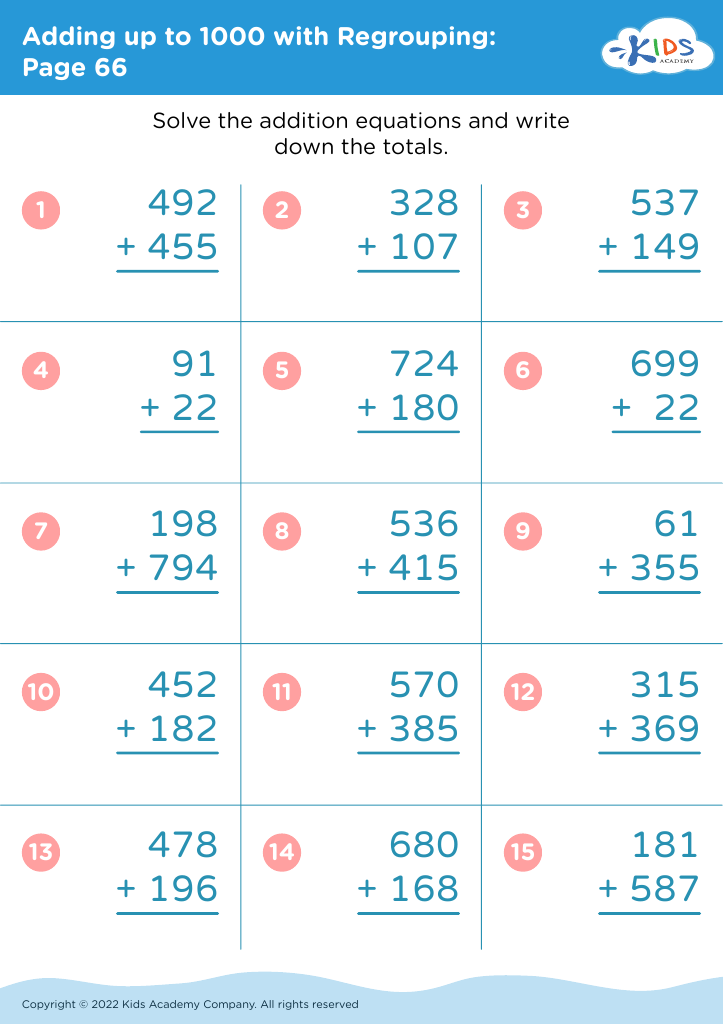








Enhancing number recognition and addition skills in young learners aged 3 to 9 is crucial for several reasons. First, these foundational skills are essential for overall mathematical proficiency, serving as building blocks for more complex concepts in later years. If children can recognize numbers and grasp simple addition early on, they are more likely to excel in math as they progress through their education.
Moreover, fostering number recognition and addition early helps develop critical cognitive skills. Engaging with numbers enables children to enhance their problem-solving abilities and logical thinking. It also increases their confidence, encouraging a positive attitude toward learning and mathematics in particular.
Parents and teachers should also care about this early development because it facilitates language growth. Explaining number concepts fosters vocabulary expansion, helping children articulate their understanding. Moreover, metrics from developmental studies show that those who receive support in early math demonstrate significantly improved academic performance down the line.
Finally, integrating number recognition and addition into everyday activities fosters a love for learning. It transforms mundane tasks into engaging challenges, making education a vital, fun part of experiential learning. Prioritizing these skills nurtures well-rounded, capable individuals ready to tackle future academic endeavors.








