Number comprehension Addition Worksheets for Ages 3-9
8 filtered results
-
From - To
Enhance your child's math skills with our engaging Number Comprehension Addition Worksheets, designed for ages 3-9. These interactive worksheets help young learners grasp essential concepts like counting, number recognition, and addition in a fun and engaging way. With colorful illustrations and age-appropriate exercises, children will develop a solid foundation for early math while building confidence. Our resources cater to diverse learning styles, ensuring every child enjoys the process of mastering addition. Perfect for home or classroom use, these worksheets foster a love for math that will last a lifetime. Start your child's mathematical journey today with our number comprehension resources!
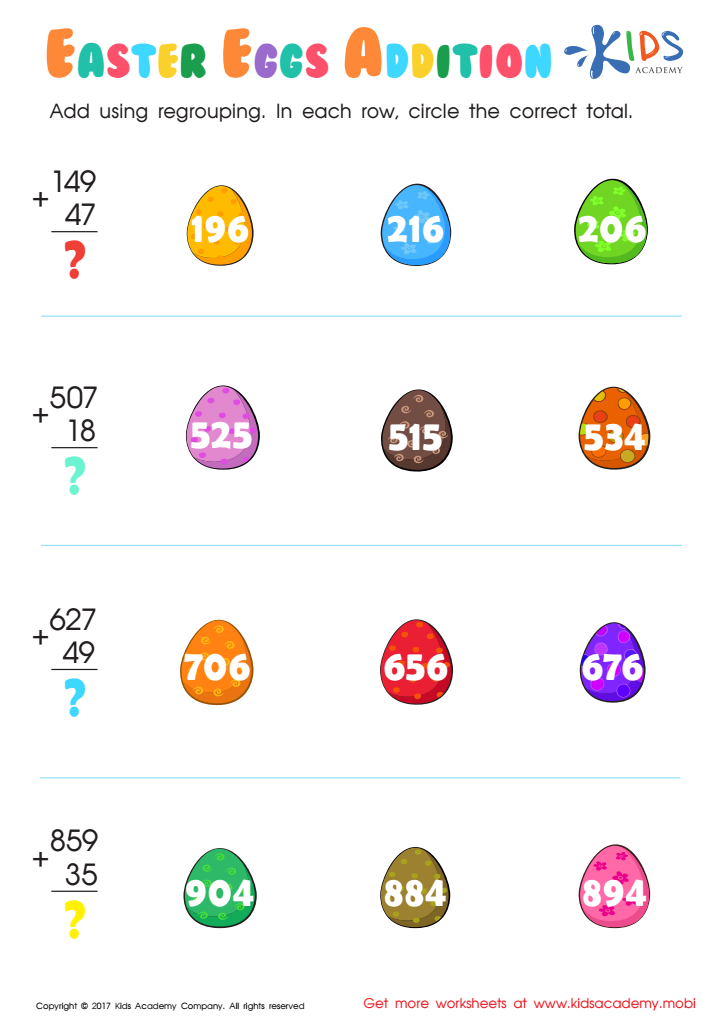
Addition with Regrouping Worksheet
 Assign to My Students
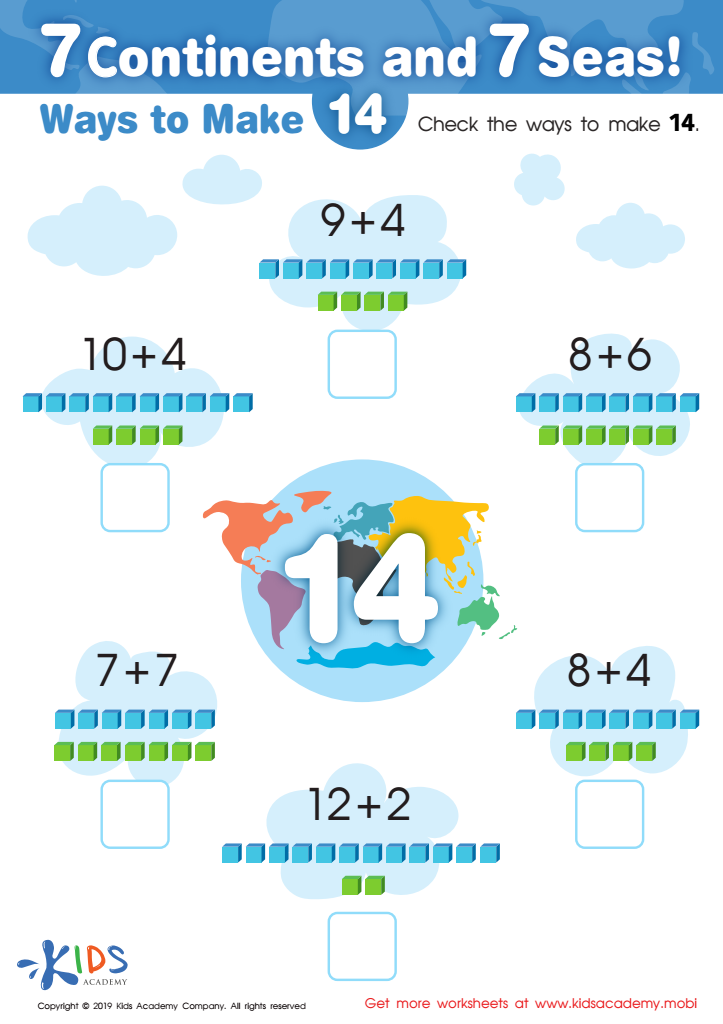
7 Continents and 7 Seas Worksheet
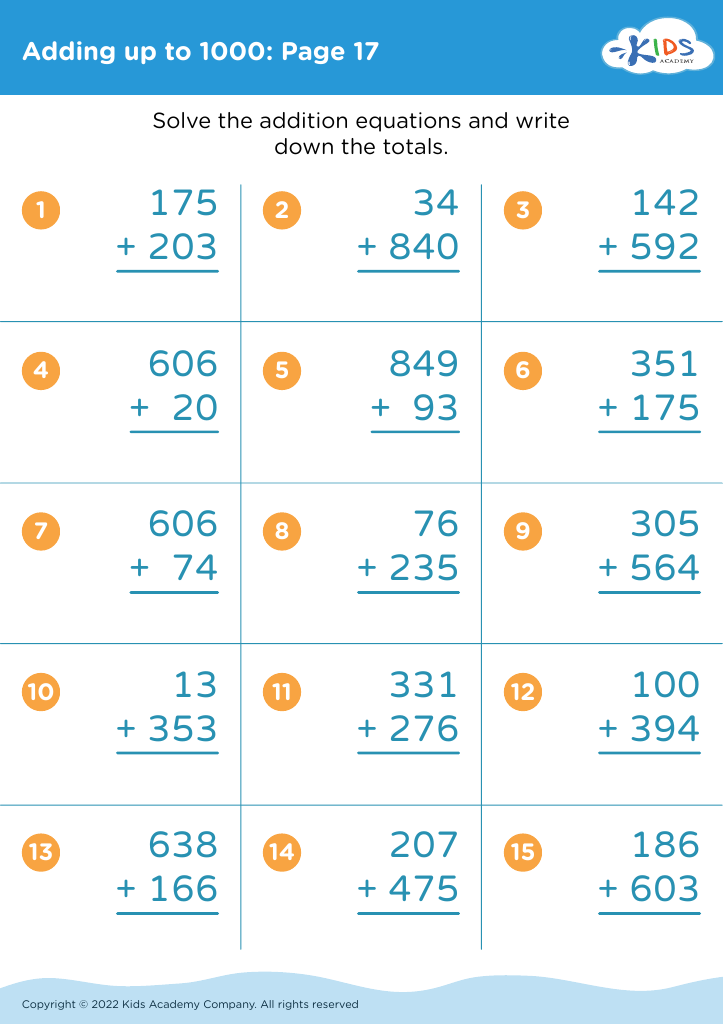
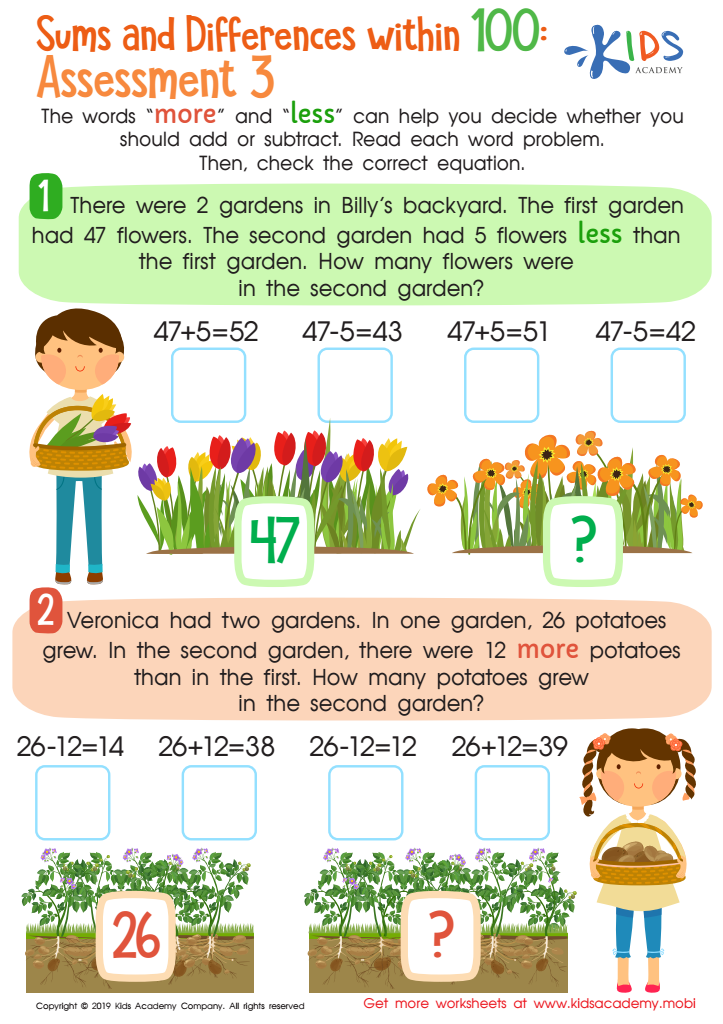
Sums and Differences Within 1 - Assessment 1 Worksheet
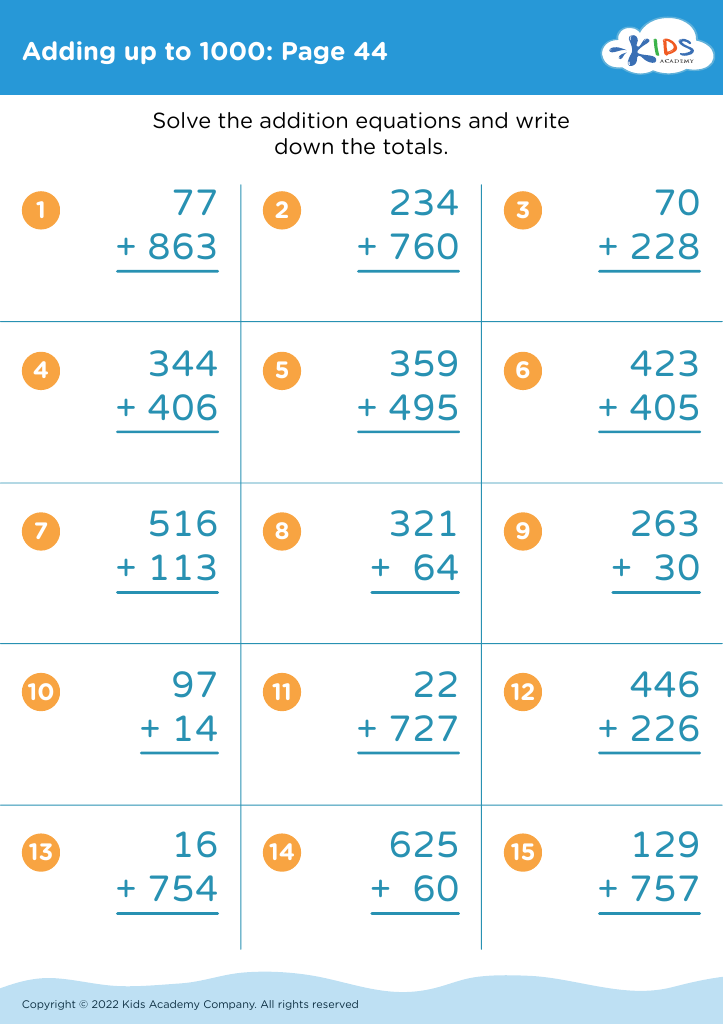
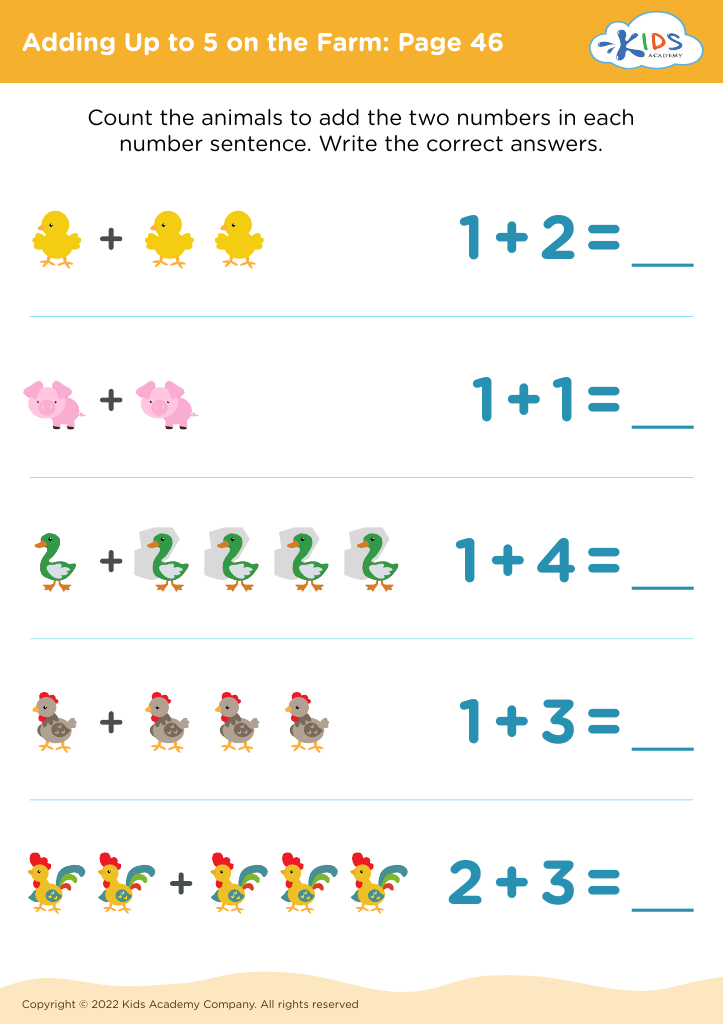
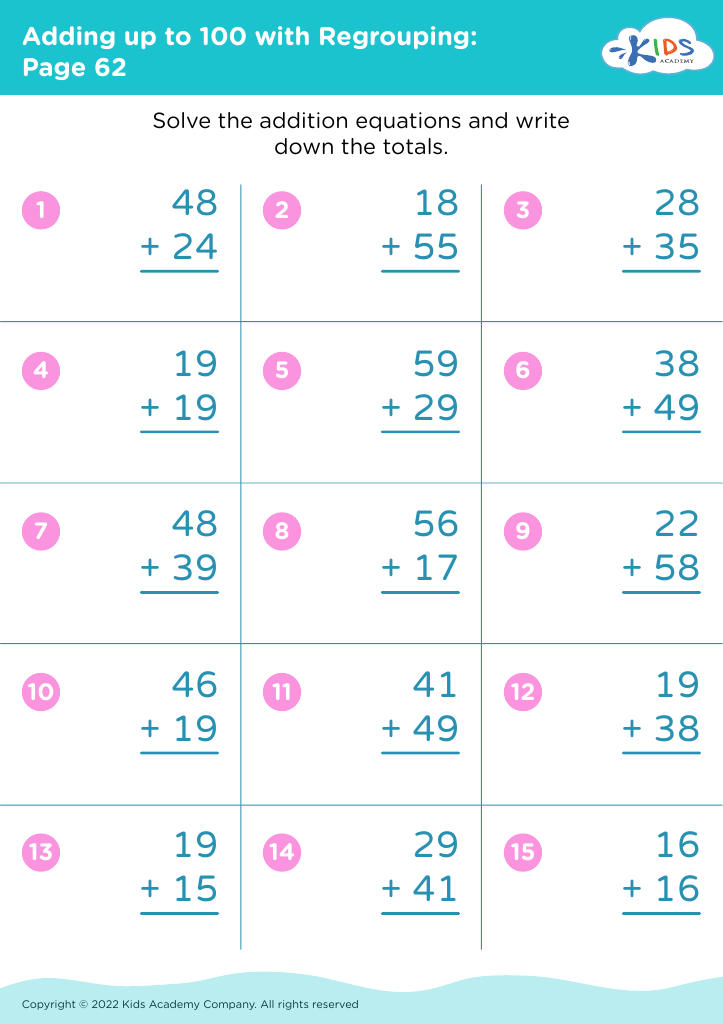
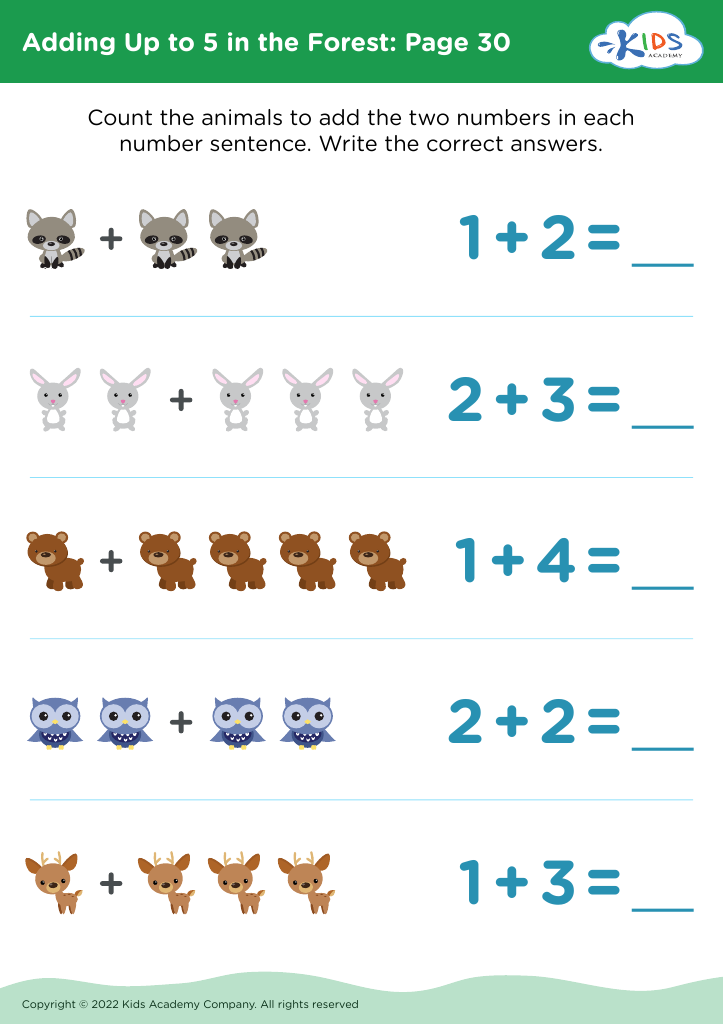








Number comprehension and addition skills are crucial for children aged 3-9 as they form the foundation for all future mathematical learning and critical thinking. During these formative years, children begin to understand not only numbers but also the relationships between them, such as quantity, sequencing, and simple operations like addition. Grasping these concepts helps build their cognitive skills and reasoning abilities, enabling them to understand more complex mathematical ideas later on.
Moreover, the early development of number sense promotes confidence in young learners. When children grasp addition through engaging activities and hands-on learning, they are more likely to enjoy math, reducing anxiety around the subject as they progress. Parents and teachers play a vital role by providing these enriching environments through games, storytelling, and interactive activities that make learning fun and engaging.
Furthermore, strong number comprehension supports everyday life skills, from shopping and cooking to problem-solving and budgeting. As children learn addition, they acquire critical thinking and analytical skills, which are applicable beyond mathematics. Therefore, fostering number comprehension and addition is not just about academics—it's about preparing children for a range of life experiences and challenges. Investing time and resources in these early skills yields long-term benefits for children's overall development.








