Practice writing numbers Addition Worksheets for Ages 3-9
6 filtered results
-
From - To
Discover our engaging "Practice Writing Numbers Addition Worksheets for Ages 3-9," designed to support your child's mathematical development and writing skills. Tailored for young learners, these worksheets combine fun addition exercises with opportunities to practice number formation. Perfect for both classroom and home use, each sheet fosters number recognition, handwriting precision, and basic math competency. Boost your child's confidence with colorful and interactive activities, ensuring a strong foundation in early math concepts. Download today to make learning numbers and addition enjoyable and effective! Visit Kids Academy for more educational resources and printables.
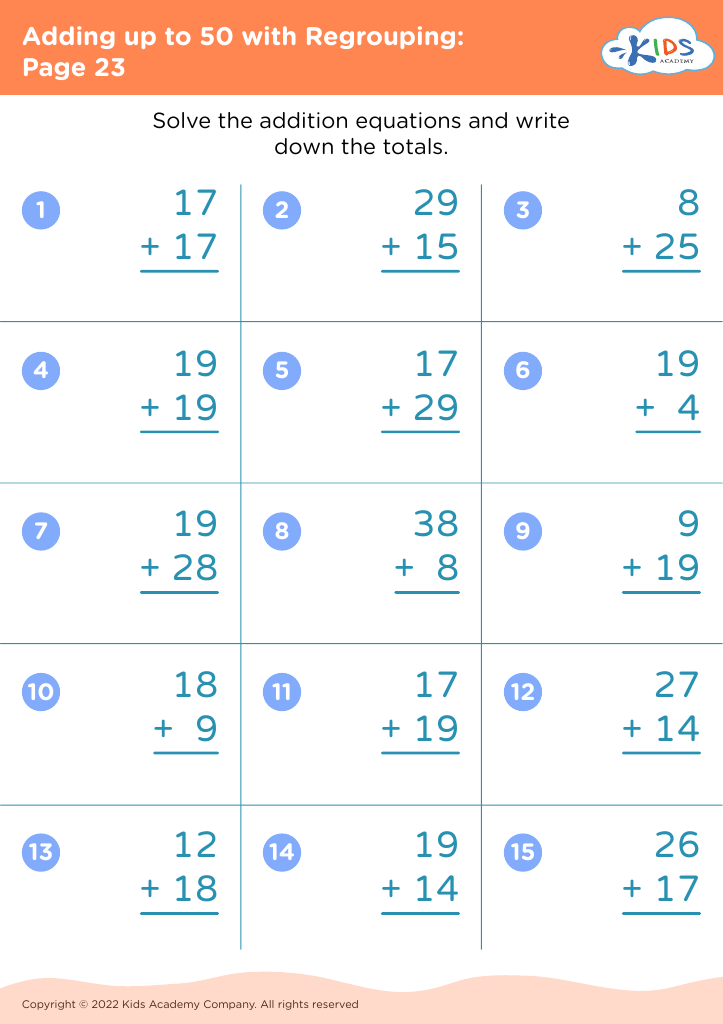
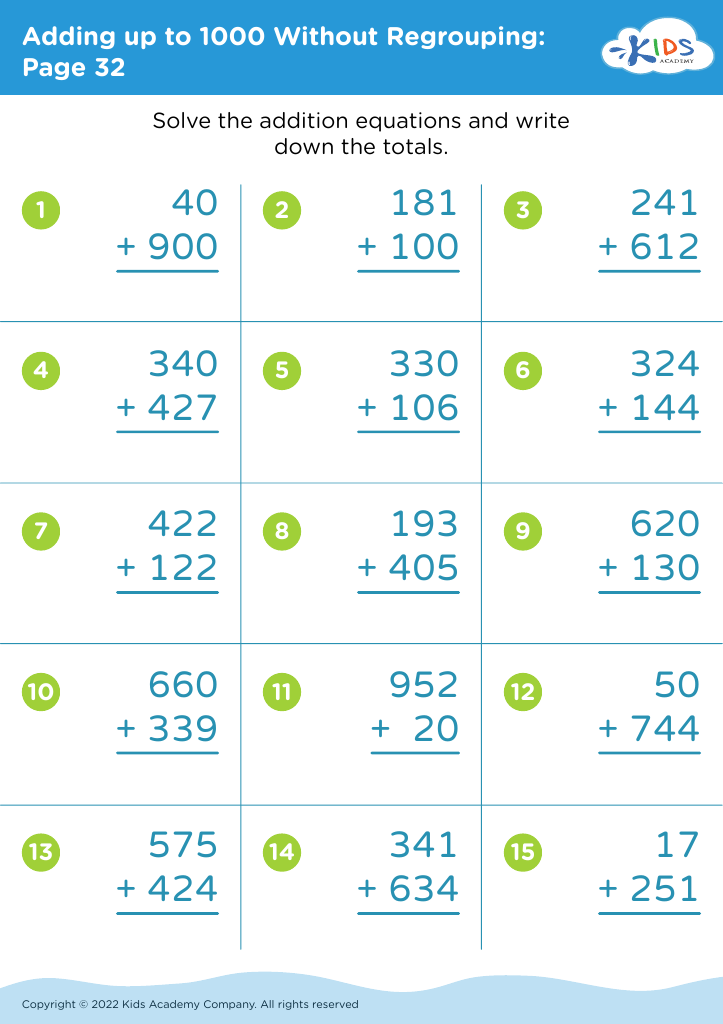
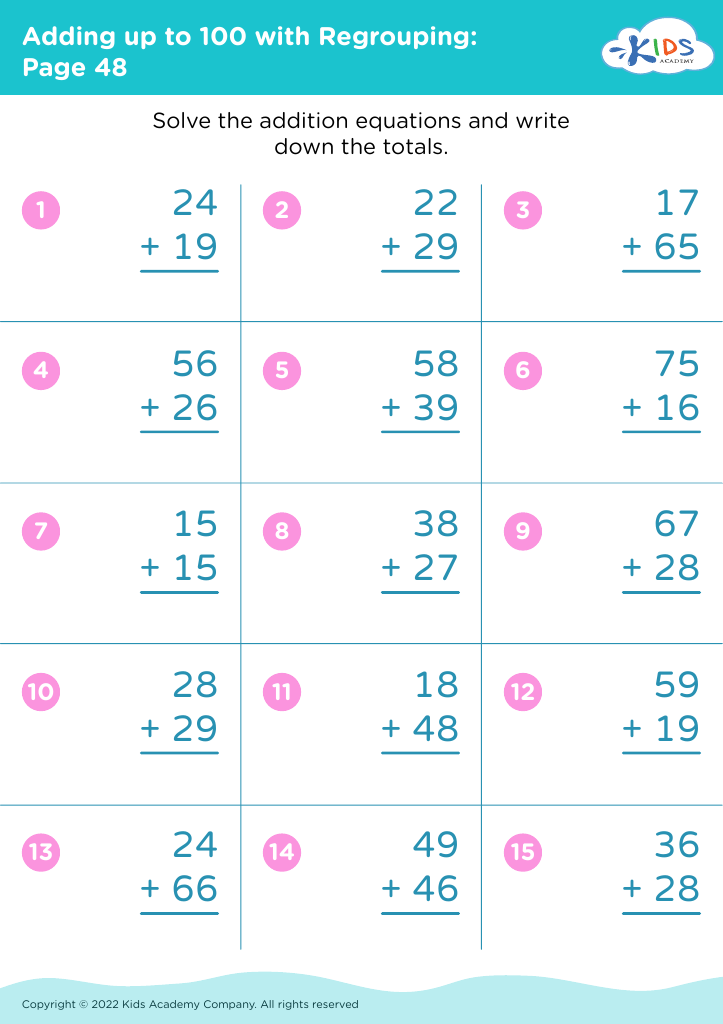
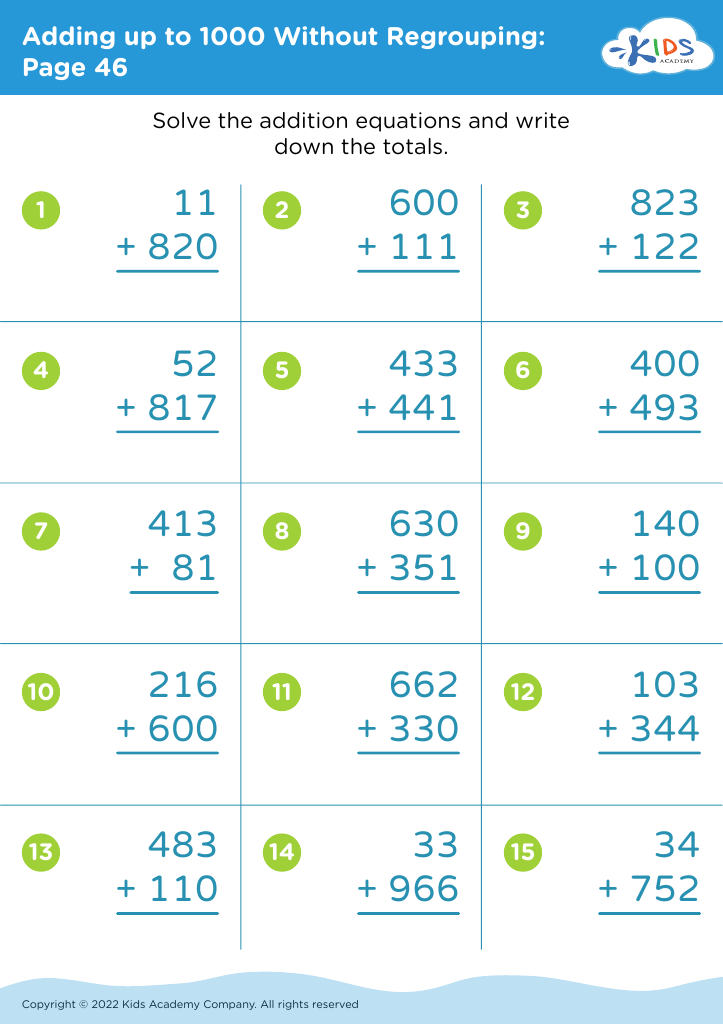
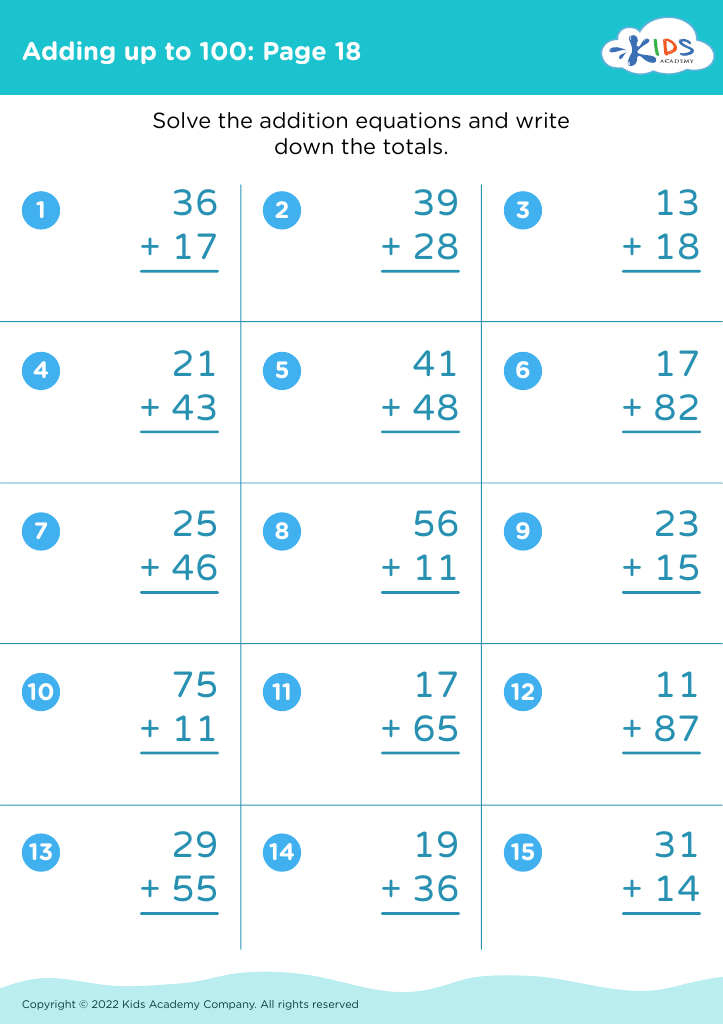
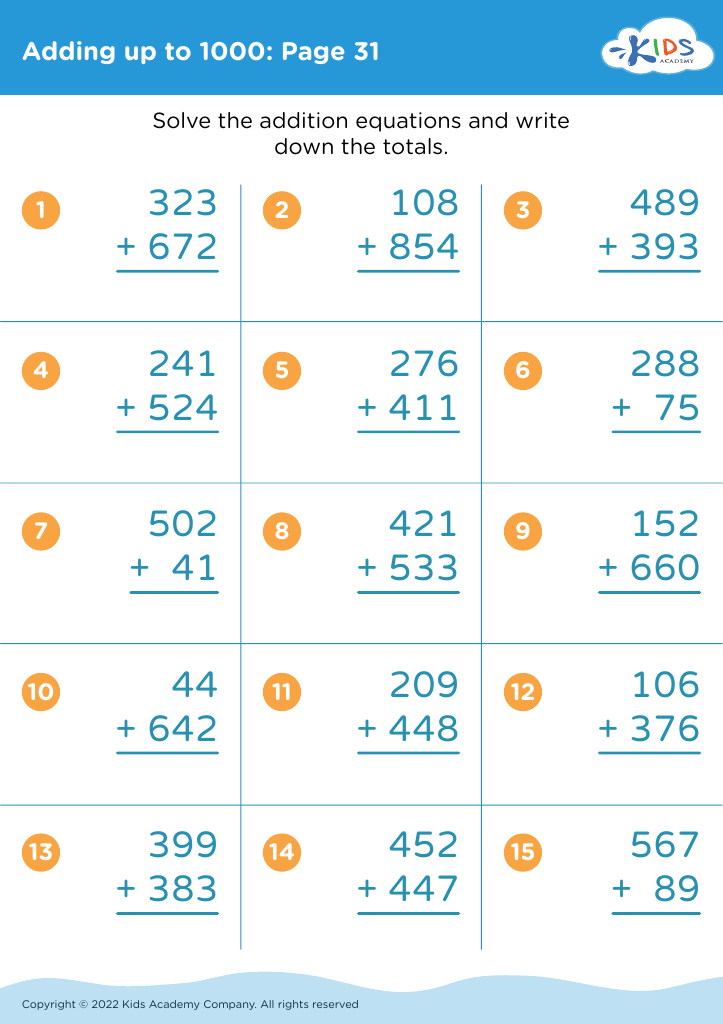








Parents and teachers should emphasize practice with writing numbers and addition for children ages 3-9 because these activities lay a strong foundation for future mathematical learning and overall cognitive development. During these formative years, children’s brains are highly receptive to learning new concepts, and engaging in number writing helps develop fine motor skills, hand-eye coordination, and numerical recognition. Ensuring that children can correctly write and recognize numbers paves the way for more complex arithmetic operations later on.
Practicing addition not only reinforces numerical comprehension but also strengthens problem-solving skills and logical thinking. Early exposure to these concepts promotes a sense of confidence and competence in mathematical abilities, which can positively influence their attitude towards math in later years. Additionally, integrating fun, interactive, and educational activities related to numbers and basic addition helps retain attention and fosters a lifelong love for learning.
Moreover, early proficiency in number writing and addition assists in developing other essential skills such as sequencing, pattern recognition, and the fundamental understanding of quantities and value, essential for day-to-day activities. Thus, a solid grasp of these basic skills can lead to academic success and contribute to a child’s overall intellectual growth and curiosity.








