Reading clocks Addition Worksheets for Ages 3-9
3 filtered results
-
From - To
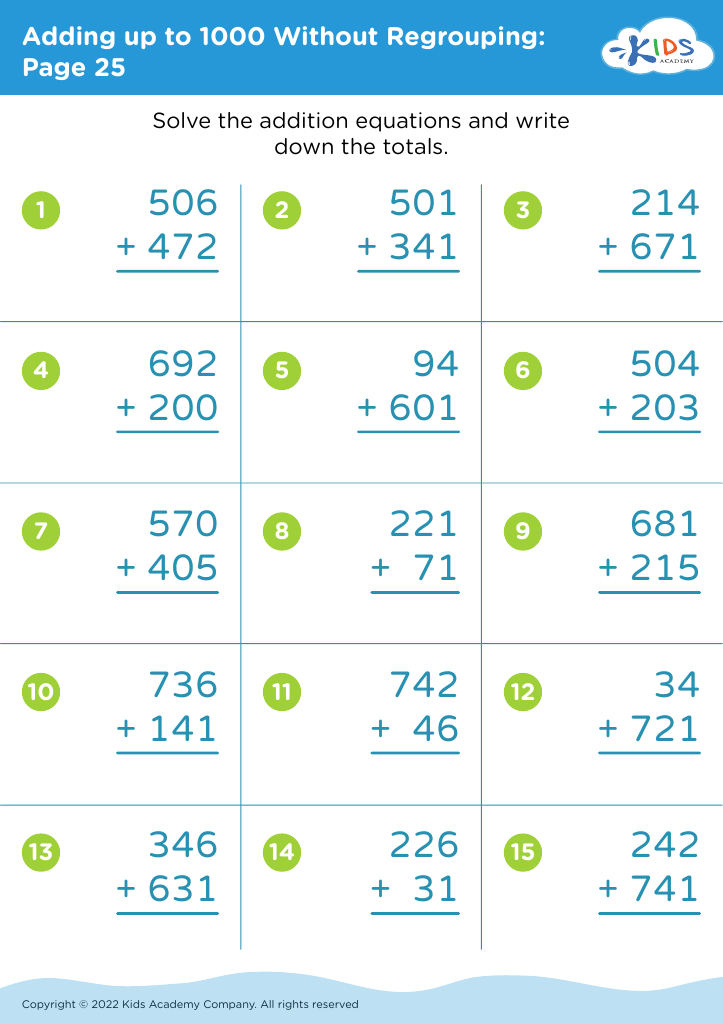
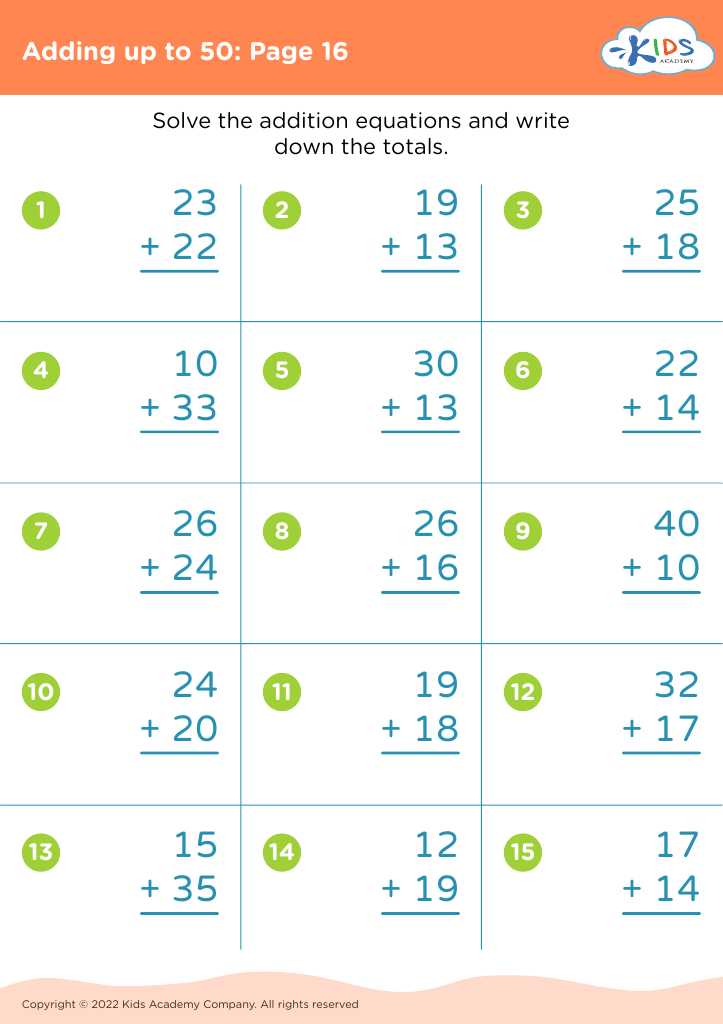
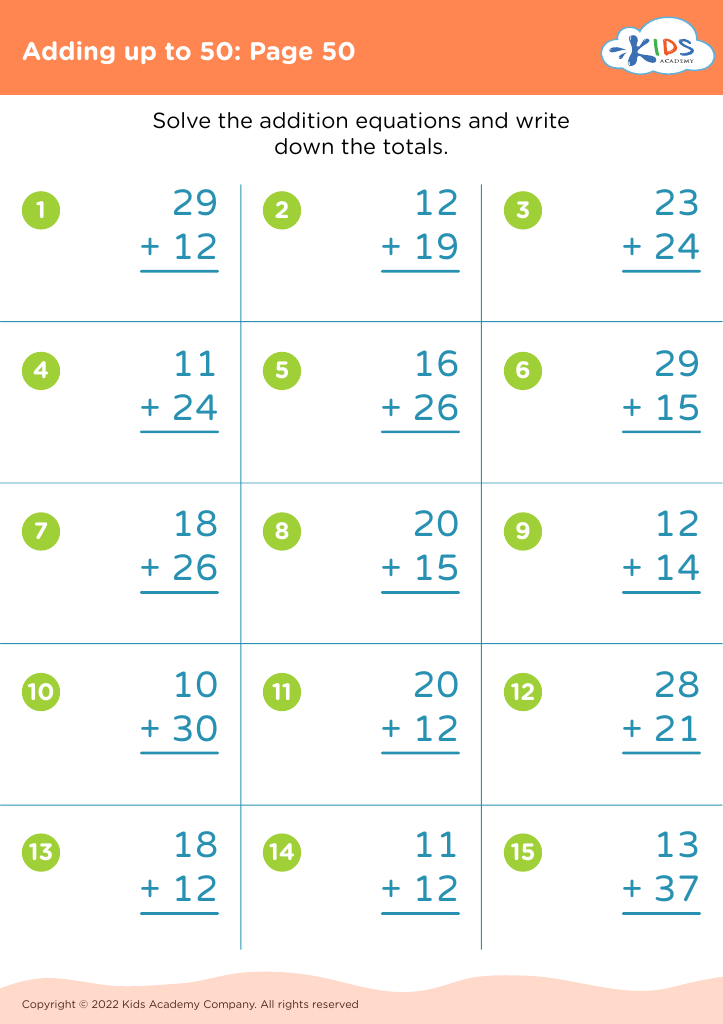
Enhance your child's math skills with our "Reading Clocks Addition Worksheets for Ages 3-9" from Kids Academy. These engaging worksheets seamlessly combine time-telling practice and fundamental addition exercises, ensuring a fun and educational experience. Tailored for children aged 3 to 9, the activities help develop crucial skills such as numeral recognition, time comprehension, and basic arithmetic. Through interactive and visually appealing designs, young learners can easily grasp the concepts of hours, minutes, and adding numbers. Boost your child's confidence and improve their mathematical abilities today with our expertly crafted, age-appropriate worksheets available for easy download and print.


.jpg)





Parents and teachers should care about teaching children to read clocks and perform basic addition at ages 3-9 because these foundational skills are crucial for a child's overall cognitive development. Learning to read clocks helps children understand the concept of time, which in turn fosters time management skills, routine establishment, and an appreciation for daily schedules. It promotes mathematical thinking and real-world problem-solving, as children learn to interpret and calculate durations.
Similarly, mastering basic addition is essential not only for subsequent math learning but also for day-to-day activities. It strengthens a child's ability to think logically and quantitatively, supporting skills such as critical thinking and decision-making. Moreover, addition lays the groundwork for more complex mathematical concepts and operations, building the confidence and competence necessary for future academic success.
Early age engagement with these skills encourages curiosity and enthusiasm for learning. It also allows early identification and intervention for any learning difficulties. Furthermore, these activities can be linked to play-based learning, making education enjoyable and relevant, and boosting a child's motivation. Consequently, teaching these concepts nurtures a well-rounded, capable, and confident young learner ready to tackle the challenges of their educational journey.








