Recognize patterns Addition Worksheets for Ages 3-9
11 filtered results
-
From - To
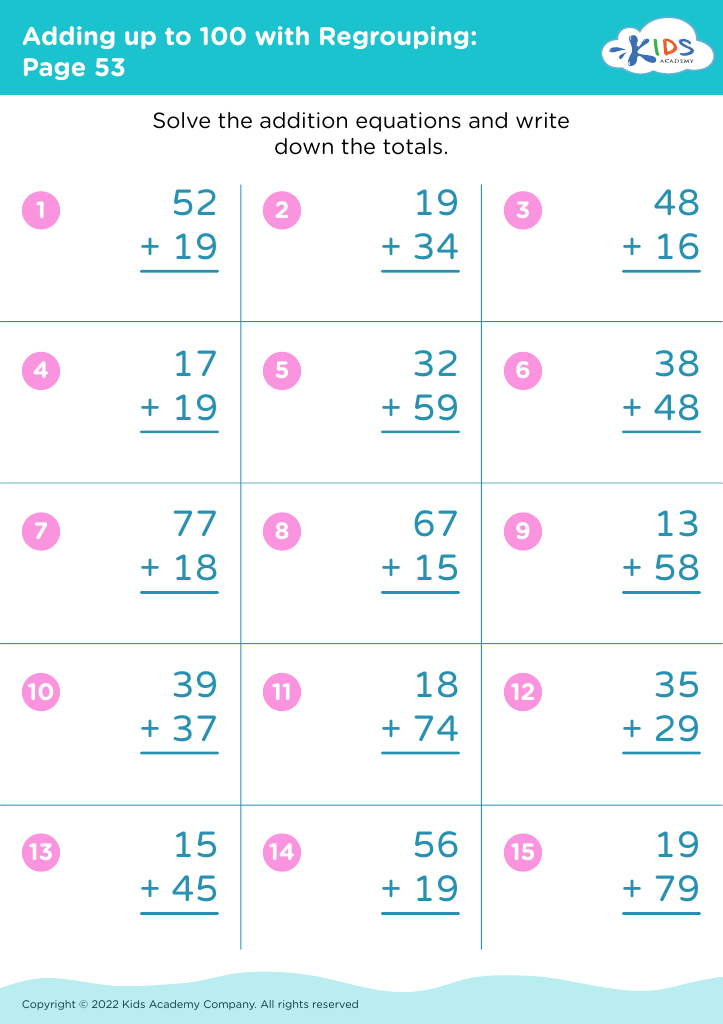
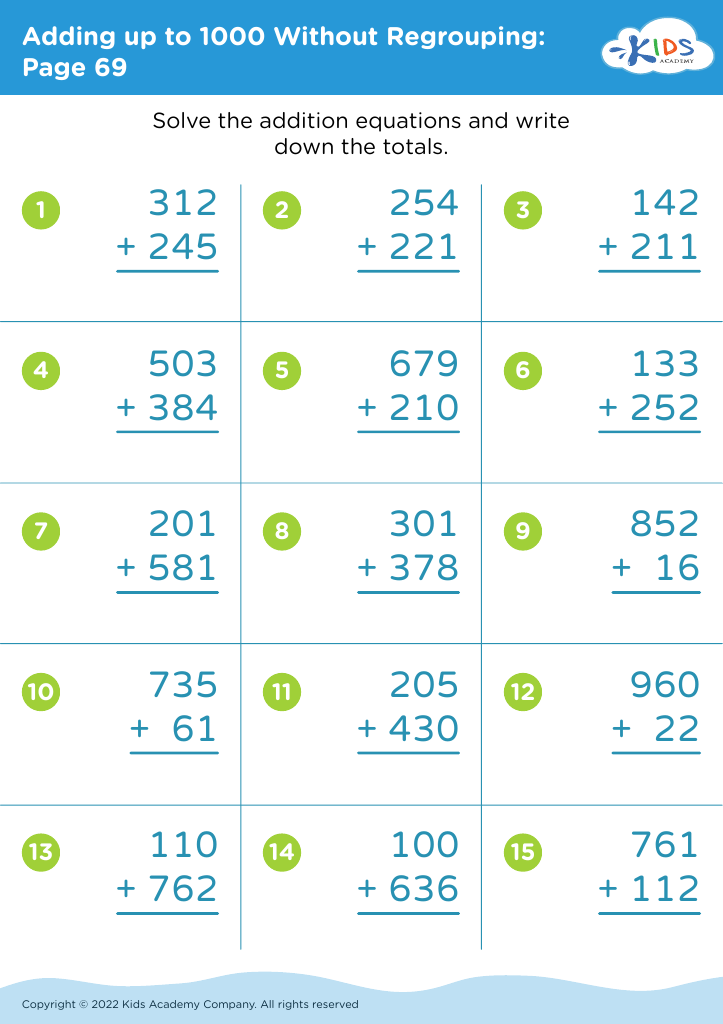
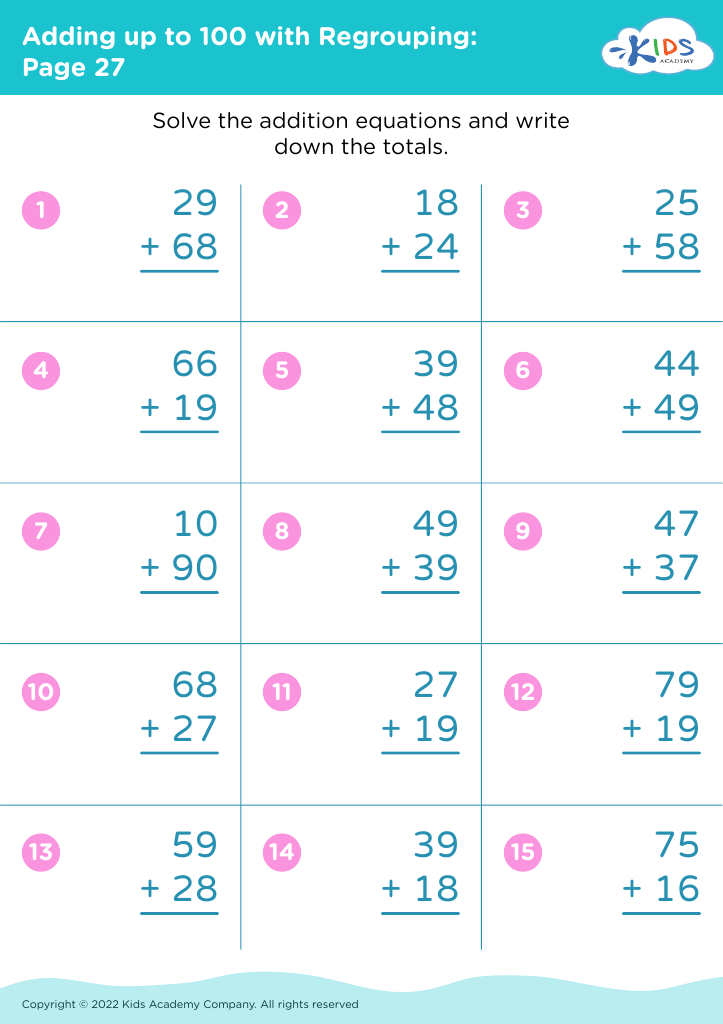
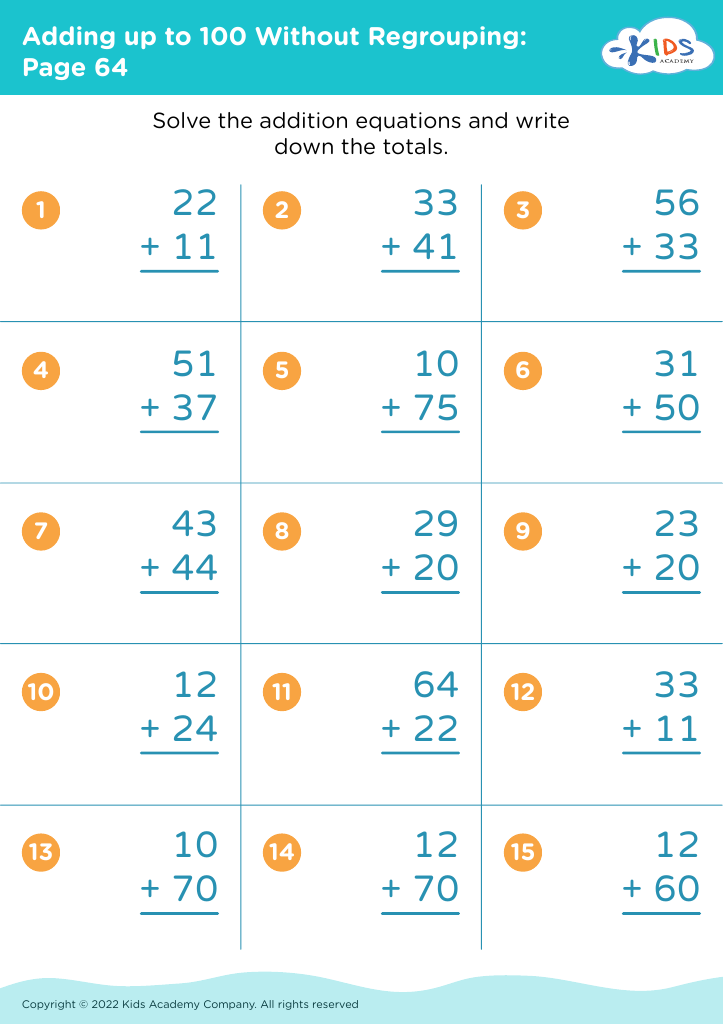
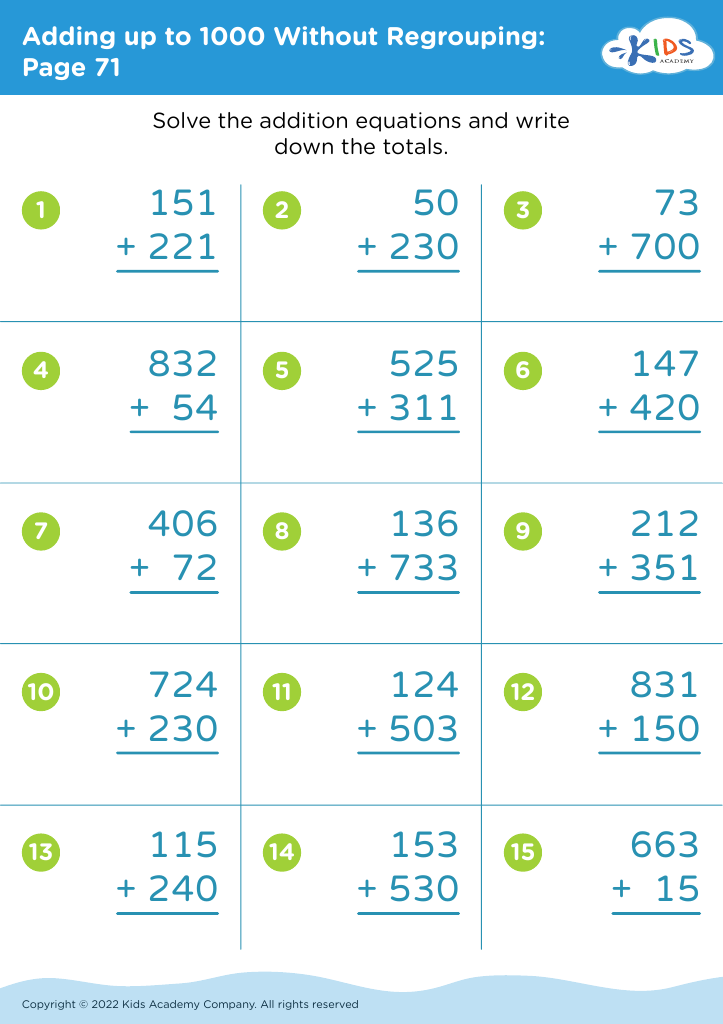
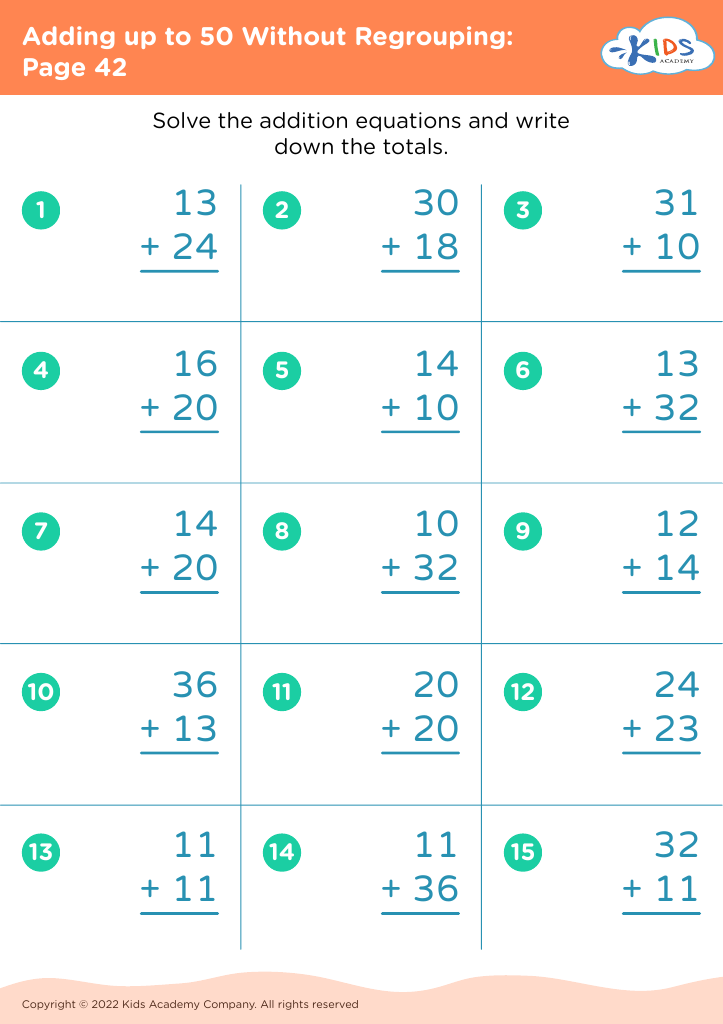
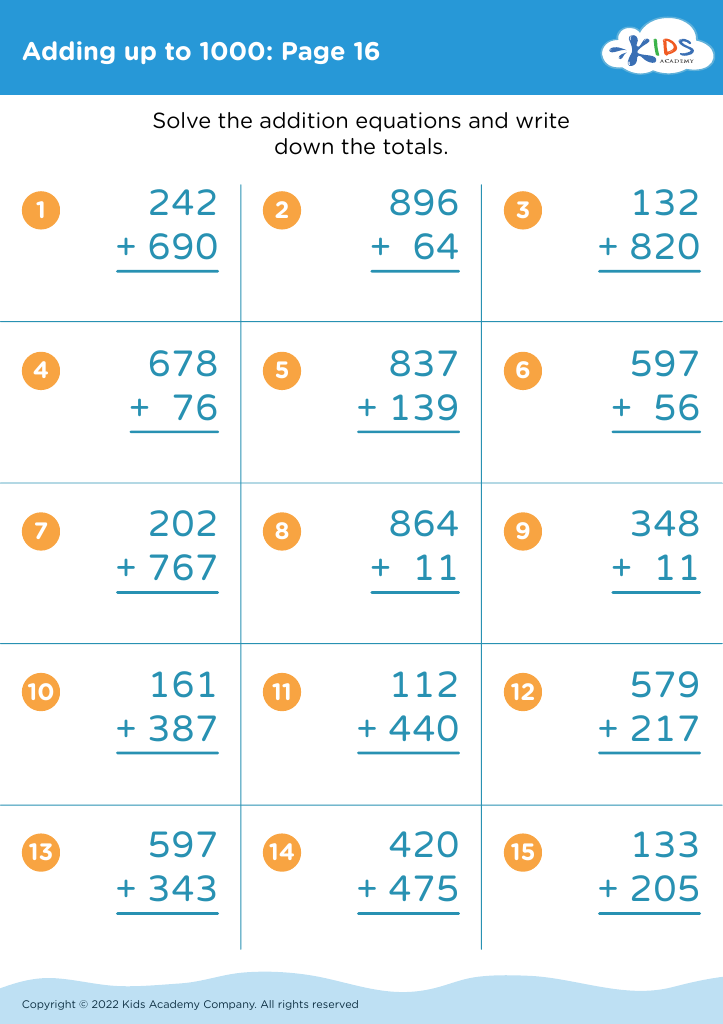
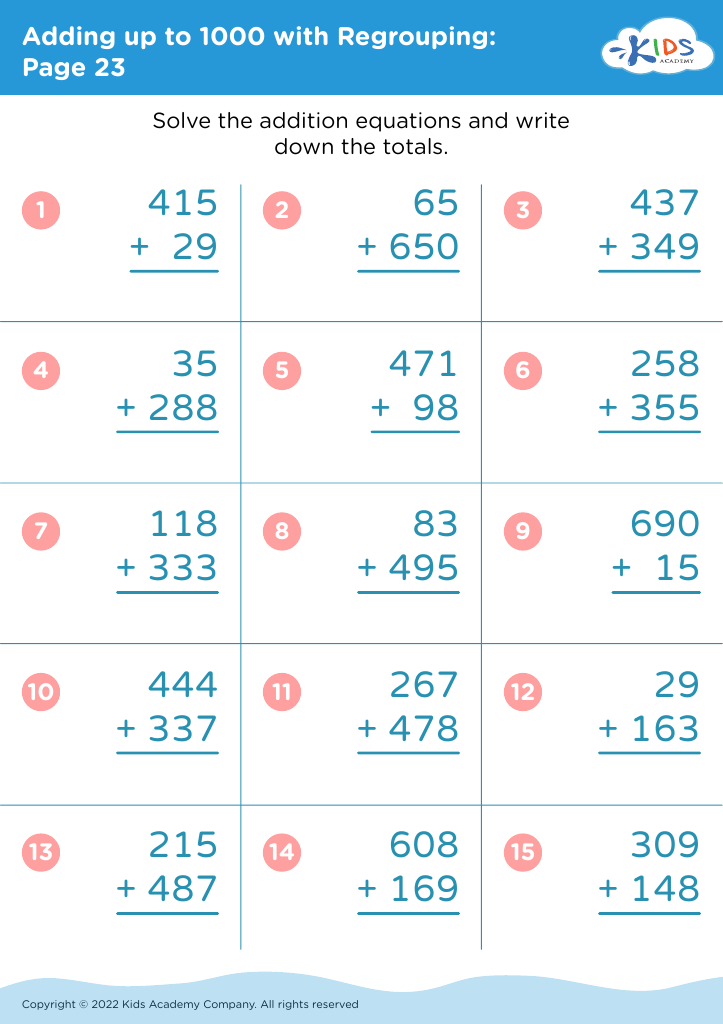
Discover the joy of learning with our "Recognize Patterns Addition Worksheets" designed specifically for ages 3-9! These engaging worksheets help young learners identify and understand patterns while practicing their addition skills. With colorful visuals and fun activities, children will easily grasp essential math concepts. Each worksheet encourages critical thinking and problem-solving, making learning interactive and enjoyable. Perfect for both classroom settings and at-home practice, our resources are tailored to support your child's mathematical development. Boost their confidence and foundational skills in math today with these effective and entertaining pattern recognition activities! Explore our collection and watch your child thrive!




.jpg)



Recognizing patterns in addition is a foundational skill that plays a crucial role in early mathematical development for children aged 3-9. Parents and teachers should care about this skill because it helps children build a strong mathematical understanding that goes beyond simple memorization of facts. Patterns provide a framework for understanding how numbers work together; for instance, recognizing that 2 + 2 is the same as adding 1 + 3 encourages flexible thinking.
This skill enhances critical thinking and problem-solving abilities. When children start to identify patterns, they gain the ability to predict outcomes and apply their knowledge in new contexts. Moreover, recognizing patterns is linked to better performance in more advanced mathematical concepts later on, such as algebra and geometry.
Encouraging pattern recognition can make learning more engaging. Fun activities like songs, games, and storytelling can reinforce these concepts in enjoyable ways. This not only helps develop a love for learning but also builds confidence in their math abilities.
Ultimately, awareness of pattern recognition in addition empowers children, fostering a solid foundation for future success in mathematics and everyday life skills. By prioritizing this area of learning, parents and teachers can contribute significantly to a child's overall academic growth and emotional well-being.








