Recognizing equivalent fractions Addition Worksheets for Ages 3-9
5 filtered results
-
From - To
Discover the best "Recognizing Equivalent Fractions Addition Worksheets for Ages 3-9" designed to enhance your child's math skills. Perfect for early learners, our worksheets break down the complexities of equivalent fractions and addition into simple, engaging activities. Each printable worksheet focuses on easy-to-comprehend exercises that help children visually and conceptually understand equal fractions while boosting their addition knowledge. Created by educational experts, these tools are ideal for use at home or in the classroom, fostering a fun learning environment that builds strong foundational math skills for young learners.
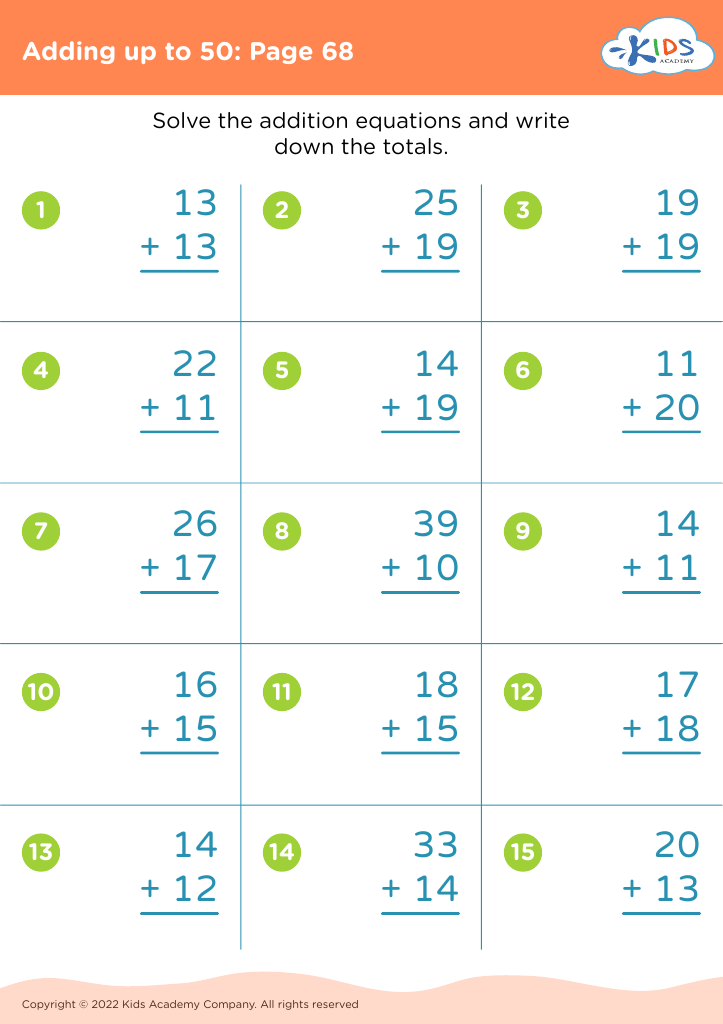
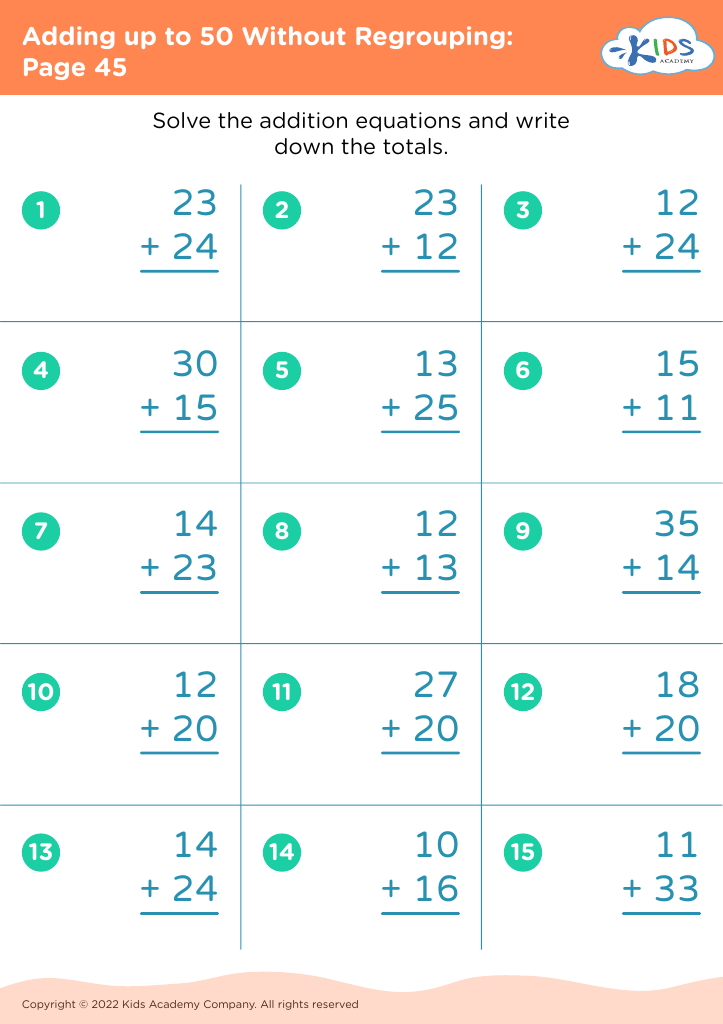
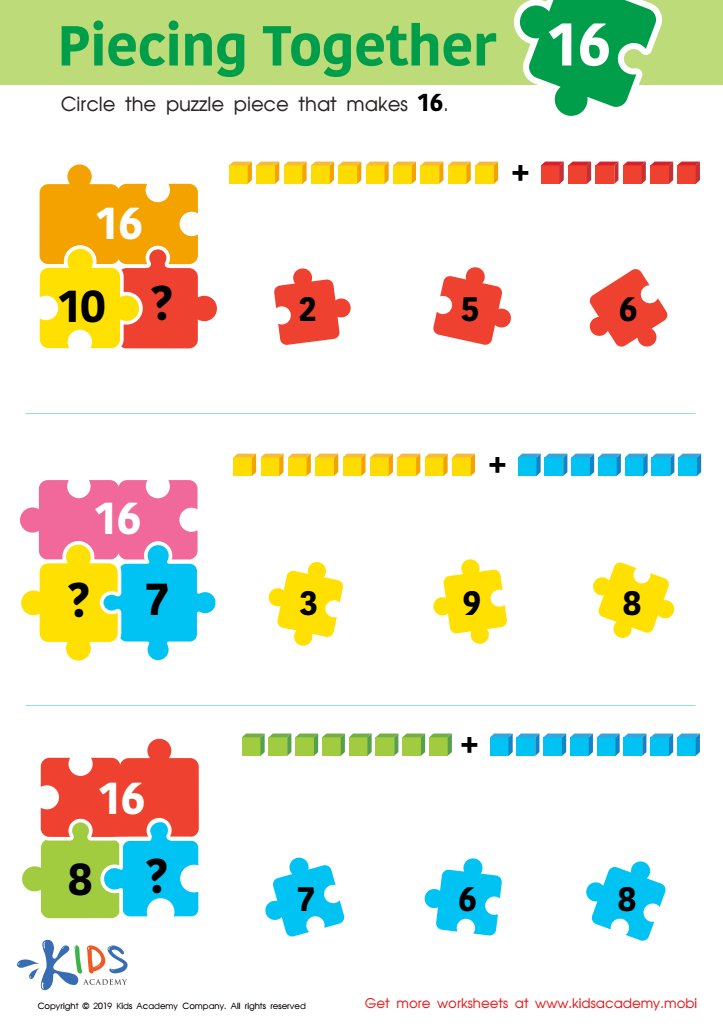
Piecing Together 16 Worksheet
 Assign to My Students
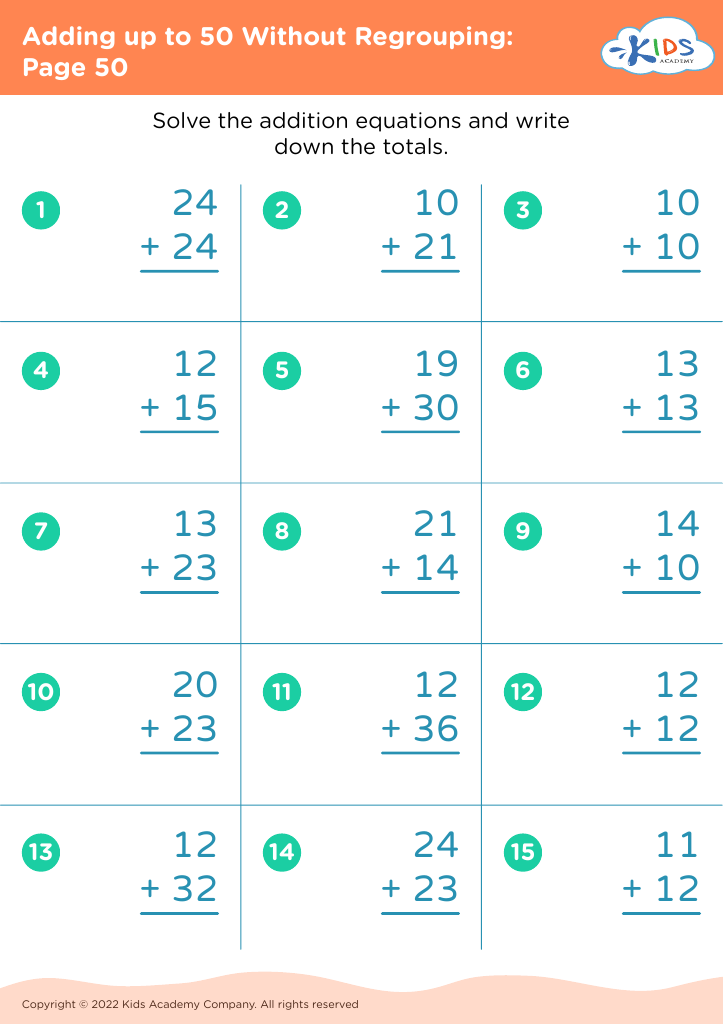








Understanding equivalent fractions and their addition is crucial for children aged 3-9 because it lays the foundation for advanced mathematical concepts. Fractions illustrate a fundamental principle of mathematics: breaking down a whole into parts. Learning equivalent fractions teaches kids that the same quantity can be represented in different ways, reinforcing flexibility in mathematical thinking. It also promotes the skills of comparison and problem-solving, essential for everyday decision-making and higher-level math.
Parents and teachers play a pivotal role in this educational phase. Making sure children grasp equivalent fractions and addition at an early age ensures they develop a strong number sense, which is critical for understanding more complex arithmetic and geometry in later years. Early proficiency also boosts children’s confidence in their mathematical abilities, encouraging a positive attitude toward learning.
Practical applications, such as cooking or dividing toys among friends, provide relatable contexts where children can see the usefulness of fractions. Thus, integrating fraction concepts into everyday activities makes learning engaging and meaningful. By recognizing, comparing, and adding fractions, young learners develop analytical thinking and precision—skills that extend beyond math to enhance academic performance in various other subjects.








