
Spatial awareness Addition Worksheets for Ages 3-9
5 filtered results
Difficulty Level
Grade
Age
-
From - To
Subject
Activity
Standards
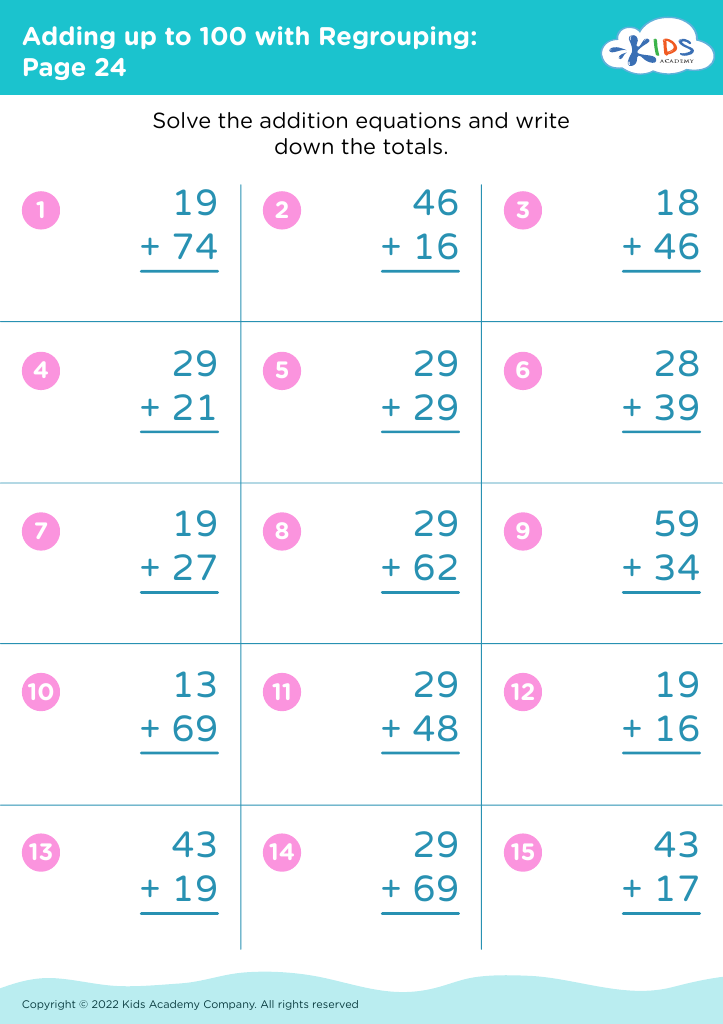
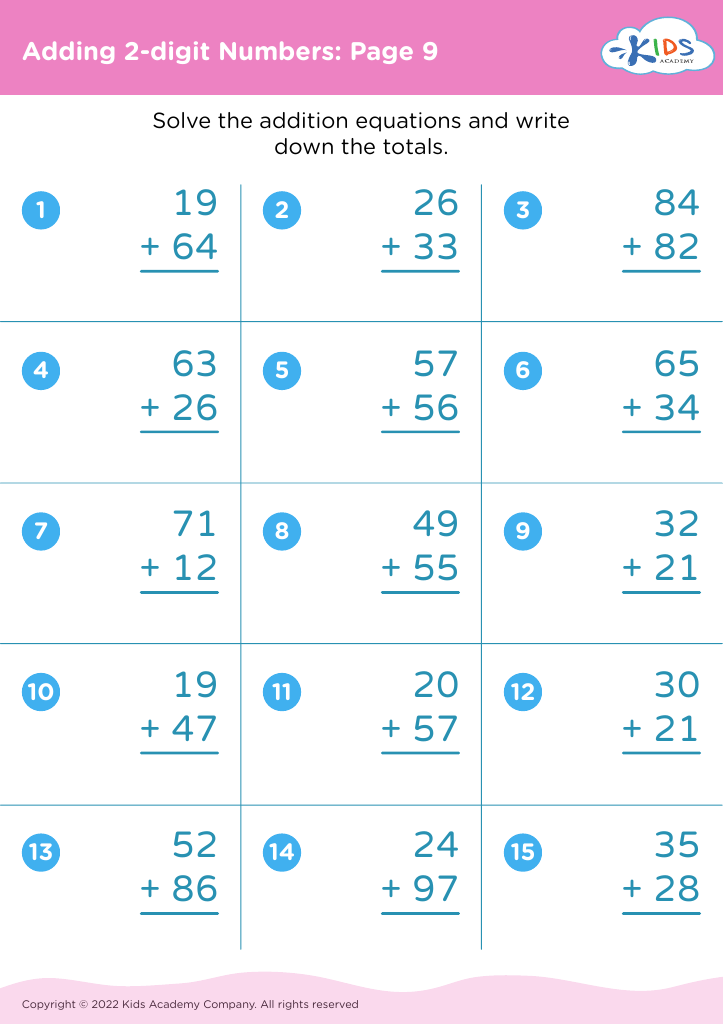
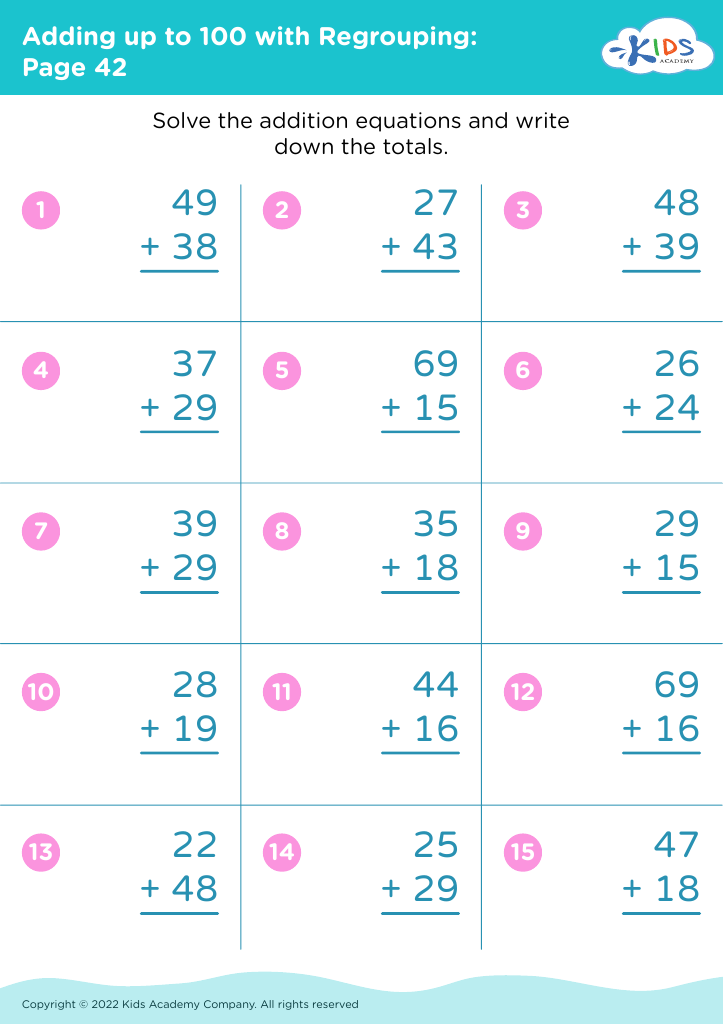
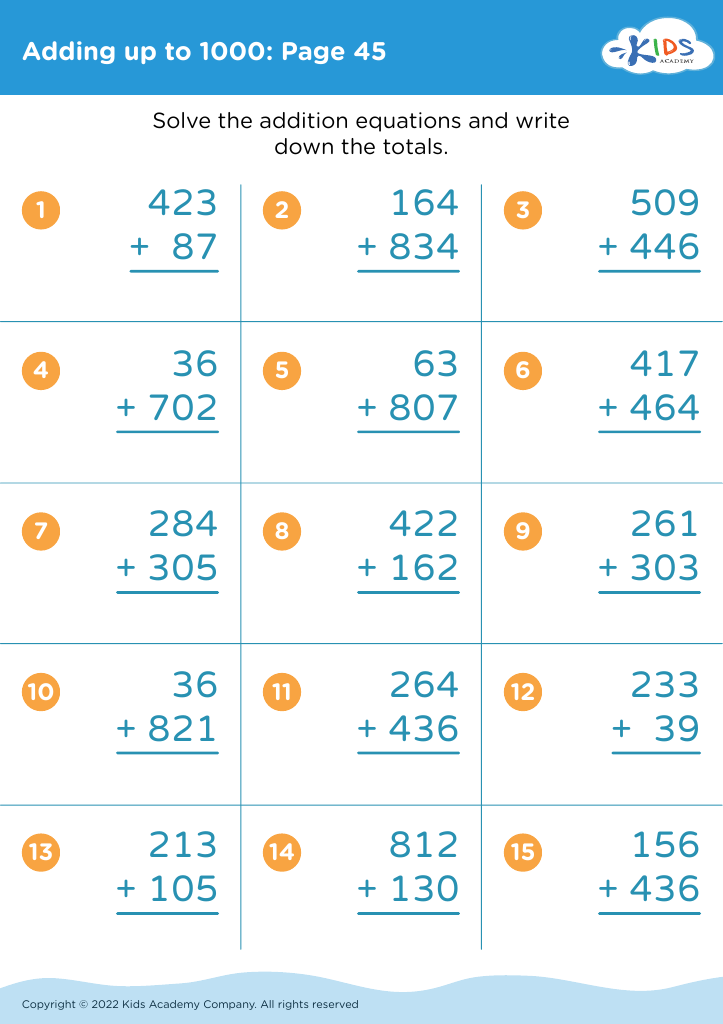
Unlock your child's potential with our Spatial Awareness Addition Worksheets, designed for children aged 3-9. These engaging resources help develop essential spatial skills while mastering addition concepts. Our worksheets combine visual elements and math challenges, making learning interactive and fun. Children will enhance their ability to understand positional relationships through various activities, improving both their mathematical and cognitive abilities. Ideal for use at home or in the classroom, these worksheets support young learners as they explore numbers in a dynamic way. Foster confidence in mathematics and spatial reasoning with our thoughtfully created worksheets, perfect for early education!
Favorites
With answer key
Interactive
Join Kids Academy for Free
Who is primarily going to use this learning content?







.jpg)
Spatial awareness is a crucial skill for children aged 3-9, as it forms the foundation for various aspects of their development, including math, reading, and physical coordination. Parents and teachers should care about this skill because spatial awareness helps children understand their world and their place within it. It encompasses the ability to visualize shapes, navigate spaces, and comprehend the relationships between objects.
For early learners, spatial awareness is particularly important in mastering addition. When children understand concepts like grouping and partitioning objects, they develop strategies for solving addition problems intuitively. Engaging in activities that enhance spatial skills—such as puzzles, building blocks, and interactive games—can help children grasp mathematical concepts more readily, making learning both effective and enjoyable.
Furthermore, spatial awareness contributes to critical thinking and problem-solving abilities. As children become adept at manipulating shapes and understanding space, they are better prepared to tackle more complex subjects in later years. By fostering spatial awareness alongside early numeracy skills, parents and teachers can cultivate a well-rounded foundation for academic success, creativity, and confidence, ultimately enabling children to thrive in various areas of life. Supporting spatial skill development enriches their learning experiences and engages them in meaningful play.








