Understand patterns Addition Worksheets for Ages 3-9
6 filtered results
-
From - To
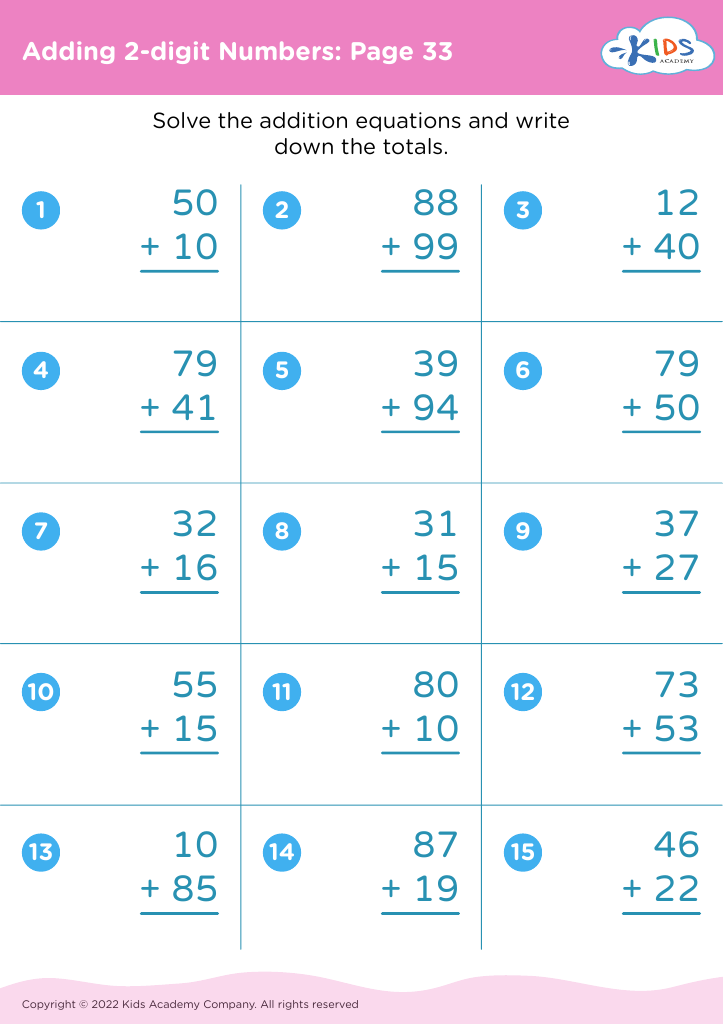
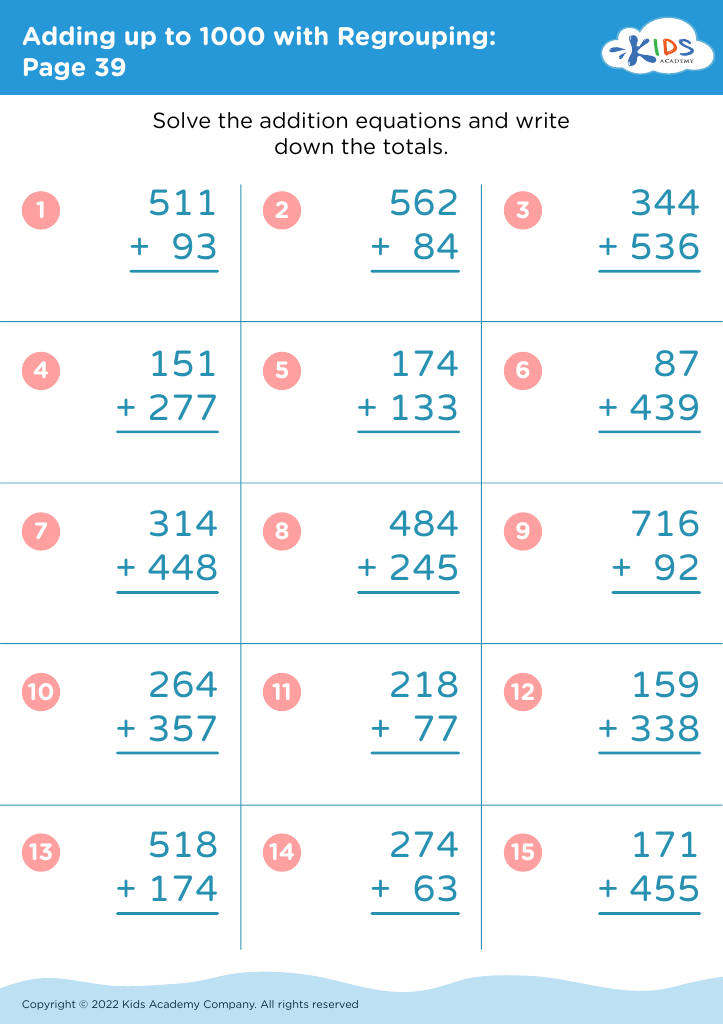
Discover our "Understand Patterns Addition Worksheets" designed for children ages 3-9! These engaging worksheets introduce young learners to the concepts of addition through patterns, helping to enhance their number recognition and problem-solving skills. By exploring a variety of colorful, fun activities, kids will learn to identify and extend patterns while solving basic addition problems. Perfect for classroom use or at-home learning, our worksheets promote critical thinking and make math enjoyable! Foster your child's mathematical foundation and boost their confidence in addition conceptually. Start your child's journey to becoming a math whiz today with our interactive, easy-to-use worksheets!
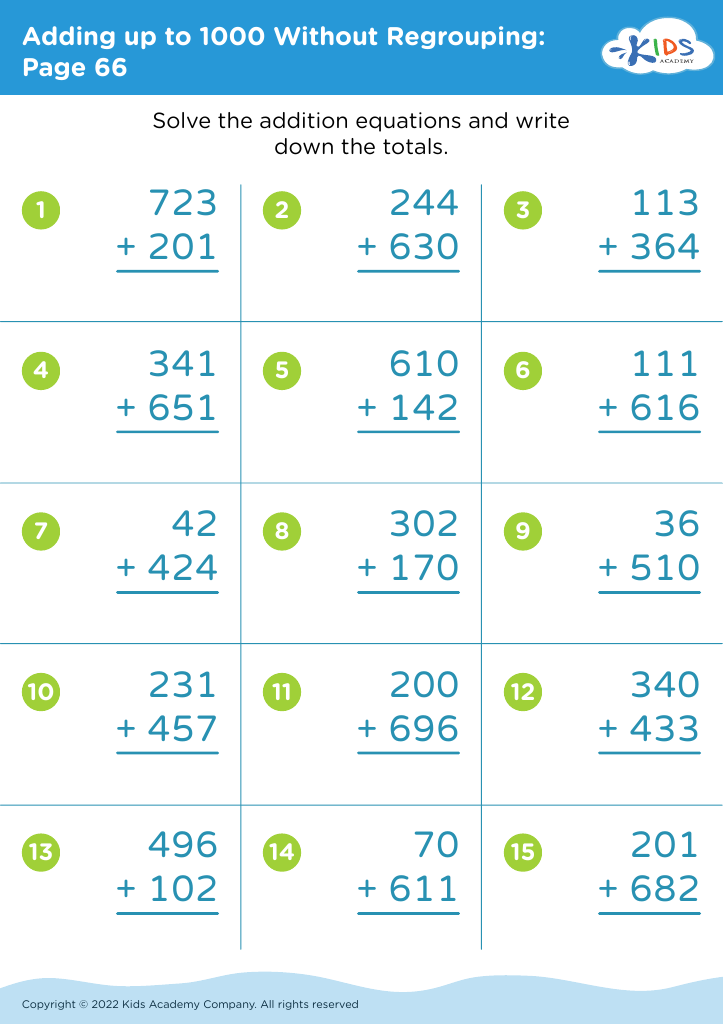
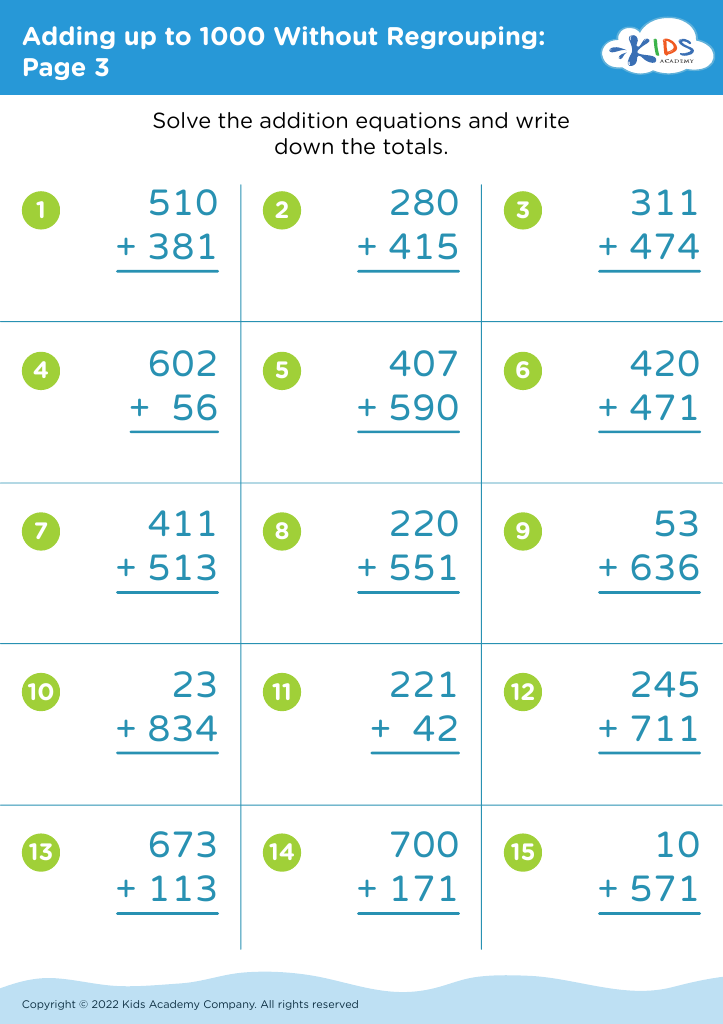
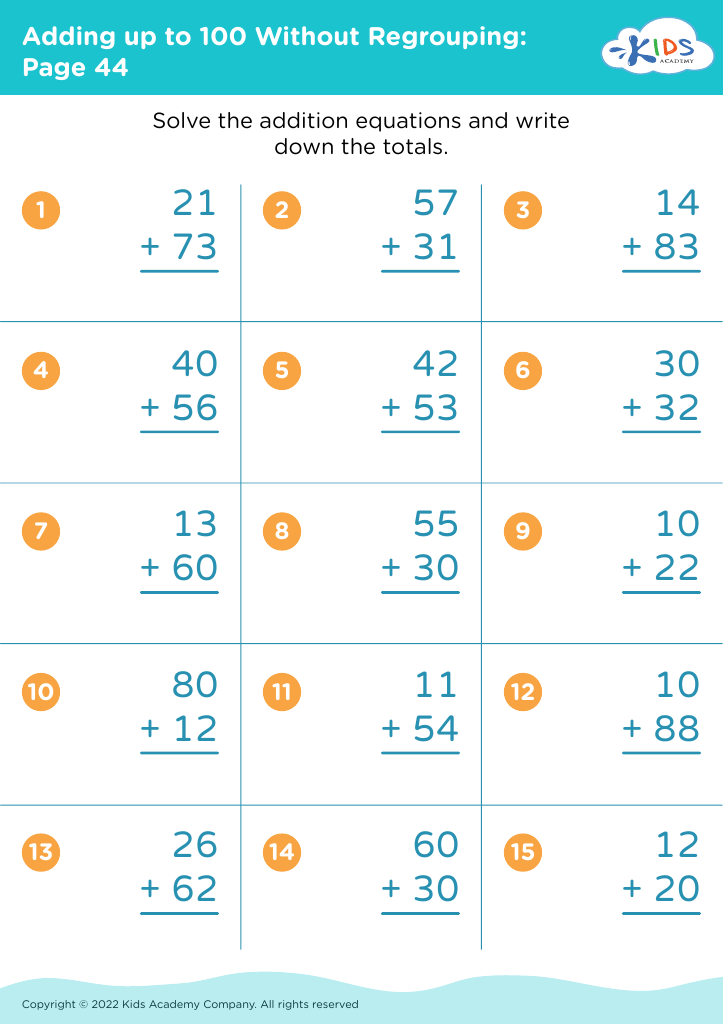
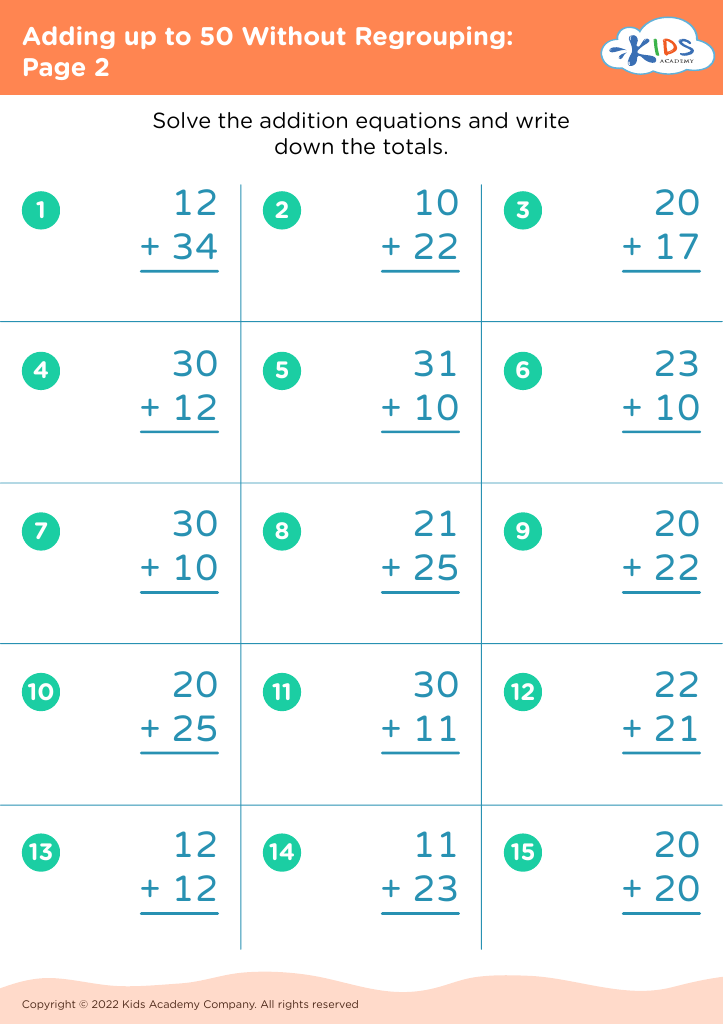








Understanding patterns in addition is crucial for children aged 3-9, as it lays the foundation for mathematical skills that will benefit them throughout their education and daily lives. By recognizing and creating patterns, children develop critical thinking and problem-solving abilities. These skills are essential as they progress to more complex mathematical concepts, such as multiplication and algebra.
Moreover, patterns foster number sense—an intuitive understanding of numbers and how they relate to each other. This increases their confidence when tackling math problems, reducing anxiety around numbers.
For teachers and parents, recognizing the importance of patterns allows them to provide engaging activities that build a solid foundation in addition. Simple activities, like sorting objects or recognizing number patterns, can reinforce these skills in a fun and interactive way, making learning enjoyable.
Finally, early exposure to pattern recognition also supports cognitive development, enhancing children's ability to make connections in other subjects, such as science and reading. Therefore, prioritizing pattern understanding in addition isn't just about math; it enriches a child’s entire learning experience, setting them up for future academic success and a lifelong love of learning.








