Understanding equality Addition Worksheets for Ages 3-9
3 filtered results
-
From - To
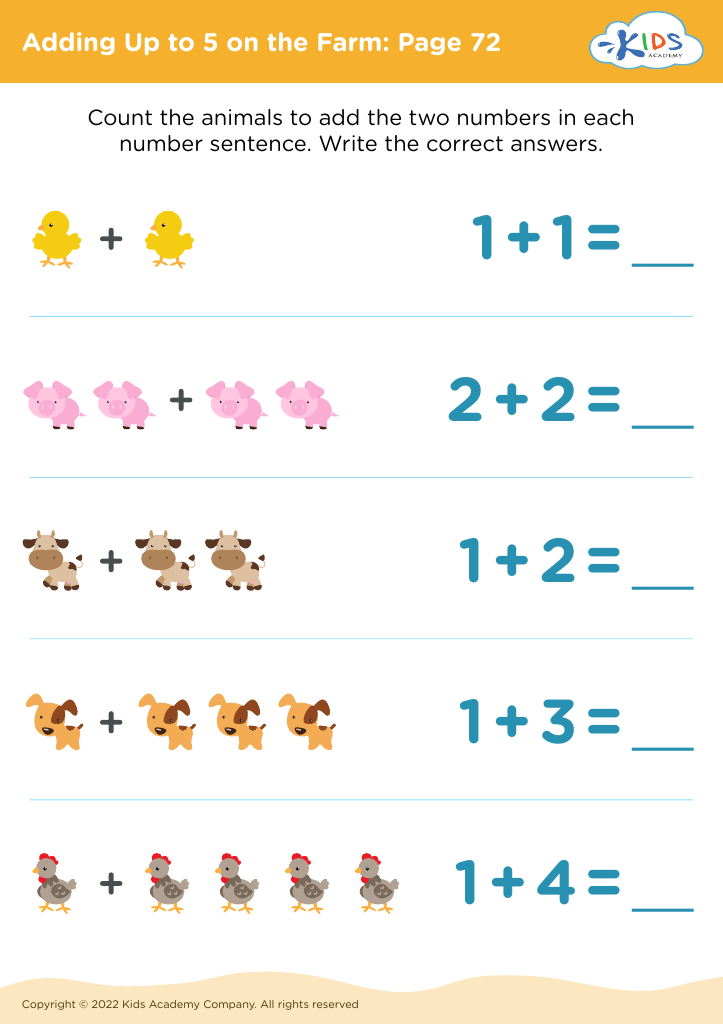
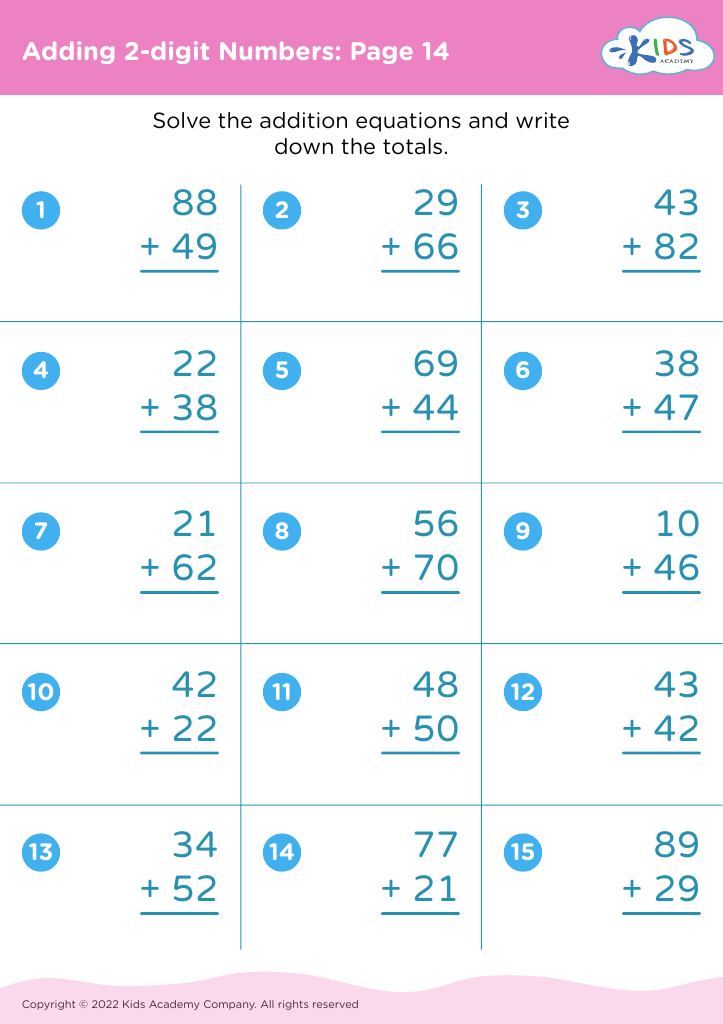
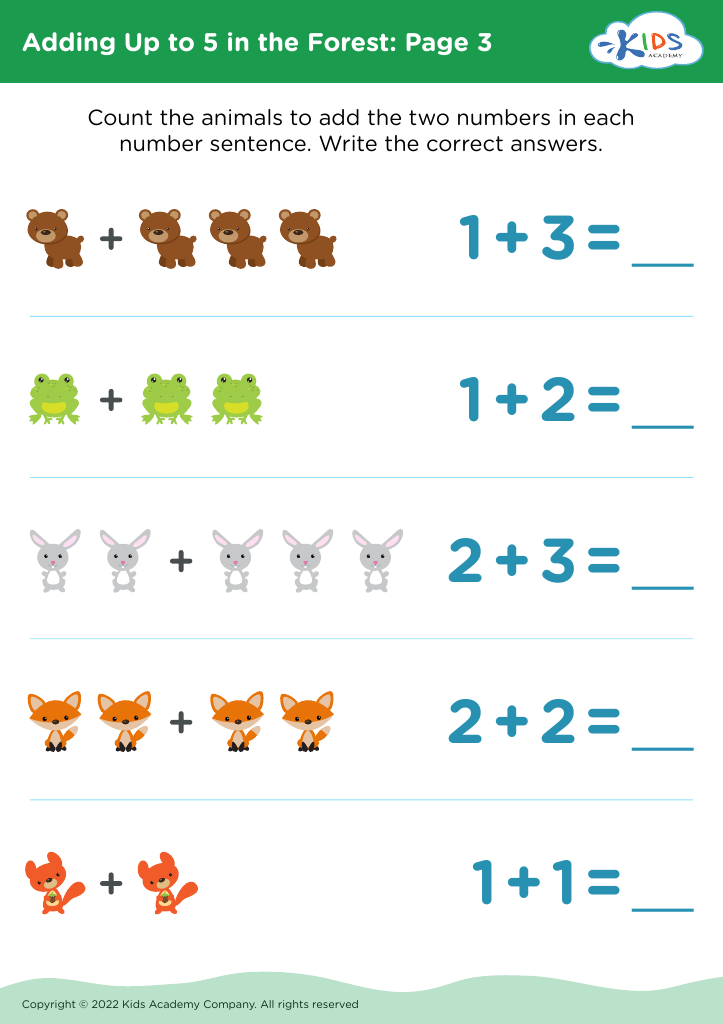
Welcome to our "Understanding Equality Addition Worksheets" designed for children ages 3-9! These engaging worksheets help young learners grasp the concept of equality in mathematics. Through fun activities, kids will explore addition and learn how to balance equations, promoting their critical thinking and problem-solving skills. Our worksheets cater to various skill levels, ensuring that every child can build a solid foundation in math. By using colorful visuals and interactive exercises, we make learning enjoyable and effective. Ideal for home or classroom use, these resources will empower your child to confidently navigate the world of addition and equality. Start their math journey today!







.jpg)
Understanding equality in addition is a foundational concept for children ages 3-9 and is crucial for their overall mathematical development. When children grasp the concept that both sides of an equation can have equal values, they develop critical thinking and problem-solving skills. This understanding lays the groundwork for more advanced mathematical concepts, such as subtraction, multiplication, and division.
Parents and teachers should care about promoting this understanding because it encourages students not just to memorize facts but to engage with numbers in a meaningful way. For instance, recognizing that 2 + 3 is equal to 5 helps children see relationships among numbers and their representations.
Additionally, this concept fosters confidence in problem-solving. Children who understand equality can approach mathematical tasks with a positive mindset, seeing them as puzzles to be solved rather than obstacles. Moreover, it promotes collaboration and communication when working with peers, as they discuss and reason out their thought processes.
Fostering an understanding of equality in addition prepares students not only for future academic success but also for real-world applications, encouraging a lifelong appreciation of mathematics. Encouraging play-based learning and opportunities for exploration will motivate young learners, making math an enjoyable and engaging part of their education.








