Visual interpretation Addition Worksheets for Ages 3-9
5 filtered results
-
From - To
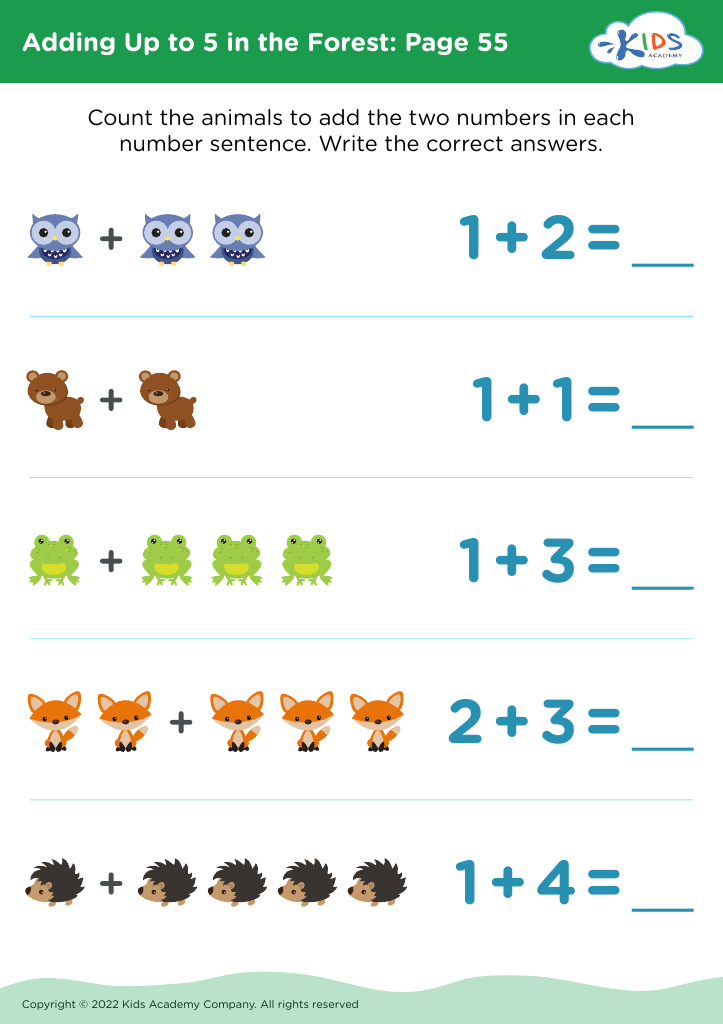
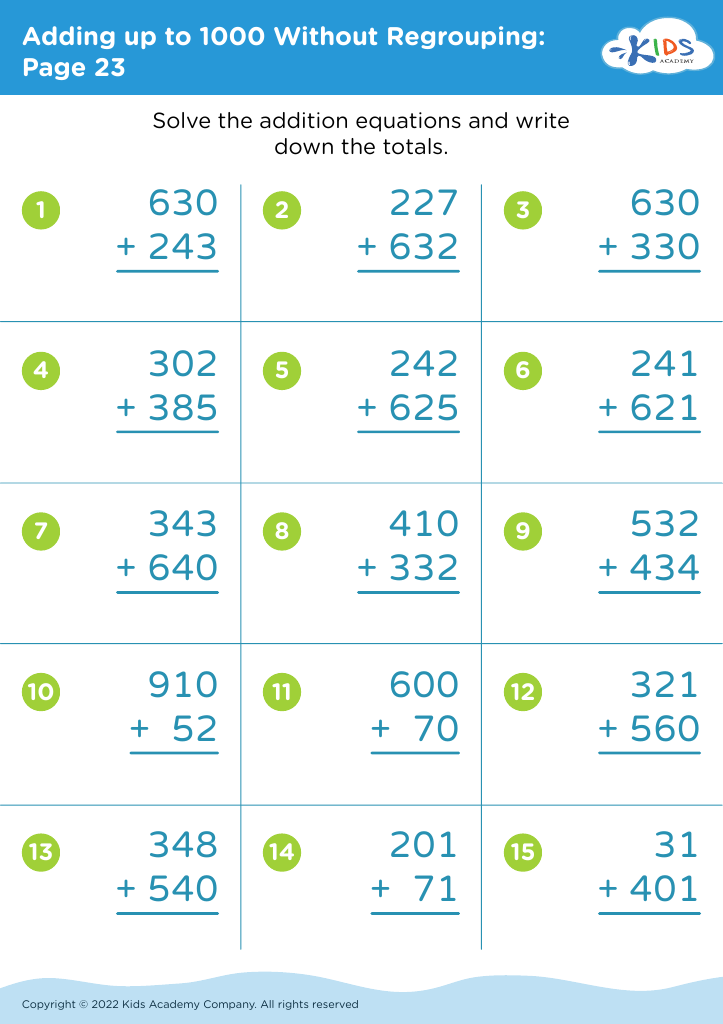
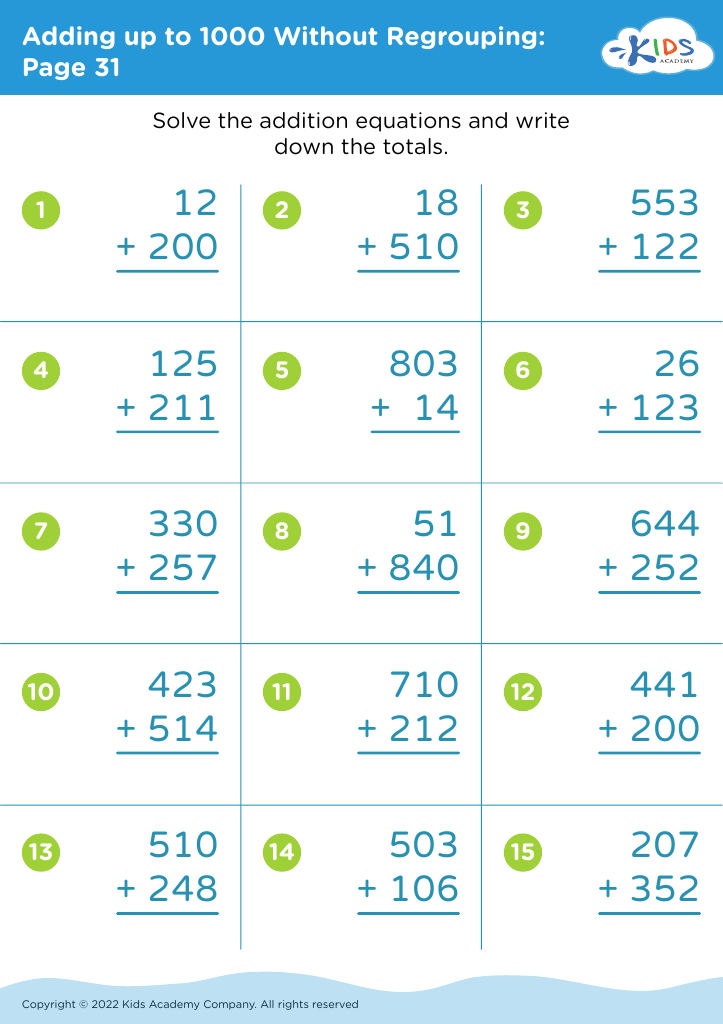
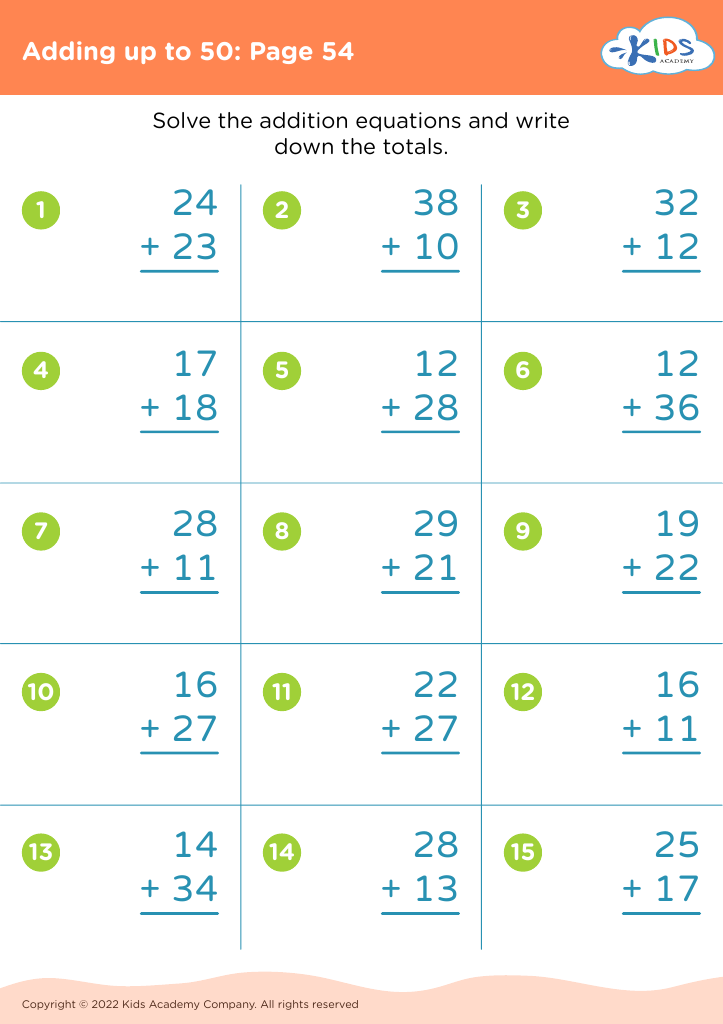
Discover our engaging Visual Interpretation Addition Worksheets, designed specifically for children ages 3-9. These worksheets utilize vibrant images and interactive elements to facilitate easy and enjoyable learning of addition concepts. Ideal for young learners, they promote visual thinking, helping kids understand numbers and simple math through intuitive imagery. Our resources foster essential skills such as number recognition, counting, and basic addition, presenting math in a fun and accessible manner. Perfect for homeschooling or classroom settings, these worksheets will keep your little ones eager to learn and improve their math abilities while gaining confidence along the way. Start your child's math journey today!
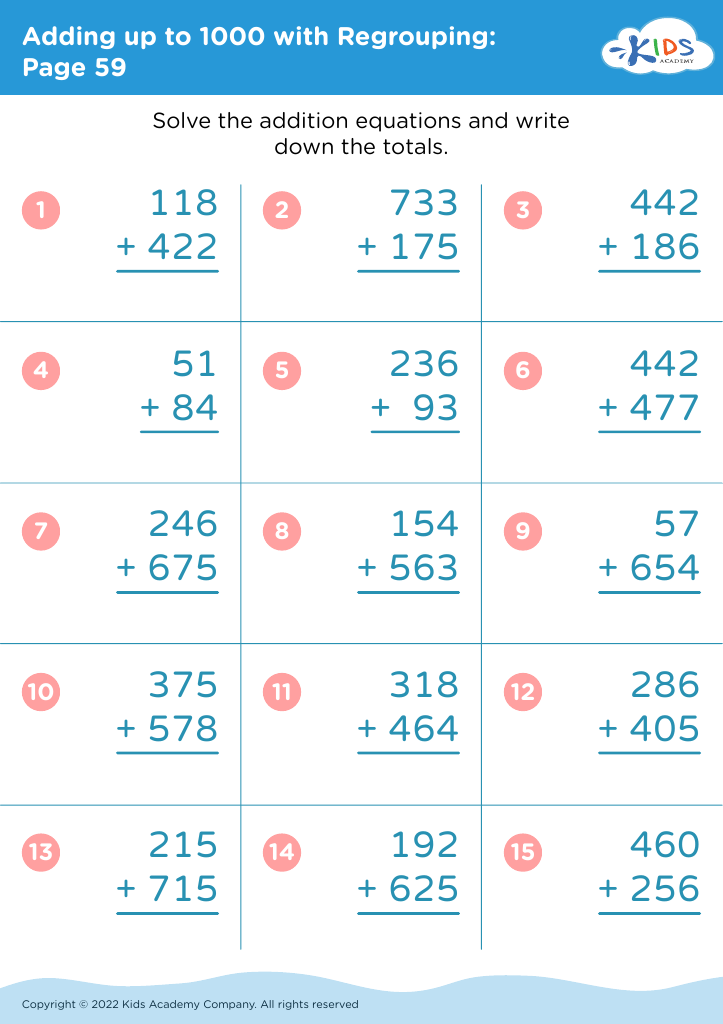







.jpg)
Visual interpretation of addition is crucial for children aged 3-9 as it lays a strong foundation for their mathematical understanding and cognitive development. At this age, children are naturally curious and learn best through visual and hands-on experiences. By using images, diagrams, and physical objects, visual interpretation helps make abstract concepts concrete. This approach supports various learning styles and facilitates comprehension, allowing children to grasp the idea of quantity, grouping, and number relationships.
Engaging with visuals also encourages problem-solving skills, as children learn to analyze and interpret information from different representations. Moreover, this method reduces math anxiety by presenting mathematics in an enjoyable and accessible way, fostering a positive attitude toward learning. For parents and teachers, promoting visual interpretation of addition builds collaborative storytelling around math concepts and enhances communication about numerical relationships in everyday situations.
Ultimately, prioritizing visual interpretation not only equips children with essential math skills but also prepares them for future academic challenges. Fostering a visually rich learning environment can ignite a lifelong love of learning and a solid mathematical foundation, making it an essential aspect of early education.








