Visual-motor skills Addition Worksheets for Ages 3-9
4 filtered results
-
From - To
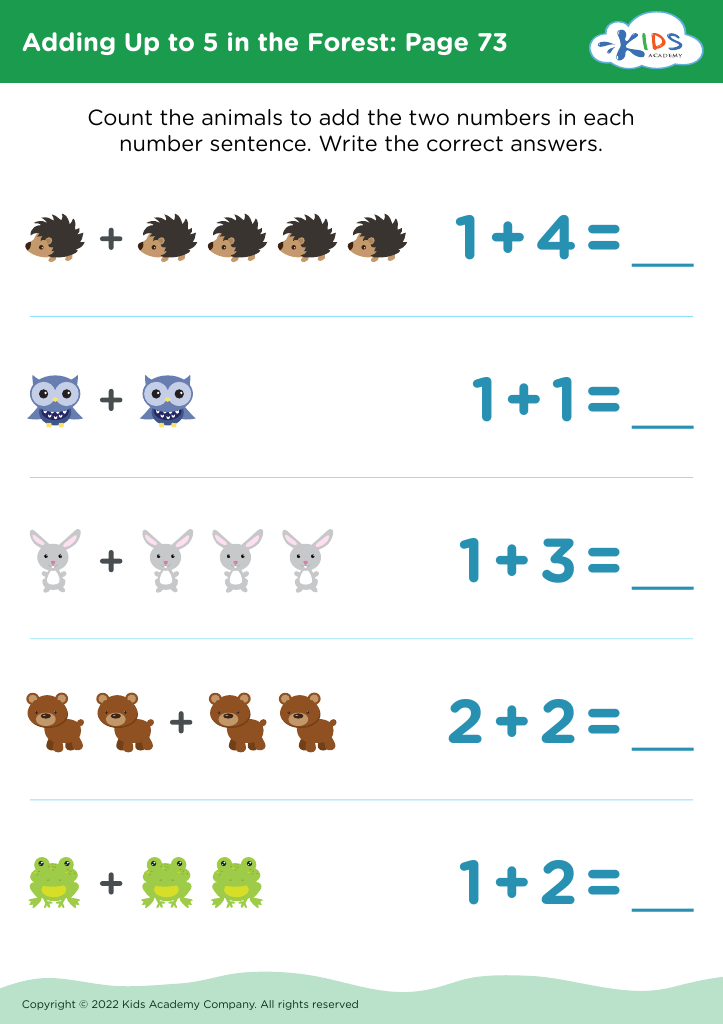
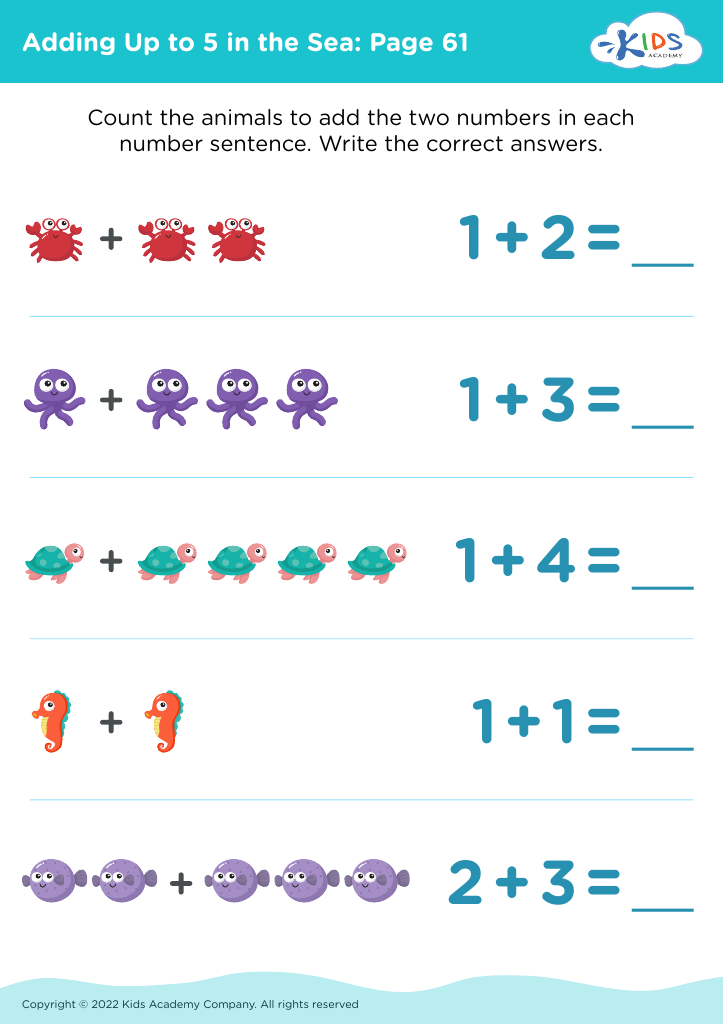
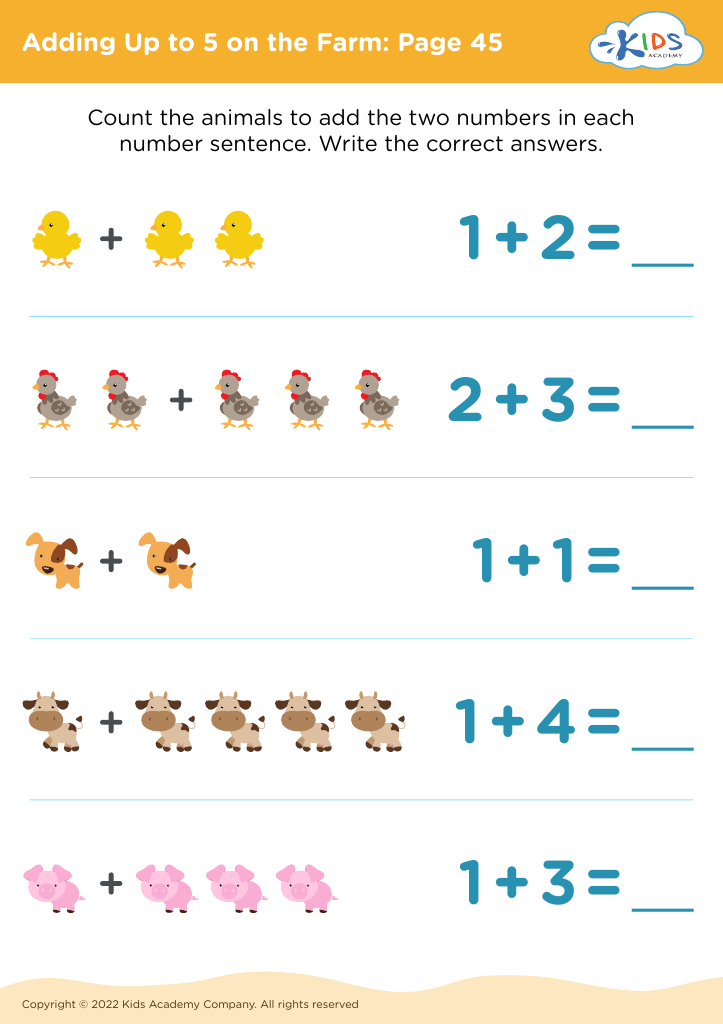
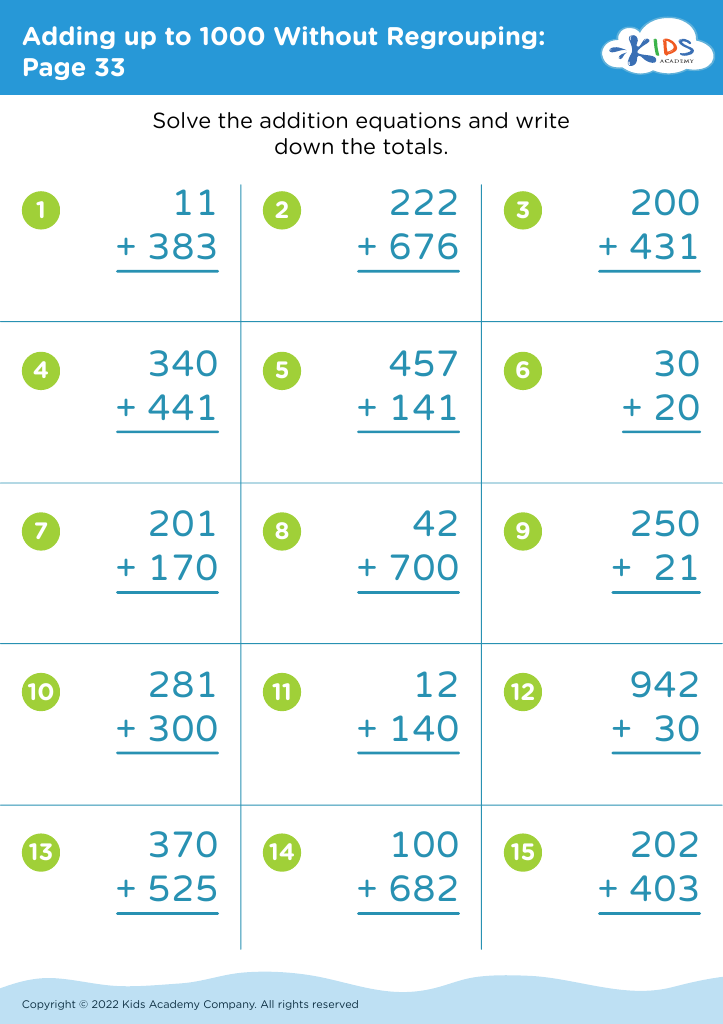
Enhance your child's learning experience with our engaging Visual-Motor Skills Addition Worksheets, specifically designed for ages 3-9. These worksheets seamlessly integrate fun visuals with essential math skills, helping young learners develop their visual perception and fine motor skills while mastering addition concepts. With a variety of colorful illustrations and interactive activities, children will practice tracing, counting, and solving addition problems to boost their confidence in mathematics. Perfect for home or classroom use, our worksheets provide a hands-on approach to learning that keeps little ones motivated and excited. Explore our resources today to support your child's educational journey!






.jpg)

Visual-motor skills are essential for young children as they are foundational for various academic and daily activities. For children ages 3 to 9, these skills integrate visual information with motor actions, enabling them to perform tasks like writing, drawing, and even playing sports effectively. Parents and teachers should care about enhancing these skills because they directly impact a child's educational progression and self-esteem.
During the early formative years, children develop hand-eye coordination and fine motor skills that are crucial for preschool and elementary activities. Children with strong visual-motor integration can follow instructions better and participate more actively in classroom learning. Furthermore, these skills influence their ability to complete tasks such as cutting with scissors, managing zippers, or buttoning shirts, fostering independence and confidence.
Investing in fun activities that bolster visual-motor skills—like puzzles, arts and crafts, and coordinated games—can significantly enhance a child’s development. Parents and educators can create a supportive environment where children explore and refine these skills, setting a positive trajectory for future academic achievement and social interaction. As they build competence in these areas, children develop a love for learning and build critical problem-solving abilities.








