Historical Knowledge Arrays Worksheets for Ages 3-9
4 filtered results
-
From - To
Explore our engaging "Historical Knowledge Arrays Worksheets" designed for children aged 3-9! These innovative resources blend history and math, introducing young learners to important historical figures, events, and concepts through the use of arrays. Each worksheet features fun, age-appropriate activities that promote critical thinking, problem-solving, and a love for history, all while reinforcing math skills. Perfect for teachers and parents alike, our worksheets encourage interactive learning and reinforce the significance of historical knowledge in shaping our world. Download and enjoy a unique educational experience that makes learning history and math enjoyable for your little ones!
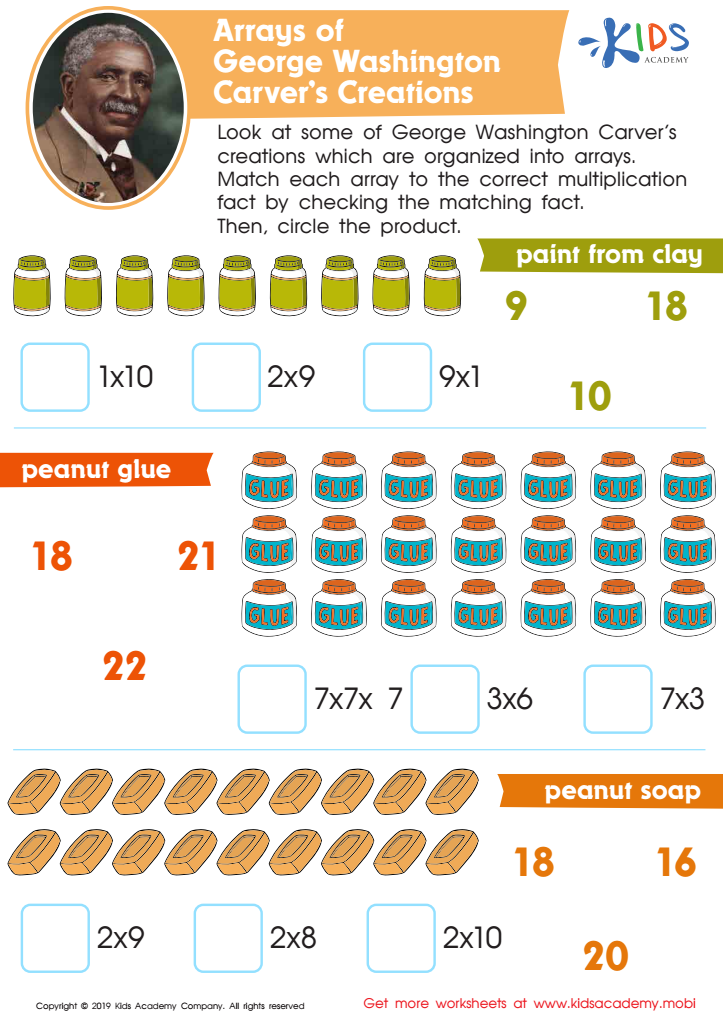
Arrays of George Washington Carver’s Creations Worksheet
 Assign to My Students
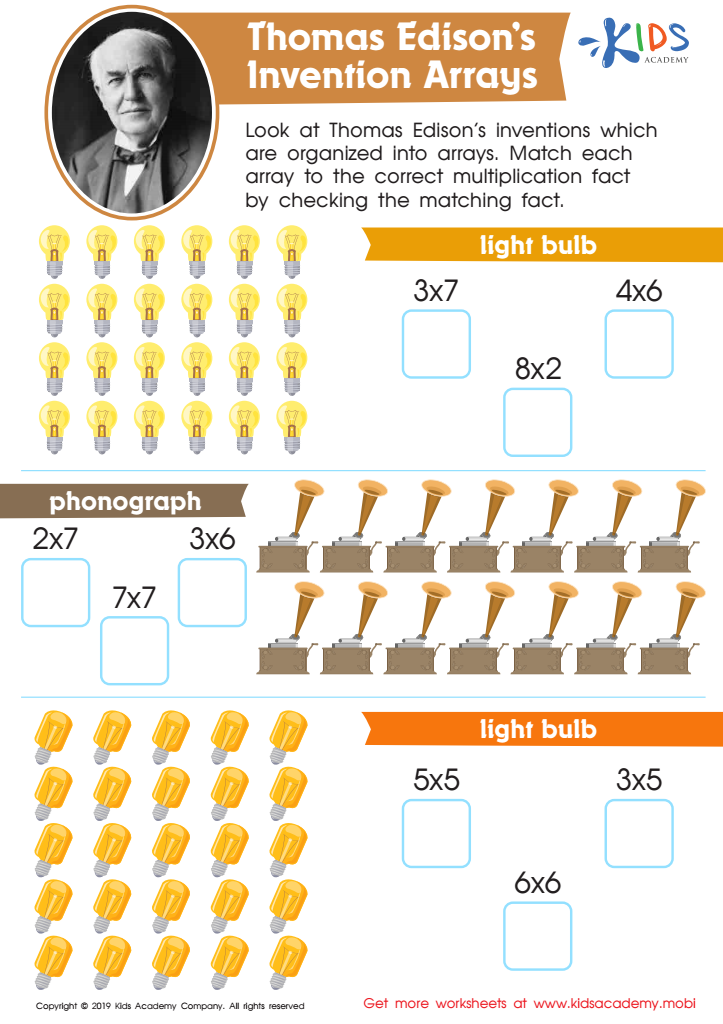
Thomas Edison’s Invention Arrays Worksheet
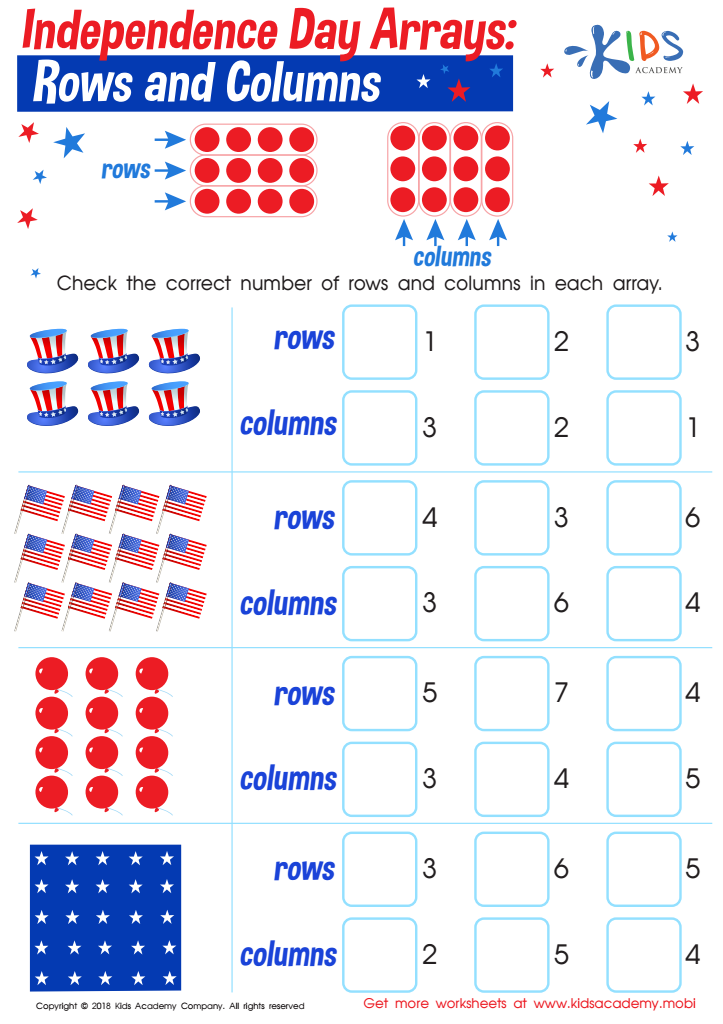
Independence Day Arrays: Rows and Columns Worksheet
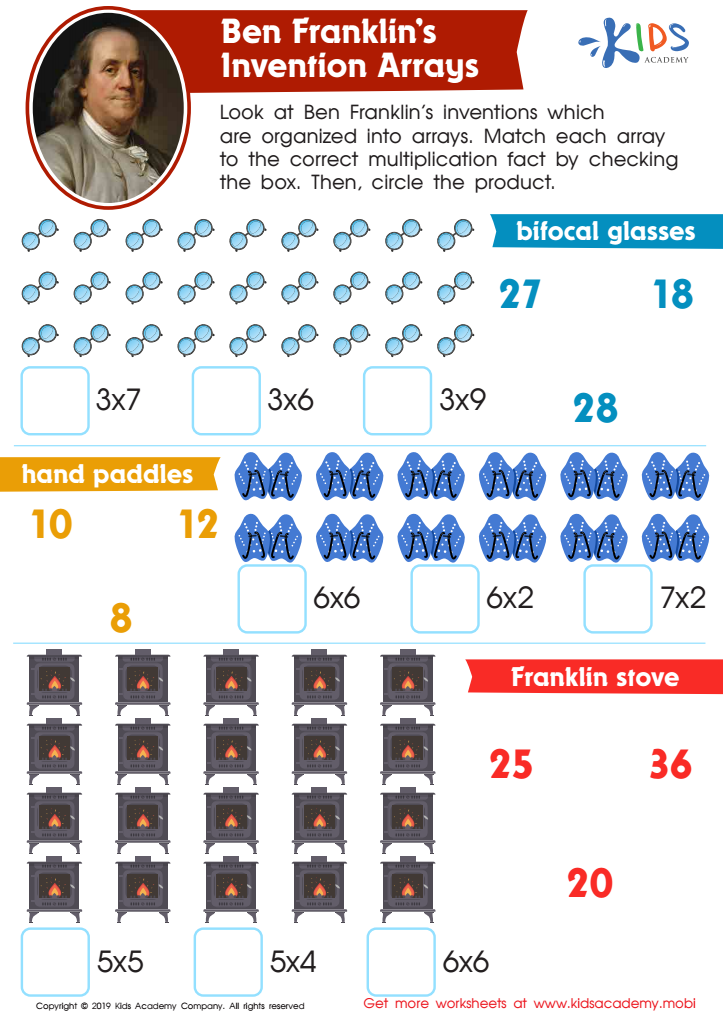
Ben Franklin’s Invention Arrays Worksheet








Parents and teachers should care about Historical Knowledge Arrays (HKAs) for young children ages 3-9 because these frameworks play a crucial role in foundational learning. HKAs help children build connections between various historical events, figures, and concepts in a structured manner, promoting critical thinking and comprehension skills.
At this developmental stage, children are naturally curious and eager to learn about the world around them. HKAs facilitate this curiosity by providing a tapestry of historical knowledge that can spark interest and engagement in young learners. Instead of presenting fragmented information, HKAs create a cohesive narrative that helps children understand the progression of history, relevance, and cause-effect relationships.
Additionally, fostering awareness of historical contexts and diverse cultures at an early age promotes empathy, tolerance, and a sense of identity. It encourages children to reflect on their role in the present and future. When educators and parents integrate historical knowledge systematically using HKAs, they help set the stage for lifelong learning and civic engagement.
Ultimately, understanding HKAs empowers educators and parents to nurture informed, compassionate, and well-rounded individuals who appreciate their heritage and grow into conscious global citizens. This holistic approach paves the way for a strong foundation in social studies and critical inquiry.








