Multiplication practice Arrays Worksheets for Ages 3-9
4 filtered results
-
From - To
Explore our engaging Multiplication Practice Arrays Worksheets designed specifically for children aged 3-9! These worksheets introduce young learners to the concept of multiplication through visually appealing arrays, making math fun and accessible. Our carefully crafted exercises help build essential foundational skills while promoting critical thinking and problem-solving. With a variety of formats and difficulty levels, these resources cater to different learning styles to ensure each child's success. Ideal for classroom use or at-home practice, our worksheets encourage independent learning and confidence in math. Start your child’s exciting journey into multiplication with our interactive and effective worksheets today!
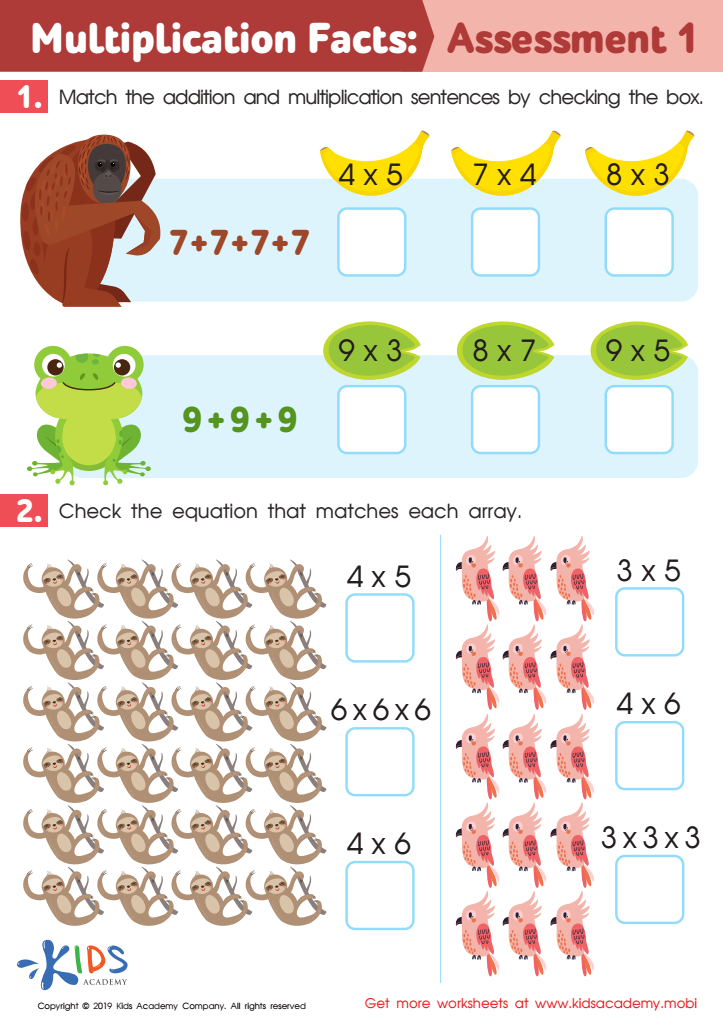
Multiplication Facts: Assessment 1 Worksheet
 Assign to My Students
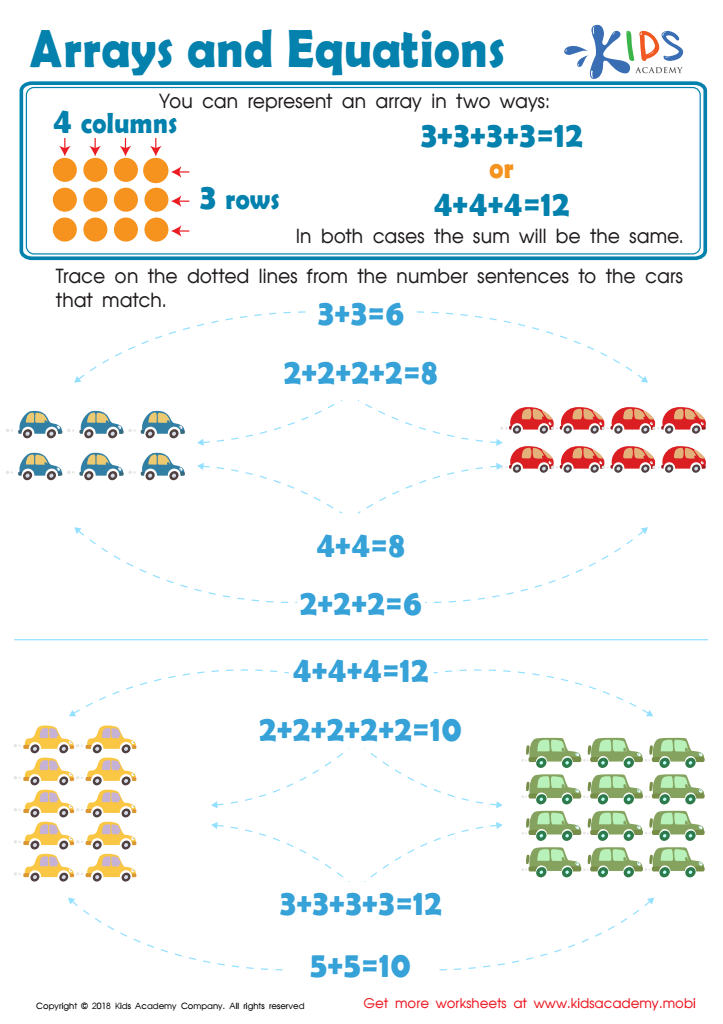
Arrays and Equations Worksheet
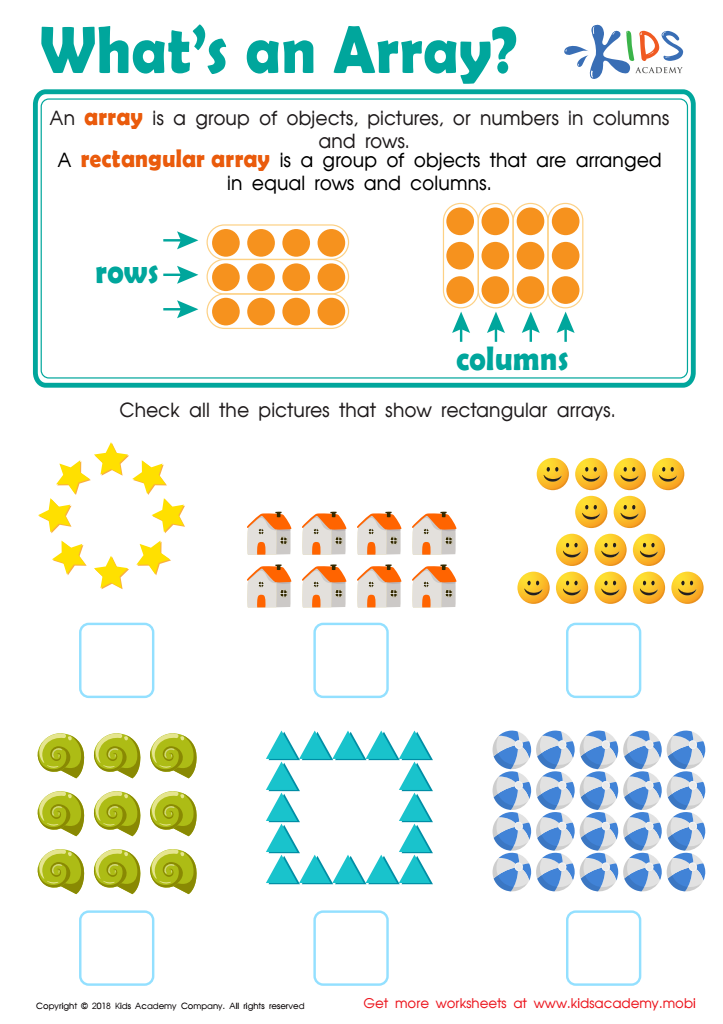
What's an Array? Worksheet
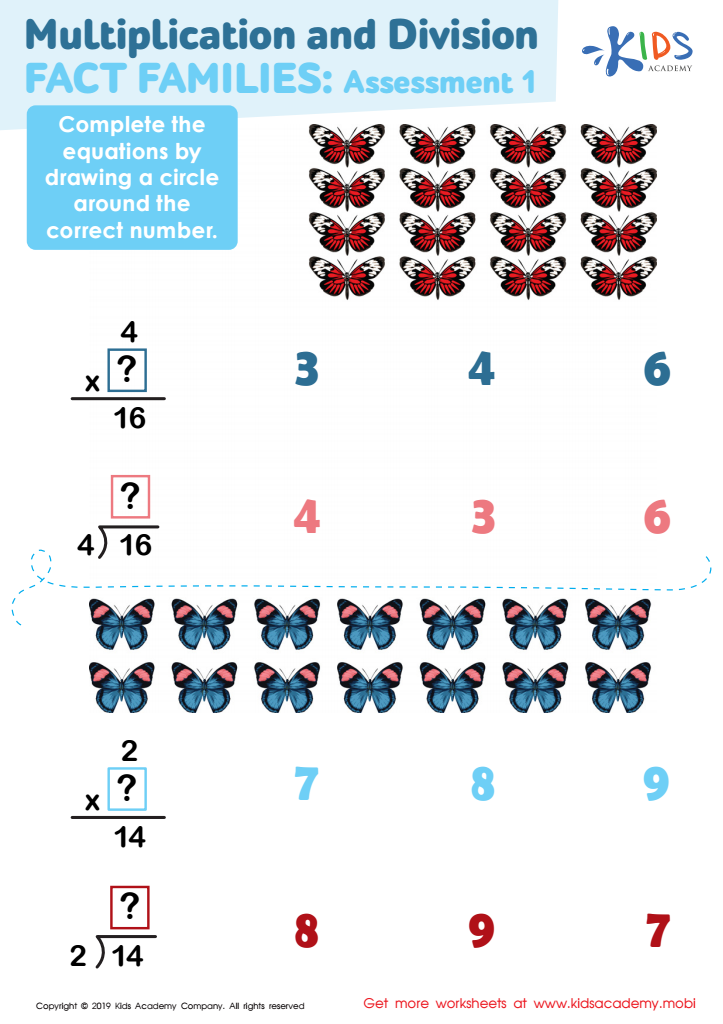
Multiplication and Division Fact Families Assessment 1 Worksheet







Parents and teachers should care about multiplication practice with arrays for children aged 3-9 because it lays a solid foundation for mathematical understanding. Arrays, which are organized arrangements of objects in rows and columns, visually represent multiplication concepts, making them easier to grasp. This visual approach is particularly beneficial for young learners, as it helps them see the relationship between addition and multiplication.
Engaging children in multiplication practice using arrays promotes not only memorization of multiplication facts but also deeper comprehension of numbers and their relationships. By using arrays, children develop critical problem-solving skills as they learn to break down larger problems into manageable parts.
Moreover, incorporating arrays into learning activities can foster a positive attitude toward math by making it more interactive and enjoyable. Children can create their own arrays using everyday objects, enhancing their creativity while reinforcing concepts.
Early mastery of multiplication through arrays can lead to greater confidence and success in math as students progress in their education. Instilling good mathematical habits early on equips children with the tools they need to tackle more complex concepts later, ultimately setting them up for lifelong academic success. Therefore, multiplication practice through arrays is vital in early education.








