
Multiplication practice Basic Times Tables up to 12 Worksheets for Ages 3-9
12 filtered results
Difficulty Level
Grade
Age
-
From - To
Subject
Activity
Standards
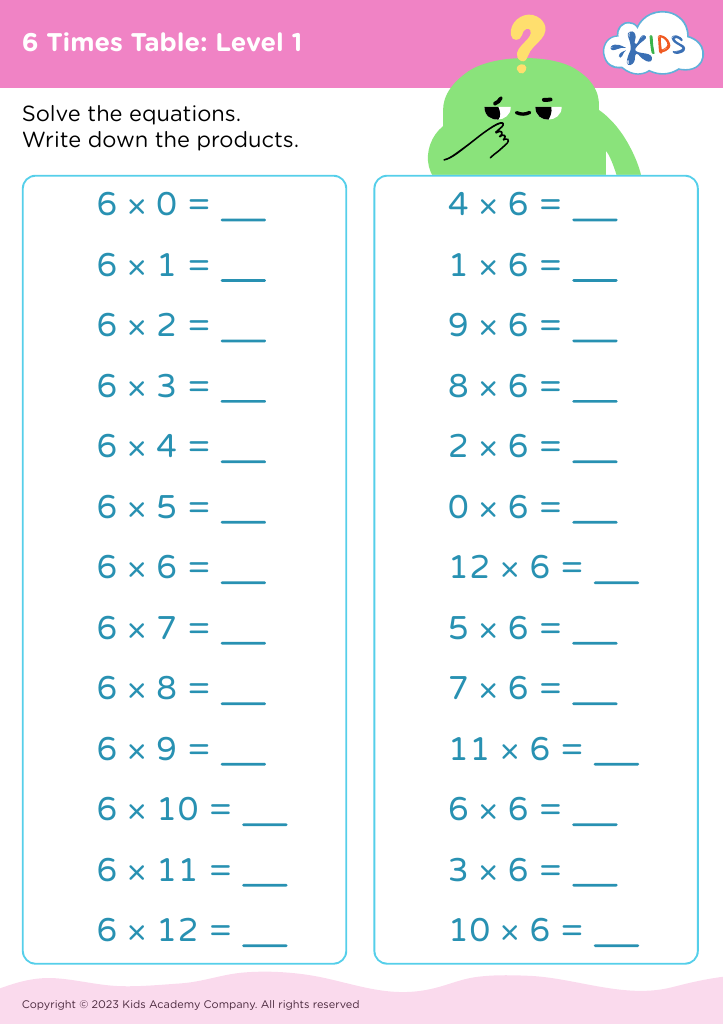
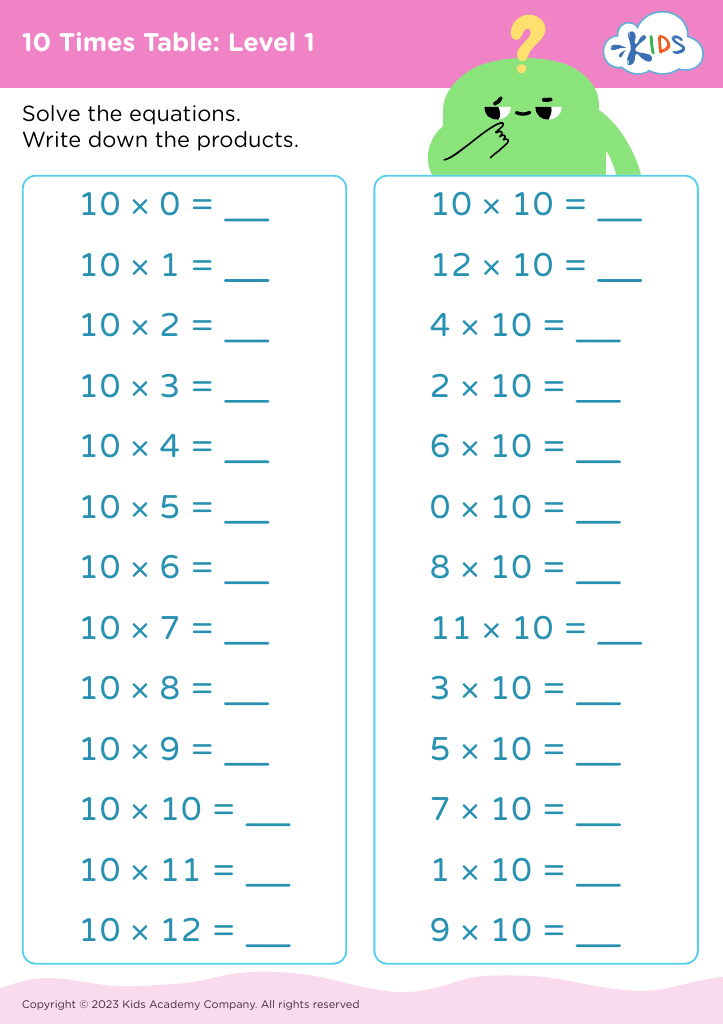
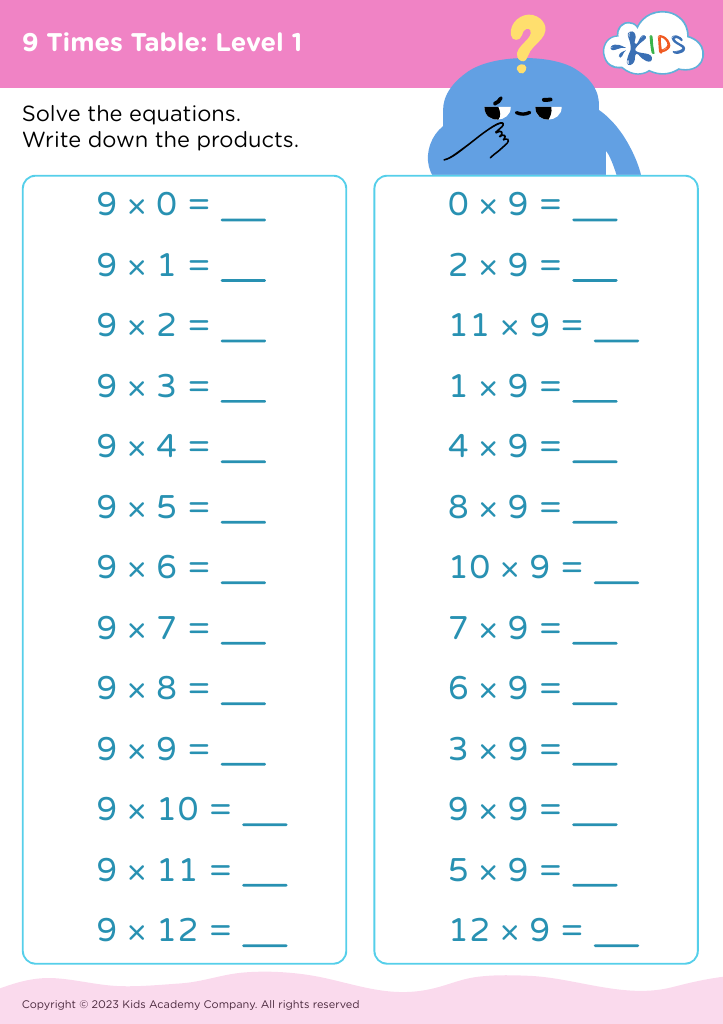
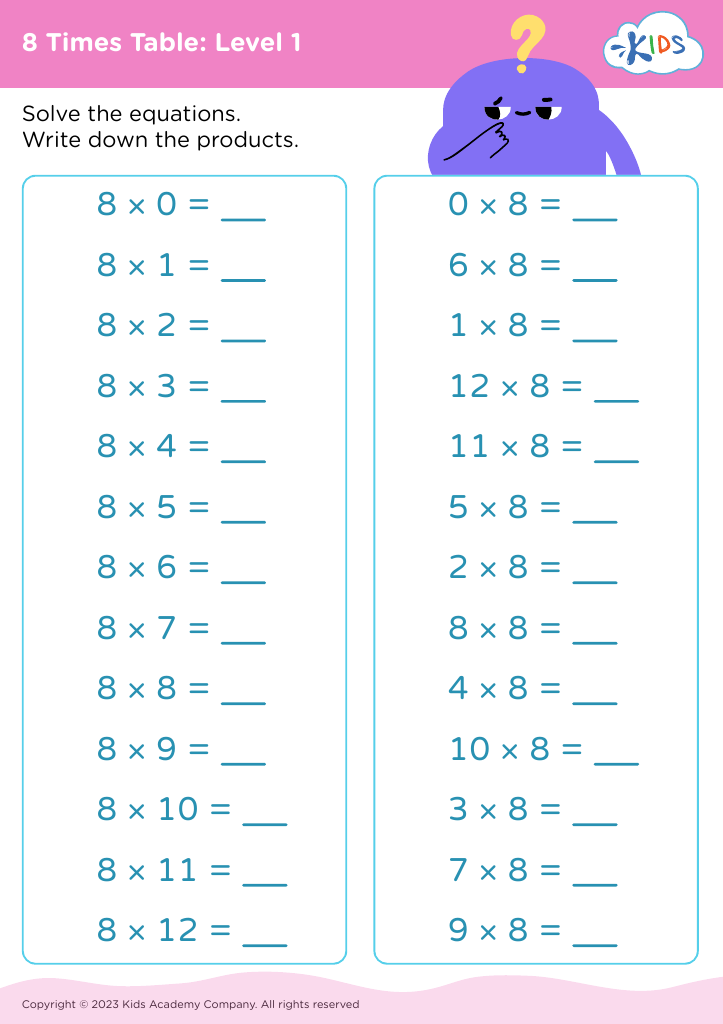
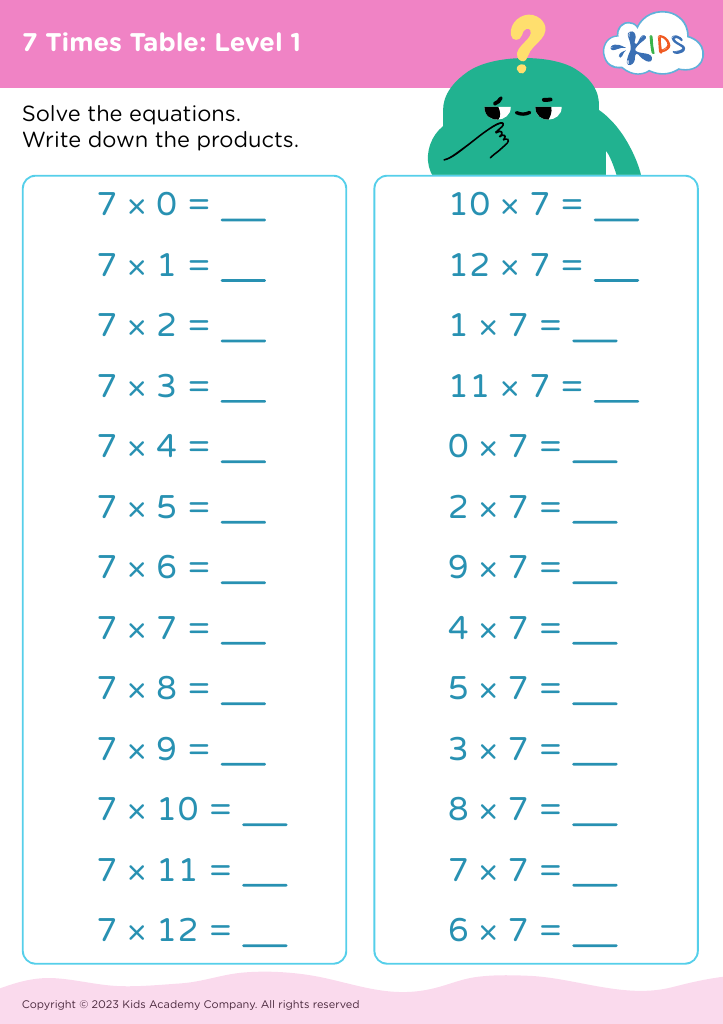
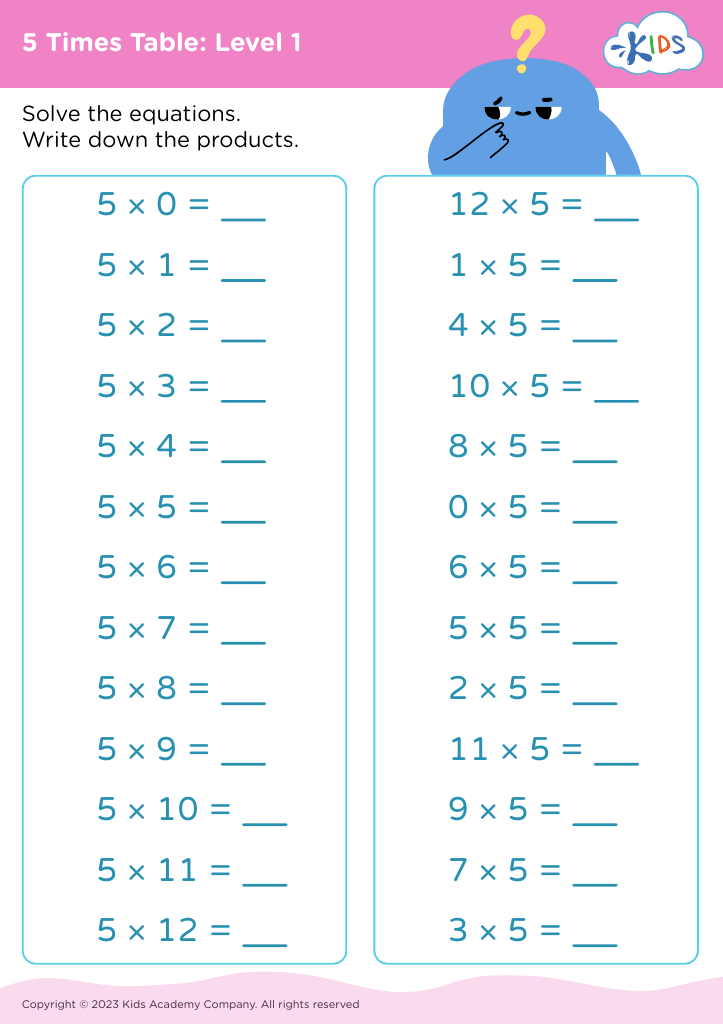
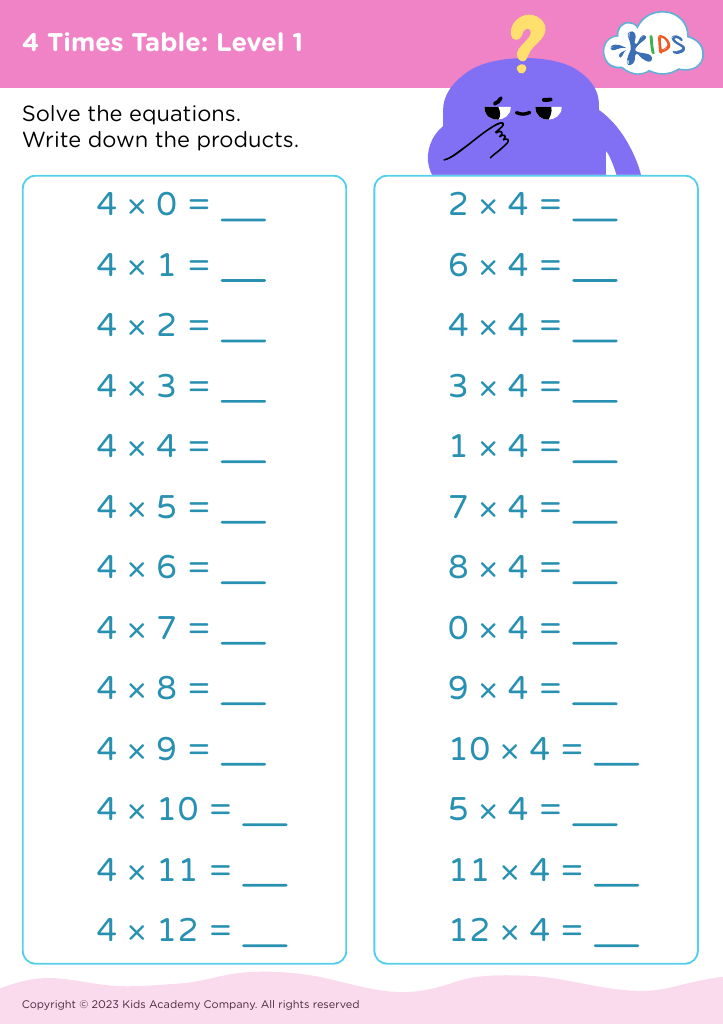
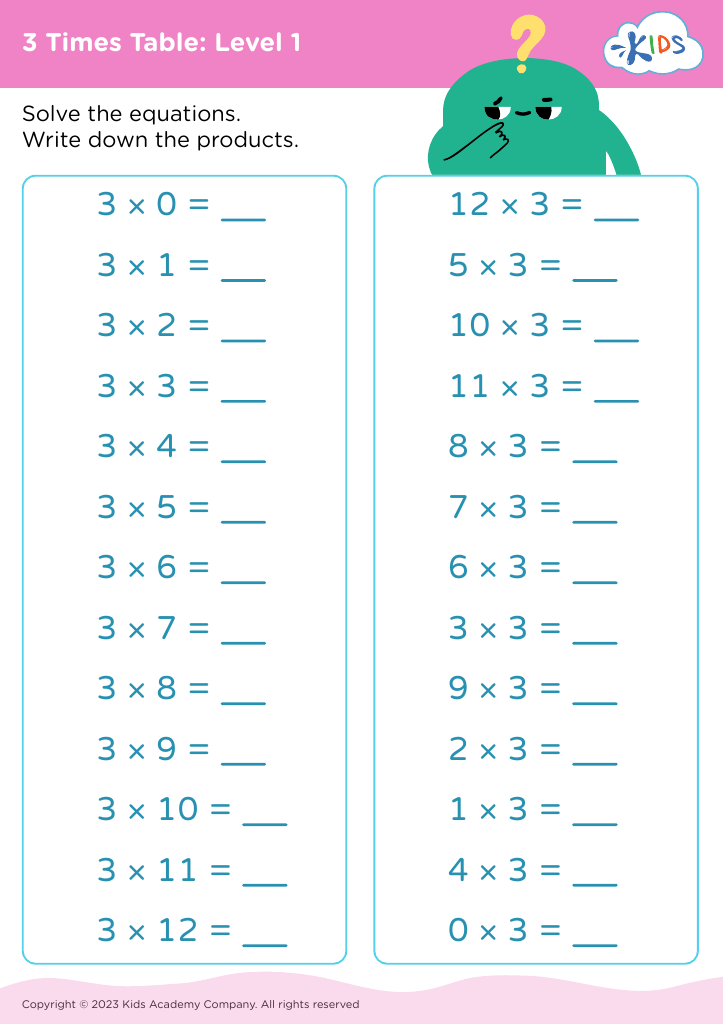
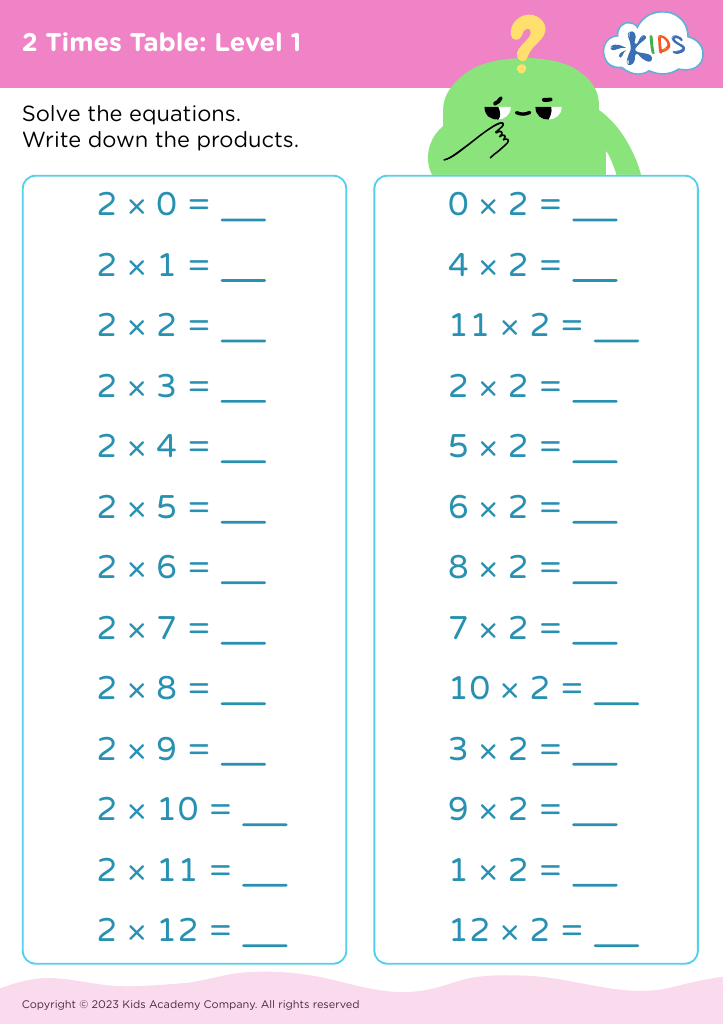
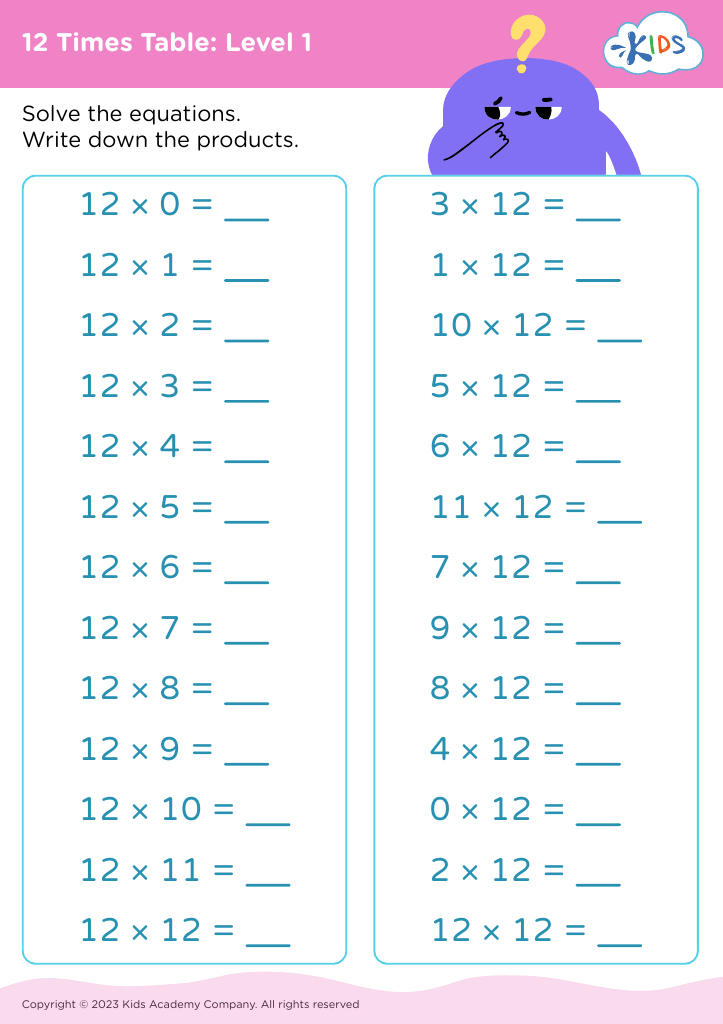
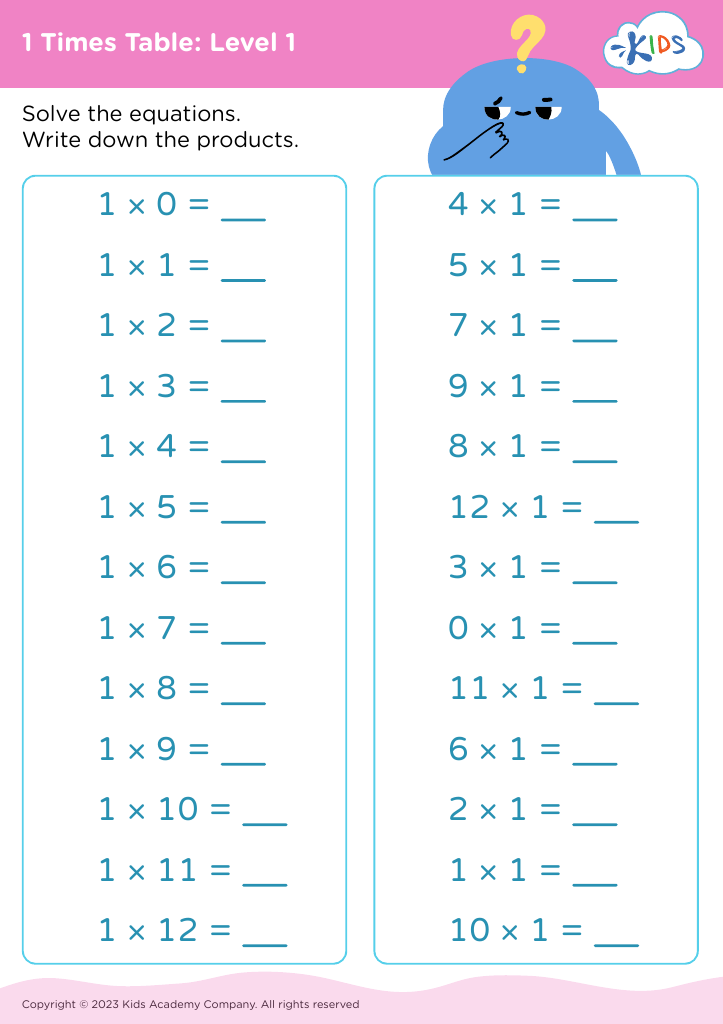
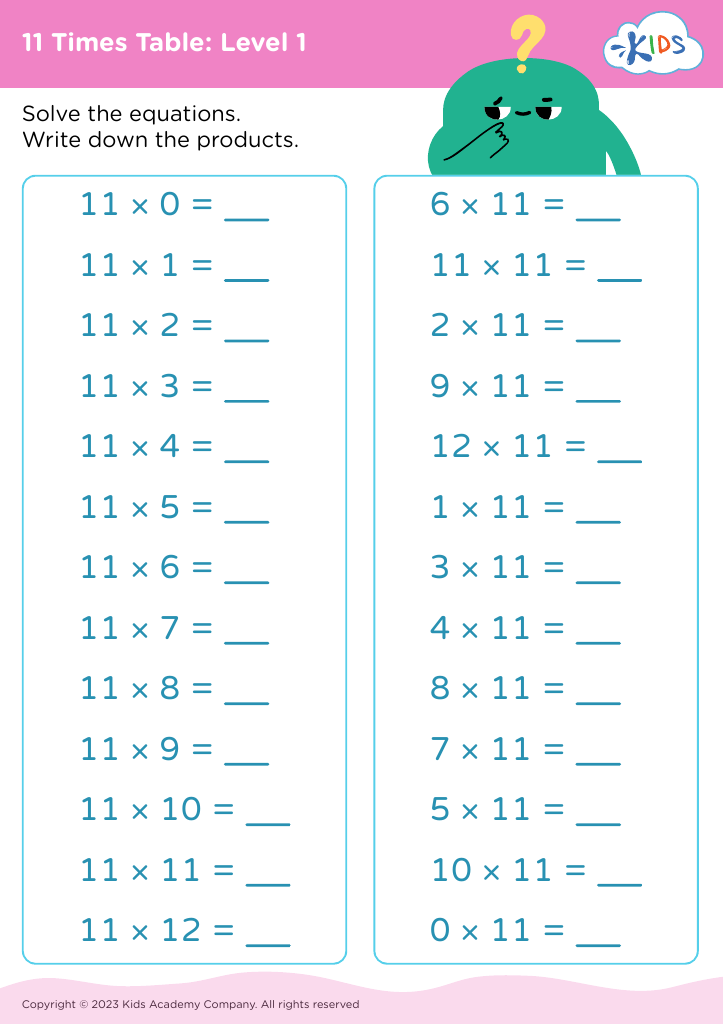
Introducing our Multiplication Practice worksheets, designed specifically for children ages 3-9! These engaging and interactive materials focus on basic times tables up to 12, helping young learners build a strong foundation in multiplication. Each worksheet reinforces essential math skills through colorful, age-appropriate exercises that make learning fun. With a variety of practice formats, children will enhance their understanding, boost confidence, and improve problem-solving abilities. Ideal for homework, classroom activities, or extra practice at home, these worksheets support essential math learning and prepare kids for more advanced concepts in the future. Download our Multiplication Practice worksheets today and watch your child thrive!
Favorites
With answer key
Interactive
Join Kids Academy for Free
Who is primarily going to use this learning content?


Multiplication practice, particularly the basic times tables up to 12, is a critical building block for children's mathematical understanding, especially for ages 3-9. This foundational knowledge enhances their confidence in math and encourages a positive attitude toward problem-solving.
Mastering times tables helps children develop essential skills such as pattern recognition, logical reasoning, and critical thinking. These skills not only contribute to their overall mathematical literacy but also lay the groundwork for more complex concepts in the future, including division, fractions, and algebra. Furthermore, at a young age, children have remarkable brain plasticity, making it an ideal time for learning and retention.
Regular practice helps instill discipline and routine, promoting a healthy work ethic that benefits their academic journey. When children engage with multiplication tables, they also improve their memorization and recall skills, which are applicable across various learning areas. From a practical perspective, mastering multiplication aids in everyday situations like shopping or cooking.
Ultimately, a strong grasp of multiplication times tables affects children's performance in school and builds their confidence, thus enabling success in more advanced math problems later on. Teachers and parents play a crucial role in creating supportive learning environments to foster this essential skill.








