Understanding patterns Basic Times Tables up to 12 Worksheets for Ages 3-9
3 filtered results
-
From - To
Empower your child’s math journey with our "Understanding Patterns Basic Times Tables up to 12 Worksheets" designed for ages 3-9. At Kids Academy, we emphasize foundational skills crucial for early math proficiency. Our worksheets are crafted to make learning multiplication tables engaging and accessible, helping young learners recognize and understand patterns effortlessly. Through consistent practice, children gain confidence and accuracy with times tables up to 12, setting a strong groundwork for future math success. These resources are perfect for both classroom instruction and home practice, ensuring that learning times tables is both fun and effective. Equip your child with the essential math skills today!
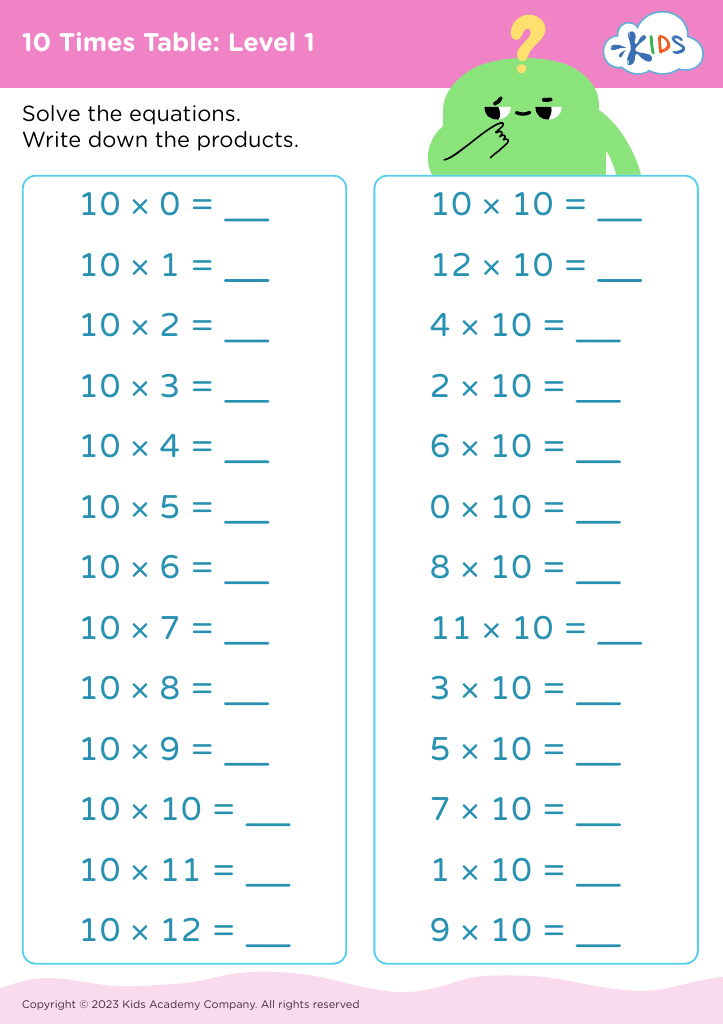
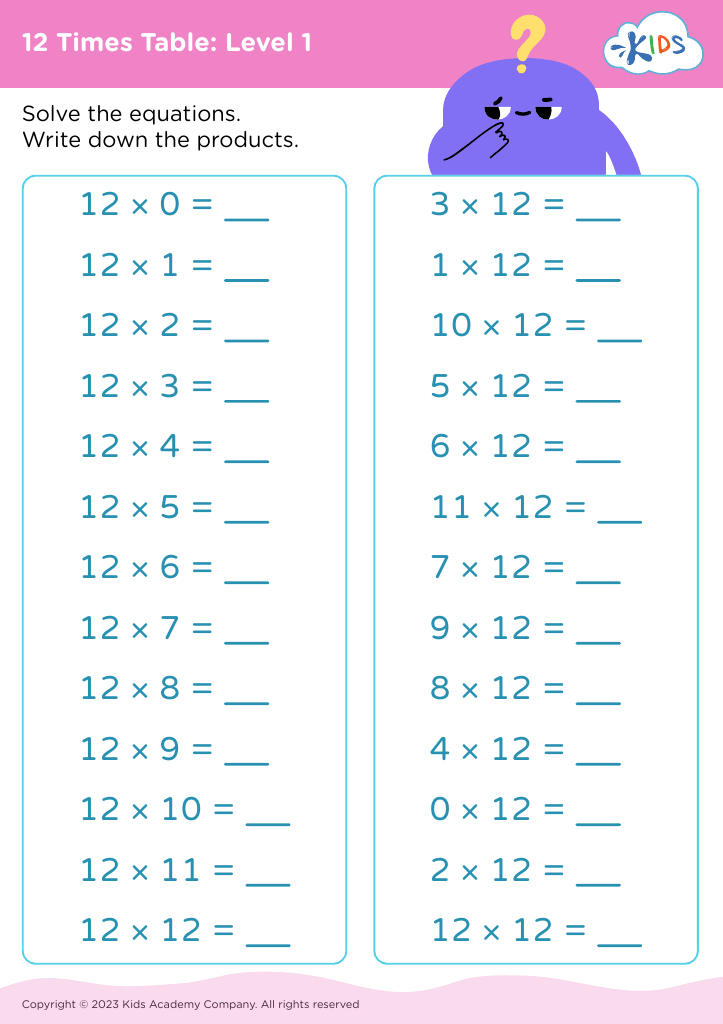
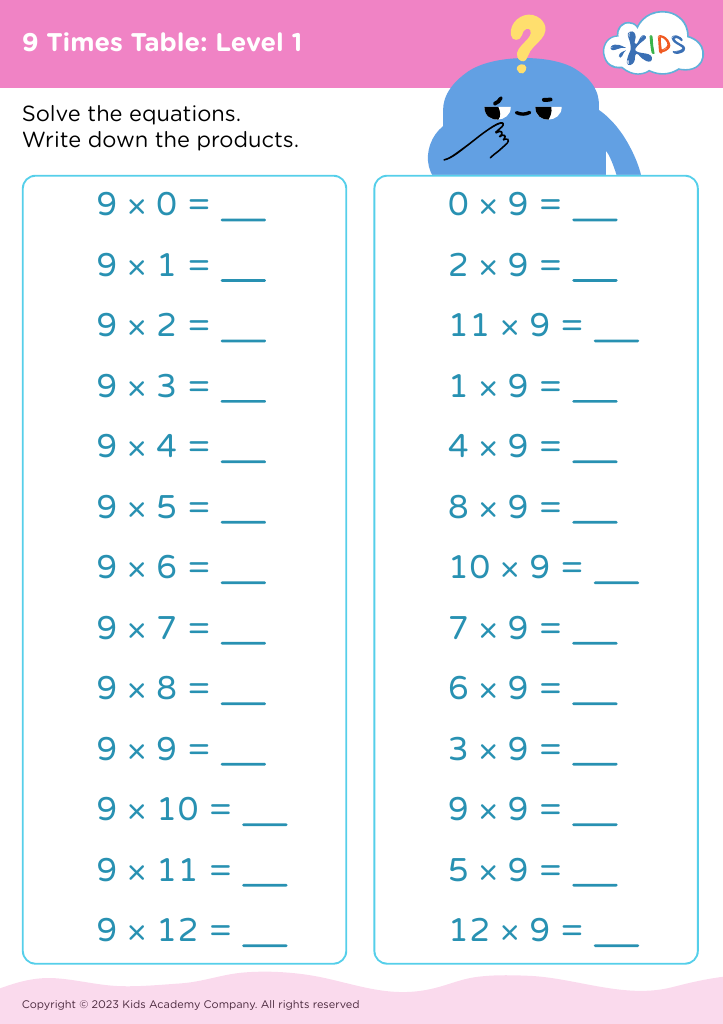


Understanding patterns and basic times tables up to 12 is crucial for young children ages 3-9 as it establishes a strong foundation for future mathematical learning and cognitive development. Parents and teachers should care because:
-
Foundational Knowledge: Mastery of times tables aids in understanding more complex mathematical concepts later, such as division, fractions, and algebra.
-
Cognitive Development: Learning patterns and multiplication enhances memory retention and problem-solving skills, components critical for overall cognitive development.
-
Confidence Booster: Proficiency in times tables builds mathematical confidence. Children who grasp basic multiplication find joy in solving math problems, fostering a positive attitude toward learning.
-
Improved Academic Performance: Familiarity with multiplication tables allows children to perform better in math, translating to higher grades and better standardized test scores.
-
Essential Lifeskills: Multiplication is practical in daily life tasks such as budgeting, shopping, and cooking. Early knowledge empowers children to handle these real-life situations competently.
-
Future Readiness: In an increasingly STEM-oriented world, a solid grounding in basic math skills sets children up for future educational and career success.
Overall, early exposure to multiplication tables not only nurtures mathematical proficiency but also contributes to broader academic and intellectual achievements.








