Improving counting skills Geometry Worksheets for Ages 3-9
3 filtered results
-
From - To
Discover the perfect resource to enhance counting skills with our Geometry Worksheets designed for children aged 3-9. These engaging worksheets from Kids Academy combine fun geometric shapes with fundamental counting exercises, expertly crafted to support early learning. Each worksheet offers a variety of activities that not only sharpen counting abilities but also introduce basic geometry concepts, fostering a love for math from an early age. Ideal for both classroom and at-home practice, our printables ensure that young learners build a strong foundation in math while enjoying the learning process. Boost your child's math skills with our exciting counting and geometry worksheets today!
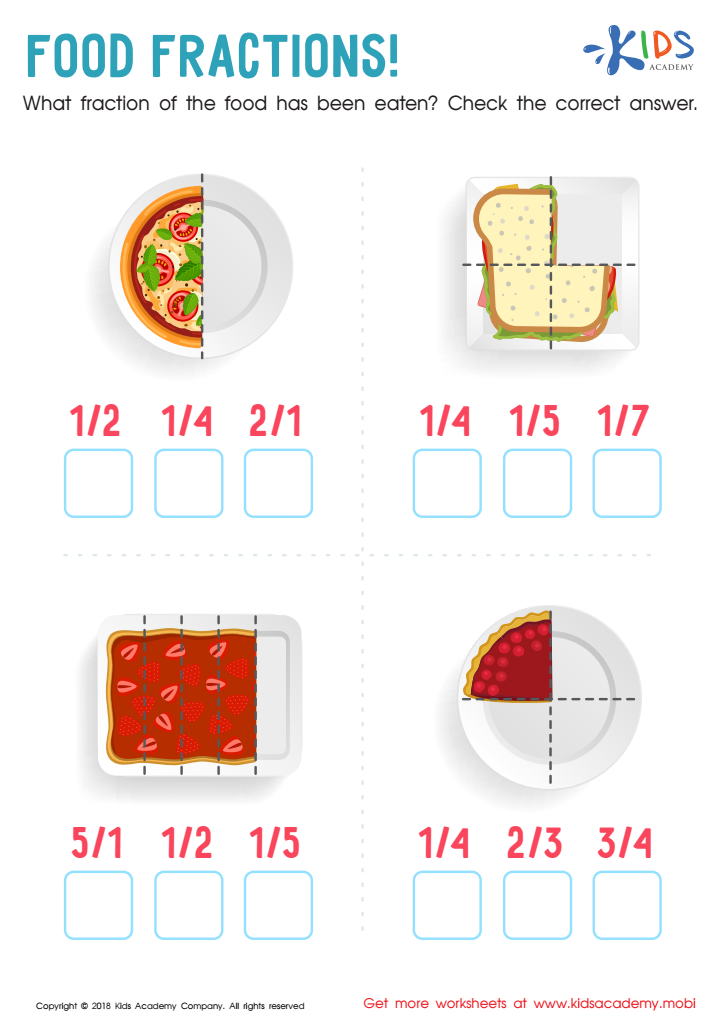
Food Fractions Worksheet
 Assign to My Students











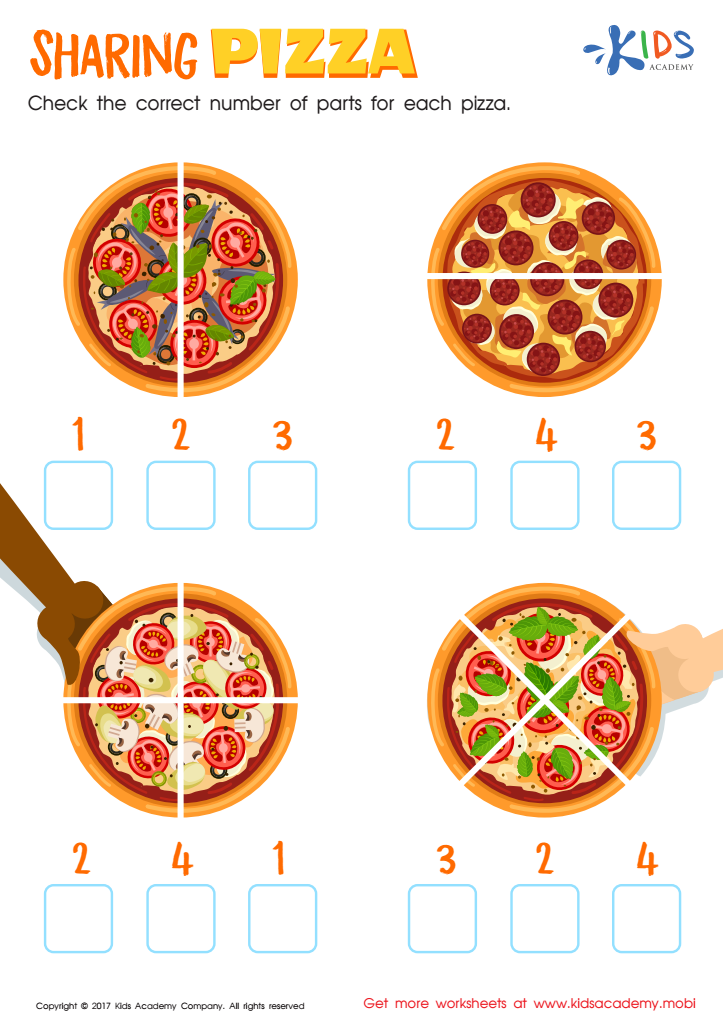
Sharing Pizza Worksheet
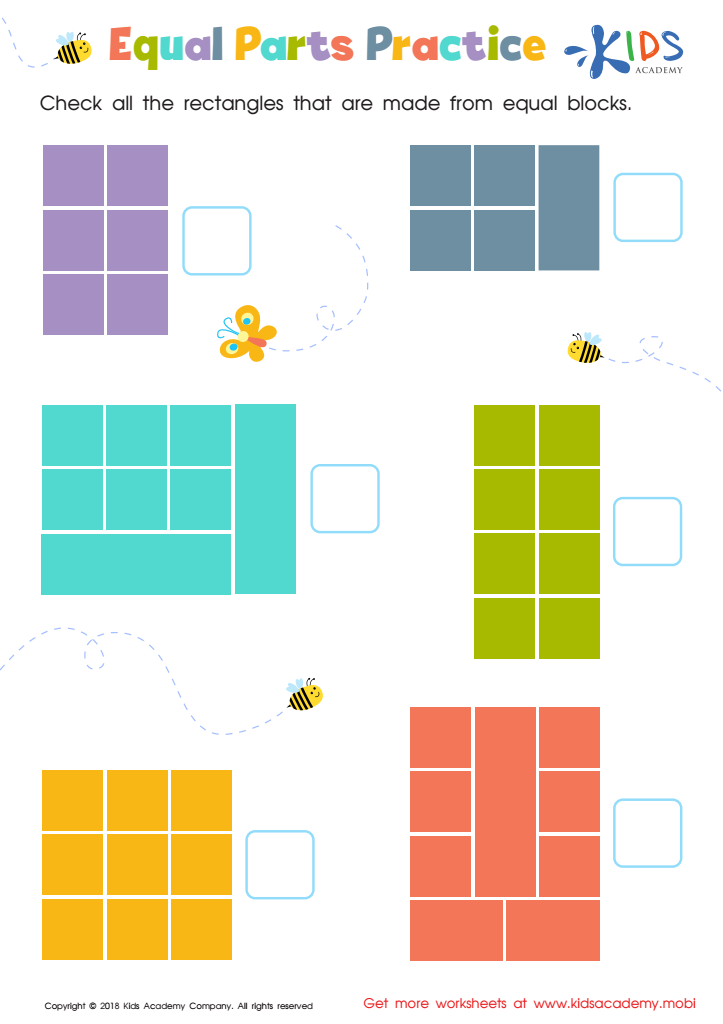
Equal Parts Practice Worksheet








Improving counting skills and geometry for children aged 3-9 is pivotal for their overall cognitive development and future academic success. Counting skills form the foundation for arithmetic and numeracy, essential not only in academics but also in daily life. Early proficiency in counting enhances logical thinking, pattern recognition, and problem-solving abilities, laying the groundwork for more complex mathematical concepts students will encounter later.
Geometry, on the other hand, introduces young learners to shapes, sizes, spatial reasoning, and relationships between objects. At an early age, understanding basic geometric principles helps develop spatial awareness and visual-perceptual skills. These skills are crucial in a variety of fields such as science, technology, engineering, and art. Engaging children with counting and geometric activities fosters creativity and critical thinking, encouraging them to recognize patterns and make connections in the world around them.
Moreover, strengthening these skills can boost a child’s confidence and interest in mathematics, making them more likely to excel in STEM (Science, Technology, Engineering, and Mathematics) subjects in the future. Parents and teachers play a crucial role in providing supportive and stimulating environments where children can explore and practice these concepts through playful, hands-on learning experiences, thereby setting the foundation for lifelong learning and success.








