Counting skills Graphs Worksheets for Ages 3-9
6 filtered results
-
From - To
Enhance your child’s numerical abilities with our Counting Skills Graphs Worksheets for ages 3-9. Our meticulously designed worksheets transform learning into a fun adventure, seamlessly blending counting exercises with vibrant graphs and visuals. Each worksheet encourages children to practice counting objects, comparing quantities, and interpreting data in engaging ways. These printables are perfect for both classroom use and at-home learning, catering to budding mathematicians and curious minds. With our expertly crafted worksheets, children not only develop essential counting skills but also build a strong foundation for future mathematical concepts, ensuring a confident start in their educational journey.
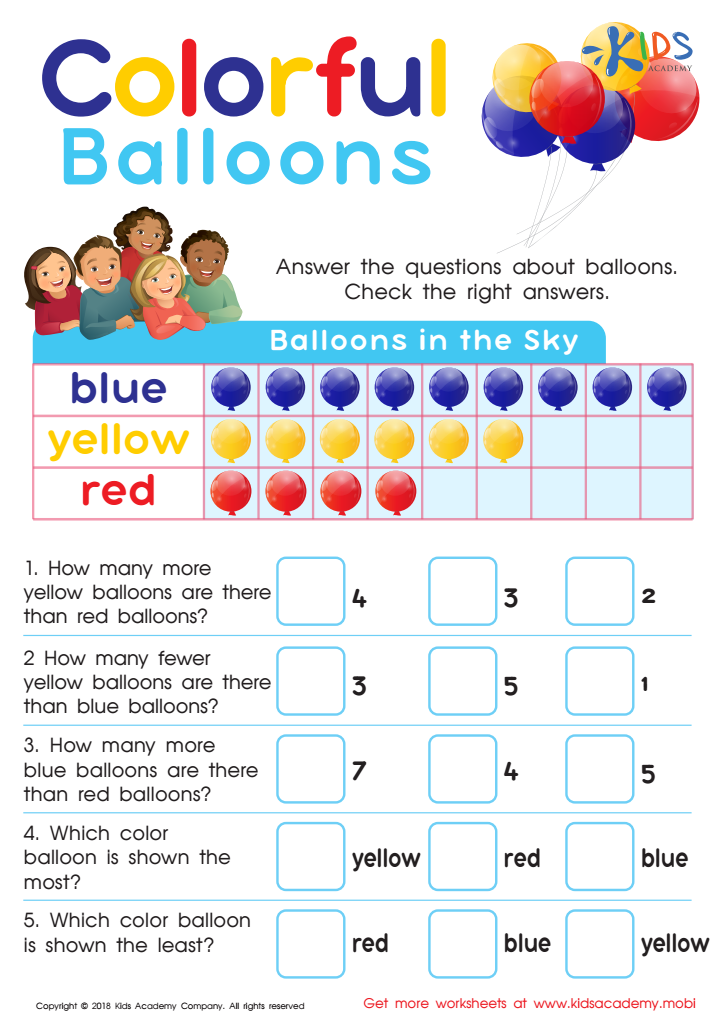
Picture Graphs: Colorful Balloons Worksheet
 Assign to My Students
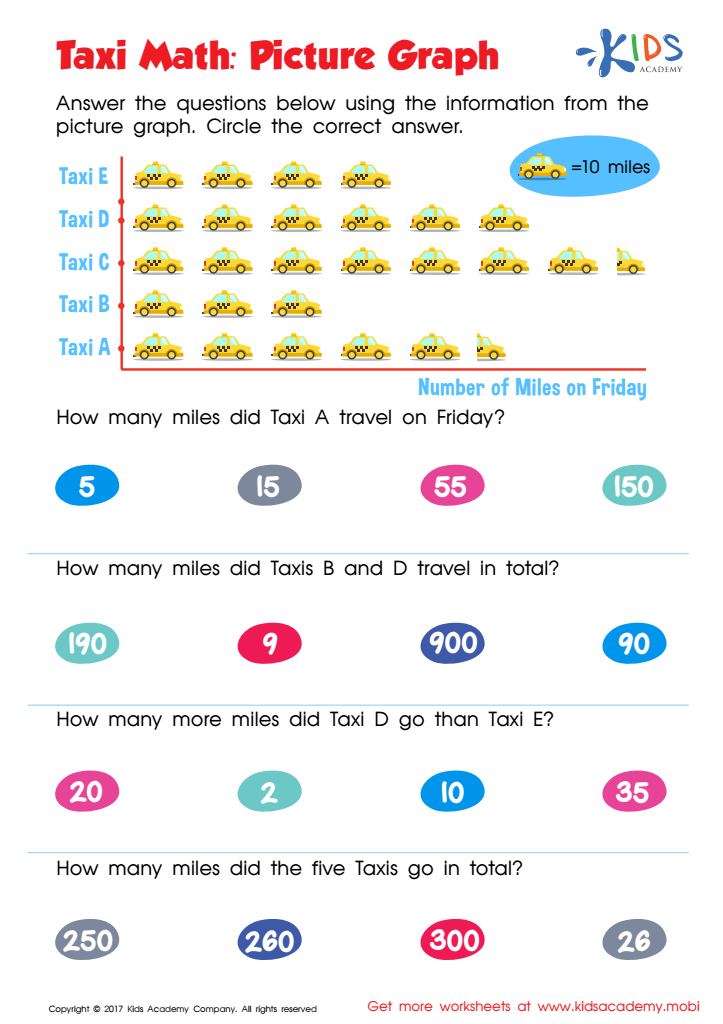
Taxi Math Worksheet
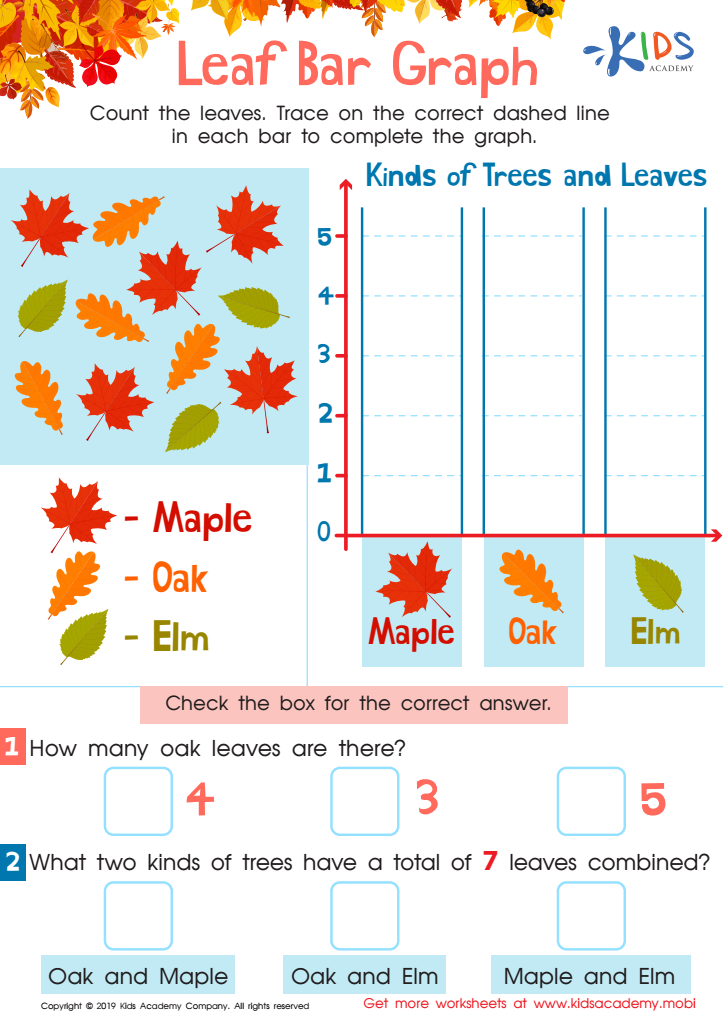
Leaf Bar Graph Worksheet
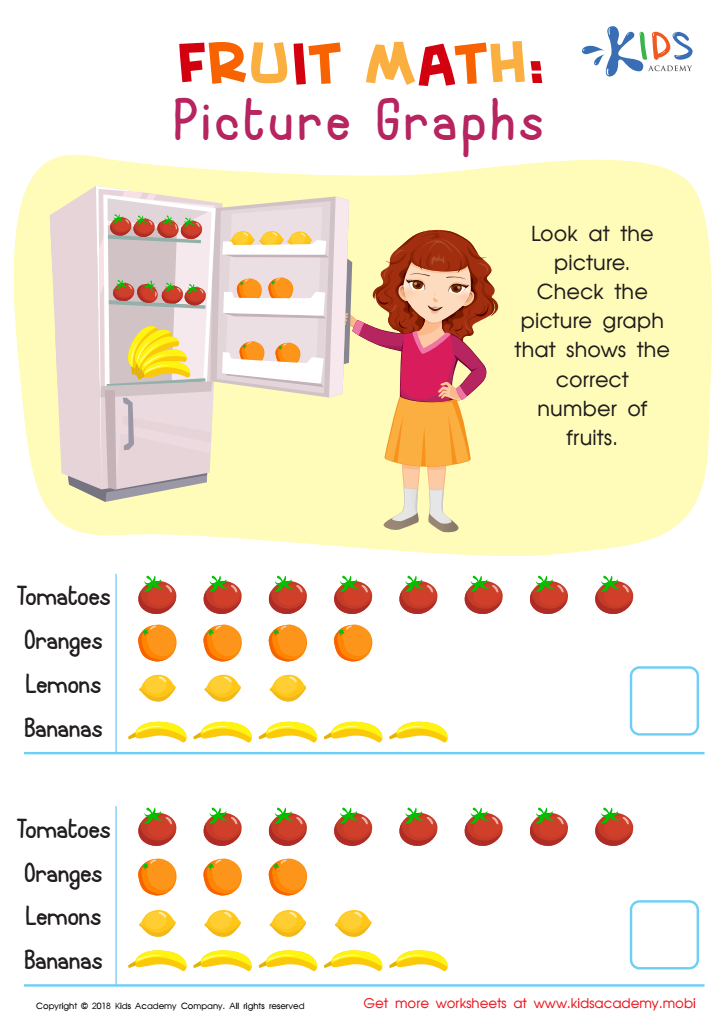
Fruit Math: Picture Graphs Worksheet
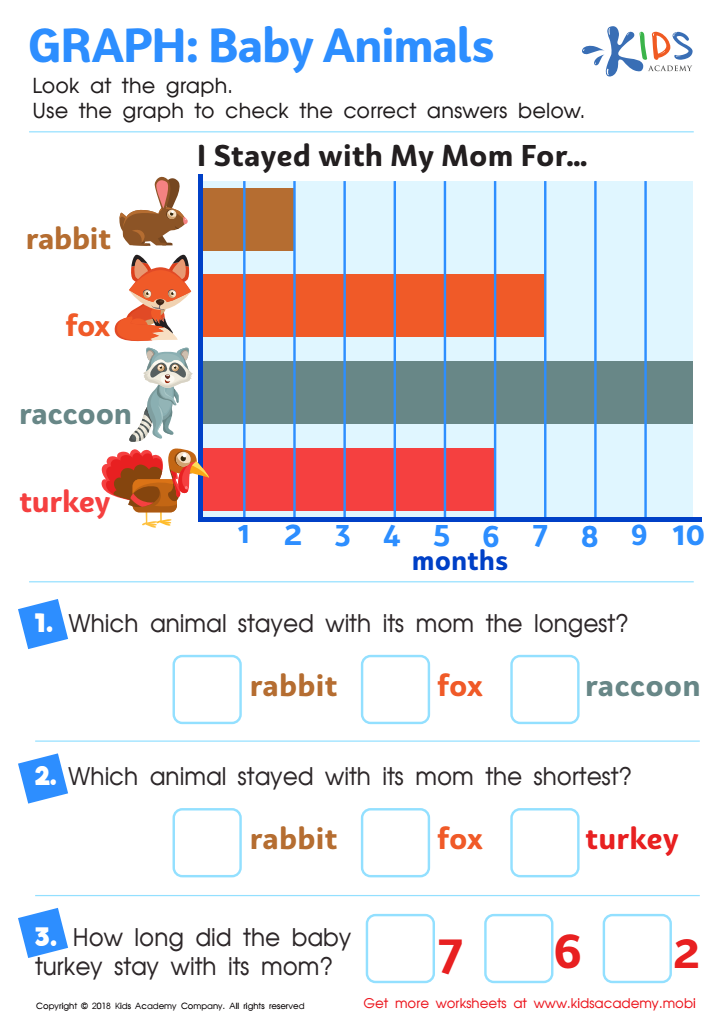
Graph: Baby Animals Worksheet
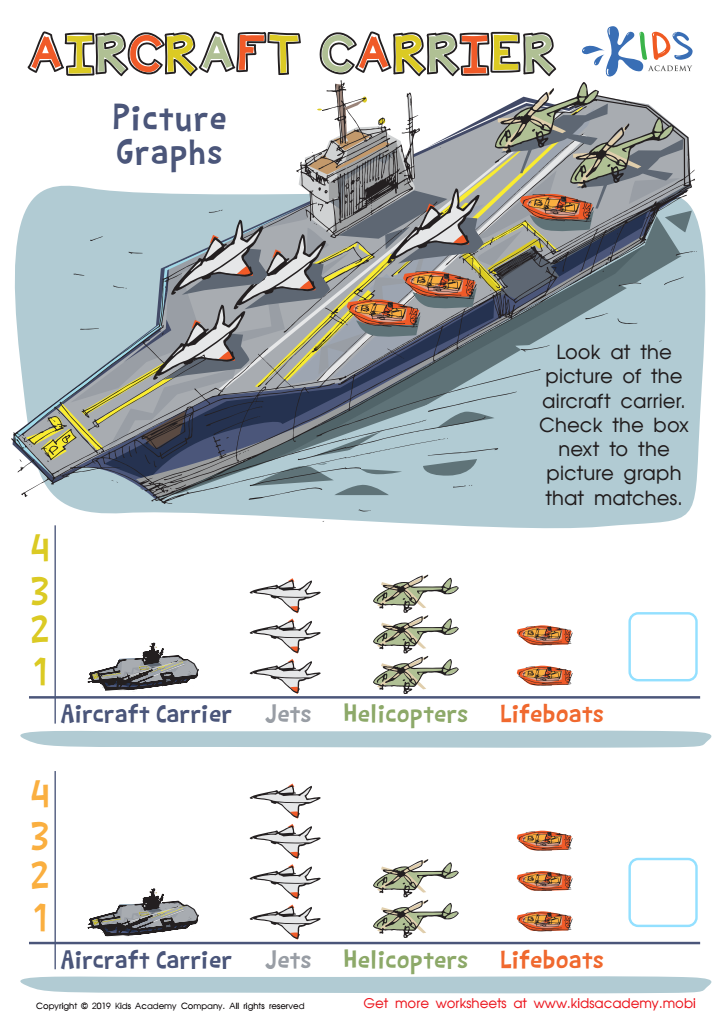
Aircraft Carrier Picture Graphs Worksheet








Counting skills and understanding graphs are foundational elements in early education for children ages 3-9, and both parents and teachers should recognize their importance. Counting is one of the first math skills children learn, playing a critical role in developing number sense, which underpins their future mathematical learning. By practicing counting, children learn the relationships between numbers, quantities, and develop the ability to perform basic arithmetic operations.
Similarly, graphs are essential as they introduce young learners to the concept of data representation. They help children understand how information can be visually organized and interpreted. Teaching kids to read and create simple graphs — like bar graphs or pie charts — enhances their analytical skills and encourages them to observe trends and patterns. This fosters critical thinking and problem-solving abilities, which are vital skills in any academic subject.
Moreover, engaging with counting and graphs promotes cognitive development by improving memory, focus, and fine motor skills (through activities like drawing graphs). These activities also align with curricula, thus ensuring children meet educational standards.
Investing in these fundamental skills not only enhances a child’s academic performance but also builds their confidence, preparing them for more complex concepts in higher grades. Therefore, both parents and teachers should prioritize activities that integrate counting and graphing into daily learning.








