Data analysis Graphs Worksheets for Ages 3-9
3 filtered results
-
From - To
Introduce young learners to the world of data analysis with our engaging and educational Data Analysis Graphs Worksheets for ages 3-9. Designed to foster critical thinking and analytical skills, these worksheets help children comprehend, interpret, and create various types of graphs. Vibrant and interactive, each worksheet is tailored to assist in learning to collect data, identify patterns, and make inferences. Ideal for merging fun with foundational math skills, our resources support classroom and at-home learning, ensuring a strong start in data literacy and mathematical reasoning, shaping confident future problem solvers. Perfect for teachers and parents dedicated to young learner success!
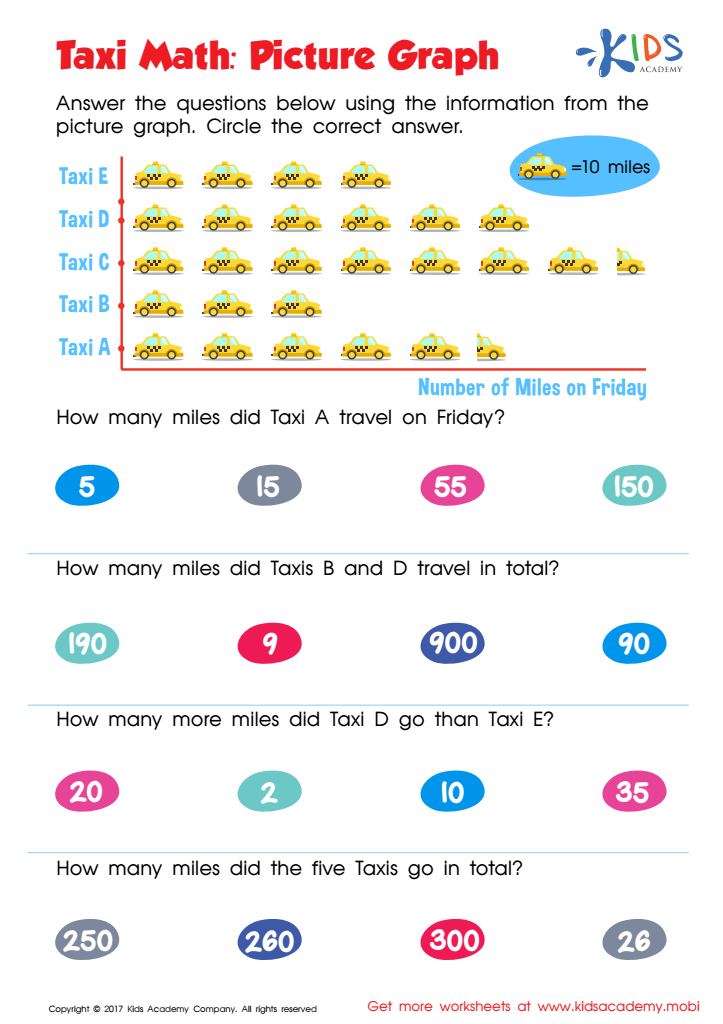
Taxi Math Worksheet
 Assign to My Students
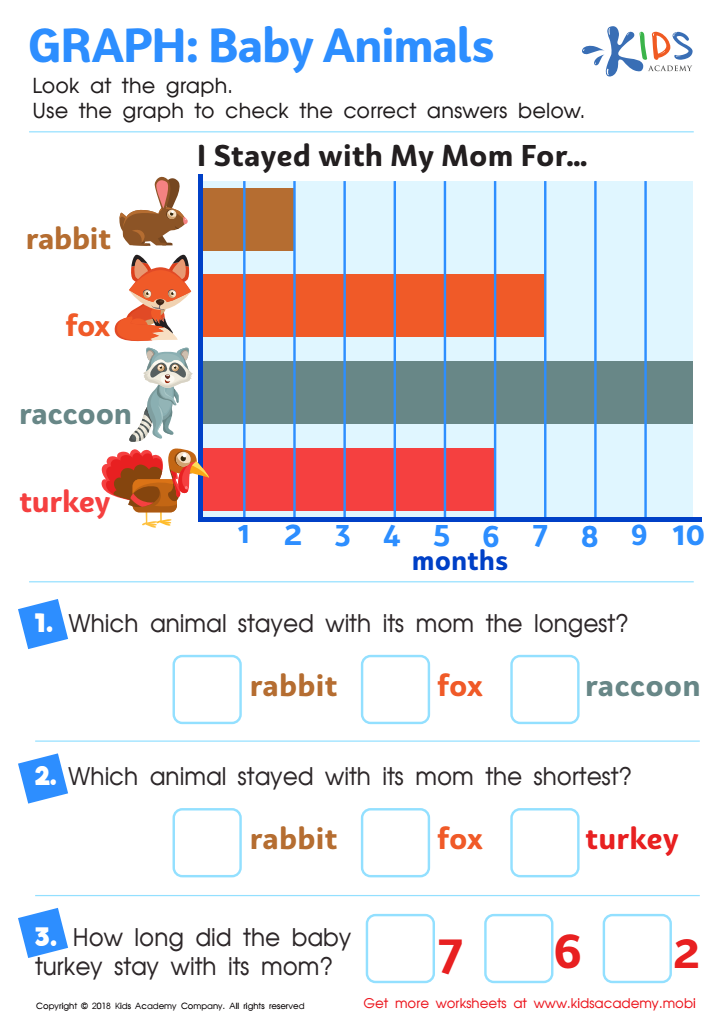
Graph: Baby Animals Worksheet
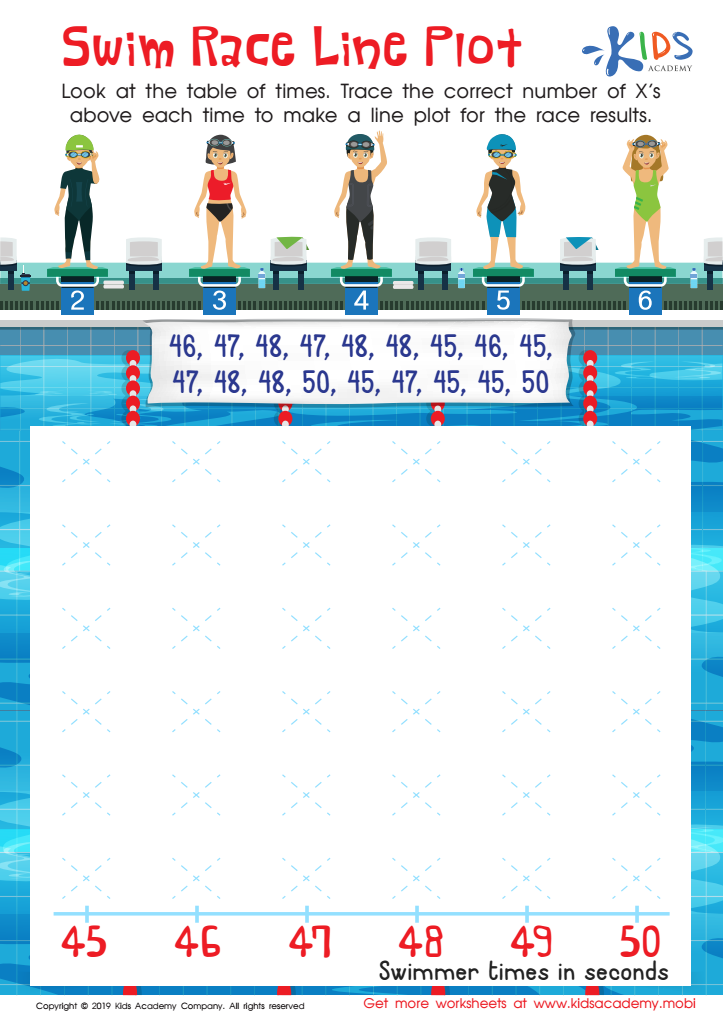
Swim Race Line Plot Worksheet








Parents and teachers should care about data analysis graphs for ages 3-9 as they form the foundational years of a child’s cognitive and social development. During these years, children are highly receptive and can easily grasp basic concepts of patterns, comparisons, and visual data representation if introduced properly. Graphs such as bar charts, pictograms, and simple line plots can make these abstract concepts tangible for young minds.
By interacting with graphs, young children can develop critical thinking and analytical skills early on. This exposure helps them learn to interpret data, recognize trends, and make informed decisions, which are essential life skills. For parents and teachers, utilizing data analysis graphs not only aligns with modern educational standards but also supports various areas of a child’s education—from math and science to reading comprehension and even social studies.
Moreover, visual aids like graphs cater to diverse learning styles and make learning more engaging and accessible. For example, a child could better understand daily temperature changes or favorite ice cream flavors through visual comparison, enhancing their engagement and retention. Fostering these analytical skills from a young age, through accessible visual tools, sets children on a path toward becoming competent problem solvers and critical thinkers in their future academic and personal lives.








