Interpreting data Graphs Worksheets for Ages 3-9
3 filtered results
-
From - To
Unlock the world of data interpretation with our engaging "Interpreting Data Graphs Worksheets" designed specifically for children aged 3-9. These thoughtfully crafted worksheets introduce young learners to the basics of reading and understanding various types of graphs, including bar graphs, pictographs, and more. Each activity encourages critical thinking and analytical skills while making learning fun! Parents and educators can use these resources to support early math expertise and data literacy in an enjoyable way. Perfect for classroom or home environments, our worksheets provide step-by-step guidance, ensuring children grasp essential concepts while developing confidence in their math abilities. Start exploring today!
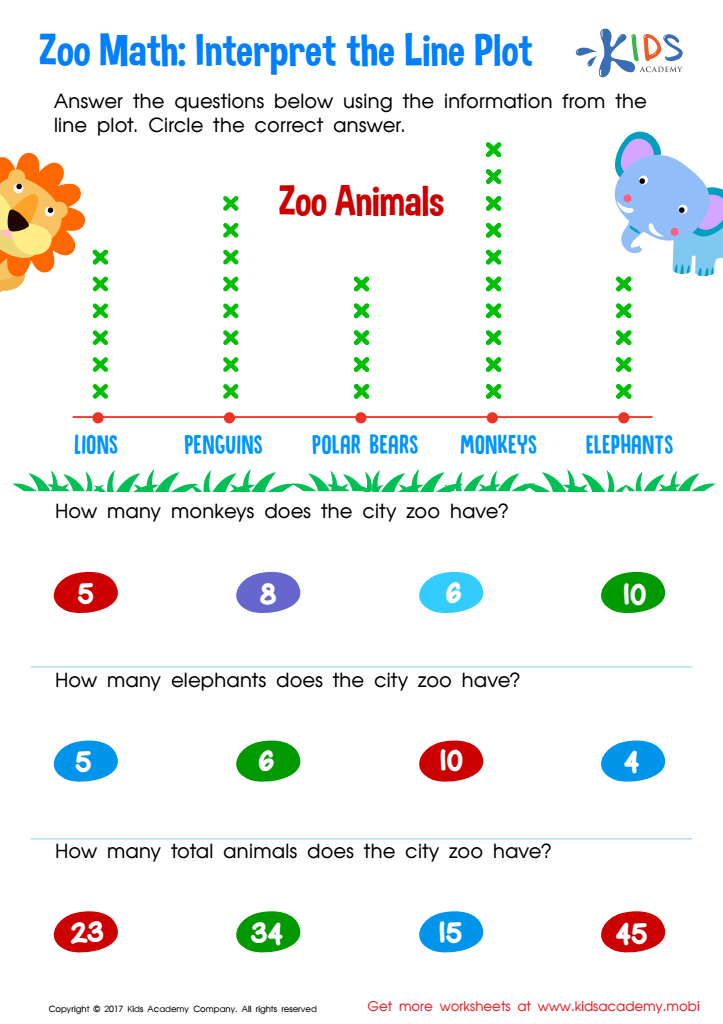
Interpret Line Plot Worksheet
 Assign to My Students
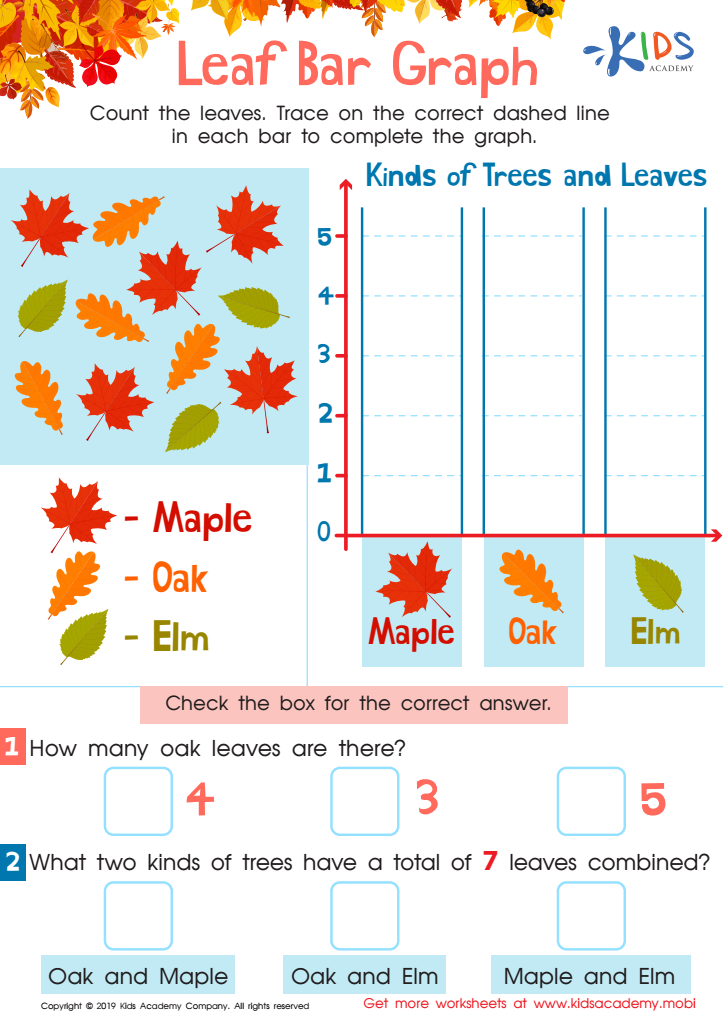
Leaf Bar Graph Worksheet
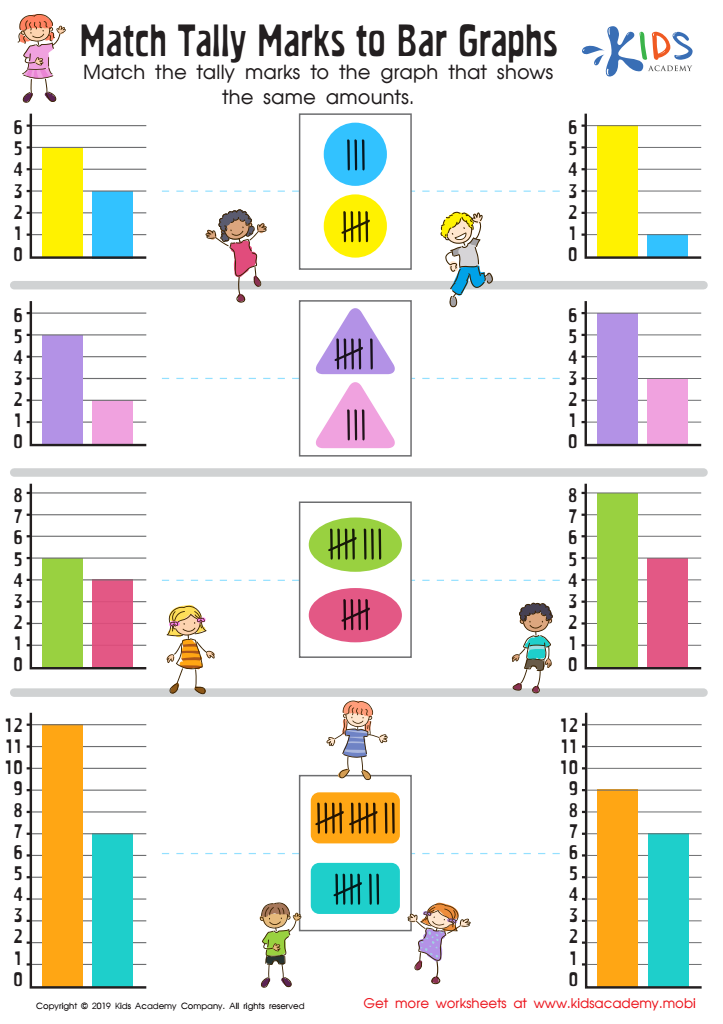
Match Tally Marks to Bar Graphs Worksheet








Understanding data graphs is increasingly important for young learners aged 3-9, and parents and teachers play key roles in fostering this skill. Learning to interpret graphs shapes critical thinking and analytical skills, letting children make sense of visual information they encounter daily. As early as preschool, kids can begin to understand basic graphs, such as bar graphs and pictographs, which cultivate foundational numerical literacy.
Graphs help children explore dating through playful data collection—like tracking daily weather—or simple surveys about favorite animals or colors. This process instills curiosity and confidence in handling data while engaging them in subjects such as math and science. Moreover, grasping data presentation reinforces mathematics skills, aiding in counting, addition, and reasoning.
Parents using graphing activities at home or teachers integrating them into the curriculum build a comprehensive framework for comprehension. As children progress, they gain skills essential for academic success and informed decision-making. In our data-rich world, these early experiences not only provide actual skills but also cultivate a mindset of inquiry and investigation that can last a lifetime. By prioritizing graph interpretation, parents and teachers equip children to become competent, confident consumers and communicators of information.








