Applying math skills Math Worksheets for Ages 3-9
3 filtered results
-
From - To
Enhance your child’s math abilities with our fun and engaging "Applying Math Skills" worksheets for ages 3-9. These printable worksheets are designed to build essential math skills through practical and interactive exercises. From basic counting and shape recognition to more advanced addition, subtraction, and problem-solving tasks, our resources cater to various learning styles and levels. Perfect for at-home practice or classroom use, these worksheets provide a solid foundation for future math success while making learning enjoyable. Empower your child with the confidence and competence to excel in math, all through age-appropriate, skill-building activities.
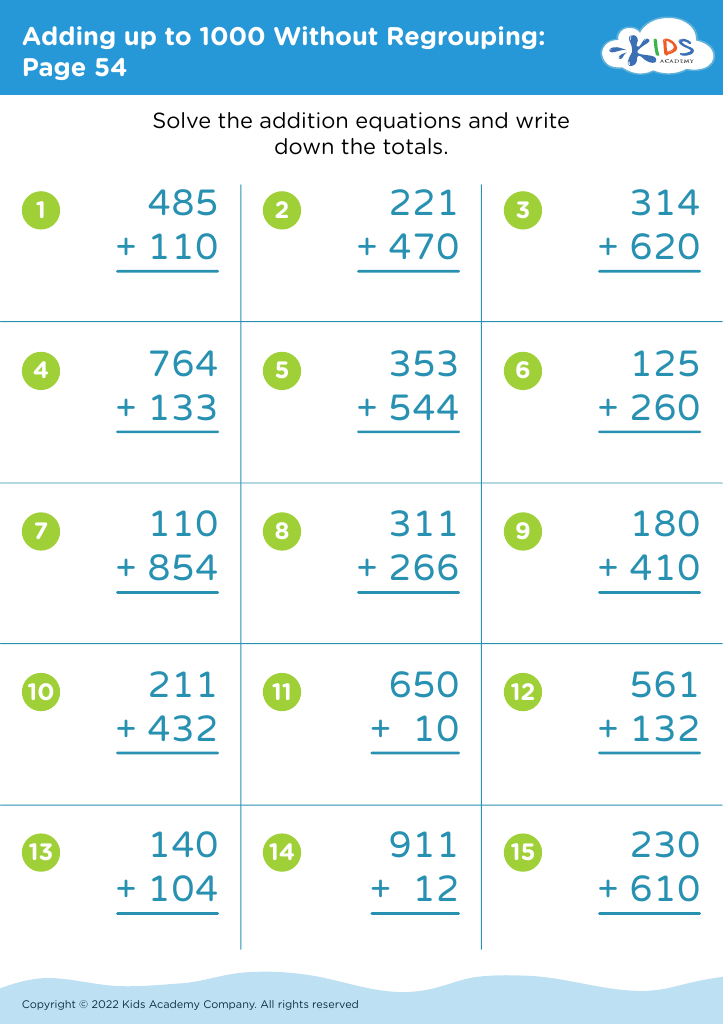
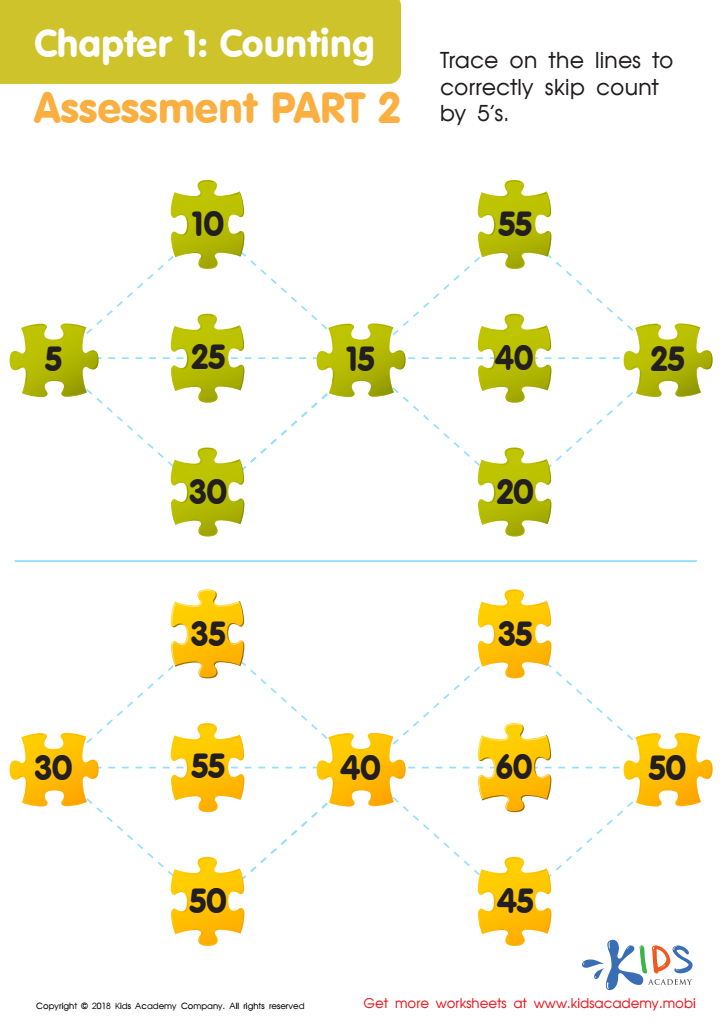
Counting: Assessment 2 Worksheet
 Assign to My Students
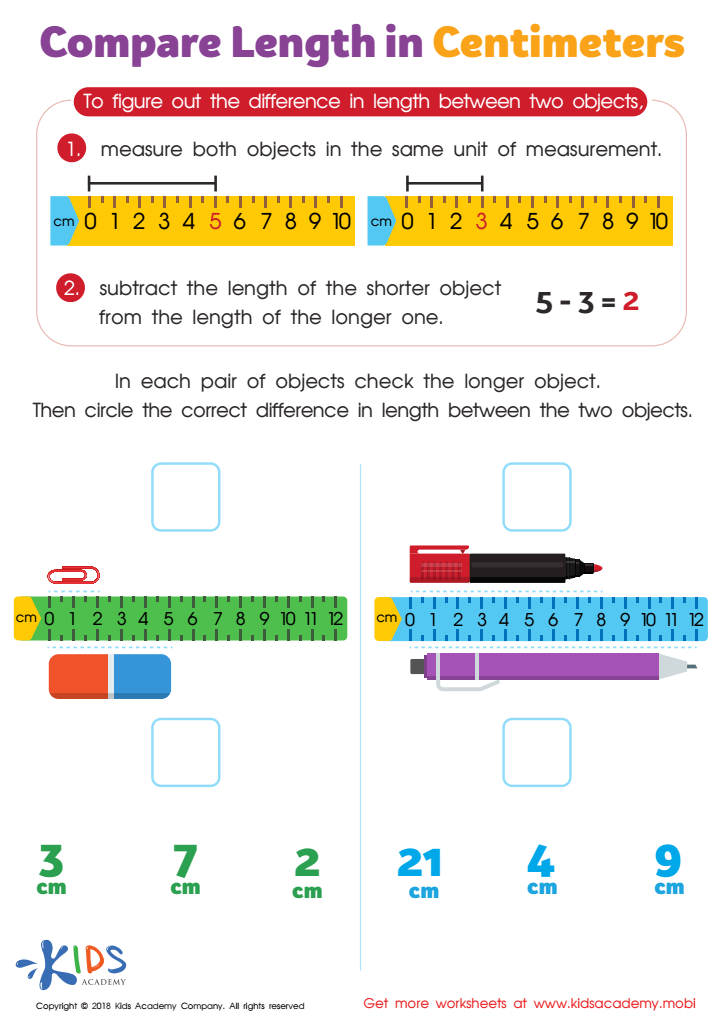
Compare Length in Centimeters Worksheet








Parents and teachers should care deeply about applying math skills to children ages 3-9 because early mathematical understanding forms the foundation for future academic success and practical life skills. At this impressionable age, children are highly receptive to new concepts and enjoy discovering patterns, shapes, and numbers in their world. When math is integrated into daily activities, it nurtures critical thinking, problem-solving skills, and logical reasoning.
Early exposure to math helps children develop confidence and a positive attitude towards the subject. Activities like counting games, measuring objects, and simple addition can be both educational and fun, fostering a child's curiosity and enthusiasm for learning. Furthermore, mathematical skills are crucial not only in academics but in everyday tasks—recognizing time, managing money, and following recipes.
Understanding math at an early age also helps close achievement gaps that can appear later in education. Children who grasp these concepts early are likely to perform better in school, facilitating continued success in higher-level math and science courses.
Overall, fostering early math skills enables children to think analytically and approach challenges constructively, laying the groundwork for a lifetime of critical thinking and informed decision-making. By prioritizing math education early, parents and teachers provide children with tools essential for their overall development and future success.








