Enhancing number recognition Math Worksheets for Ages 3-9
3 filtered results
-
From - To
Transform number recognition into an exciting journey for children aged 3-9 with our expertly designed math worksheets. Each printable worksheet is crafted to foster foundational math skills, engaging kids through activities tailored to their developmental stage. Bright illustrations, interactive exercises, and progressive challenges ensure learning remains fun and effective. Perfect for both classroom and home use, our worksheets support learners in identifying, writing, and counting numbers with confidence. Empower your students to master number recognition through hands-on practice and joyful exploration. Boost essential math skills today with Kids Academy's innovative worksheets, turning learning into play!
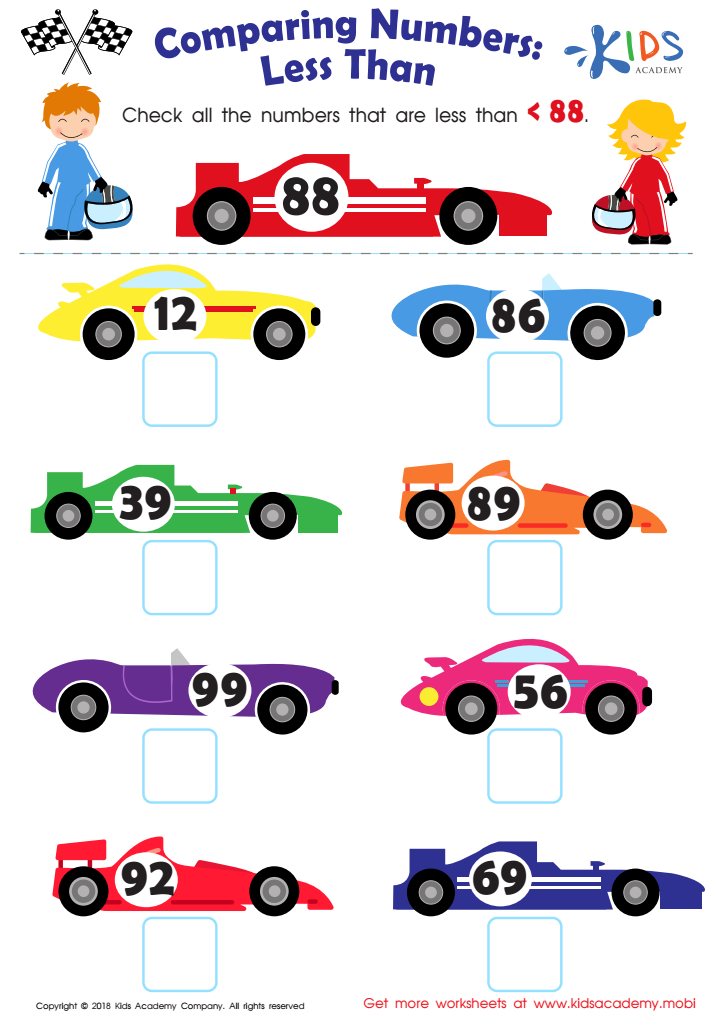
Less Than Worksheet
 Assign to My Students
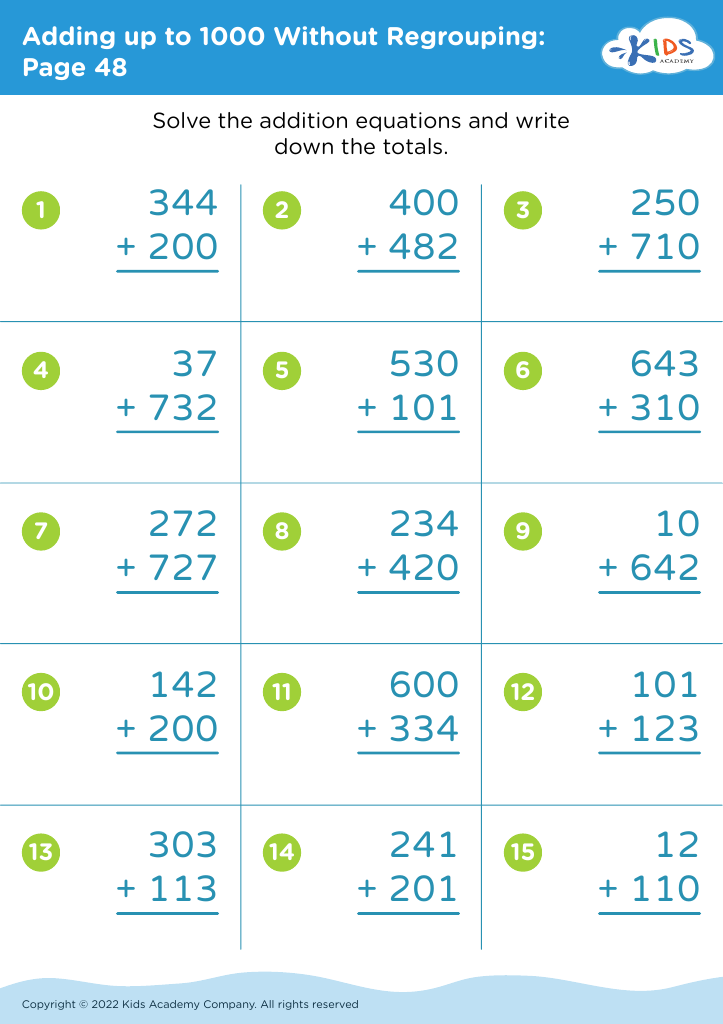
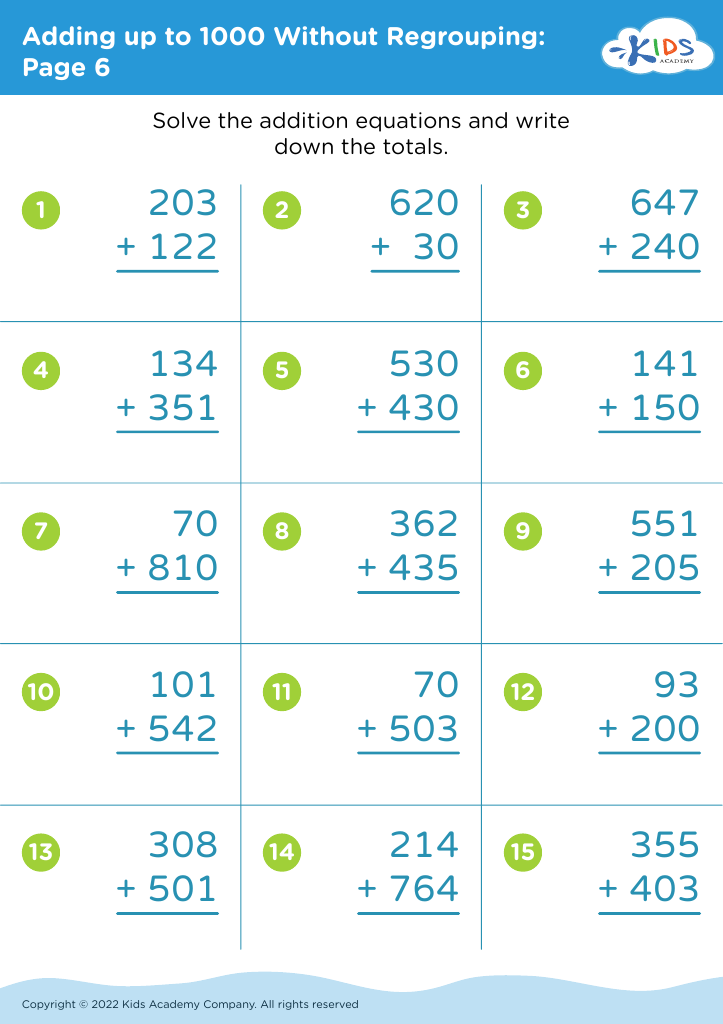







Enhancing number recognition in children aged 3-9 is foundational for their overall mathematical development and future academic success. During this critical period, young minds are highly adaptable and primed for learning new concepts. Recognizing numbers is the bedrock upon which all other math skills are built, including counting, addition, subtraction, and understanding more complex mathematical concepts in later years.
When parents and teachers focus on enhancing number recognition, they give children the tools they need to approach math with confidence. Early exposure to numbers helps children develop cognitive skills such as problem-solving, logical thinking, and spatial awareness. Moreover, number recognition is critical for daily life, as it aids in tasks like telling time, identifying dates, and handling money—skills essential for independence.
Engaging children in fun, interactive activities like counting games, number-based songs, and visual aids can make learning enjoyable and memorable. These foundational skills not only prepare children for more structured math education but also instill a positive attitude toward learning, reducing math anxiety in later years.
Investing time and effort into enhancing number recognition early sets the stage for continued academic achievement, making it a crucial focus for both parents and teachers.








