
Identifying objects Math Worksheets for Ages 3-9
3 filtered results
Difficulty Level
Grade
Age
-
From - To
Subject
Activity
Standards
Kickstart your child's mathematical journey with our "Identifying Objects Math Worksheets for Ages 3-9." Designed to captivate young minds, these engaging worksheets help kids develop essential skills like recognizing shapes, counting objects, and understanding differences and patterns. Perfect for preschool through elementary school, the activities combine fun and learning, making math an enjoyable adventure. Whether at home or in the classroom, these printable worksheets ensure your child masters foundational math concepts effortlessly. Visit Kids Academy to explore a variety of exercises tailored to stimulate curiosity and boost confidence in young learners.
Favorites
With answer key
Interactive
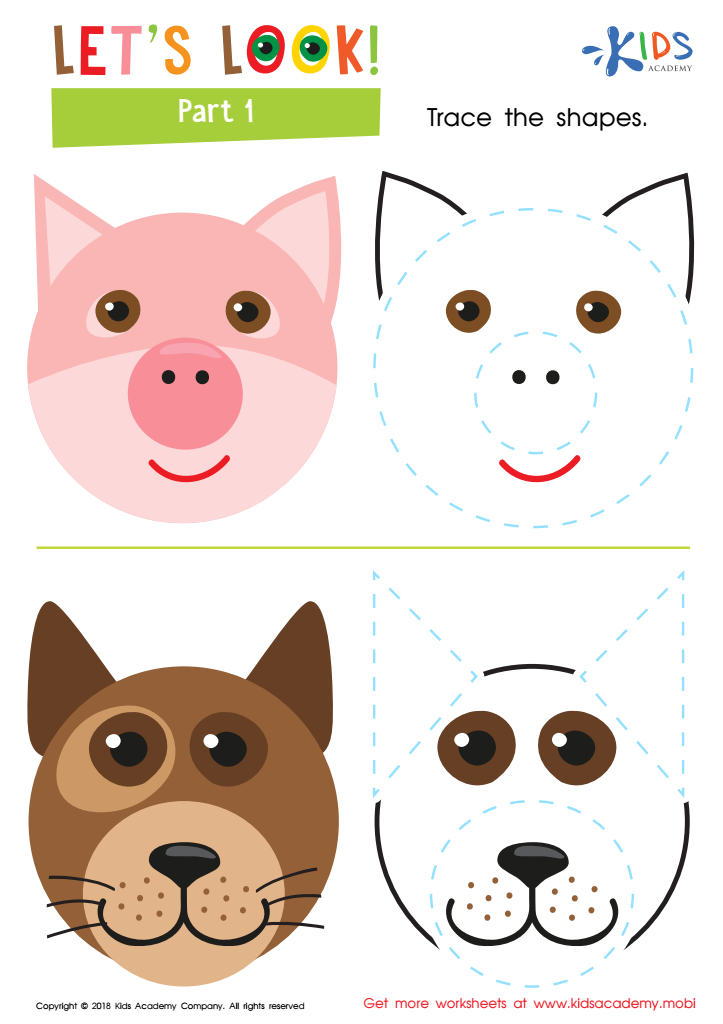
Let's Look! Part 1 Worksheet
If your kids love animals or have a pet at home, they'll get a kick out of this tracing worksheet. It tests their ability to imitate shapes, starting with a pig and followed by a dog. Beside each of these pictures is a space for tracing the shapes. Unleash your child's creativity and see what they come up with!
 Assign to My Students
Let's Look! Part 1 Worksheet
Worksheet
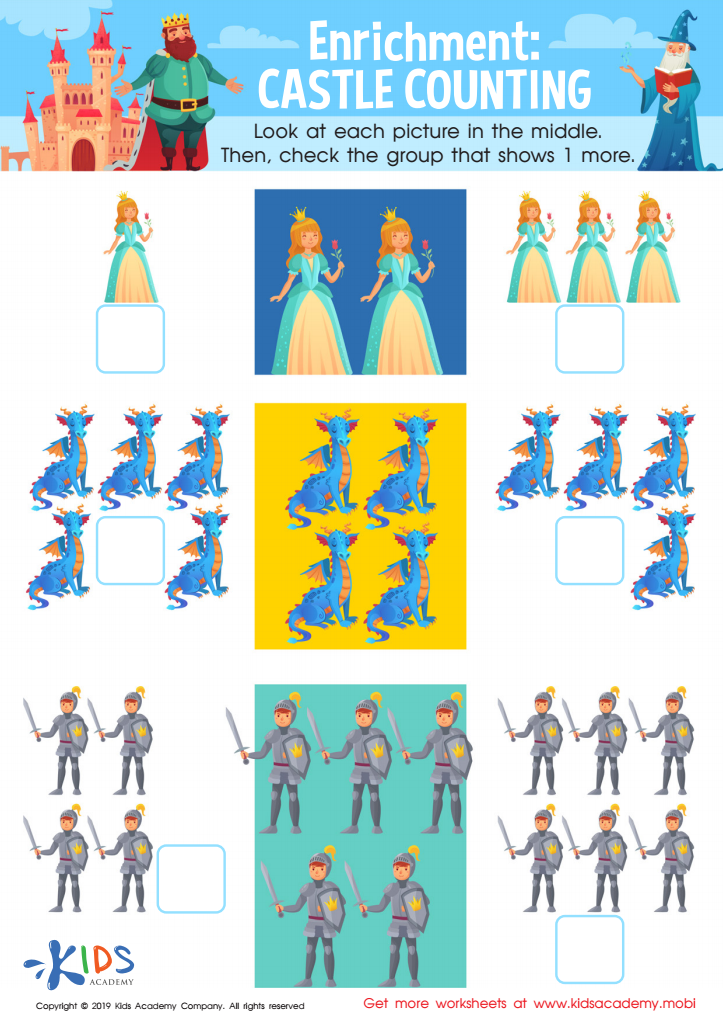
Enrichment: Castle Counting Worksheet
Help your kids learn to count. Start with easy counting of numbers as high as possible. Use the pictures in this printout. Point to the middle one, help them identify it and then count one more than it. Do this to help them get ready for more difficult math concepts like addition, subtraction and multiplication.
Enrichment: Castle Counting Worksheet
Worksheet
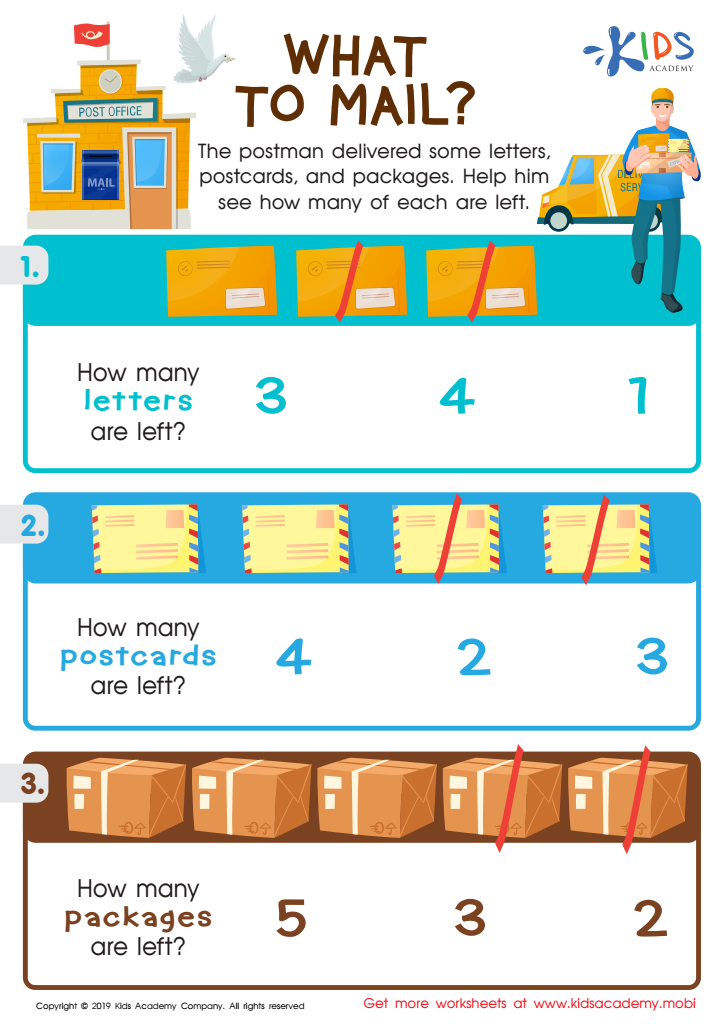
What to Mail? Worksheet
Do your kids know what postmen do? They deliver mail from the post office to the intended recipient. Word problems are math questions written in sentence form. Here, kids must examine the image, read the problem, and find the correct answer. This worksheet offers practice in that skill.
What to Mail? Worksheet
Worksheet
Join Kids Academy for Free
Who is primarily going to use this learning content?






Identifying objects in math for children aged 3-9 lays the foundation for essential cognitive development and future academic success. At this critical stage, children are developing their ability to recognize, categorize, and understand the relationships between different objects, which are fundamental skills in mathematics.
For parents and teachers, focusing on identifying objects helps children enhance their number sense, spatial recognition, and problem-solving abilities. By recognizing and naming shapes, sizes, and patterns, children learn to observe details and categorize them, boosting their analytical skills.
Engaging in activities like sorting shapes, counting objects, or identifying patterns not only promotes mathematical thinking but also improves language skills as children describe what they see. For instance, distinguishing between a square and a circle involves understanding properties like edges and curves, which lays the groundwork for geometry.
Additionally, early identification skills foster confidence and curiosity in young learners, making math feel approachable and enjoyable. As children succeed in these foundational activities, their confidence grows, and they are more likely to have a positive attitude toward math in the future.
By investing time in helping children develop these skills, parents and teachers are setting them up for long-term success, ensuring they have the necessary tools to tackle more complex mathematical concepts as they progress in their education.








