
Identifying shapes Math Worksheets for Ages 3-9
29 filtered results
Difficulty Level
Grade
Age
-
From - To
Subject
Activity
Standards
Explore our engaging collection of "Identifying Shapes Math Worksheets" designed for children ages 3 to 9. These fun, interactive worksheets help young learners recognize and differentiate various shapes, enhancing their mathematical skills and spatial awareness. Our resources are thoughtfully crafted to offer a mix of exercises that cater to different learning levels, making it easier for kids to grasp essential concepts. With colorful illustrations and stimulating activities, these worksheets provide a perfect blend of education and enjoyment. Ideal for homeschooling, classroom use, or supplemental learning, these worksheets foster confidence in essential math skills while making learning a delightful experience!
Favorites
With answer key
Interactive
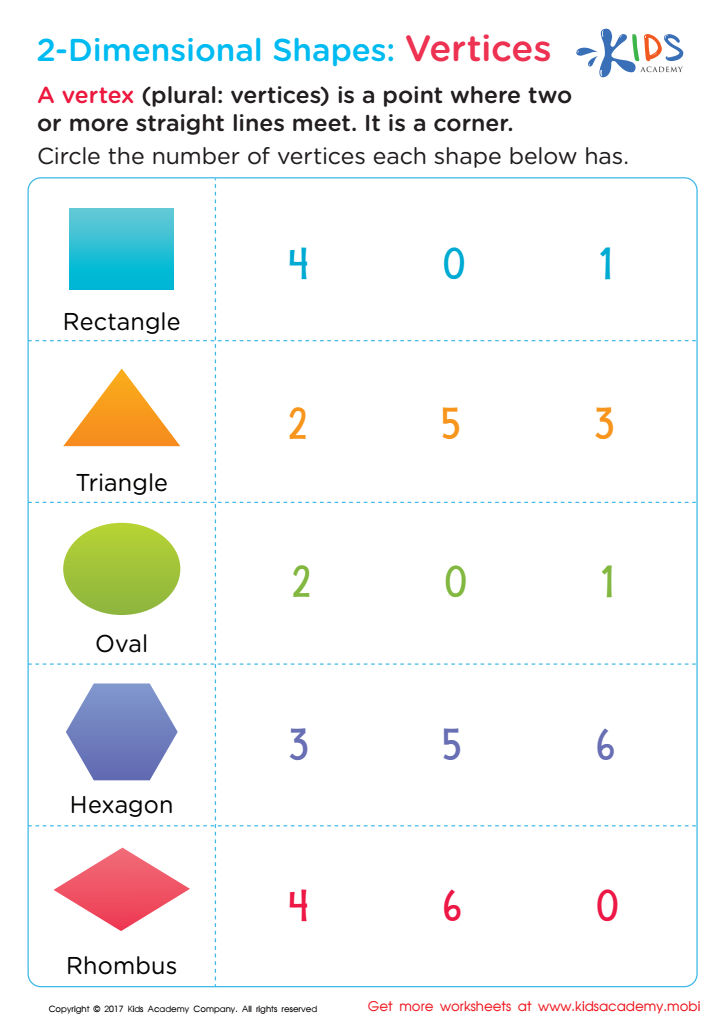
Two–Dimensional Shapes: Vertices Printable
This colorful worksheet teaches kids geometry by introducing them to two-dimensional shapes and vertices. Kids can practice counting vertices and learn an important new math term in an easy to understand way. Boost your child's knowledge of geometry today!
Two–Dimensional Shapes: Vertices Printable
Worksheet
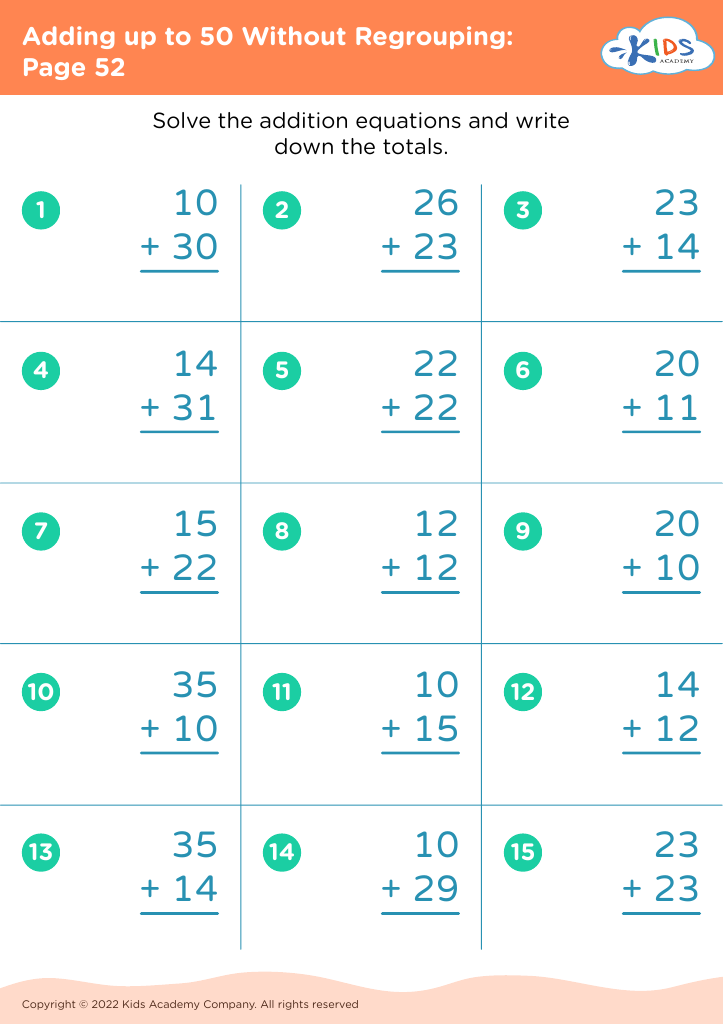
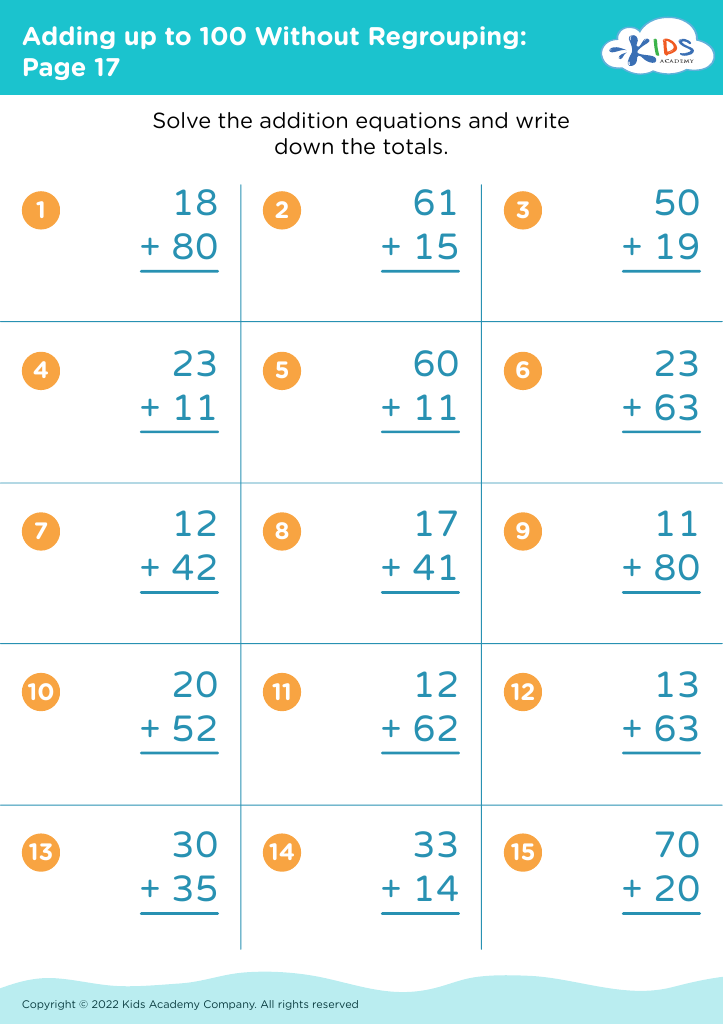
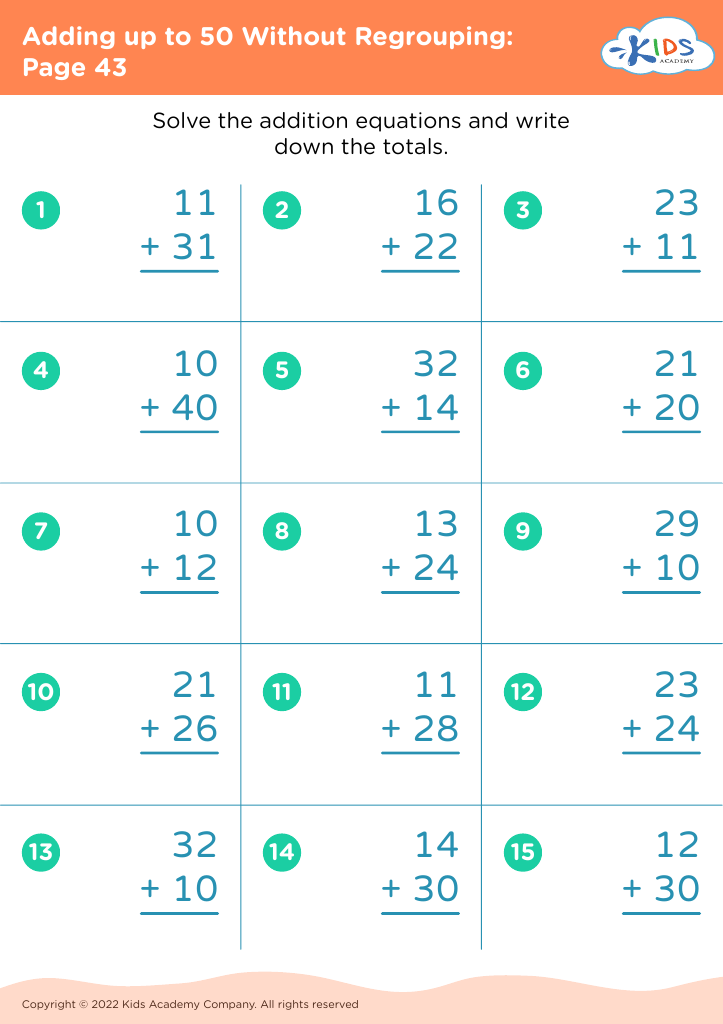
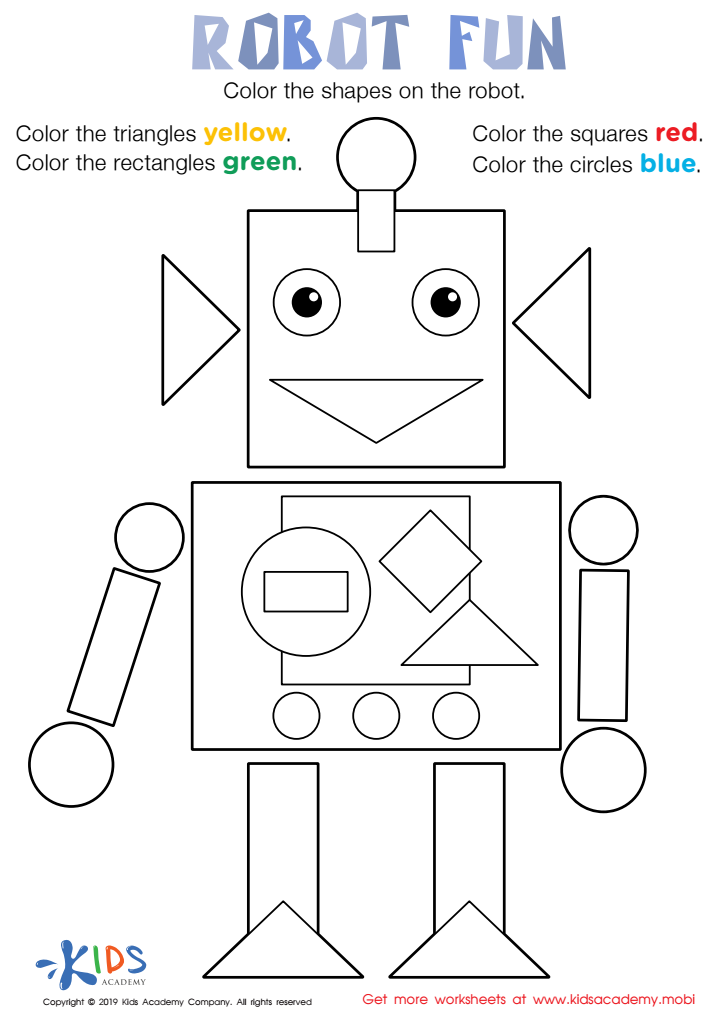
Robot Fun Worksheet
Help your child learn about basic shapes with this fun robot worksheet! Kids practice identifying circles, squares, rectangles and triangles, then color each shape according to directions. Make math practice enjoyable with this coloring page that teaches all four basic shapes - it's an important math skill!
Download (PDF)
 Assign to My Students
Assign to My Students
Robot Fun Worksheet
Worksheet
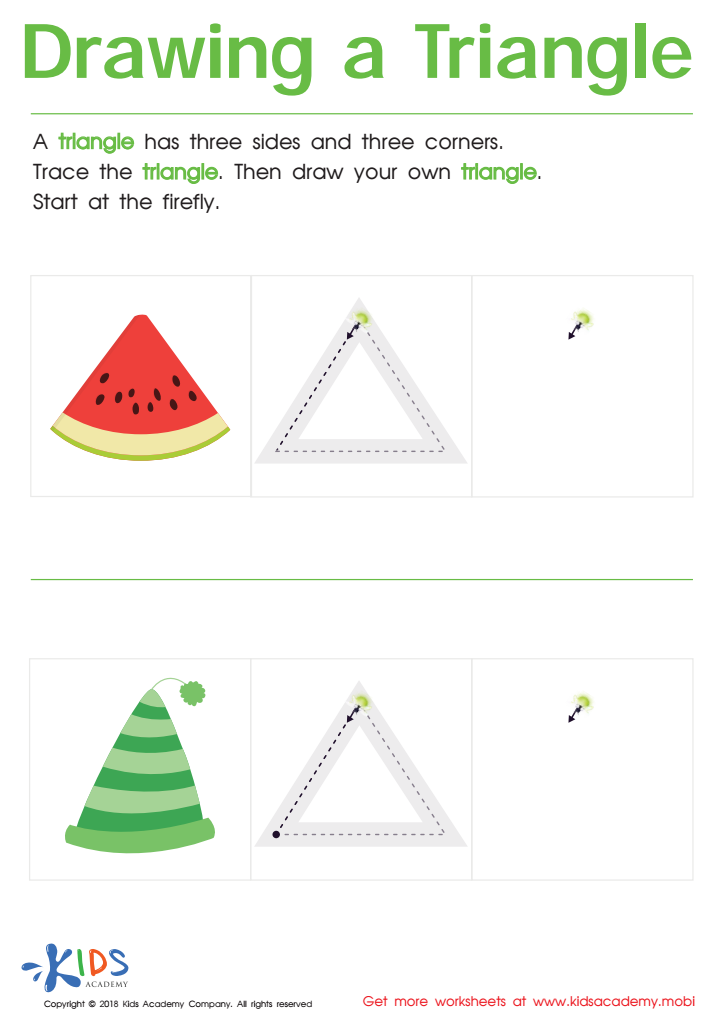
Drawing a Triangle Worksheet
Help your child develop fine motor skills with this fun, traceable printable! It teaches them how to draw a triangle, with easy steps and cute picture motivation. They'll work on pre-writing skills, pencil position, and grip control without even realizing it. With this basic shape, they'll gain a foundation for strong writing and drawing skills.
Drawing a Triangle Worksheet
Worksheet
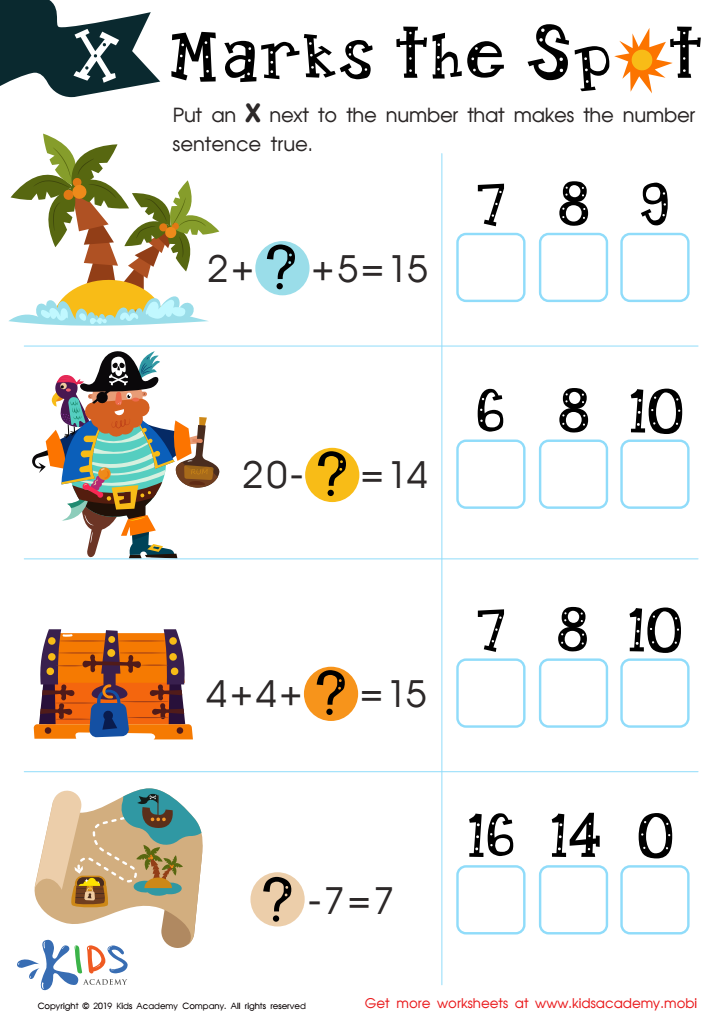
X Marks the Spot Worksheet
Let your kids explore the world of pirates! Ask them what they know about them, what they do and the phrases they like. Download the printout and point at the images, asking them to tell you what they see. Help them tick the box for the number that makes the sentence true. Let them have fun learning about pirates! (80 words)
X Marks the Spot Worksheet
Worksheet
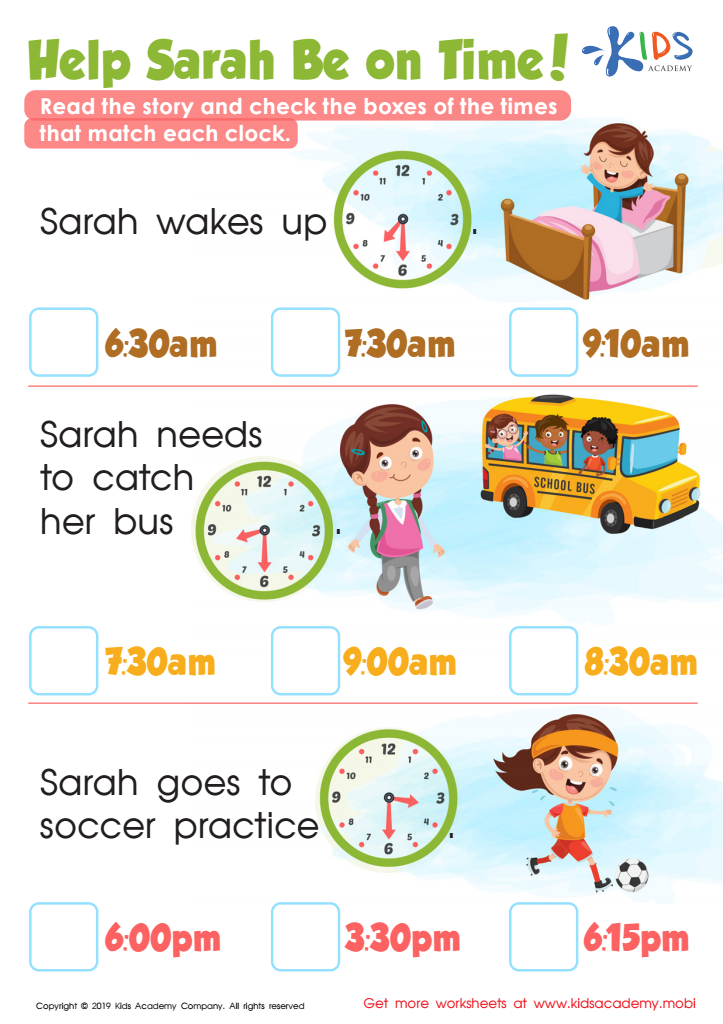
Help Sarah Be on Time! Worksheet
Humans are social creatures and need to be punctual for things to run smoothly. For instance, a meeting with a friend requires a time to be agreed upon. Ask your kids what else needs to be punctual. Then, show them the worksheet and read the accompanying story. Get them to match clocks with the correct times.
Help Sarah Be on Time! Worksheet
Worksheet
Join Kids Academy for Free
Who is primarily going to use this learning content?







Identifying shapes is a fundamental skill for children aged 3-9, laying the groundwork for their mathematical understanding and cognitive development. Parents and teachers should care about this aspect of early learning because shape recognition enhances spatial awareness, critical thinking, and problem-solving abilities.
When children learn to identify shapes, they begin to notice patterns and relationships in their environment, making connections that are essential for more advanced mathematical concepts later, such as geometry and measurement. Additionally, engaging with shapes often incorporates hands-on learning through play, crafts, and everyday activities, which captivates young minds and fosters a love for learning.
Shape recognition also supports language development, as children learn to articulate and describe their environment using specific vocabulary. This skill provides a foundation for more complex language use in math-related contexts. Furthermore, identifying shapes can boost confidence in young learners; as they master this skill, they build a sense of accomplishment that encourages further exploration and inquiry in mathematics.
In conclusion, prioritizing shape identification in early education nurtures a comprehensive skill set that contributes to overall academic success and lifelong learning, making it essential for parents and teachers to focus on this vital area of development.








