Improving observation Math Worksheets for Ages 3-9
3 filtered results
-
From - To
Enhance your child's mathematical abilities with our fun and engaging observation math worksheets designed for ages 3-9. These worksheets help children develop critical skills such as pattern recognition, counting, comparing, and spatial awareness. Through interactive activities and vibrant visuals, kids learn to observe and analyze mathematical concepts in a playful and supportive environment. Ideal for home or school use, our observation math worksheets are crafted to boost confidence and foster a love for learning. With progressive challenges and a variety of tasks, kids will enjoy exploring math while mastering essential skills foundational for future academic success.
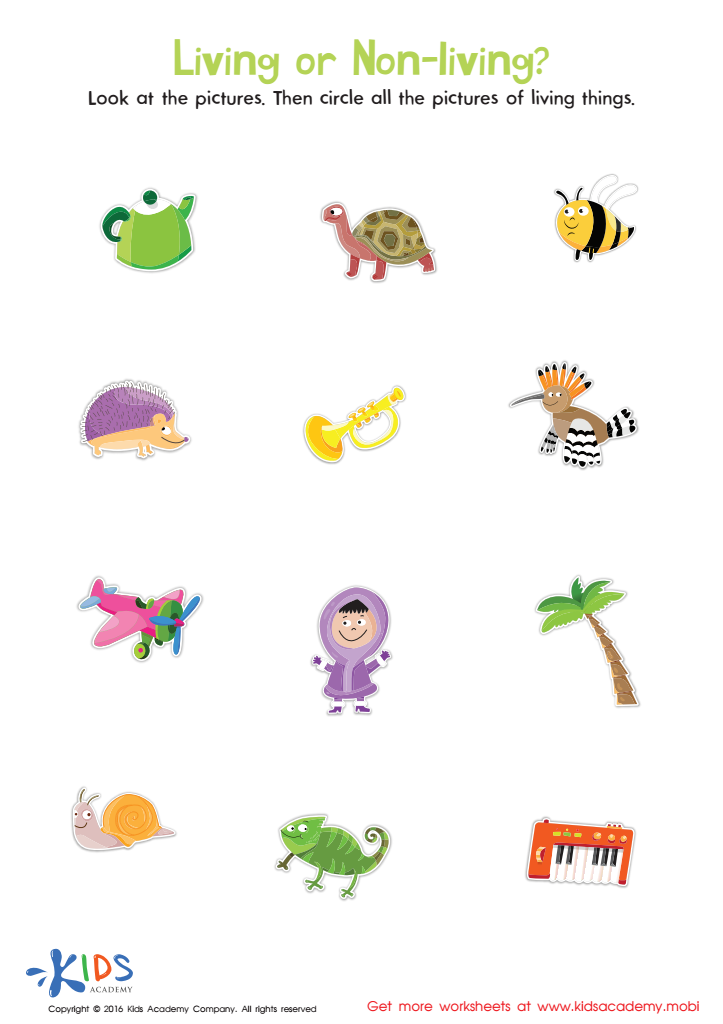
Identifying Living and Non–living Things Sorting Worksheet
 Assign to My Students
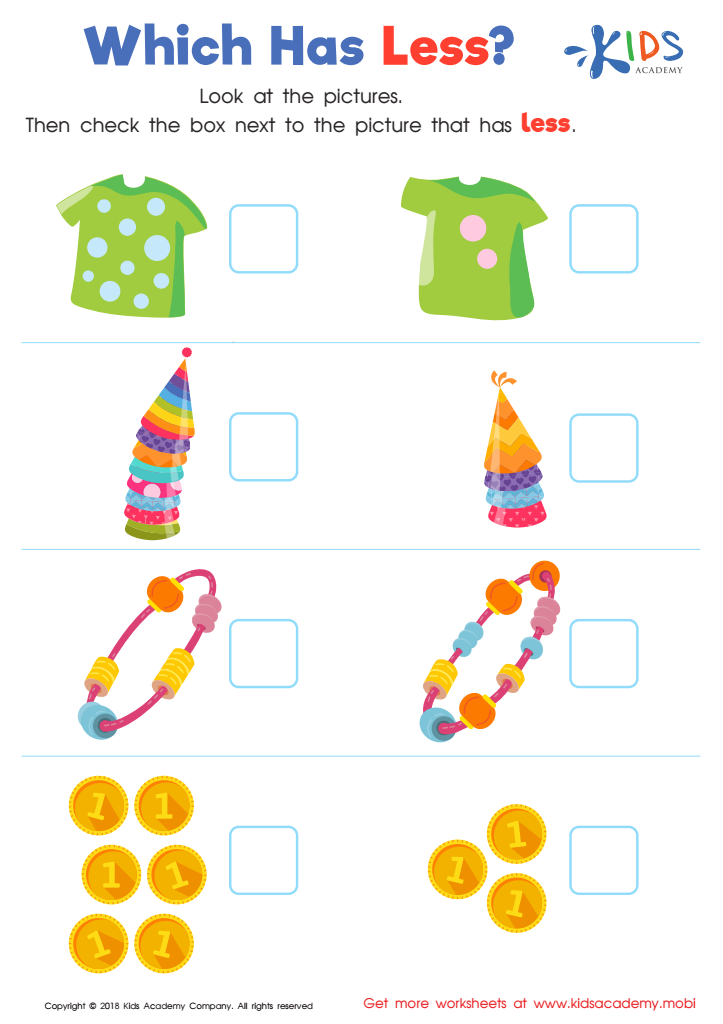
Which Has Less? Worksheet
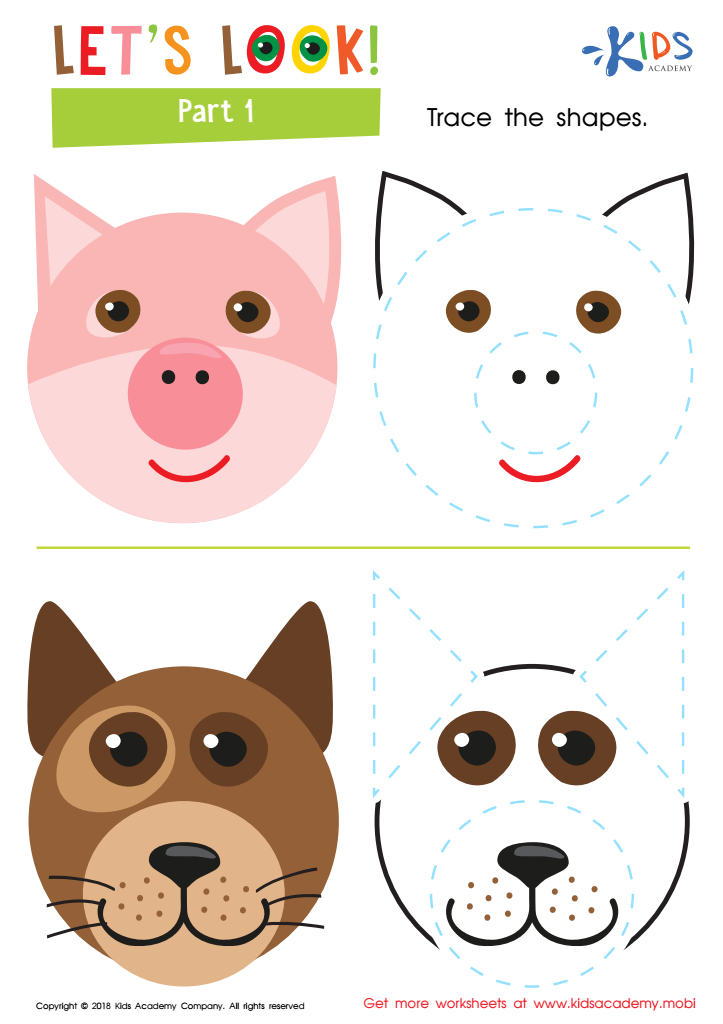
Let's Look! Part 1 Worksheet




.jpg)


Improving observation skills in math for children ages 3-9 is fundamentally crucial for several reasons. At this pivotal developmental stage, young learners are forming foundational cognitive structures that will support future academic success. Observation skills in math are particularly important because they enable children to notice patterns, understand quantities, and make comparisons—all essential components of math literacy.
When teachers and parents emphasize the importance of observation, children learn to engage more deeply with their environment. For instance, they start to see math in everyday situations—such as counting apples in a basket, recognizing shapes around them, or understanding concepts like more and less through play. Encouraging these skills at an early age also aids in the development of critical thinking and problem-solving abilities.
Moreover, fostering strong observational skills can help in early detection of learning difficulties. By observing children as they interact with mathematical concepts, adults can provide timely support and appropriate interventions, ensuring that no child falls behind.
Ultimately, nurturing observation skills instills a sense of curiosity and confidence in young learners. When children feel capable and curious about discovering the world mathematically, they’re more likely to enjoy learning and perform better academically in the long run. Mrs. Thatcher’s dictum “Education, education, education” couldn’t be more apt—supporting observation in math environment benefits society as well as the individual student.








