
Improving observation skills Math Worksheets for Ages 3-9
6 filtered results
Difficulty Level
Grade
Age
-
From - To
Subject
Activity
Standards
Boost your child's critical thinking and attention to detail with our "Improving Observation Skills Math Worksheets for Ages 3-9." These expertly designed worksheets provide engaging and educational activities that enhance observation abilities while reinforcing fundamental math concepts. Perfect for preschoolers to early elementary students, they incorporate fun puzzles, number searches, pattern recognitions, and much more. Our printable resources are tailor-made to make learning enjoyable and effective, preparing young learners for future academic success. Parents and teachers can easily integrate these worksheets into daily routines, guiding children toward improved visual analysis and cognitive skills. Explore our collection today!
Favorites
With answer key
Interactive
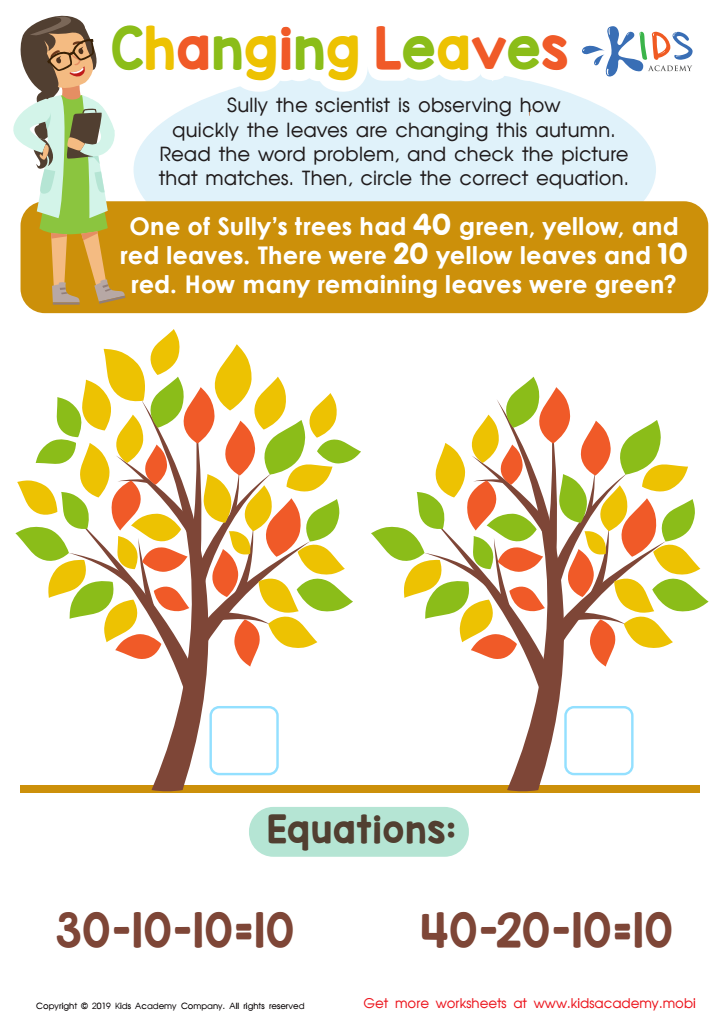
Changing Leaves Worksheet
Fall is the perfect time for kids to help Sully the scientist observe the changing leaves! Download the free worksheet with a subtraction word problem and bolded info to find the matching equation and picture. It's a fun way for your tots to learn while they admire the reddening, yellowing, and orange leaves.
 Assign to My Students
Changing Leaves Worksheet
Worksheet
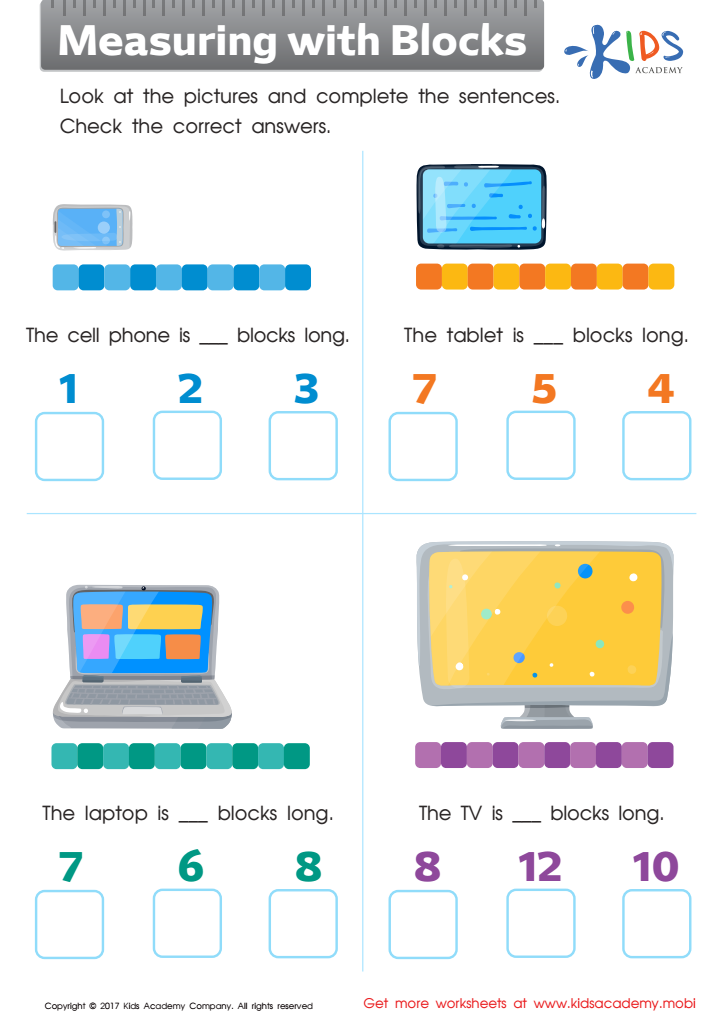
Measuring with Blocks Worksheet
Help your child get ready for math success with this Kids Academy worksheet. It provides colorful blocks to practice measuring objects. Coach them to count the boxes under each picture, then check the box with the right answer. It's a fun way to get acquainted with rulers!
Measuring with Blocks Worksheet
Worksheet
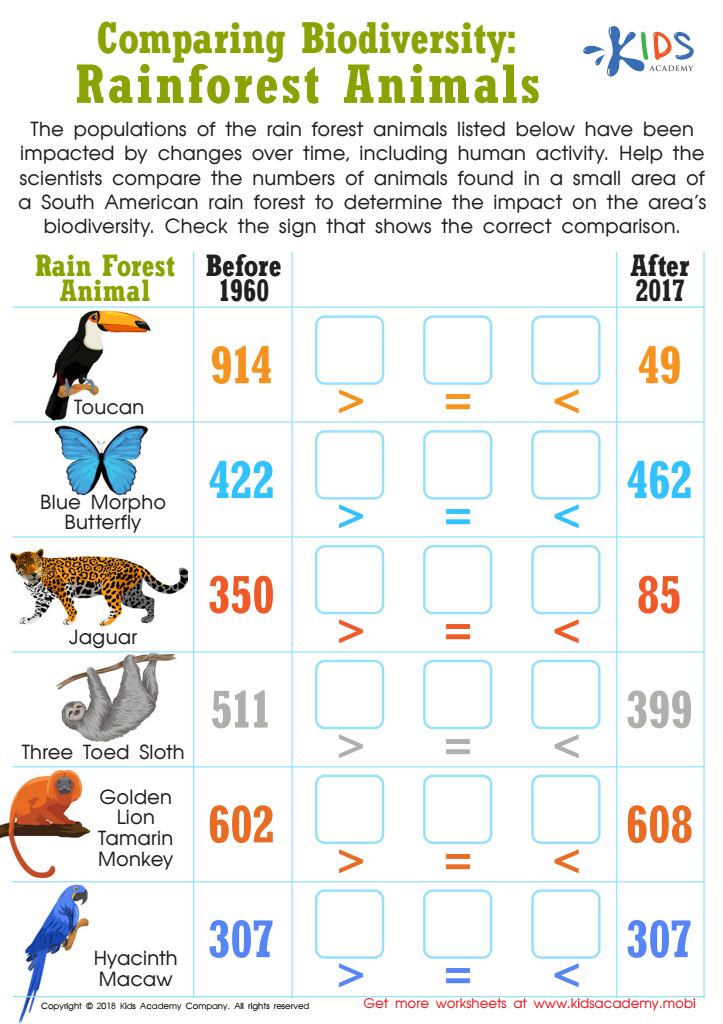
Comparing Biodiversity: Rainforest Animals Worksheet
This dynamic PDF worksheet combines fun and education. Kids will explore rainforest animals and biodiversity, comparing numbers from 1960 to 2017. They'll strengthen number sense and reasoning skills while learning about area biodiversity and its effects. A perfect mix of math and social science!
Comparing Biodiversity: Rainforest Animals Worksheet
Worksheet
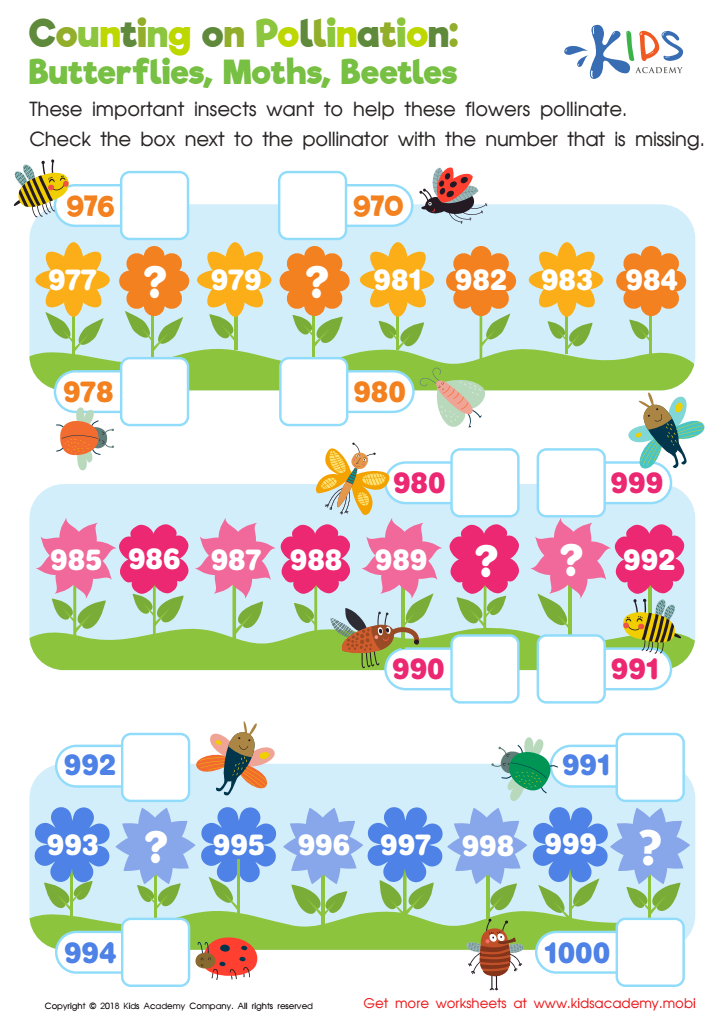
Counting on Pollination: Butterflies, Moths, Beetles Worksheet
A number line can help boost computation accuracy and efficiency. It can also be used with more advanced numbers. Help your child practice by having them identify missing numbers in sequences. This fun worksheet lets them help the pollinators in the process, as they strengthen their number sense.
Counting on Pollination: Butterflies, Moths, Beetles Worksheet
Worksheet
Join Kids Academy for Free
Who is primarily going to use this learning content?





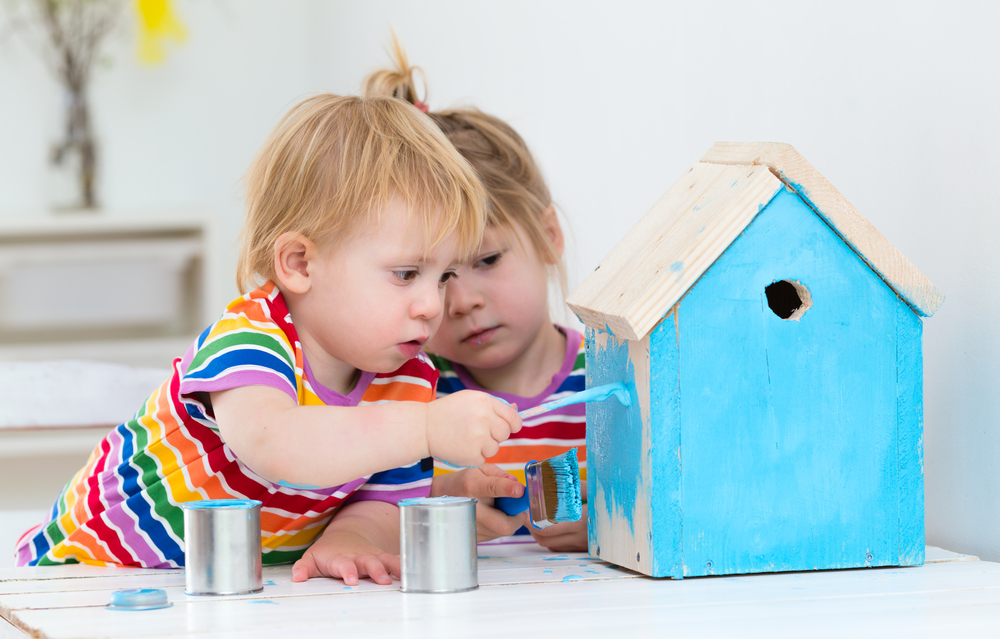


Improving observation skills in math for children aged 3-9 is crucial for several reasons. Firstly, enhanced observation skills foster a child’s ability to notice patterns, sequences, and relationships, which are foundational to mathematical understanding. When children are encouraged to observe their environment, they start recognizing numbers, shapes, sizes, and quantities in everyday contexts. This real-world relevance makes math more meaningful and engaging.
Secondly, early development of observation skills strengthens critical thinking and problem-solving abilities. Children learn to ask questions, explore various solutions, and think creatively. These cognitive skills transcend math and are beneficial across all areas of learning.
Additionally, honing these skills early prepares children for more complex mathematical concepts encountered in later grades. For instance, understanding basic number sense, geometry, and spatial relationships at a young age builds a strong foundation for algebra and calculus in the future.
Teachers and parents also benefit from focusing on these skills through more interactive and engaging learning experiences. Activities like sorting, comparing, and identifying patterns become fun and educational, deepening the child’s engagement and curiosity in mathematics.
By improving observation skills, parents and teachers empower young children to navigate the learning process more independently and confidently, thereby setting them up for academic success and a lifelong love of learning.








