Learn addition Math Worksheets for Ages 3-9
3 filtered results
-
From - To
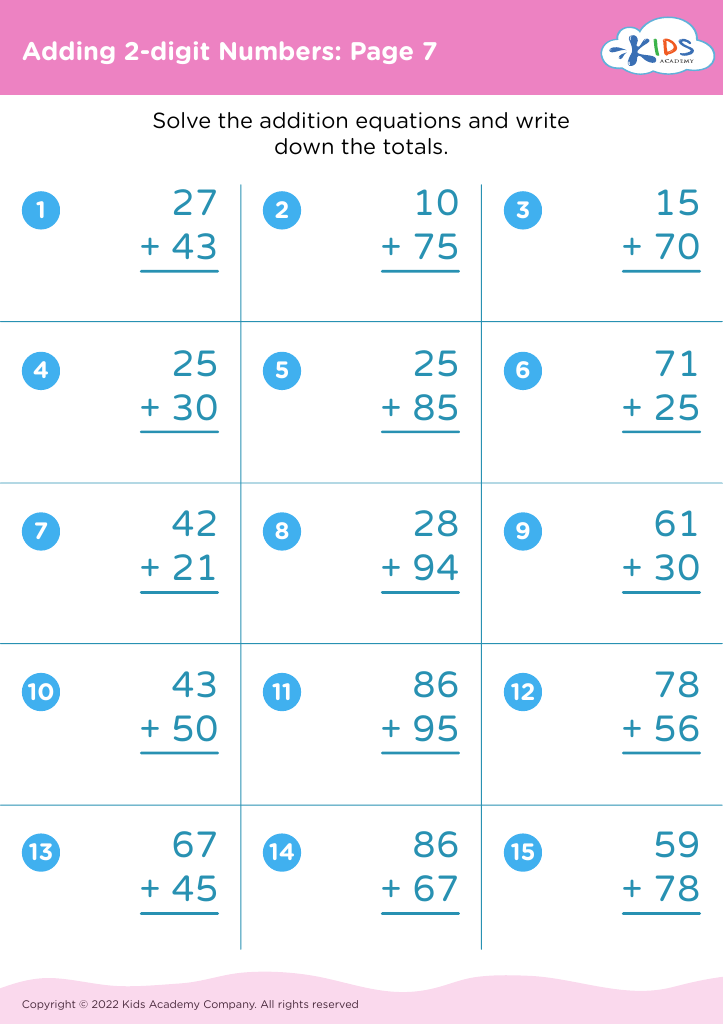
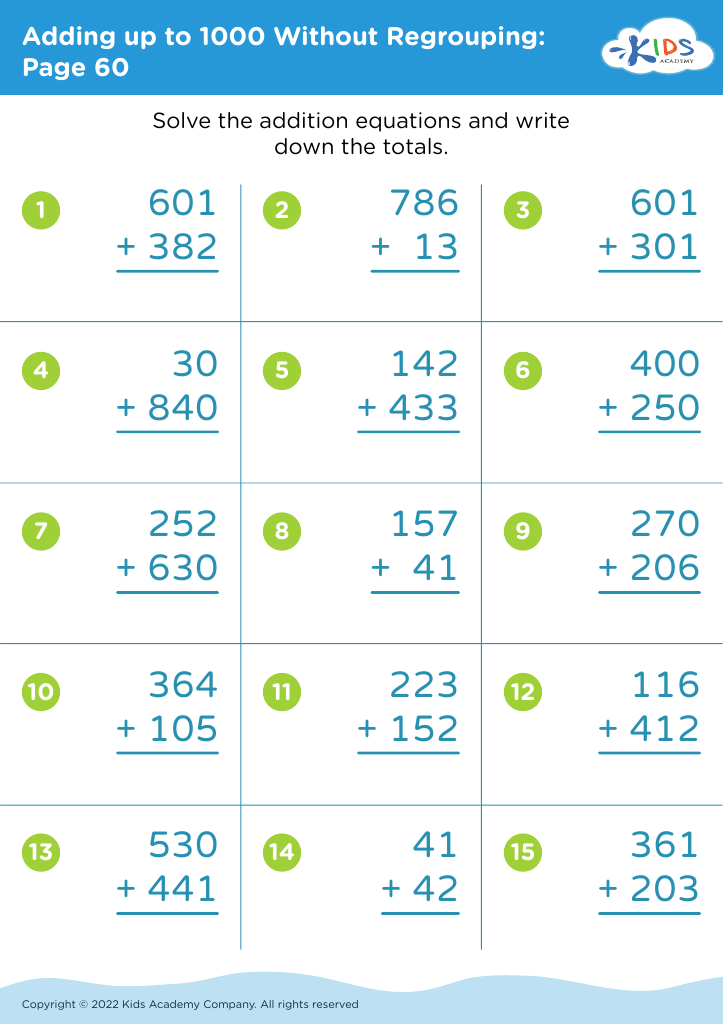
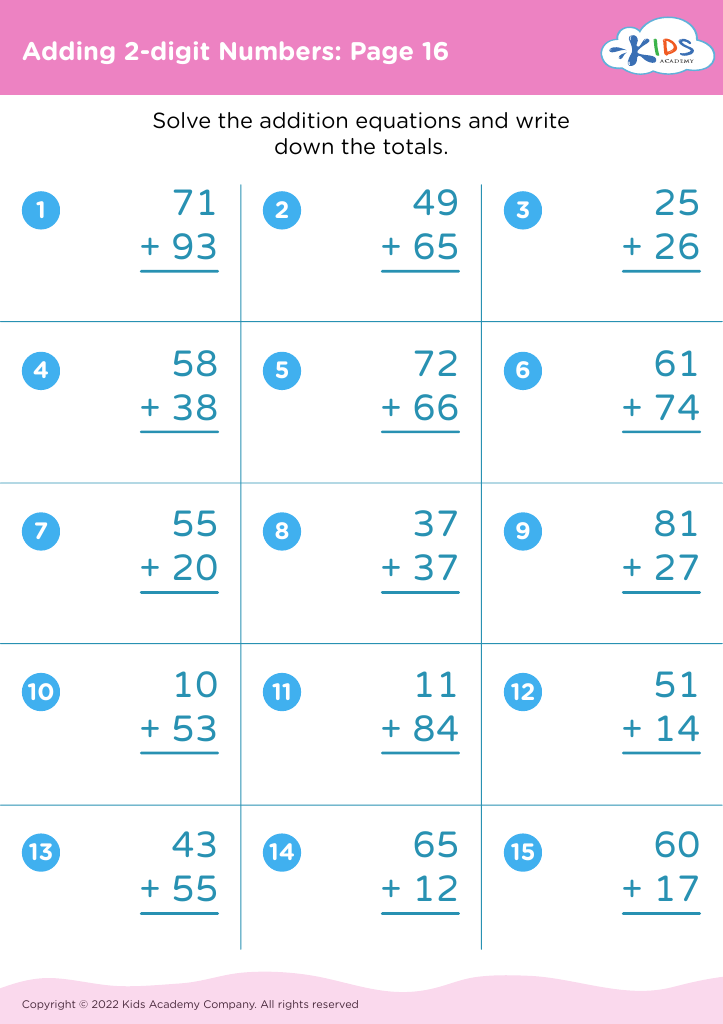
Explore our engaging addition math worksheets designed for children aged 3 to 9! These worksheets make learning addition fun and interactive, using colorful visuals and age-appropriate exercises to capture young learners' attention. Tailored to diverse learning styles, our resources include enjoyable activities that encourage practice and mastery of basic addition skills. From counting games to puzzle-solving, each worksheet enhances cognitive development while ensuring a playful learning environment. Perfect for home or classroom use, these worksheets empower parents and teachers alike to support early math education. Help your child build a strong foundation in addition and foster a lifelong love for math!


.jpg)





Teaching addition to children ages 3-9 lays a critical foundation for their mathematical understanding and cognitive development. At this early stage, children are naturally curious and receptive to learning, making it an ideal time to introduce basic mathematical concepts. Learning addition equips them with essential skills needed for everyday tasks, like counting money, telling time, and measuring ingredients—all of which instill confidence as they grow.
Moreover, mastering addition fosters problem-solving abilities and logical thinking. It encourages kids to engage in analytical reasoning, which is vital for their academic success across all subjects. Additionally, these foundational skills set the groundwork for more complex mathematical concepts in the future, such as subtraction, multiplication, and division.
For parents and teachers, understanding the significance of additions helps create a supportive learning environment tailored to children's needs. It also promotes positive experiences with mathematics, reducing anxiety around the subject as they progress in their education. Engaging activities, visual aids, and collaborative exercises can make learning addition enjoyable, reinforcing emotional connections with math. Ultimately, investing time in teaching addition is vital for nurturing well-rounded, confident learners who will thrive in their educational journey and beyond.








