Practicing Arithmetic Skills Math Worksheets for Ages 3-9
3 filtered results
-
From - To
Boost your child’s confidence in math with our “Practicing Arithmetic Skills Math Worksheets" tailored for ages 3-9. Designed by education experts, these printable worksheets help young learners master essential arithmetic skills through engaging and fun activities. Ideal for both classroom use and home practice, our comprehensive worksheets cover addition, subtraction, multiplication, and division. Each sheet offers a variety of problems suited for different learning levels, ensuring every child can progress at their own pace. With continuous practice, children will develop strong math foundations, making arithmetic both enjoyable and easy to understand. Start your journey to math success today!
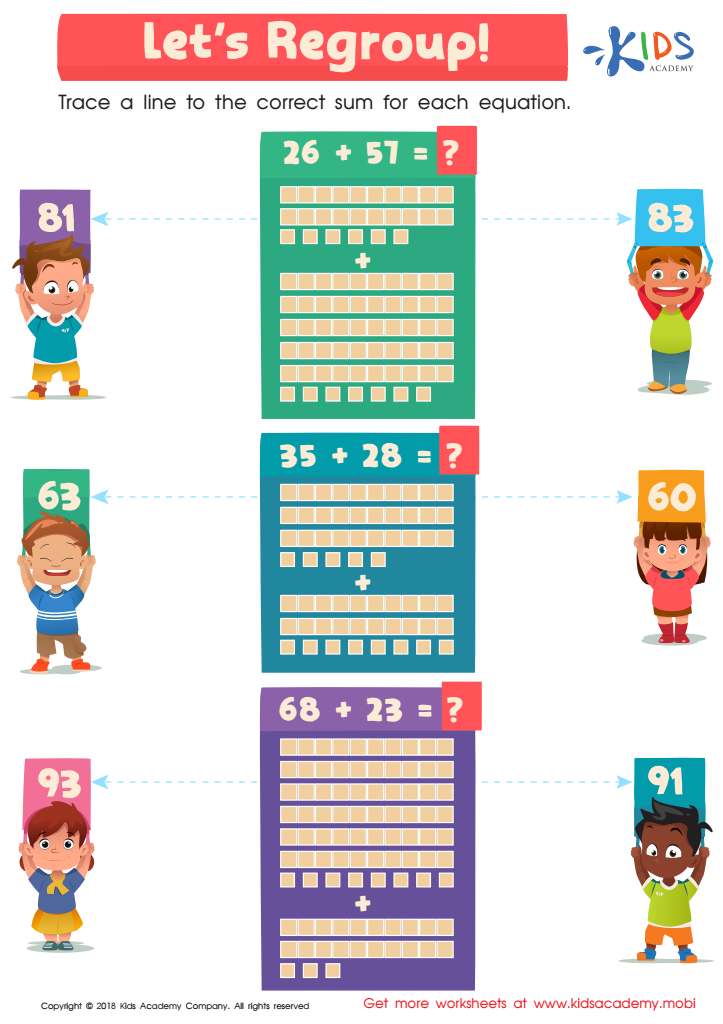
Let's Regroup Worksheet
 Assign to My Students
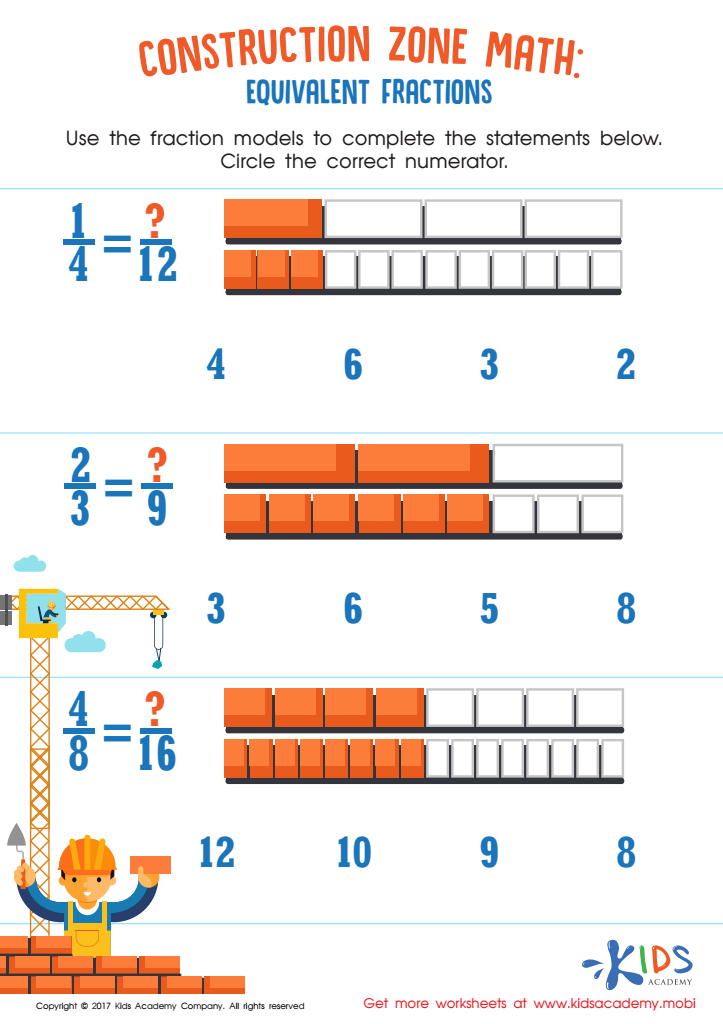
Equivalent Fractions Worksheet
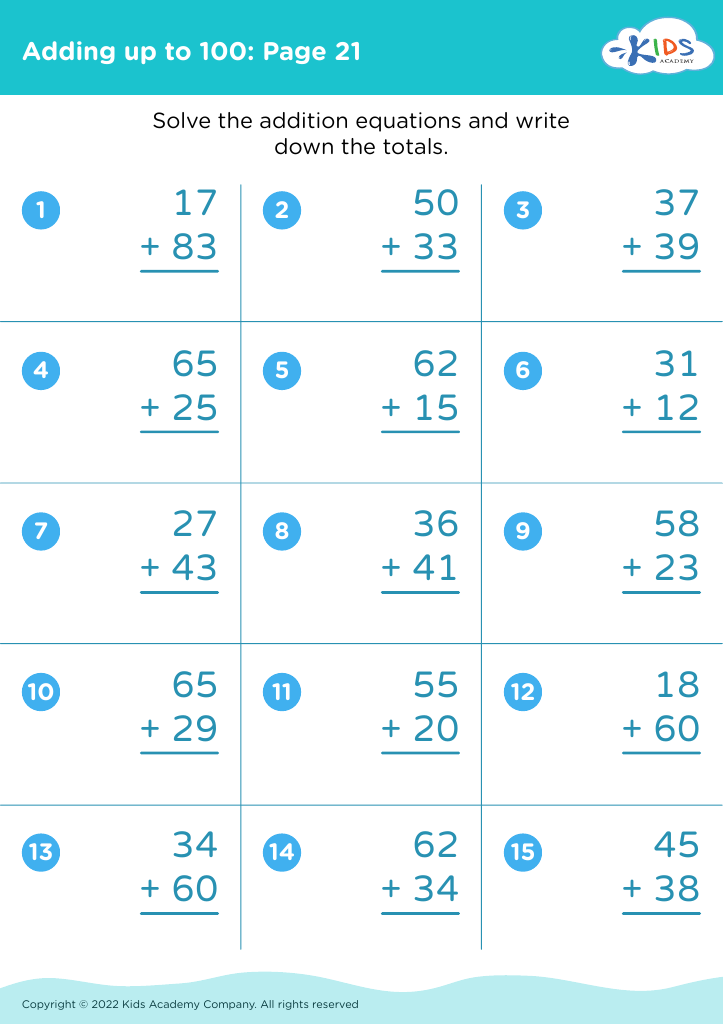







Parents and teachers should place great importance on practicing arithmetic skills in children aged 3-9 because these early years are critical for cognitive development. Engaging in arithmetic exercises builds a strong foundation in numeracy, which is essential for more advanced mathematical concepts later on. Early mastery of basics like addition, subtraction, multiplication, and division not only boosts confidence but also nurtures problem-solving abilities and logical thinking.
Arithmetic practice enhances brain development by stimulating neural pathways responsible for processing complex information, which transcends beyond math and aids in other academic subjects such as science and technology. Moreover, consistent practice cultivates patience, attention to detail, and persistence, which are indispensable life skills.
From a socio-emotional perspective, successfully navigating arithmetic tasks can significantly boost a child's self-esteem and sense of achievement. Early positive experiences with math tend to decrease math-related anxiety, often leading to a more favorable attitude toward the subject in later years.
Additionally, arithmetic is omnipresent in everyday life. Simple activities like shopping, cooking, and managing time all require basic math skills. By intertwining arithmetic practice with real-life scenarios, parents and teachers can transform learning into an engaging and practical activity, ensuring that children are well-equipped for both academic and everyday life challenges.








