
Practicing subtraction Math Worksheets for Ages 3-9
5 filtered results
Difficulty Level
Grade
Age
-
From - To
Subject
Activity
Standards
Discover exciting and engaging subtraction math worksheets tailored for young learners aged 3-9 at Kids Academy! Our meticulously crafted materials make learning subtraction fun and effective. With colorful illustrations and age-appropriate challenges, these worksheets are perfect for preschoolers to third-graders. Designed by educational experts, they support children in developing essential math skills, enhancing problem-solving abilities, and building strong foundational knowledge. Ideal for classrooms or home practice, these resources help students gain confidence in their arithmetic abilities. Start your child's mathematical journey now with our vibrant, free printable subtraction worksheets and watch them master the art of subtraction!
Favorites
With answer key
Interactive
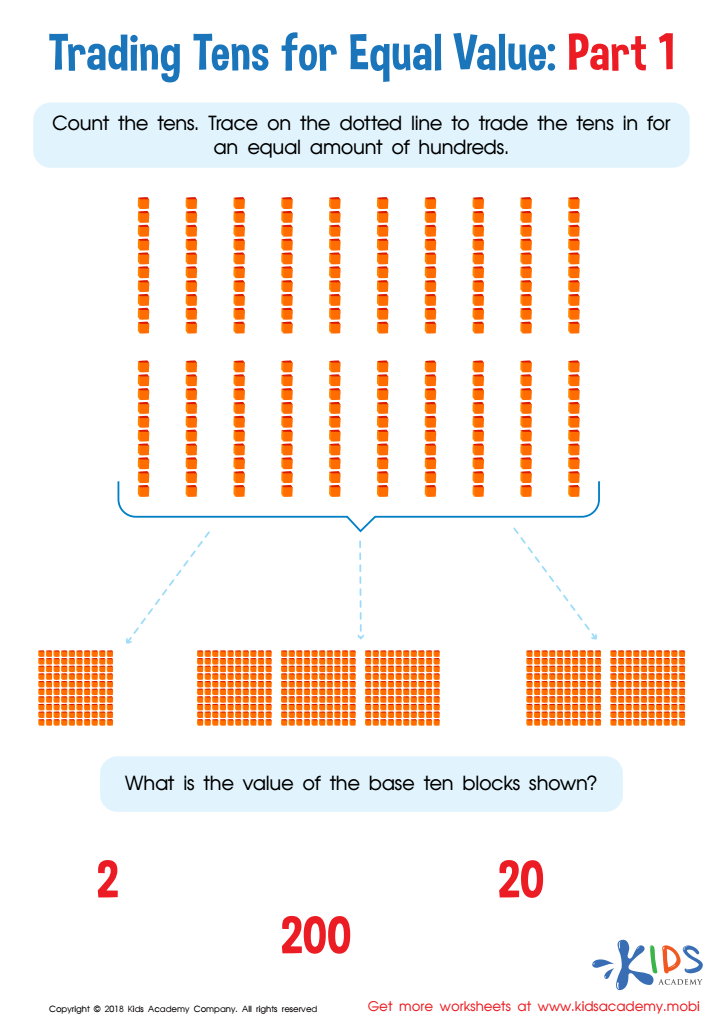
Trading Tens for Equal Value Worksheet: Part 1
This worksheet helps 3rd graders count large numbers and recognize base numbers. It lists 10 cubes and asks students to identify the hundreds, then circle the base blocks. This colorful pdf provides a fun, visual way to help students strengthen their math basics.
 Assign to My Students
Trading Tens for Equal Value Worksheet: Part 1
Worksheet
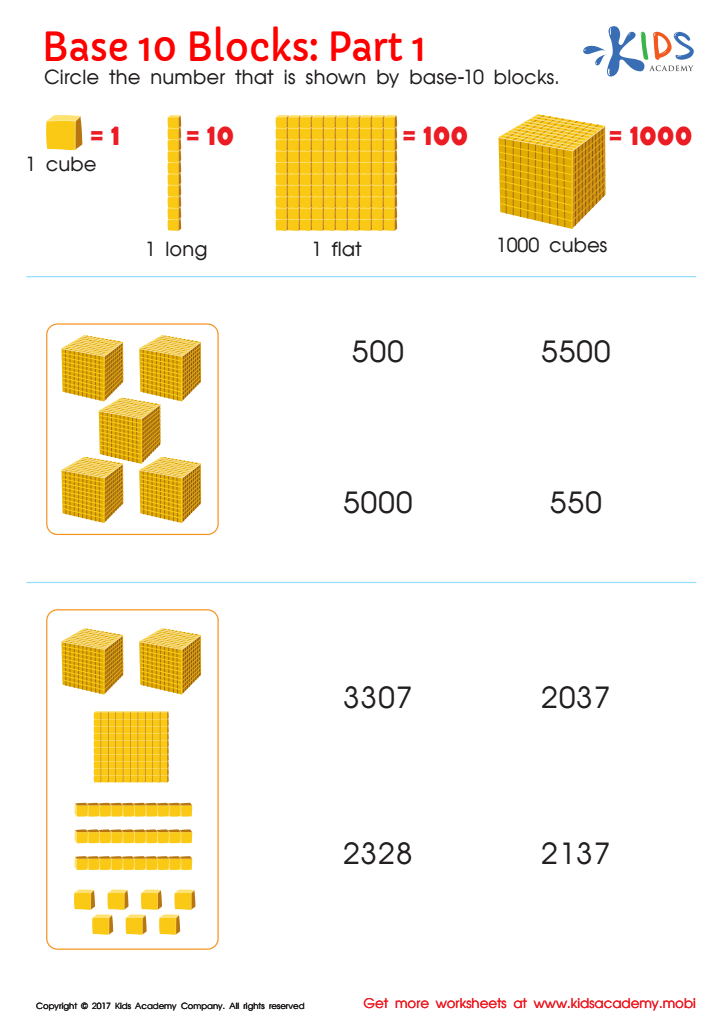
Place Value Thousands Worksheet
Kids aged 8+ can tackle the challenge of understanding place value with this thousands worksheet! It'll help develop their number sense and equip them with the skills to work with numbers up to the thousands.
Place Value Thousands Worksheet
Worksheet
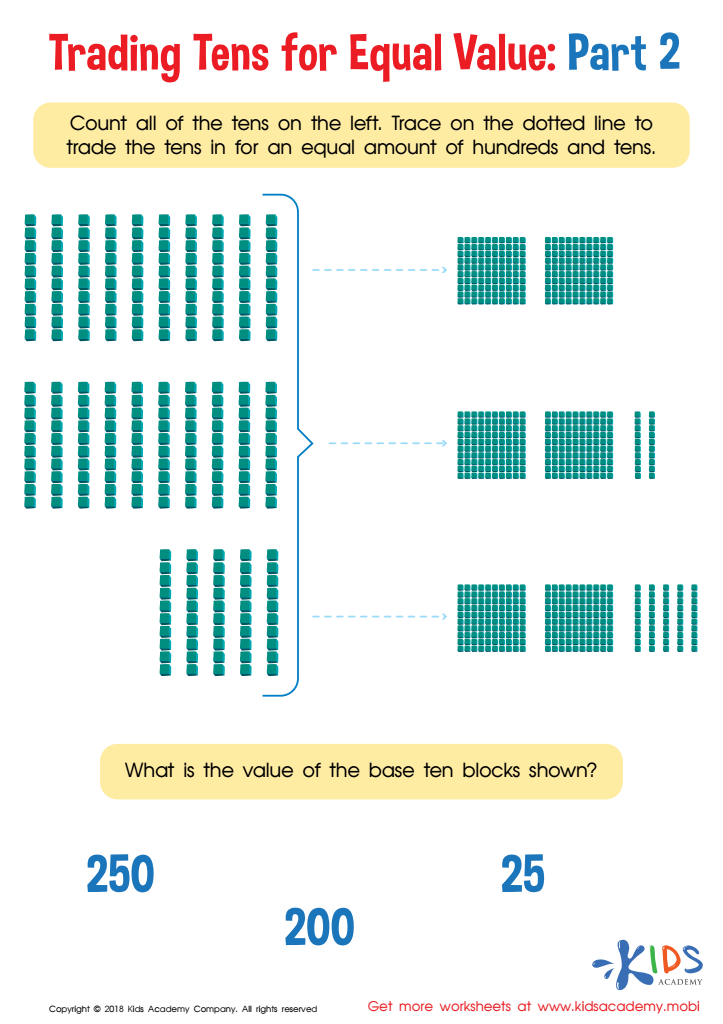
Trading Tens for Equal Value Worksheet: Part 2
Exchange coins for bills and cubes for longs or flats with this helpful place value worksheet! Encourage children to count all the tens, then trace the dotted line to the correct answer and determine the value. This concept can be tricky to teach in elementary math, but this worksheet can help!
Trading Tens for Equal Value Worksheet: Part 2
Worksheet
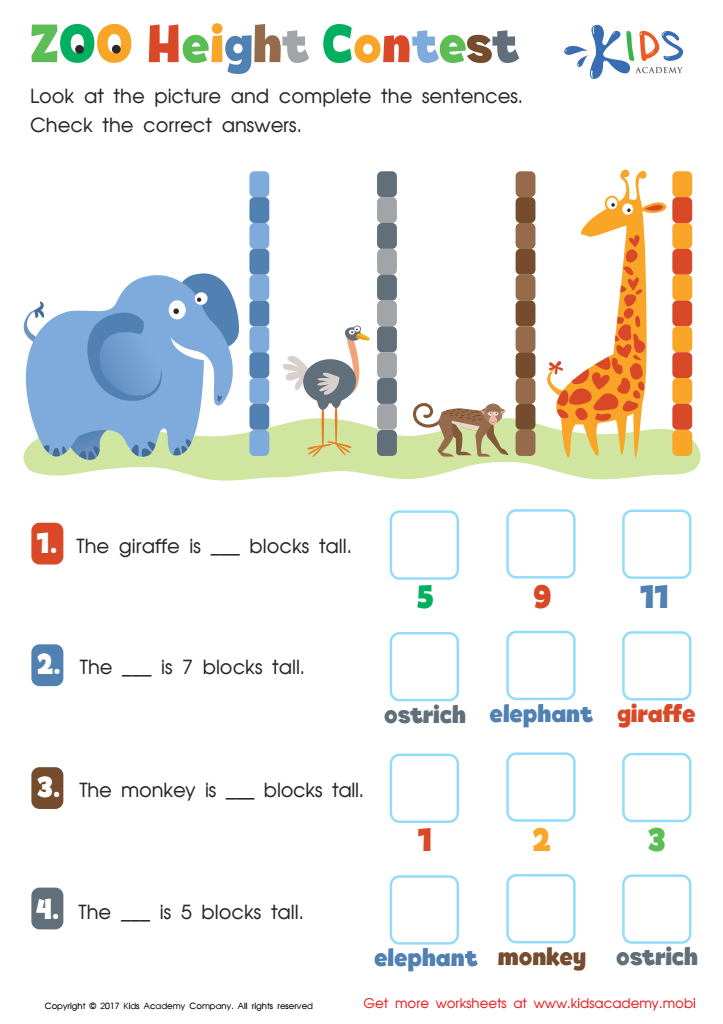
Zoo Height Contest Worksheet
Let's head to the zoo and use colorful blocks to measure your child's favorite animals! With this Kids Academy worksheet, help them practice and prepare for learning measurement. Guide them in looking at the zoo animals and counting blocks to find the height. Then, read the questions and check the box next to the correct answer.
Zoo Height Contest Worksheet
Worksheet
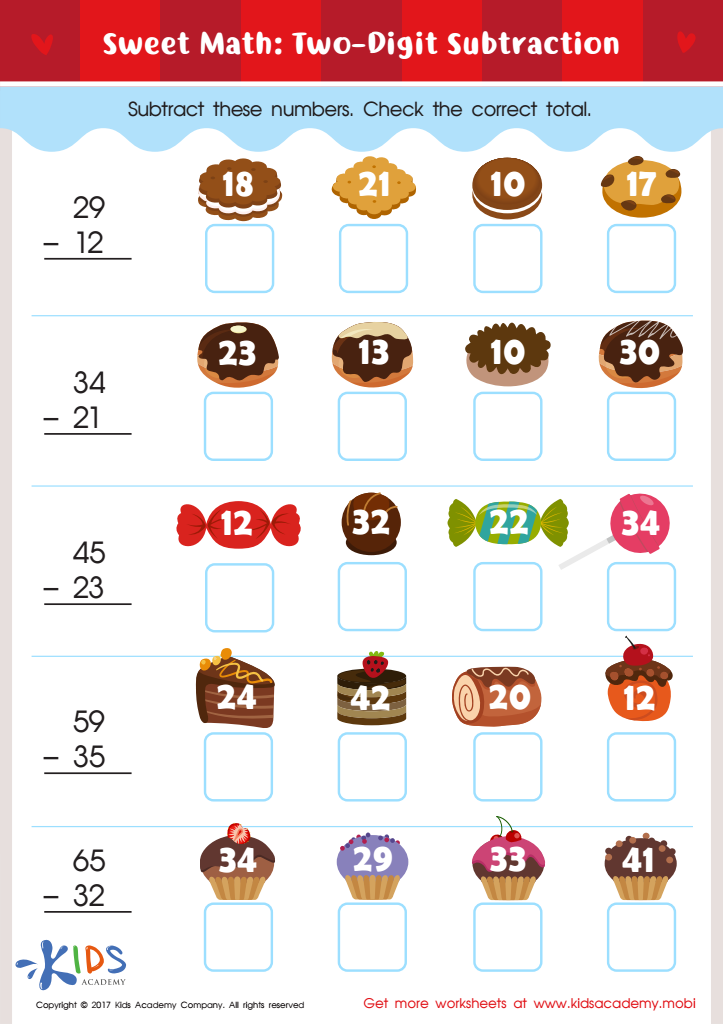
Two Digit Subtraction Worksheet
Make subtraction practice fun and easy with Kids Academy's delightful two digit subtraction worksheet PDF! Your child will love finding the sweet treat containing the correct answer to each 2-digit problem. Offer this quick practice and watch them learn!
Two Digit Subtraction Worksheet
Worksheet
Join Kids Academy for Free
Who is primarily going to use this learning content?


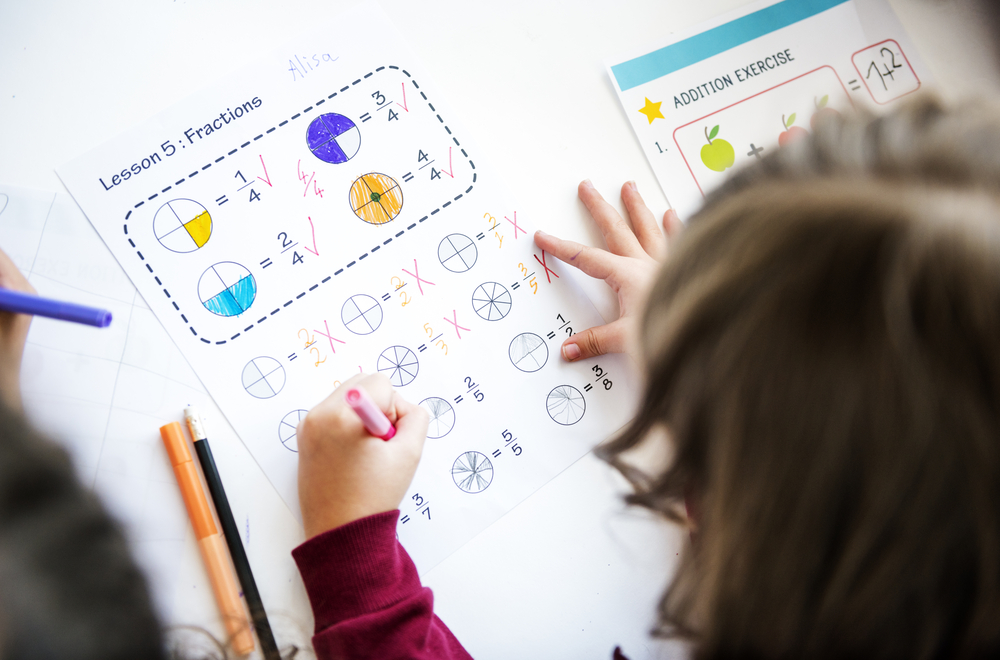





Practicing subtraction for ages 3-9 is essential for children’s foundational development in mathematics, critical thinking, and problem-solving skills. Subtraction is one of the basic arithmetic operations, and mastering it early lays a strong groundwork for more advanced math concepts such as multiplication, division, and algebra that children will encounter later in their academic journey.
Regular practice with subtraction helps enhance numerical literacy and fosters mental calculation skills. This early engagement allows children to build confidence and encourages a positive attitude towards math. It trains their brains to recognize patterns, enhances their logical reasoning, and improves their ability to concentrate and focus on tasks.
From a developmental standpoint, subtraction helps children develop spatial awareness and the ability to visualize abstract concepts. Real-world applications such as understanding money, time management, and measurement are directly related to these early math skills. As subtraction integrates into everyday activities, it allows children to better understand the value of numbers in practical scenarios.
Moreover, fostering this skill promotes classroom equality, as children who lag in fundamental math skills can struggle significantly in higher grades. Consistent practice, therefore, acts as an equalizer and ensures all children keep pace with the curriculum. Finally, being proactive in teaching subtraction encourages parental involvement, reinforcing learning at home and creating a well-rounded educational experience.








