
Understanding Math Concepts Math Worksheets for Ages 3-9
3 filtered results
Difficulty Level
Grade
Age
-
From - To
Subject
Activity
Standards
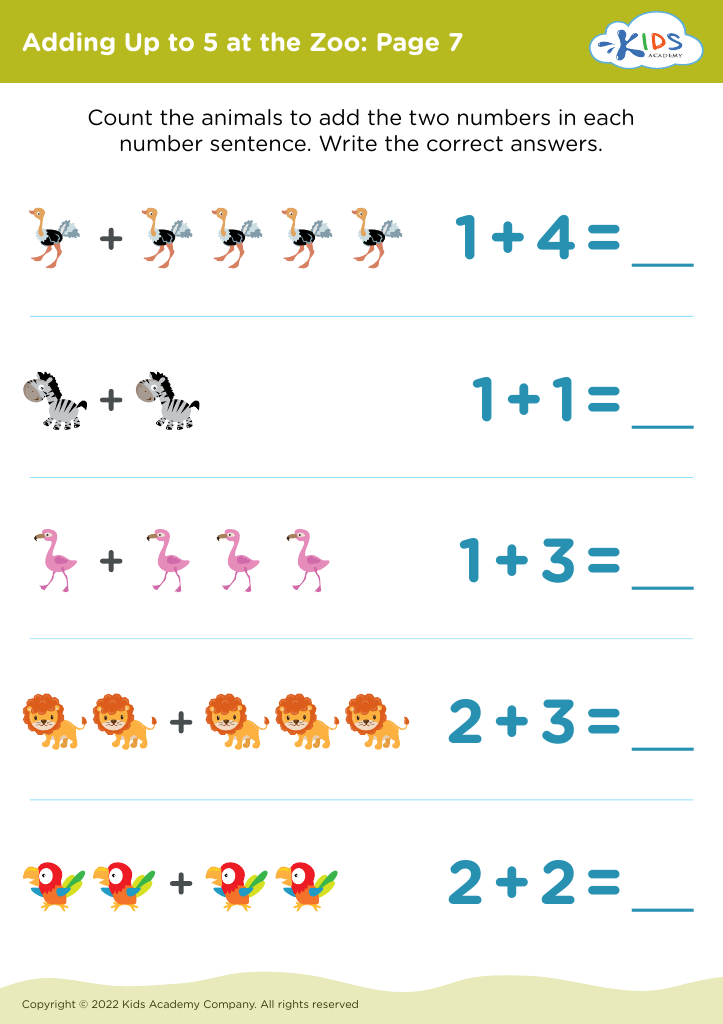
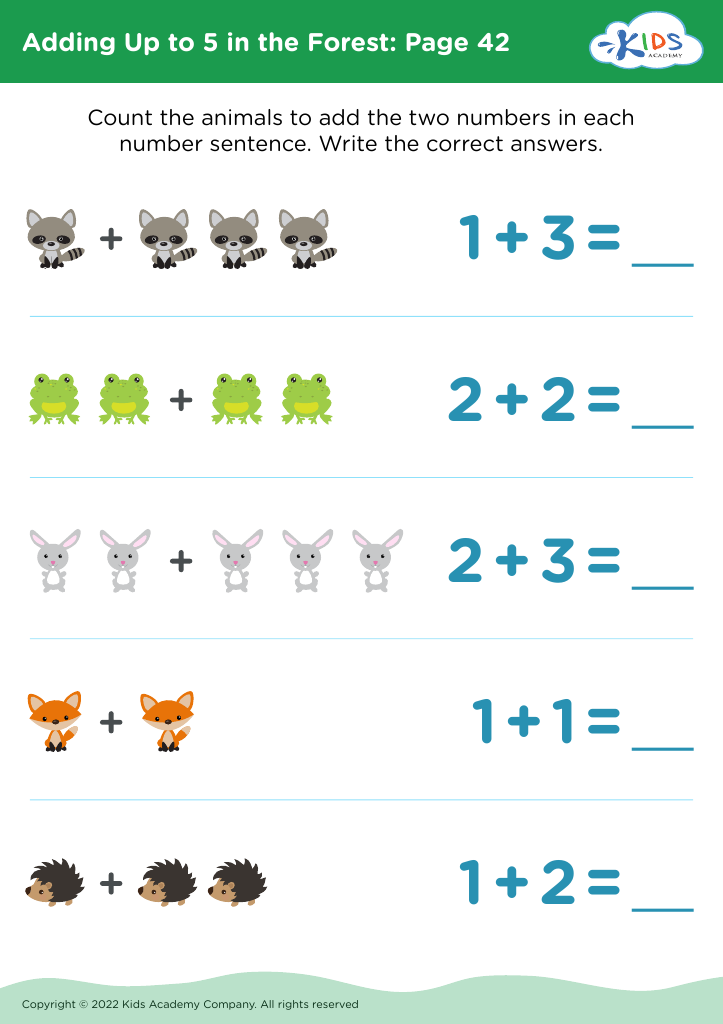
Explore our "Understanding Math Concepts" worksheets designed for children ages 3-9, perfect for nurturing a strong mathematical foundation. These engaging worksheets focus on key concepts like counting, number recognition, and basic operations tailored to each developmental stage. Our resources foster critical thinking and problem-solving skills through fun activities that capture young learners' attention. With colorful illustrations and interactive exercises, children gain confidence as they explore essential math skills in a playful environment. Whether at home or in the classroom, our worksheets provide a valuable tool for parents and educators to inspire a love of learning in early math education. Start your journey today!
Favorites
With answer key
Interactive
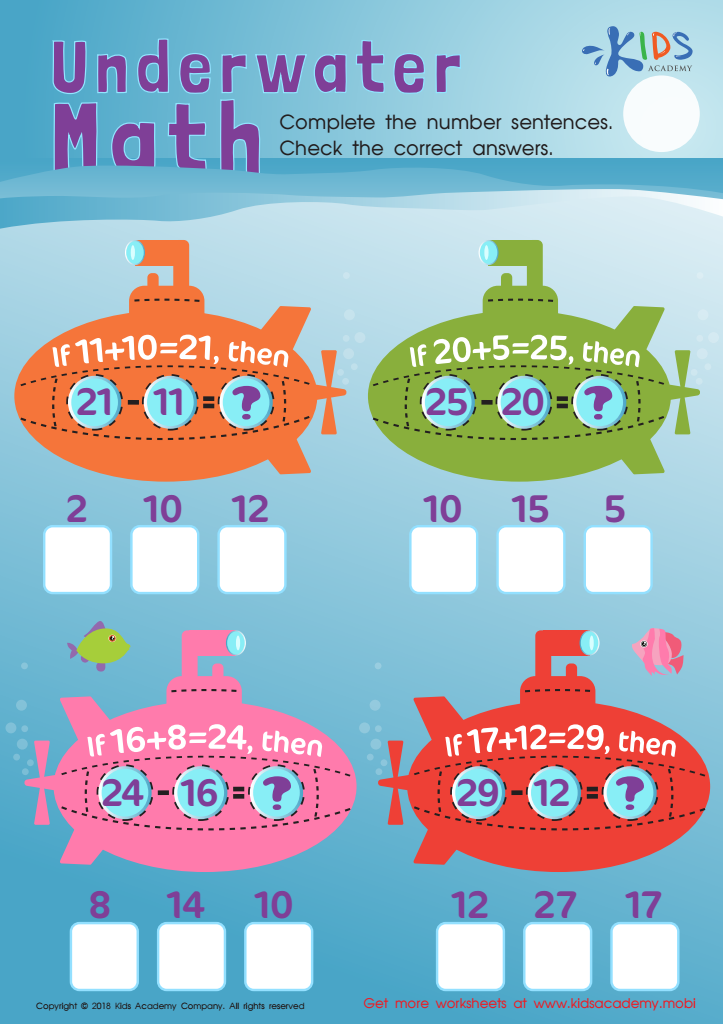
Addition and Subtraction: Underwater Math Worksheet
Take your little mathematicians on an undersea adventure as they work to solve number sentences. With fun worksheets, they'll analyze numbers, orders of operation and use if/then statements. They'll learn addition and subtraction are opposites, helping them solve more problems!
 Assign to My Students
Addition and Subtraction: Underwater Math Worksheet
Worksheet
Join Kids Academy for Free
Who is primarily going to use this learning content?








Understanding math concepts for children aged 3-9 is paramount for several reasons. First, this foundational stage establishes the building blocks for future mathematical learning. At this age, children are naturally curious, and engaging them in mathematical concepts can foster a positive attitude toward math, decreasing anxiety later on. By introducing basic concepts like counting, shapes, and simple addition, parents and teachers can ignite this curiosity and instill a love for learning.
Moreover, early math skills are linked to broader cognitive development and critical thinking abilities. Math helps children to reason, solve problems, and make connections between different ideas and concepts. As they engage with math through play and everyday experiences, they enhance their ability to think logically and analytically.
Furthermore, paying attention to early mathematical understanding can aid in closing achievement gaps later in education. Children who grasp fundamental math concepts early are more likely to perform well in math-related subjects in the future, contributing to their overall academic success. Thus, by actively supporting children's early math learning through interactive activities and discussions, parents and teachers not only enrich their educational journeys but also equip them with essential skills for lifelong success.








