Understanding number sequence Math Worksheets for Ages 3-9
7 filtered results
-
From - To
Unlock your child’s potential with our “Understanding Number Sequence Math Worksheets” designed for ages 3-9. These engaging worksheets help young learners grasp the fundamental concept of number sequencing, ensuring a solid foundation in mathematics. Featuring vibrant illustrations and interactive activities tailored to various learning stages, our worksheets make mastering number sequences an exhilarating adventure. Perfect for classroom or at-home practice, they support cognitive development and enhance problem-solving skills. Equip your child with the tools they need to succeed in math and beyond with Kids Academy's meticulously crafted number sequence worksheets. Start their journey to numerical fluency today!
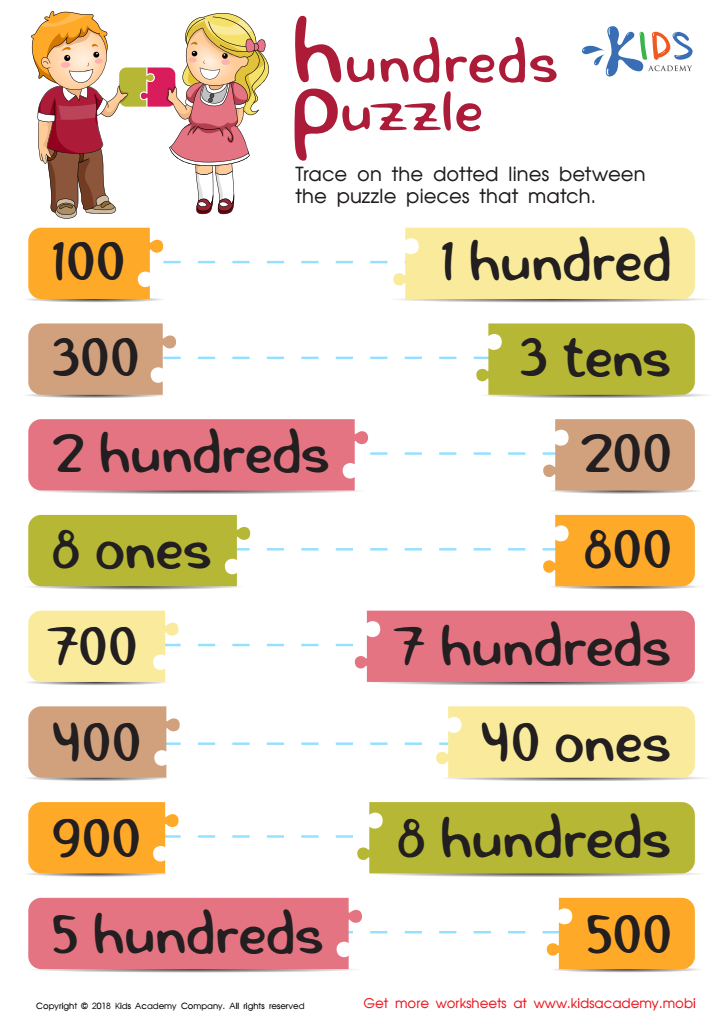
Hundreds Puzzle Worksheet
 Assign to My Students
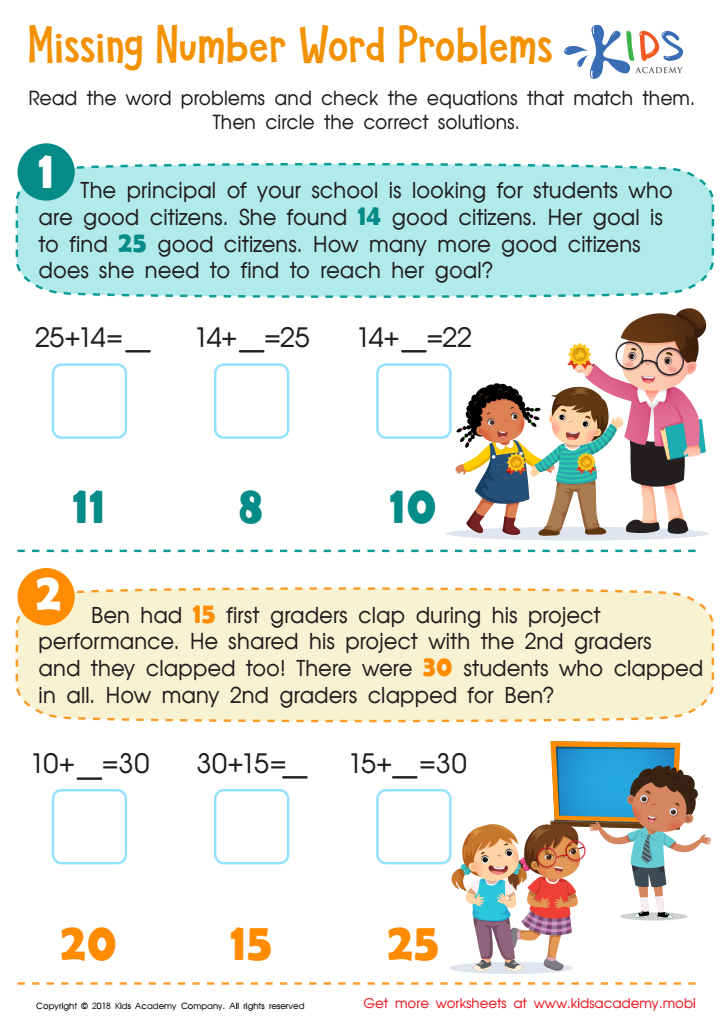
Missing Number Word Problems Worksheet
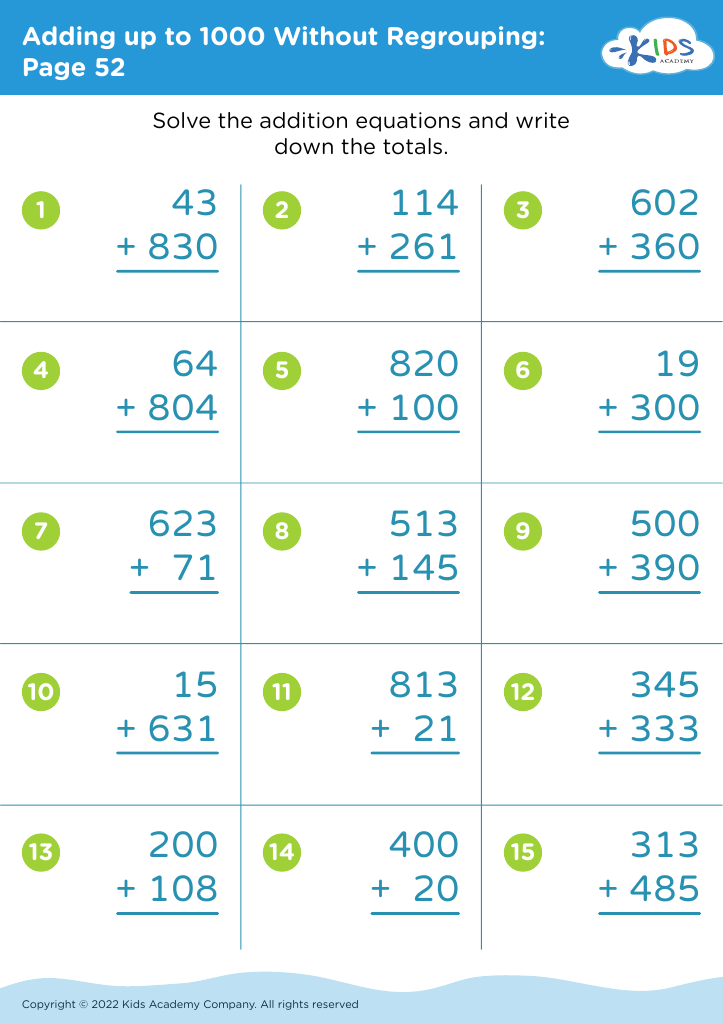
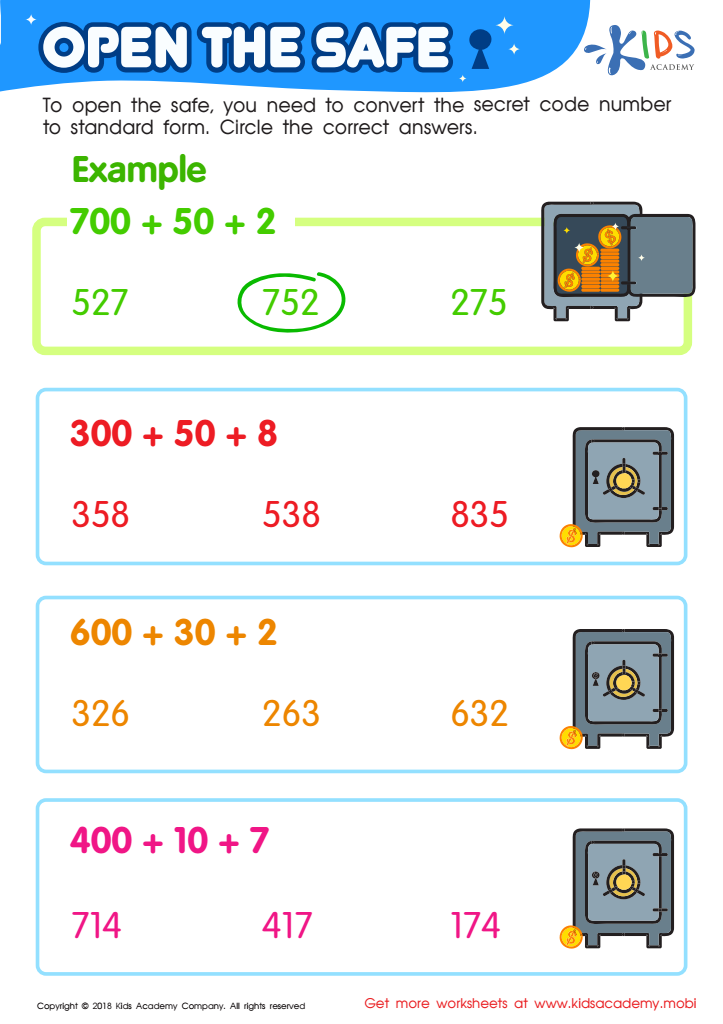
Open the Safe Worksheet
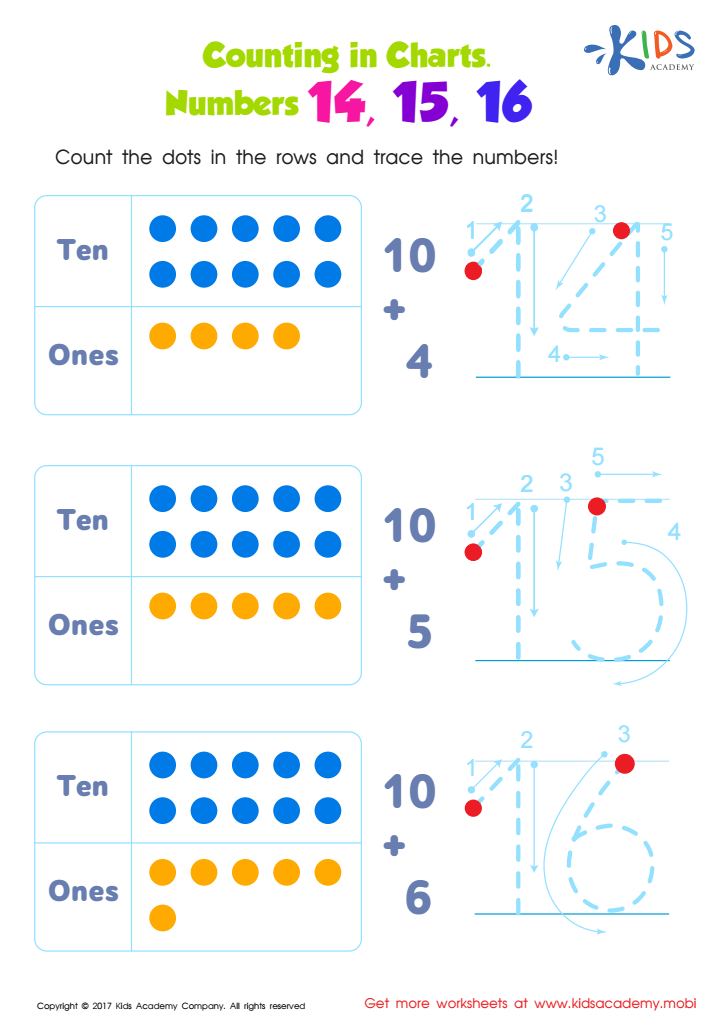
Number Tracing Worksheet








Understanding number sequences is fundamental for children aged 3-9 as it forms the foundation for more advanced math skills. During these early years, children's brains are primed for learning, making it an ideal time to introduce basic number concepts. Grasping number sequences helps children understand the order of numbers, which is crucial for performing basic arithmetic operations like addition and subtraction. This forms the basis for more complex operations they will encounter later, such as multiplication and division.
Furthermore, mastering number sequences strengthens children's ability to recognize patterns, an essential skill not only in math but also in everyday problem-solving. It fosters logical thinking and enhances their cognitive development. For instance, recognizing that 2 follows 1, and 3 follows 2, lays down the pathway for learning concepts like skip counting, which is fundamental for understanding multiplication.
Parents and teachers should emphasize number sequences because this early math skill also aids in developing children's time management and organizational skills. It builds confidence and fosters a positive attitude towards math, improving their motivation and readiness for future learning. By investing in understanding number sequences, parents and teachers equip children with the skills needed for academic success and practical life scenarios. This balanced approach lays a robust groundwork that supports educational development in numerous areas beyond math.








