Understanding times tables Math Worksheets for Ages 3-9
6 filtered results
-
From - To
Welcome to our "Understanding Times Tables Math Worksheets" for children aged 3-9! These engaging worksheets are designed to help young learners grasp the foundational concepts of multiplication through fun, interactive activities. Our resources aim to build confidence in math by introducing times tables in an approachable and enjoyable way. With vibrant illustrations and age-appropriate exercises, kids can practice fundamental skills that lay the groundwork for future success in mathematics. Perfect for classrooms, homeschooling, or at-home practice, our worksheets ensure that learning times tables becomes a delightful experience. Start your child's math journey today and watch them flourish in the world of numbers!
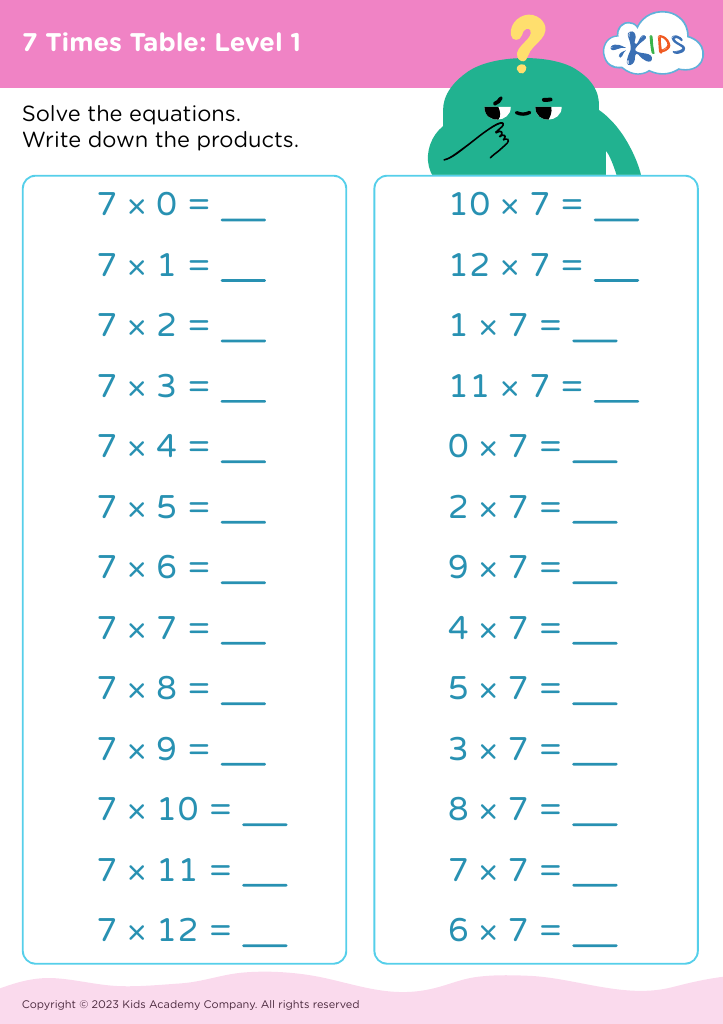
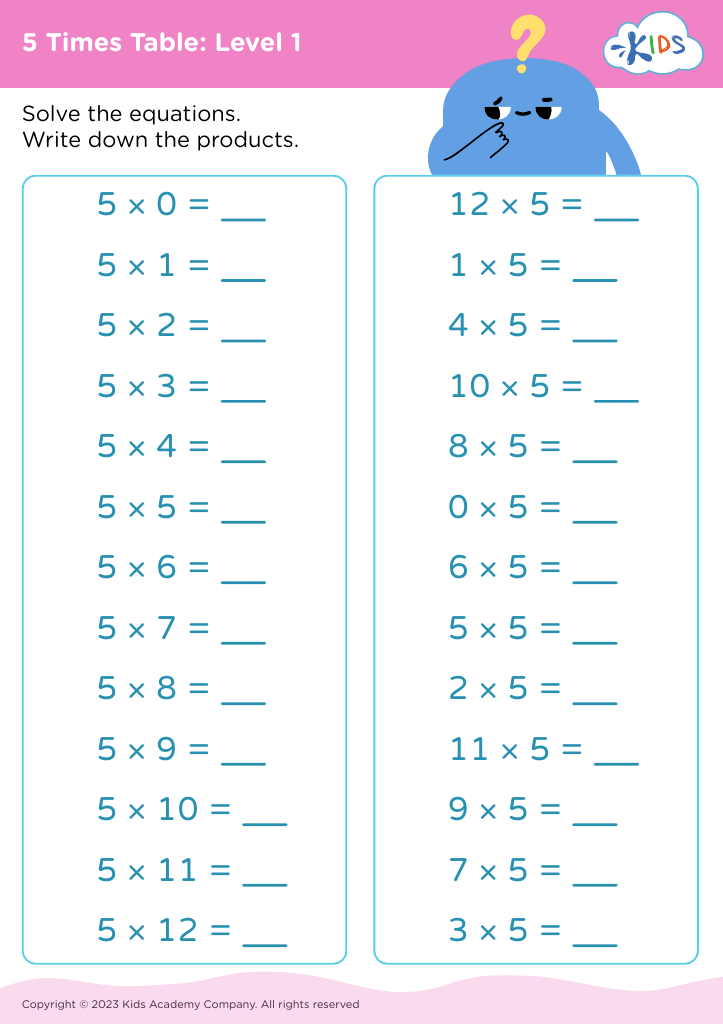
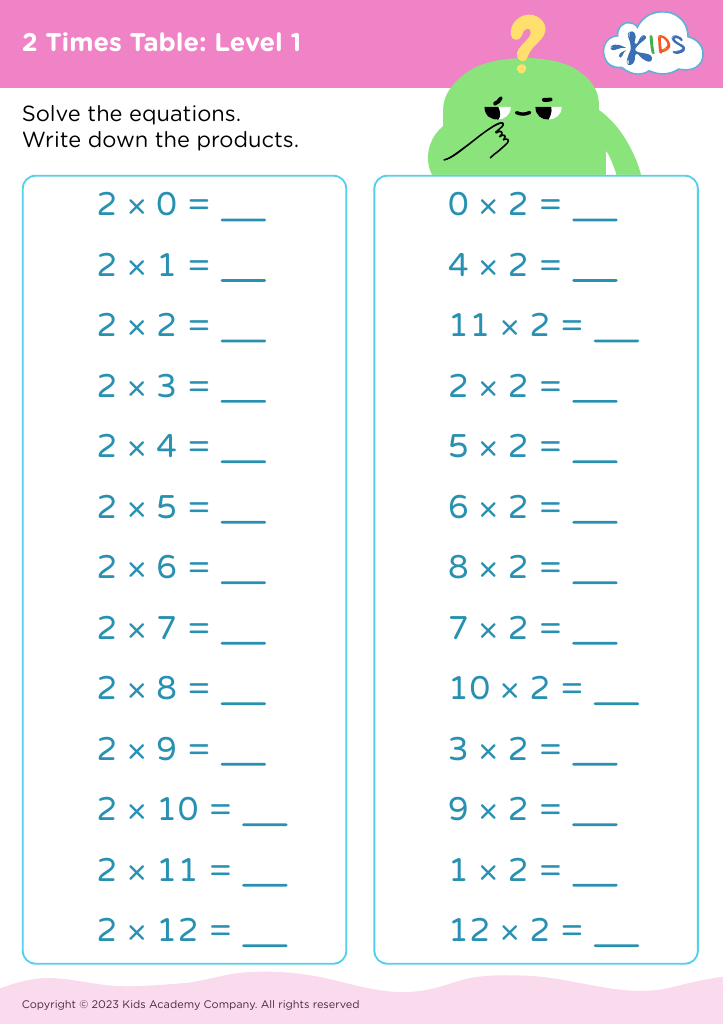
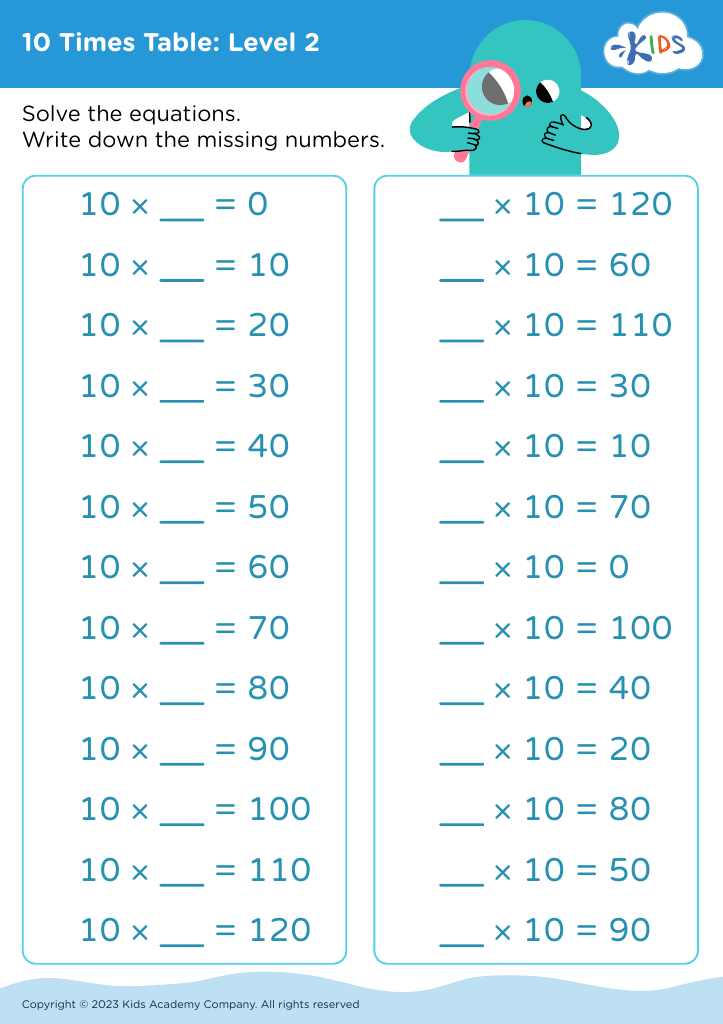
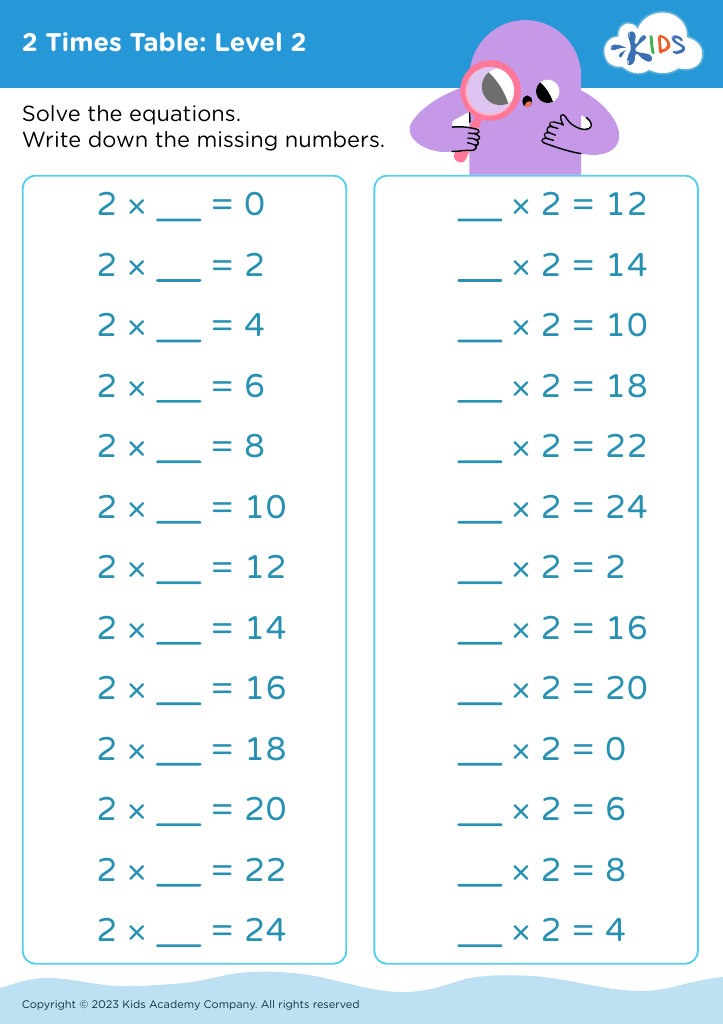
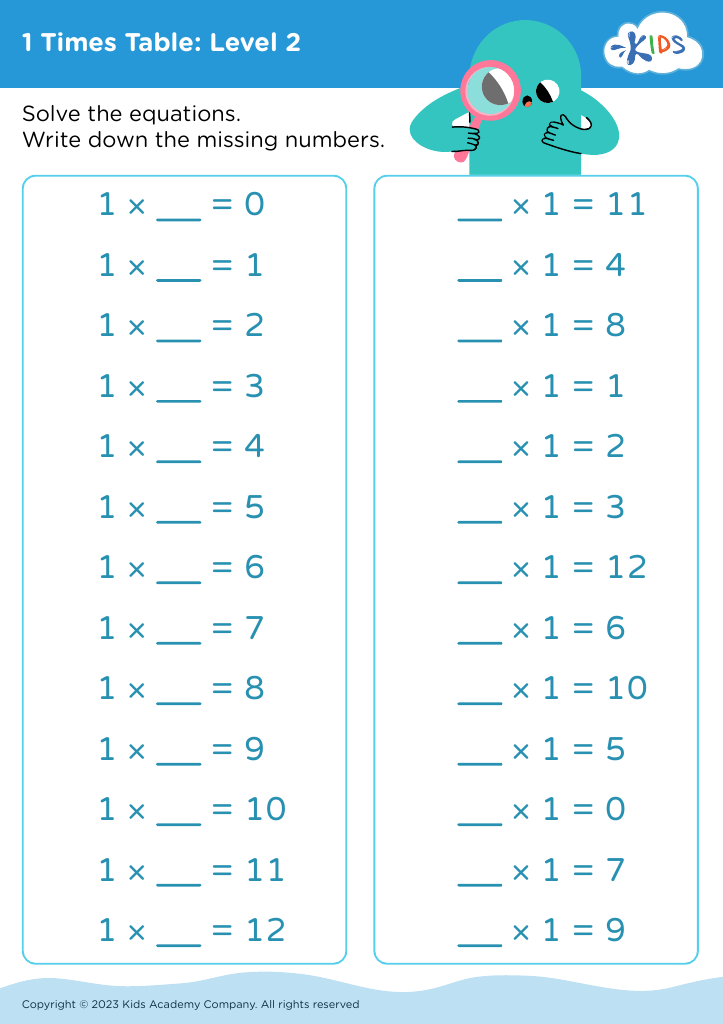







Understanding times tables is crucial for children aged 3-9 for several reasons. First, early mastery of multiplication lays a solid foundation for more advanced mathematical concepts, ensuring that children feel confident as they progress in their education. Multiplication, often viewed as simply repeated addition, becomes a vital skill that helps children understand patterns and relationships in numbers.
Furthermore, knowing times tables enhances problem-solving skills. Children frequently encounter multiplication in daily life, such as when sharing or grouping items. If they have a strong grasp of times tables, they can navigate these situations more effectively. This knowledge also reduces the cognitive load when tackling complex equations later in their math-development journey.
Additionally, learning times tables reinforces memorization and improves focus and retention. This cognitive exercise promotes brain development in younger children, fostering their ability to handle other academic challenges.
Lastly, parents and teachers must recognize that as math proficiency boosts a child's self-esteem, it encourages a positive attitude towards learning. Ultimately, instilling a love for math early on invites curiosity and creativity, setting the stage for lifelong learning and success in the subject.








