Visual discrimination skills Math Worksheets for Ages 3-9
4 filtered results
-
From - To
Enhance your child's cognitive development with our engaging Visual Discrimination Skills Math Worksheets, designed for ages 3-9. Focused on boosting crucial abilities such as pattern recognition, shape differentiation, and spatial awareness, these worksheets lay a solid foundation for math proficiency. Tailored to be fun and educational, each activity captures young learners' attention while cultivating essential skills through visual exercises. Perfect for both home and classroom environments, these worksheets support children in becoming confident, detail-oriented learners. Explore our collection today to give your child a head start in their mathematical journey!
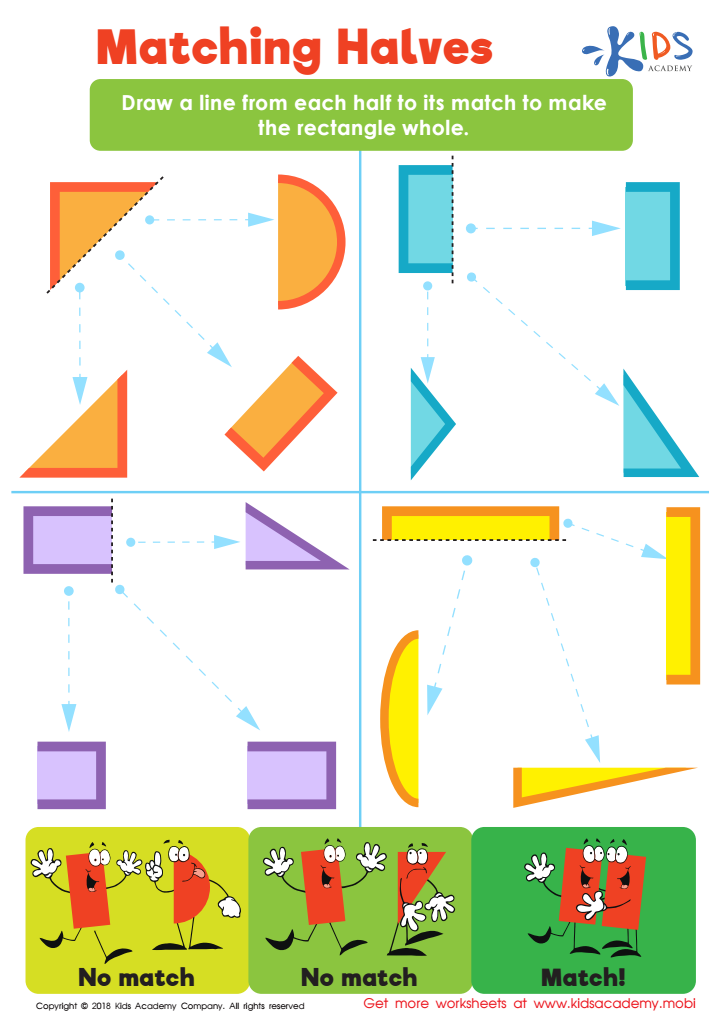
Matching Halves Worksheet
 Assign to My Students
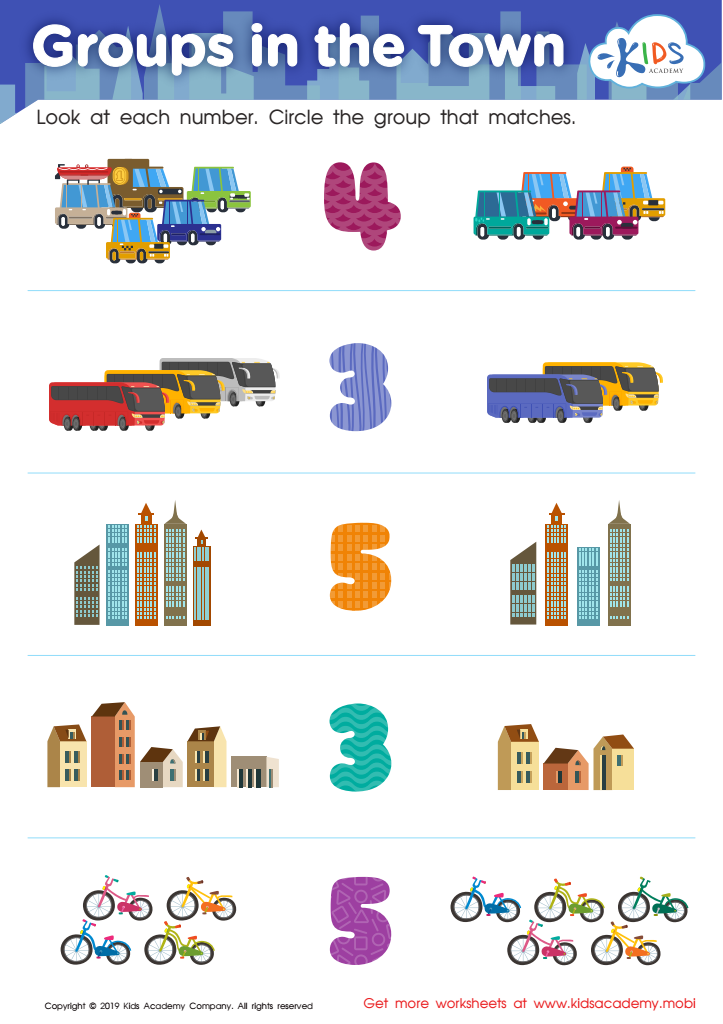
Groups in the Town Worksheet
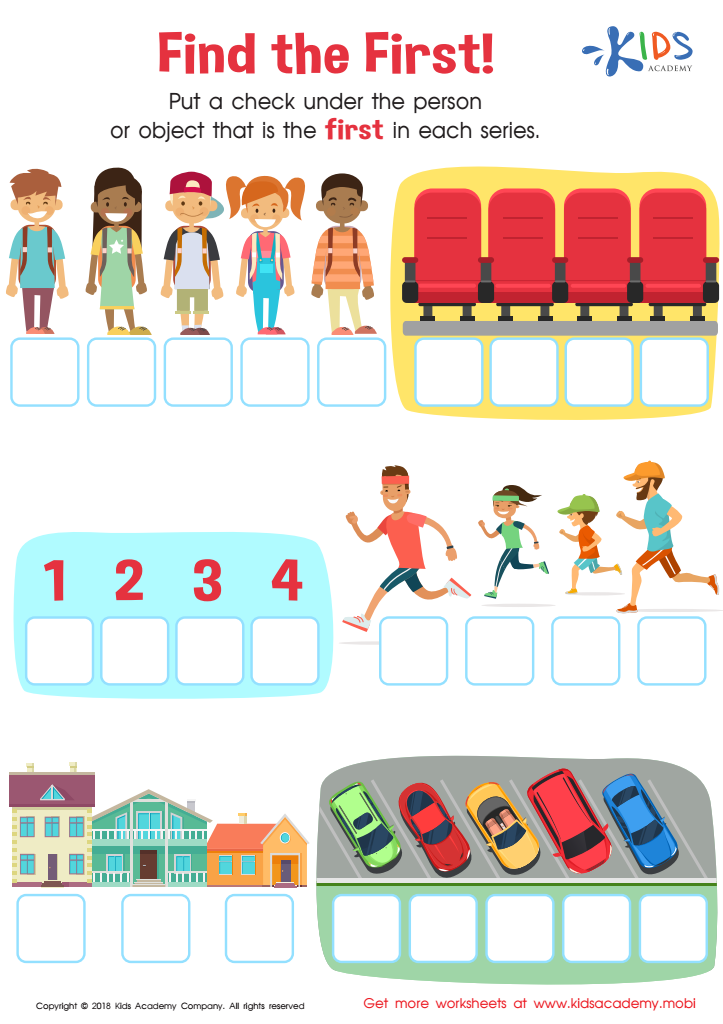
Find the First! Worksheet







Visual discrimination skills are essential for mathematical success between the ages of 3 and 9. These skills enable children to recognize differences and similarities in shapes, patterns, and symbols—all fundamental components of math learning.
For young children, developing strong visual discrimination is the cornerstone of number recognition, as they differentiate between digits like 6 and 9, which are crucial for counting and calculation. Similarly, visual discrimination helps children distinguish between various geometrical shapes, aiding their understanding of spatial relationships and geometrical concepts. This skill set underpins their ability to interpret math symbols correctly, reducing errors and fostering confidence.
Moreover, visual discrimination extends to pattern recognition, an important early math skill that forms the basis for understanding more complex math concepts such as sequencing, categorization, and predicting outcomes. When children can identify and analyze patterns, they build critical thinking skills and improve their problem-solving abilities.
In a classroom or home setting, focusing on visual discrimination aids more than just academic success; it enhances lifelong learning skills. Parents and teachers who prioritize activities that strengthen these skills, such as sorting games, matching exercises, and picture puzzles, contribute significantly to a child's psychological and intellectual development. Early investment in these skills cultivates an engaging and supportive learning environment, laying the groundwork for future mathematical acumen and scholastic achievement.








