
Visual perception development Math Worksheets for Ages 3-9
5 filtered results
Difficulty Level
Grade
Age
-
From - To
Subject
Activity
Standards
Enhance early learning with our Visual Perception Development Math Worksheets for Ages 3-9. Crafted to boost critical mathematical and cognitive skills, these worksheets offer engaging activities that develop visual perception, pattern recognition, and spatial awareness. Perfect for young learners, they combine fun and education to make math approachable and enjoyable. Through puzzles, matching games, and colorful graphics, children sharpen their ability to see differences and similarities, build foundational math skills, and enhance problem-solving abilities. Ideal for both classroom and home use, our worksheets provide a strong start to lifelong learning and a love for math.
Favorites
With answer key
Interactive
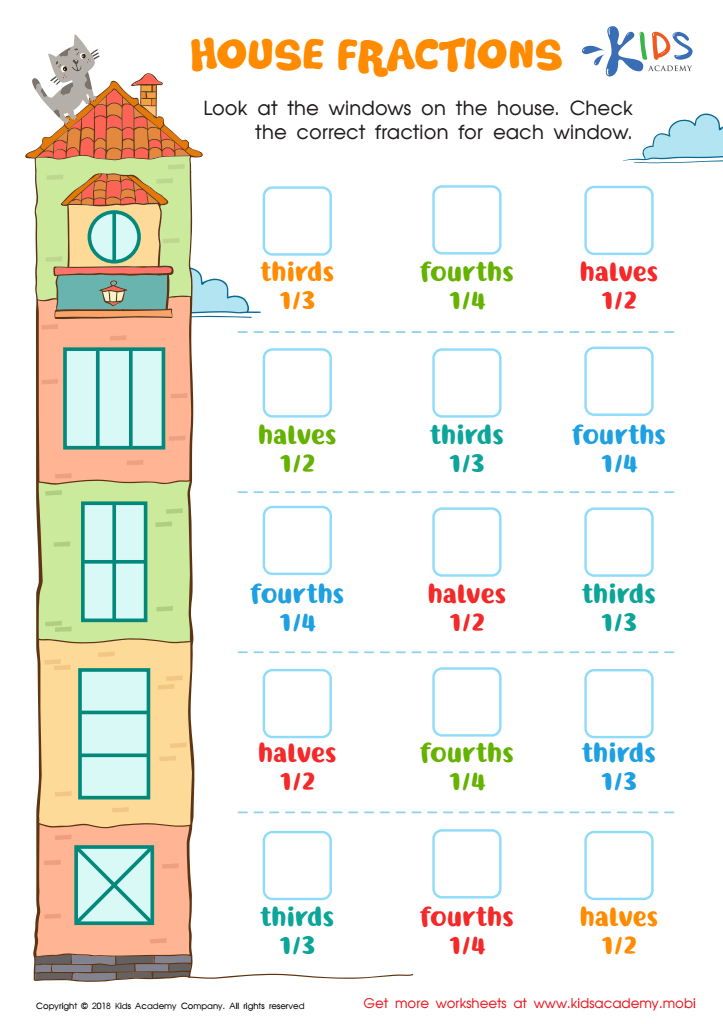
House Fractions Worksheet
Test your child's knowledge of fractions with this worksheet! Have them examine the windows of a house and select the correct fraction from the options given. This is a great way to see how much they understand about wholes, fractions, halves, one thirds, and one fourths.
 Assign to My Students
House Fractions Worksheet
Worksheet
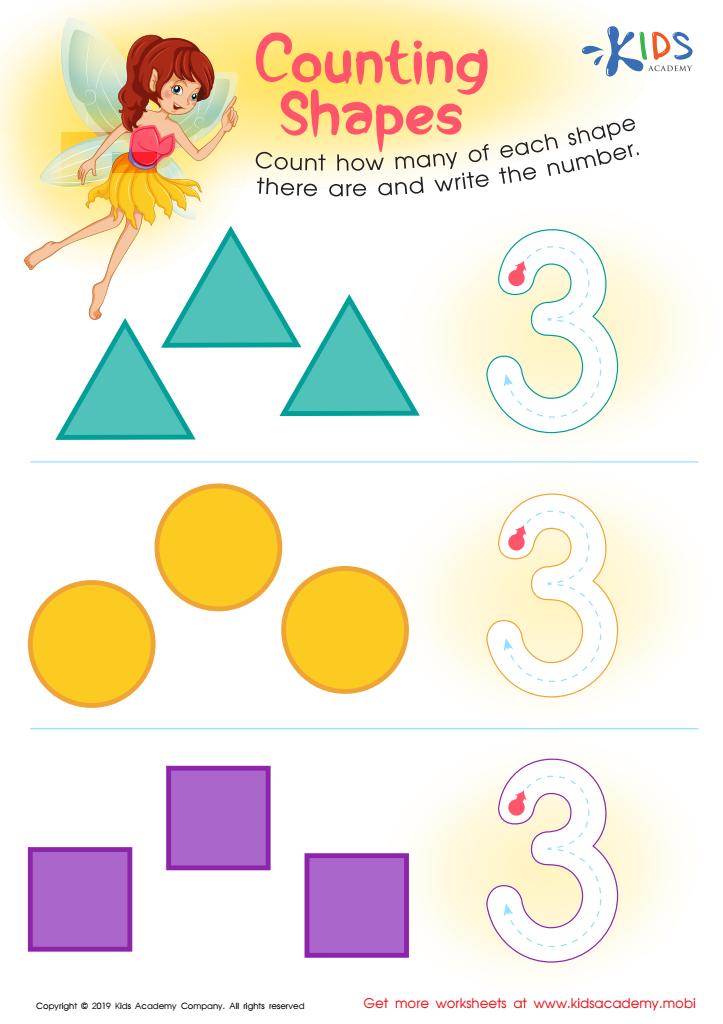
Counting Shapes Worksheet
Counting and number sense are essential skills. Picture representation helps kids understand and remember concepts. This free worksheet is perfect for introducing numbers and counting in groups of three. It also helps kids to practice writing numbers with traceable lines and guiding dots. It's an easy and fun way to give little mathematicians a successful start.
Counting Shapes Worksheet
Worksheet
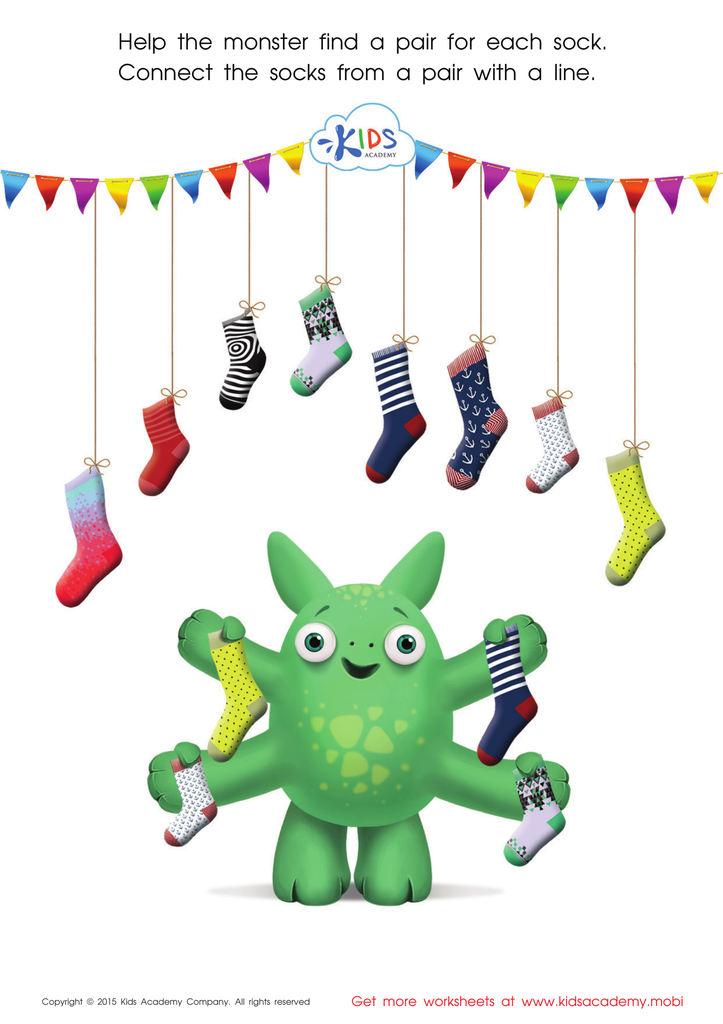
Math Matching Pairs Game: Monsterв's Socks Worksheet
Let your child learn, concentrate and practice sorting skills with this fun kindergarten worksheet. Matching polka dots, anchors, geo shapes and stripes on Monster's socks will help improve fine motor skills. Download and print this free worksheet and several others on different topics.
Math Matching Pairs Game: Monsterв's Socks Worksheet
Worksheet
Join Kids Academy for Free
Who is primarily going to use this learning content?






Visual perception development in math is crucial for children ages 3-9 because it forms the foundation for many essential skills. At this age, kids are just learning how to process visual information and relate it to mathematical concepts. Visual perception underpins abilities such as recognizing shapes, patterns, numbers, and spatial relationships, which are integral components of early math education.
When children develop strong visual perception skills, they improve their capacity to distinguish between different objects, sizes, and match similar items. This influences their numeracy skills, such as counting and sequencing. For instance, understanding that three apples are different from two apples requires good visual differentiation skills.
Furthermore, spatial awareness, a subset of visual perception, is key in comprehending geometry, solving puzzles, and understanding graphs and charts. Early exposure to visual math through play, drawing, and interactive learning can make math more engaging and less intimidating.
Underdeveloped visual perception can lead to difficulties in reading, writing, and mathematical problem-solving, potentially impacting academic performance across subjects. Therefore, parents and teachers should prioritize activities that stimulate visual skills, like sorting games, pattern recognition exercises, and hands-on activities with shapes and numbers. By fostering these abilities early, we set kids up for long-term success in math and beyond.








