Weather identification Math Worksheets for Ages 3-9
4 filtered results
-
From - To
Discover our engaging Weather Identification Math Worksheets designed for children ages 3-9! These interactive resources help young learners explore different weather types while developing essential math skills. With fun activities focusing on sorting, counting, and identifying weather patterns, children will enhance their understanding of both math concepts and real-world meteorology. Our worksheets cater to various learning styles, ensuring a playful and educational experience for every child. Perfect for in-class use or home learning, these worksheets make learning about weather fun and exciting! Start building a solid foundation in math and environmental awareness today with our creative and easy-to-use resources!
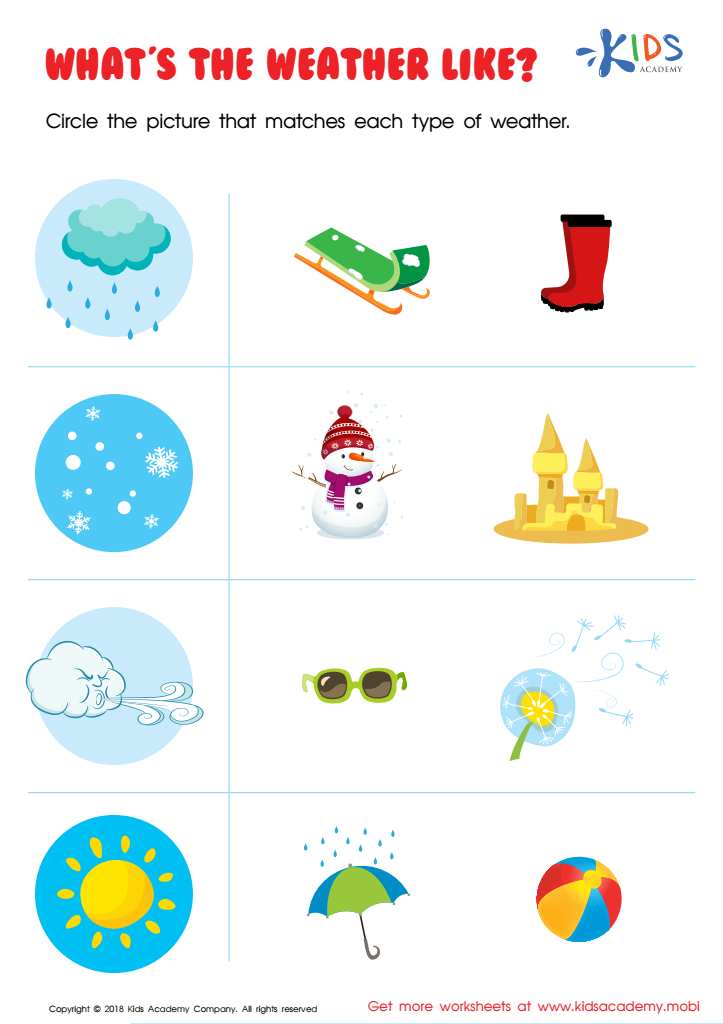
What's the Weather Like? Worksheet
 Assign to My Students
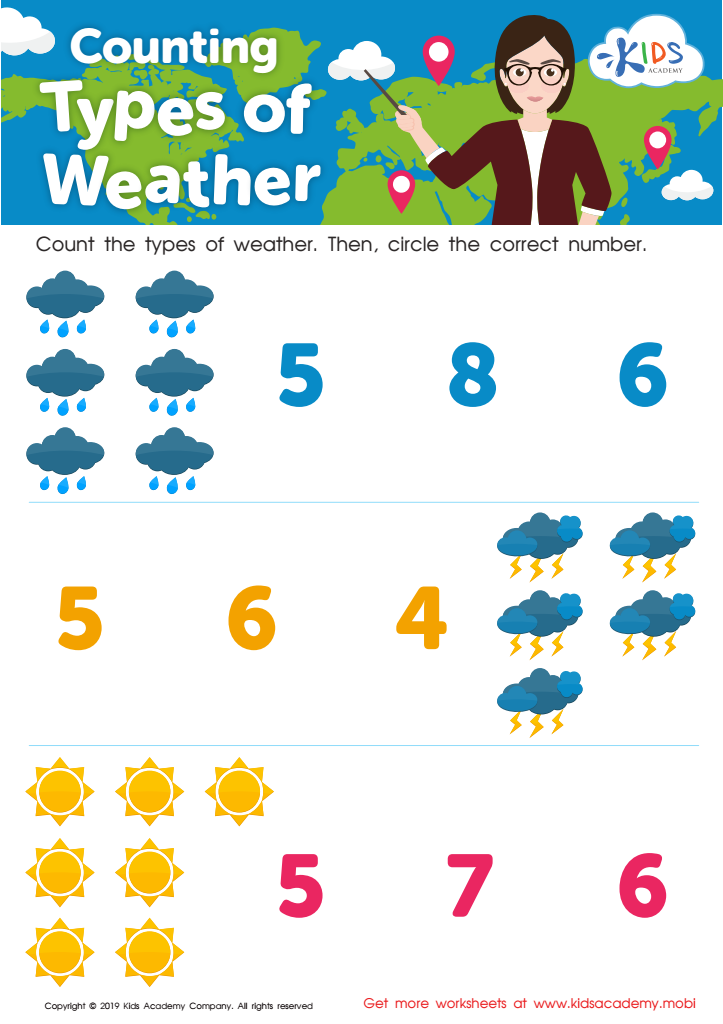
Counting Types of Weather Worksheet
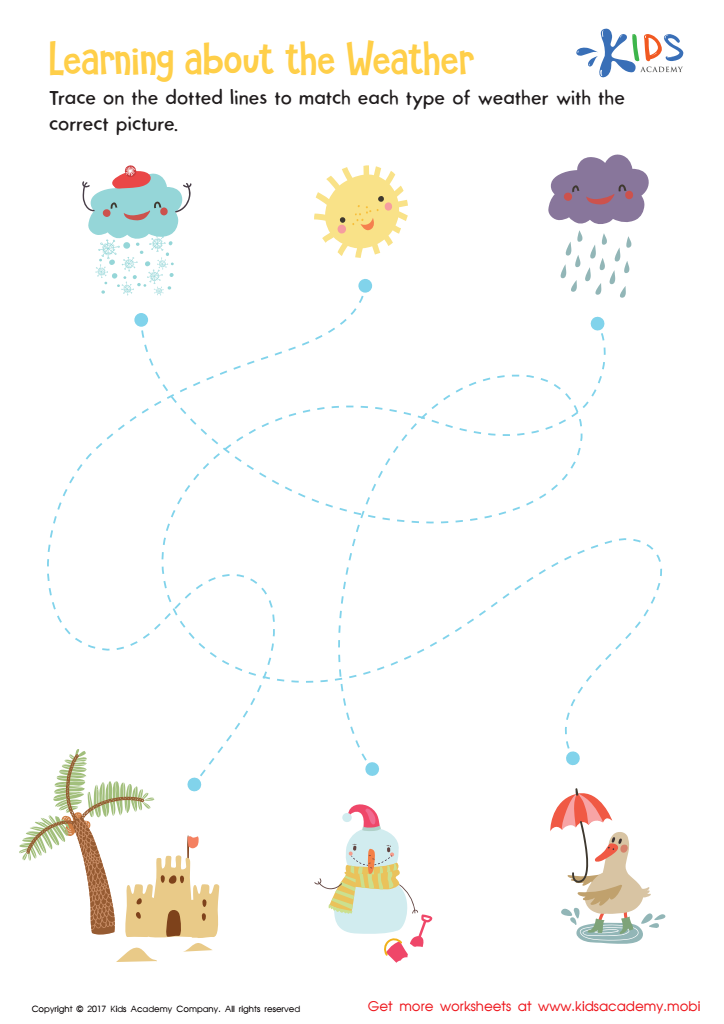








Weather identification math for ages 3-9 is crucial in early education as it intertwines scientific concepts with foundational math skills, fostering a comprehensive learning experience. By teaching young children how to identify different weather types (sunny, rainy, snowy, etc.) alongside basic math principles (counting, shapes, patterns), parents and teachers equip them with essential cognitive tools.
Understanding weather patterns helps children make sense of the world around them, enhancing their observational skills and promoting critical thinking. For instance, a child might learn to compare the number of sunny days to rainy ones, engaging in simple arithmetic while developing curiosity about the environment.
Additionally, weather-related activities encourage creativity and can be integrated into play, reinforcing learning. This hands-on approach aids retention and nurtures a lifelong interest in both science and mathematics. Moreover, early liaison of math skills with real-life applications—such as measuring rainfall or tracking temperatures—strengthens children’s ability to analyze data and draw conclusions.
Ultimately, weather identification math supports holistic growth by weaving together mathematical thinking, scientific inquiry, and environmental awareness, providing a solid foundation for future learning that parents and teachers should recognize and embrace.








