Basic measurement skills Measurement Worksheets for Ages 3-9
3 filtered results
-
From - To
Introduce your young learners to essential basic measurement skills with our engaging measurement worksheets, designed specifically for children aged 3-9. These fun, interactive resources help kids grasp fundamental concepts such as length, weight, and volume through colorful illustrations and hands-on activities. Packed with age-appropriate exercises, our worksheets promote critical thinking and reinforce measurement vocabulary, ensuring a solid foundation for future math success. Perfect for classroom or home use, these worksheets encourage curiosity and confidence while making learning enjoyable. Explore our collection today and watch your child's understanding of measurements grow! Ideal for early grades and playful learning environments.
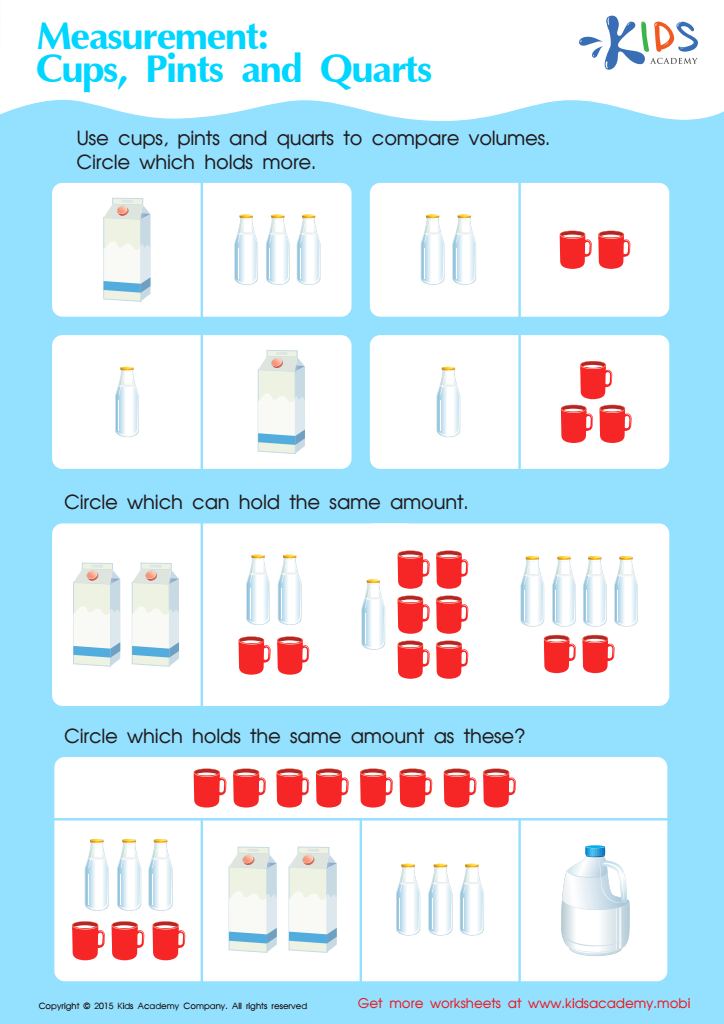
Measurement: Compare Volumes Worksheet
 Assign to My Students
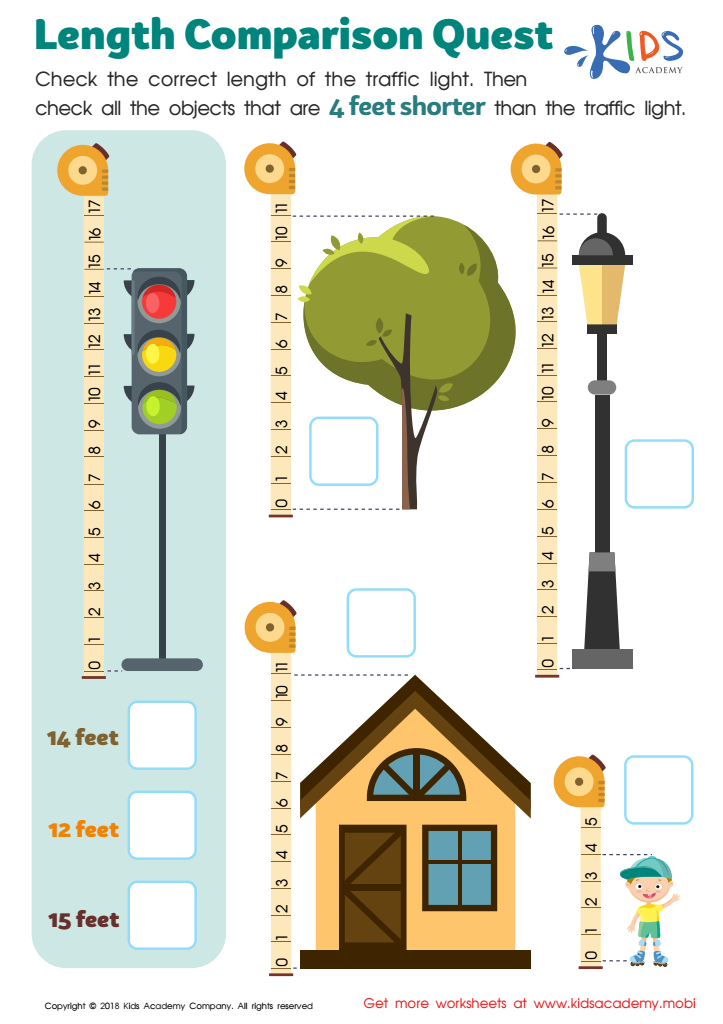
Length Comparison Quest Worksheet
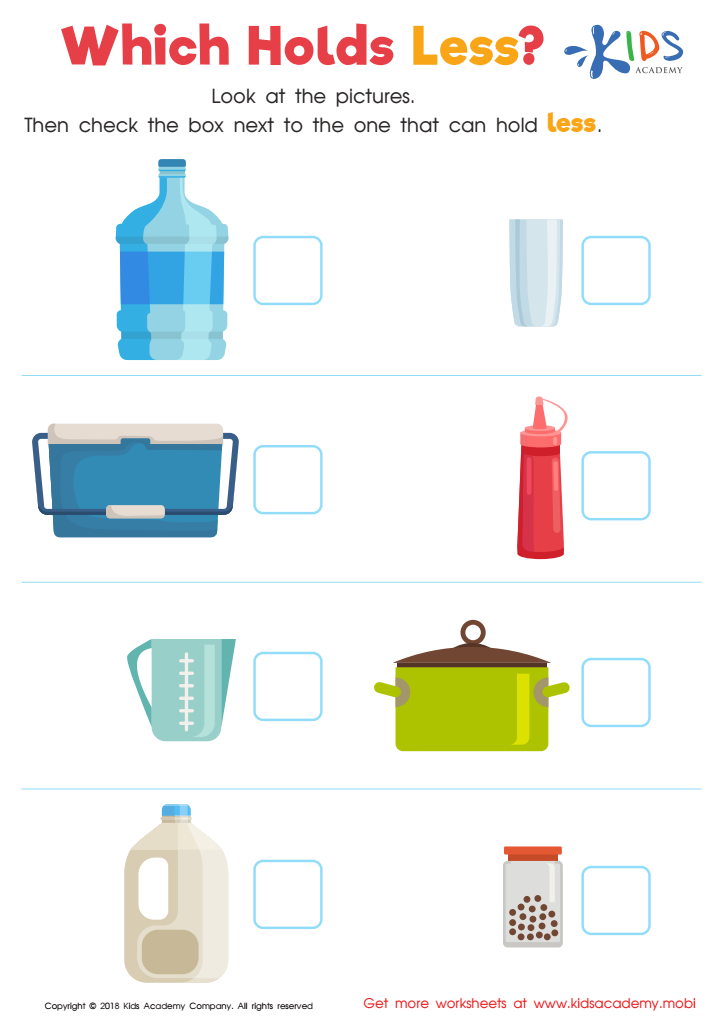
Which Holds Less? Worksheet








Basic measurement skills are essential for children ages 3-9, forming a foundation for their cognitive development and everyday problem-solving abilities. First, understanding measurement helps children grasp important concepts in math and science, such as size, volume, weight, and time. These skills support critical thinking as children learn to compare, classify, and quantify their experiences in the world around them.
Parents and teachers play a vital role in fostering these skills by creating opportunities for hands-on experiences. For instance, measuring ingredients during cooking can teach fractions, while comparing heights or weights can introduce children to data collection and analysis. Such interactive learning promotes engagement and retention, as children can see practical applications of measurement in their daily lives.
Additionally, strong measurement skills contribute to a child's future academic success. As they progress in education, the ability to understand and apply measurement concepts will be crucial for tackling more complex subjects like geometry and science experiments.
Moreover, early mastery of these skills boosts self-confidence and communication abilities, enabling children to articulate their observations and findings effectively. Therefore, parents and teachers should prioritize teaching basic measurement skills to equip children with valuable tools for lifelong learning and success.








