Comparing objects Measurement Worksheets for Ages 3-9
3 filtered results
-
From - To
Discover our engaging collection of Comparing Objects Measurement Worksheets, designed for children ages 3 to 9. These interactive resources are perfect for developing essential measurement skills as young learners explore the concepts of size, length, and weight. Our worksheets incorporate fun activities to help kids categorize and compare various objects, enhancing their critical thinking and reasoning abilities. Whether in a classroom setting or at home, these worksheets promote hands-on learning and reinforce mathematical foundations through colorful illustrations and age-appropriate challenges. Equip your child with the skills they need for success in maths with our user-friendly, curriculum-aligned measuring worksheets today!
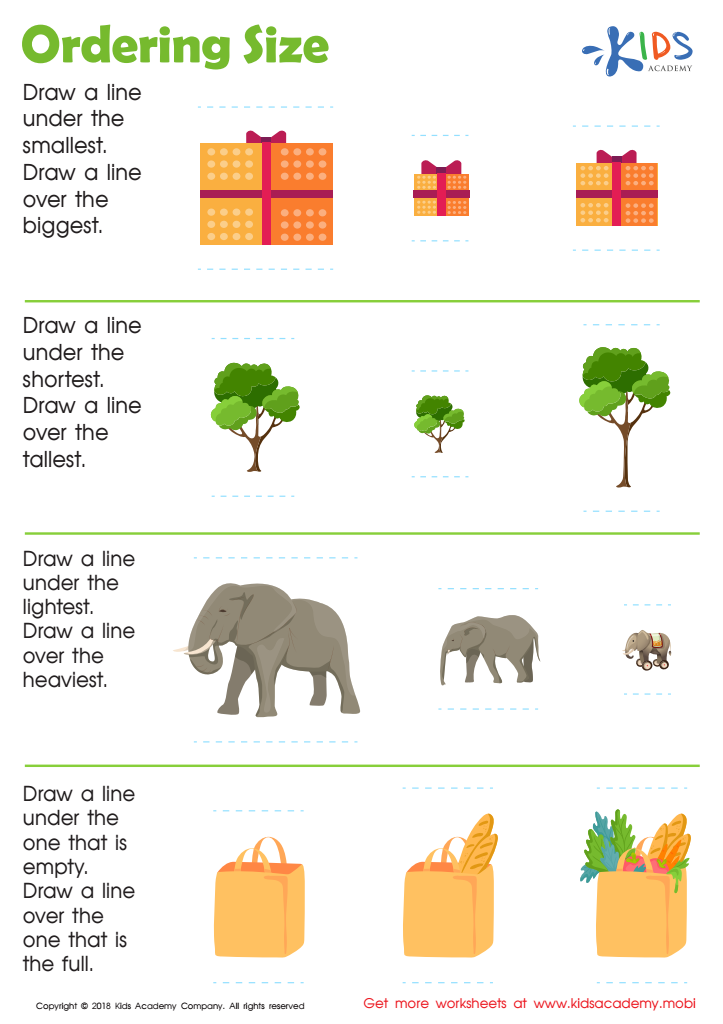
Ordering Size Worksheet
 Assign to My Students
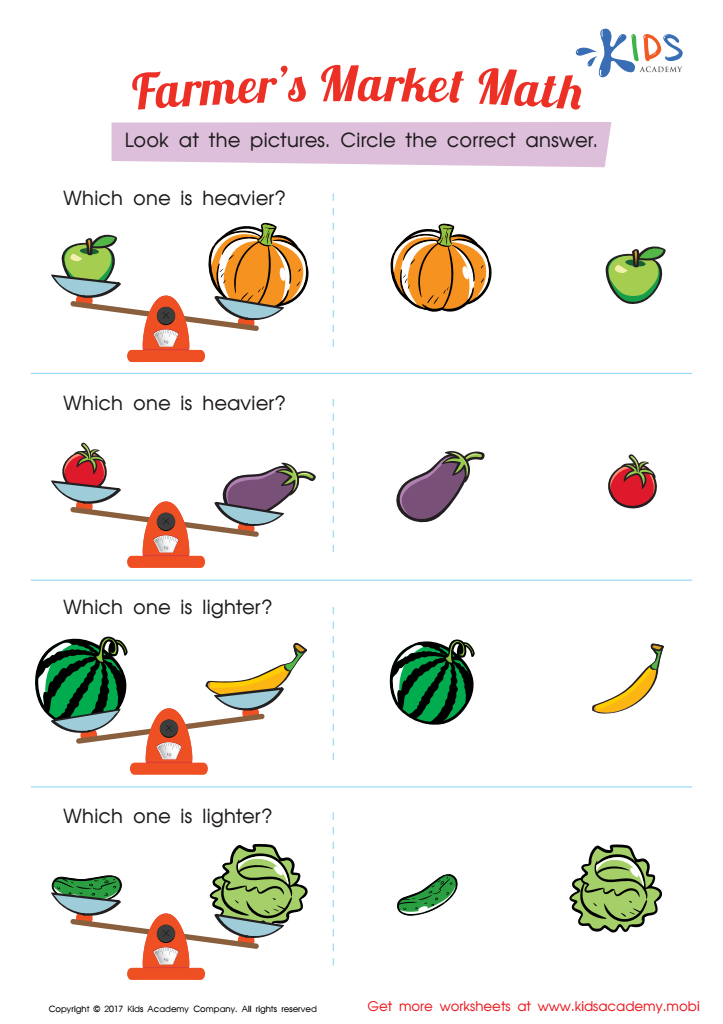
Which One Is Heavier Worksheet
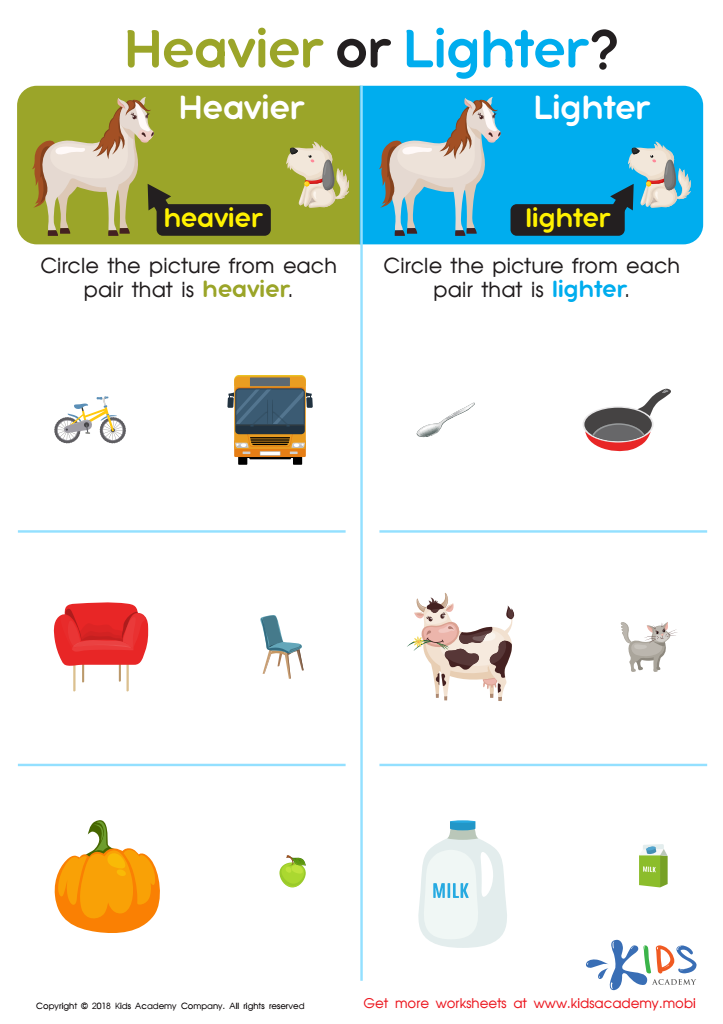
Heavier or Lighter? Worksheet








Comparing objects through measurement is a fundamental skill that plays a crucial role in the cognitive development of children aged 3 to 9. Parents and teachers should care about this skill as it lays the foundation for essential mathematical concepts. From early childhood, children naturally engage with the world by comparing sizes, weights, and volumes, making measurement an intuitive and engaging learning experience.
Measurement fosters critical thinking and problem-solving abilities. When children compare different objects, they learn to observe, classify, and make predictions based on their findings. This nurtures their analytical skills, enabling them to understand relationships between objects in terms of length, weight, and capacity.
Moreover, measurement offers opportunities for hands-on activities, enhancing fine motor skills and promoting sensory experiences. It encourages children to explore and ask questions, facilitating a love for learning and curiosity about their environment. Engaging in these measurement activities builds confidence in their mathematical abilities, preparing them for more complex concepts in later grades.
In conclusion, by emphasizing comparing objects and measurement, parents and teachers can significantly enhance children's foundational math skills, critical thinking, and engagement in learning—an invaluable investment for their future academic success.








