Spatial awareness Measurement Worksheets for Ages 3-9
3 filtered results
-
From - To
Boost your child's spatial awareness with our specially designed Measurement Worksheets for ages 3-9! Developed by education experts, our engaging worksheets offer fun activities to improve essential skills like understanding space, orientation, and object relationships. Through interactive puzzles, matching games, and drawing exercises, kids will learn to measure dimensions, identify shapes, and much more. Ideal for preschoolers to young learners, these worksheets support critical thinking and foundational math concepts. Perfect for both classroom settings and at-home learning, our Spatial Awareness Measurement Worksheets make learning both enjoyable and effective. Explore, learn, and build confidence today!
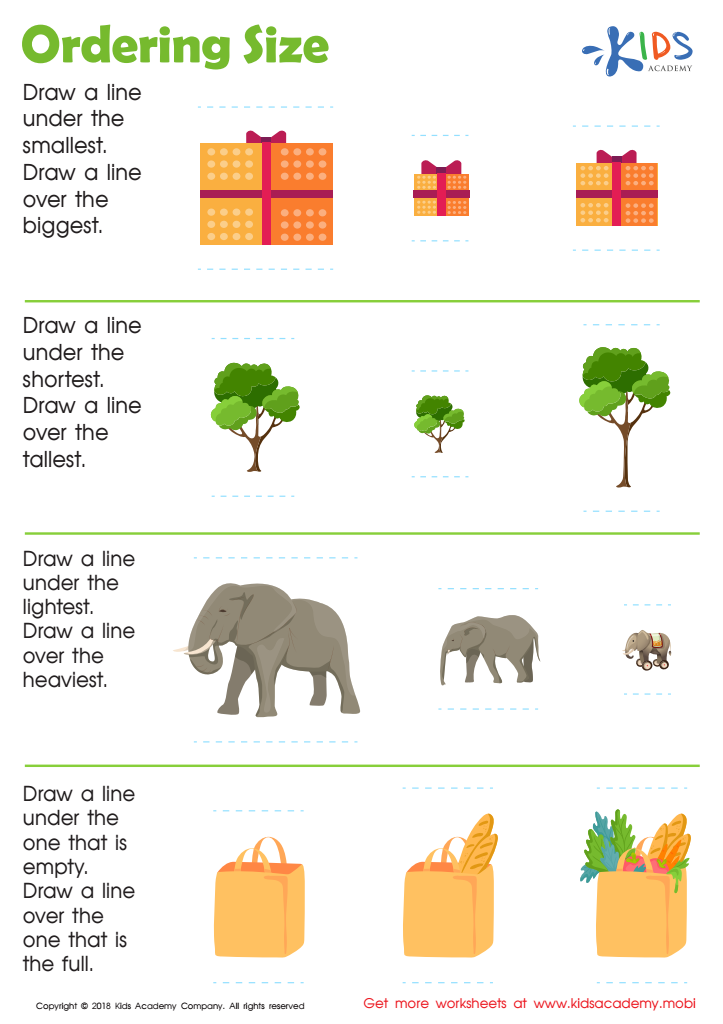
Ordering Size Worksheet
 Assign to My Students
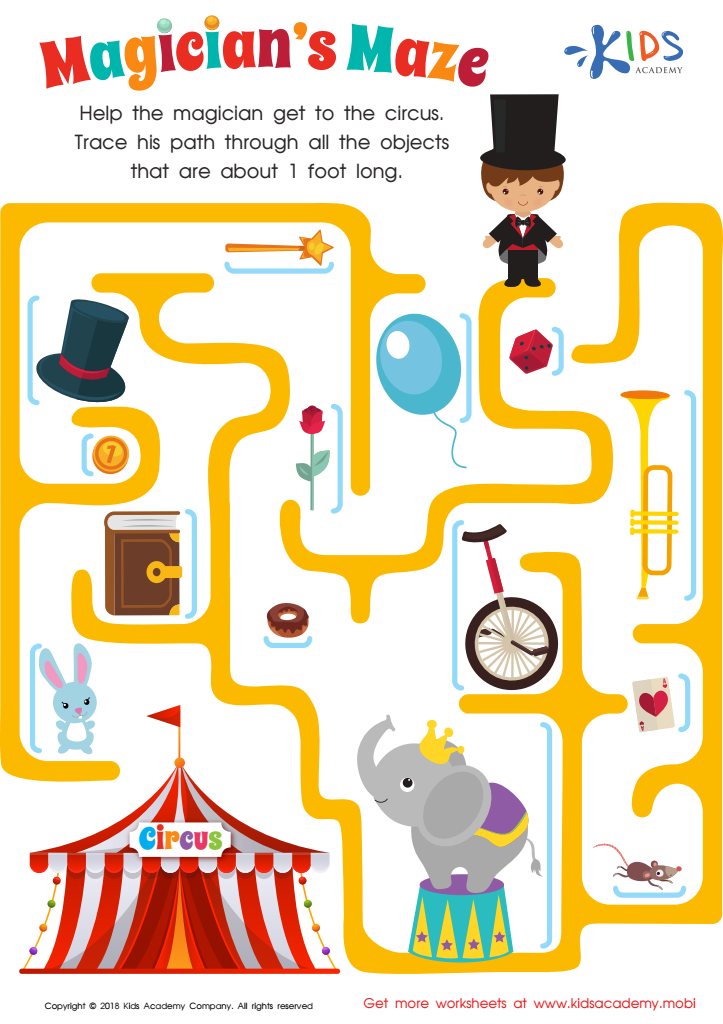
Estimating Length: Magician's Maze Worksheet
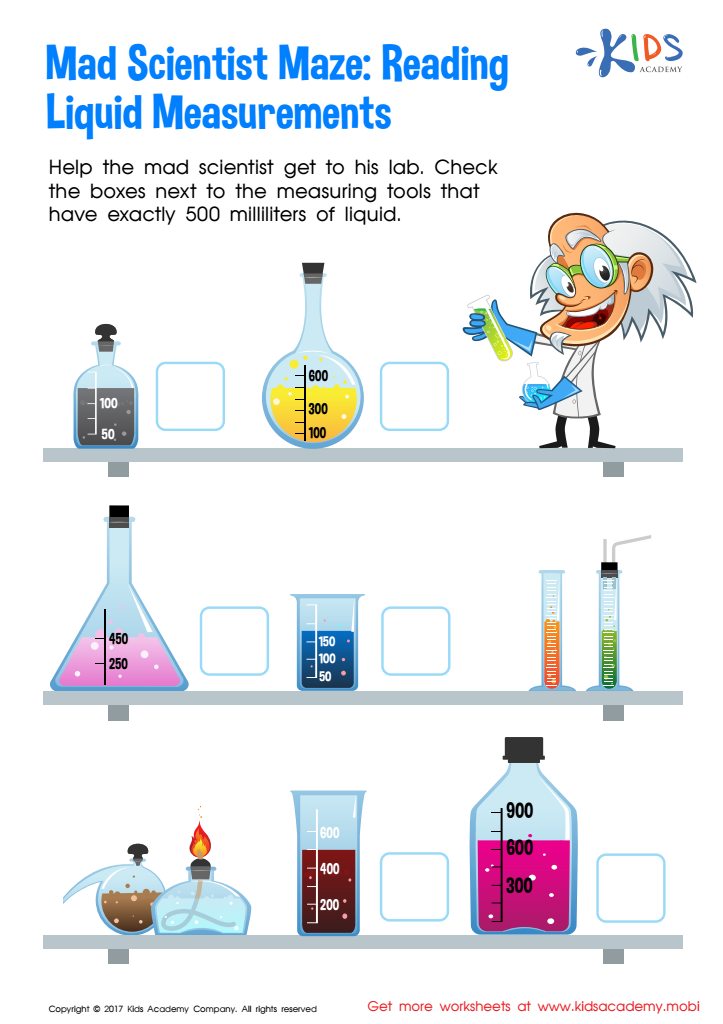
Reading Liquid Measurement Worksheet








Spatial awareness is crucial for young children's development as it underpins many key skills they will rely on throughout their lives. For children aged 3-9, developing strong spatial awareness helps them navigate their environment safely and effectively. It enables them to judge distances, understand the relationships between objects, and anticipate the consequences of their movements.
In the context of academics, spatial awareness is foundational for success in STEM (Science, Technology, Engineering, and Math) fields. For instance, understanding shapes, sizes, and the spatial relationships between different objects is critical for geometry and other math topics. It also helps in understanding maps and graphs, which are important for subjects like geography and science.
Moreover, spatial awareness contributes to the development of fine and gross motor skills. When children recognize space relations and depth, they can more efficiently perform tasks that require good hand-eye coordination (like writing and cutting) and larger movements (like running and playing sports). These physical activities are vital for healthy muscles and motor development.
Parents and teachers who focus on activities that enhance spatial awareness ensure that children are developing these essential skills. By integrating puzzles, building blocks, drawing, and other creative activities into their daily routines, they lay the groundwork for higher learning and help children become more adept and confident in interacting with the world around them.








