
Understanding measurement units Measurement Worksheets for Ages 3-9
3 filtered results
Difficulty Level
Grade
Age
-
From - To
Subject
Activity
Standards
Discover our "Understanding Measurement Units" worksheets, designed for kids aged 3-9. These worksheets make learning fun and engaging, helping children grasp essential measurement concepts early on. Covering diverse topics such as length, weight, and volume, the worksheets promote hands-on learning and critical thinking. Structured to match varying developmental stages, they gradually progress in complexity, ensuring a smooth learning journey. Perfect for both classroom instruction and at-home practice, these resources support foundational math skills crucial for academic success. Empower your child with the knowledge and confidence to master measurement units through creative and interactive exercises. Explore more today!
Favorites
With answer key
Interactive
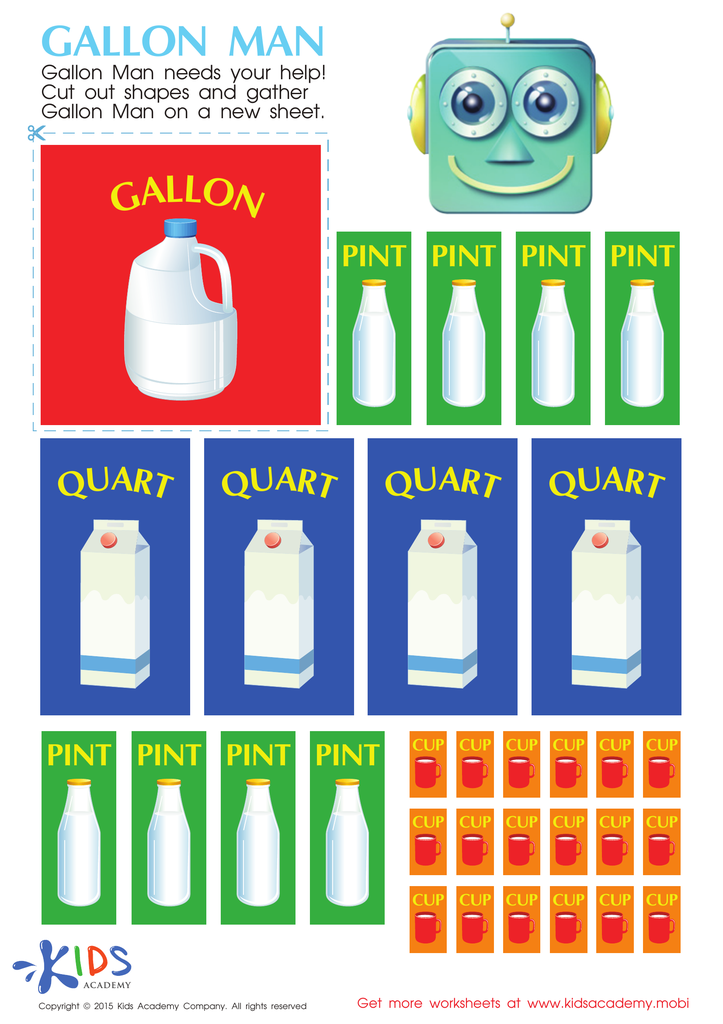
Cups, Pints and Quarts With Gallon Man Worksheet
Measurement in cups, pints, quarts and gallons has never been this fun!
Cups, Pints and Quarts With Gallon Man Worksheet
Worksheet
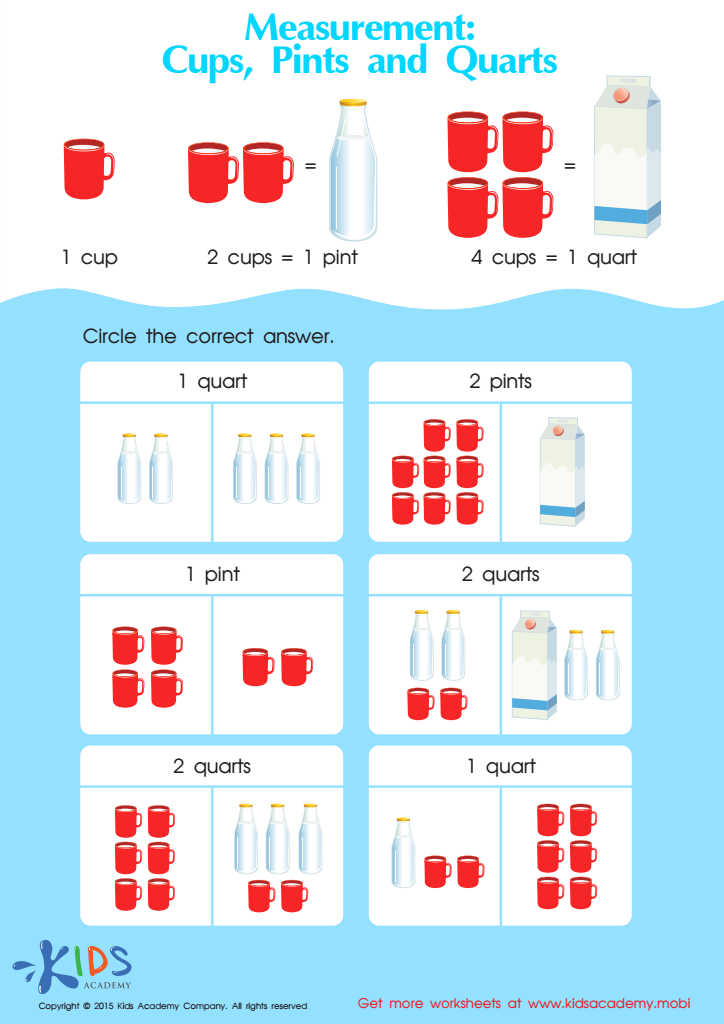
Cups, Pints and Quarts Worksheet
Let your kids explore the world of math with our worksheet! Have them count cups, pints and quarts in pictures and circle the right answer. Get even more free printable math worksheets for kindergarten on our website. Come on, join the adventure!
 Assign to My Students
Cups, Pints and Quarts Worksheet
Worksheet
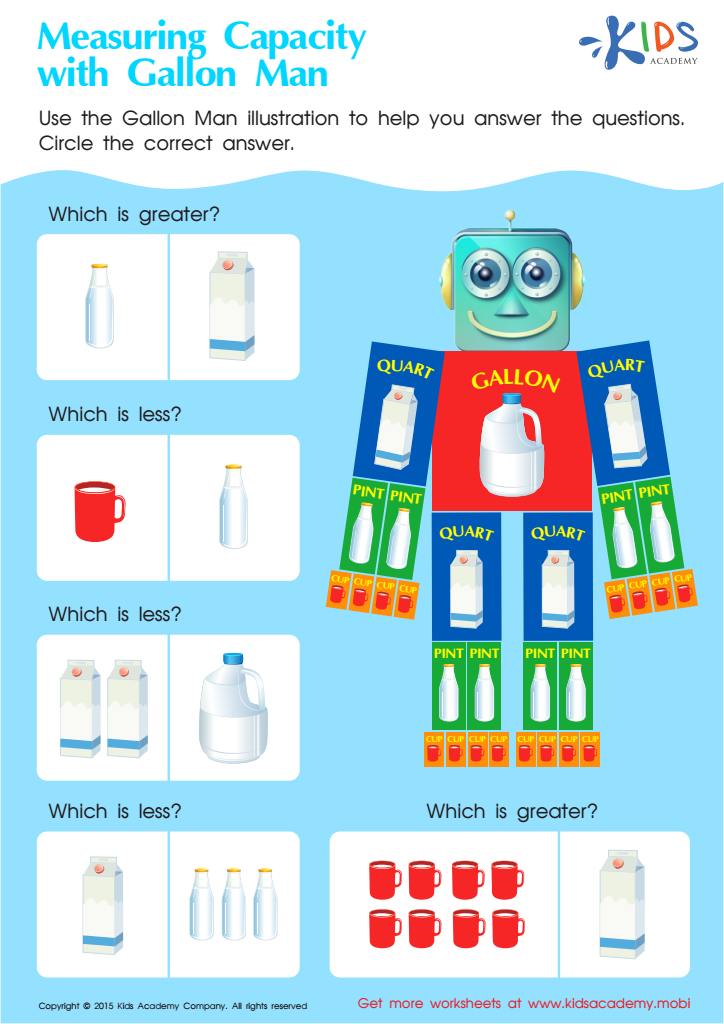
Measurement: Measuring Capacity with Gallon Man Worksheet
Check out Gallon Man to practice measuring capacity with cups, pints, quarts, and gallons. Our worksheet has questions with answers checked against Gallon Man. For more practice, visit our site for free printable math worksheets for kindergarten and learn math with fun!
Measurement: Measuring Capacity with Gallon Man Worksheet
Worksheet
Join Kids Academy for Free
Who is primarily going to use this learning content?








Understanding measurement units is fundamental for young children (ages 3-9) as it lays the groundwork for practical life skills and academic success. For parents and teachers, emphasizing measurement in early education is crucial because it enhances cognitive development by teaching children how to compare, quantify, and make sense of their environment. By learning simple concepts like length, weight, and volume, children begin to develop mathematical thinking and problem-solving skills.
Measurement also facilitates language development as children learn new vocabulary and concepts to describe the size, amount, and extent of objects. Phrases such as "taller than," "lighter," or "more" become part of their descriptive toolkit, improving their communication skills.
Moreover, measurement is inherently experiential and hands-on, making it engaging for young minds. Activities such as using blocks, measuring cups, or rulers provide tactile and visual learning experiences. By relating abstract numbers to real-world items, measurement becomes meaningful and memorable.
Another key aspect is that early immersion in these concepts aligns with future academic standards, ensuring children are on track with educational benchmarks. Consistency in understanding these basics helps ease transitions into more advanced subjects, like fractions or geometry, later on.
In essence, parents and teachers who nurture a child's understanding of measurement units equip them with essential skills for both academic pursuits and everyday life, ensuring a well-rounded, confident learner.








