Counting skills Multiplication Worksheets for Ages 3-9
4 filtered results
-
From - To
Enhance your child's counting skills with our vibrant Multiplication Worksheets designed for ages 3-9! These engaging, interactive resources make learning multiplication fun and effective. Tailored to support young learners, our worksheets focus on building a strong foundation in counting and multiplication through visual aids and hands-on activities. Kids will develop essential math skills while enjoying colorful illustrations and exciting challenges. Ideal for both classroom settings and home practice, these worksheets help cultivate a love for math. Explore our range of thoughtfully crafted multiplication exercises and watch your child thrive as they master counting and multiplication concepts readily!
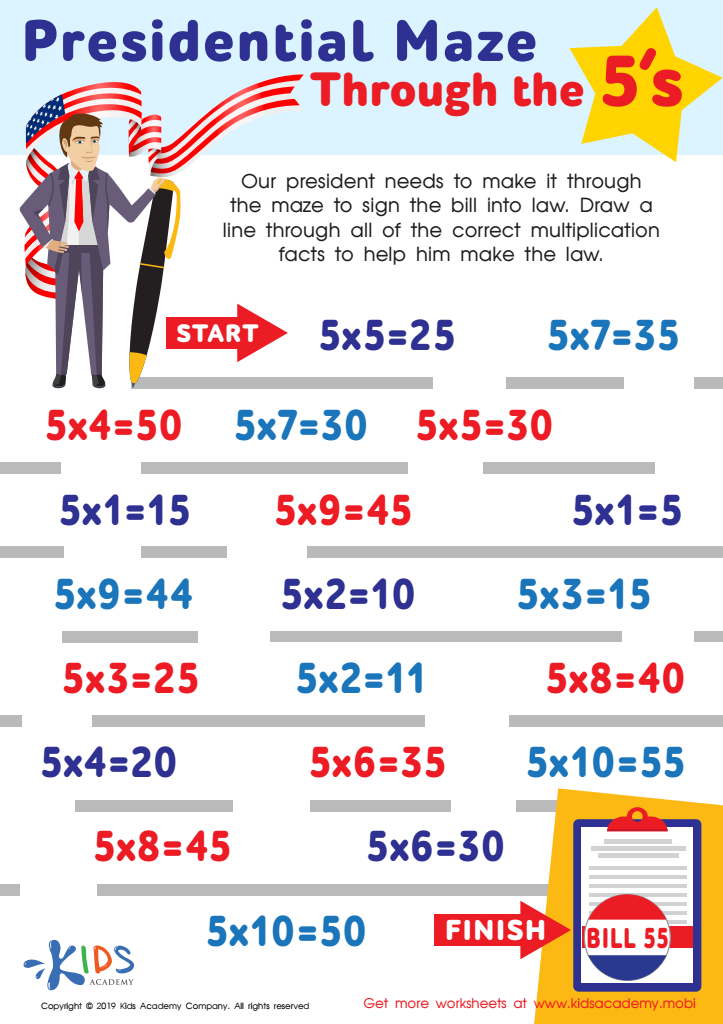
Presidential Maze Through the 5’s Worksheet
 Assign to My Students
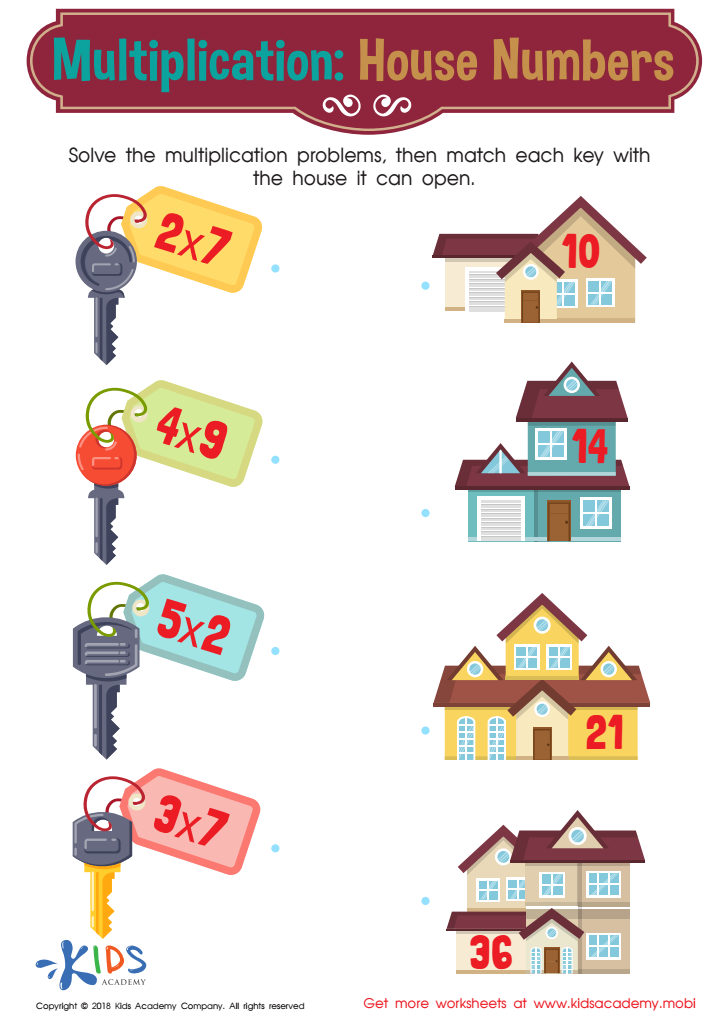
House Numbers Worksheet
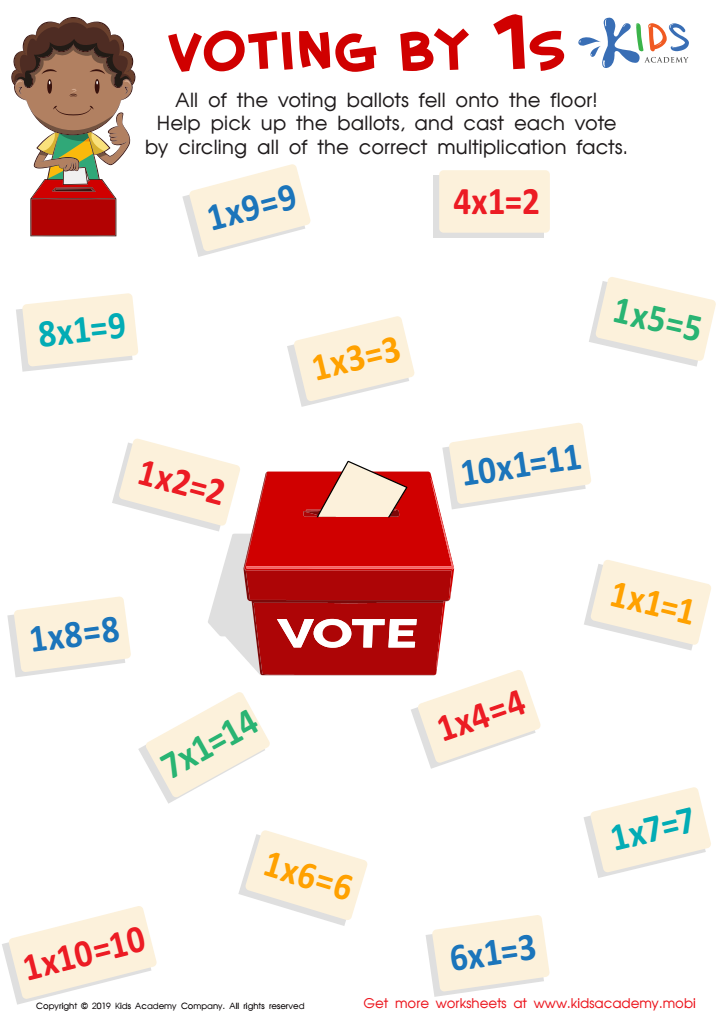
Voting by 1s Worksheet
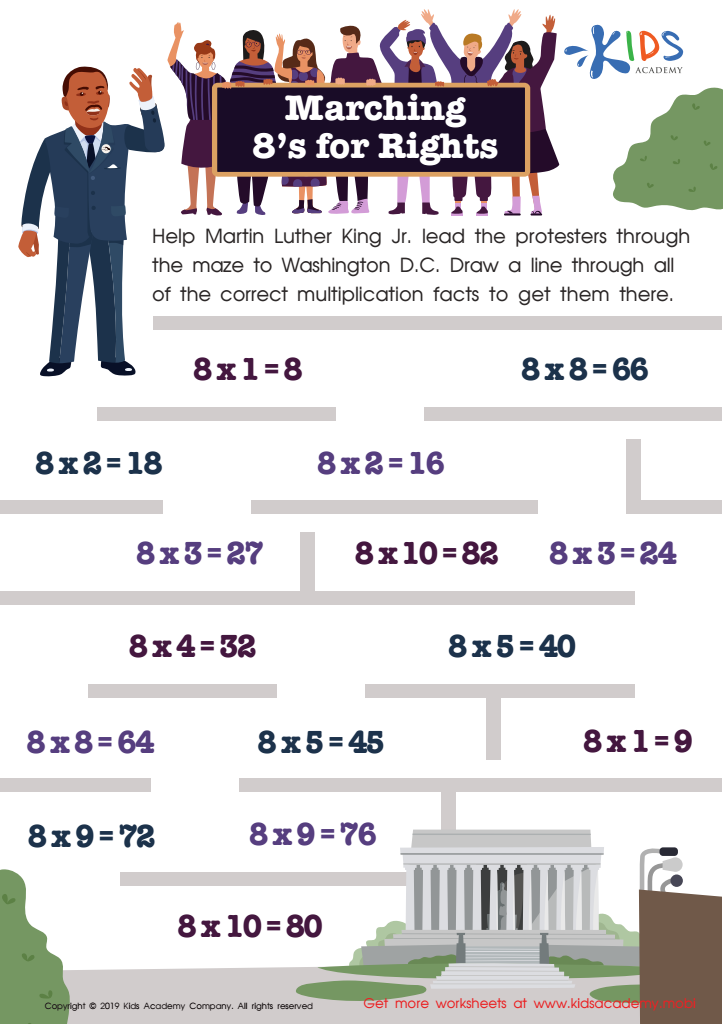
Marching 8’s for Rights Worksheet








Counting skills and understanding multiplication are foundational competencies for children aged 3-9, crucial not only in math but for overall cognitive development. Parents and teachers should prioritize these skills because they contribute significantly to a child's ability to think logically, solve problems, and understand the world around them.
At the age of 3, simple counting introduces essential mathematical concepts, promoting number recognition and sequencing. As children grow, they begin to grasp multiplication, a crucial operation that highlights patterns and relationships between numbers. Mastering these skills early lays the groundwork for more complex math concepts encountered later in school.
Understanding multiplication, often introduced around age 5-7, fosters critical thinking and accelerates children's ability to tackle mathematical problems more efficiently. It forms connections between addition and multiplication, reinforcing skills transfer and enhancing overall numeracy.
Moreover, proficiency in counting and multiplication equips children with confidence and independence in dealing with everyday situations, such as shopping or sharing items. Engaging in activities that strengthen these skills promotes not only academic success but also essential life skills that pave the way for a child’s future achievements. Encouraging early development in these areas ultimately prepares children for lifelong learning and critical problem-solving.








