Critical Thinking Multiplication Worksheets for Ages 3-9
5 filtered results
-
From - To
Introducing our Critical Thinking Multiplication Worksheets, designed specifically for ages 3-9. These engaging, developmentally appropriate worksheets not only reinforce multiplication skills but also encourage young learners to think critically and solve problems creatively. Our resources use fun, interactive activities to help children understand multiplication concepts deeply while improving logical reasoning and analytical abilities. Incorporating diverse and colorful exercises, these worksheets make learning multiplication an exciting journey. Ideal for both classroom and home use, our worksheets support educators and parents in fostering a strong foundation in math and critical thinking. Start building smarter math skills today!
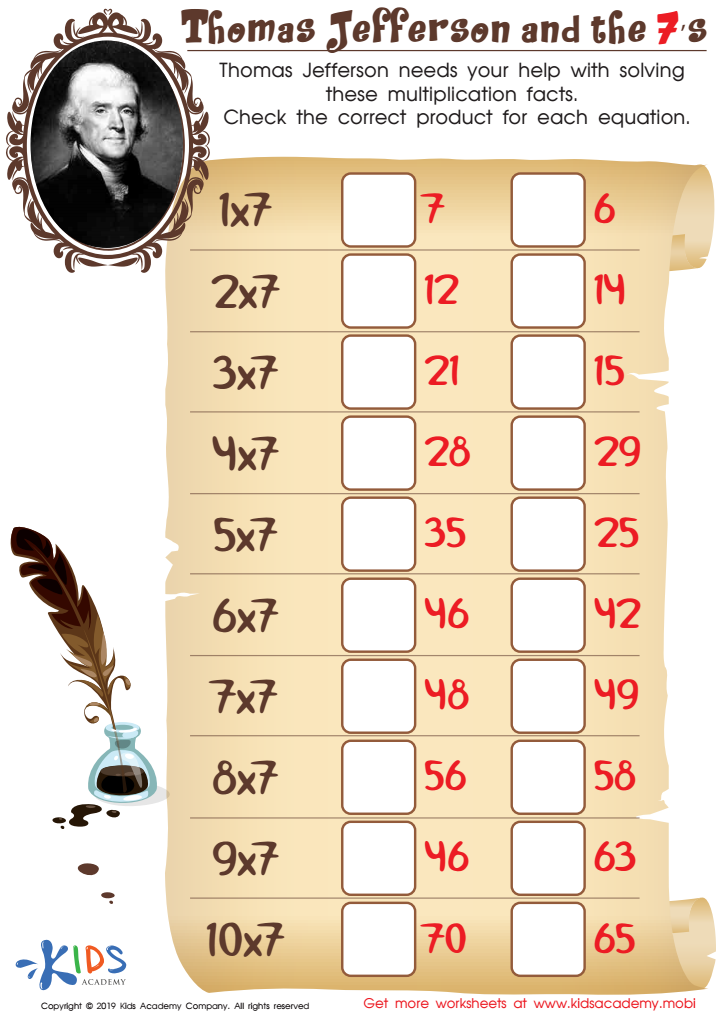
Thomas Jefferson and the 7’s Worksheet
 Assign to My Students
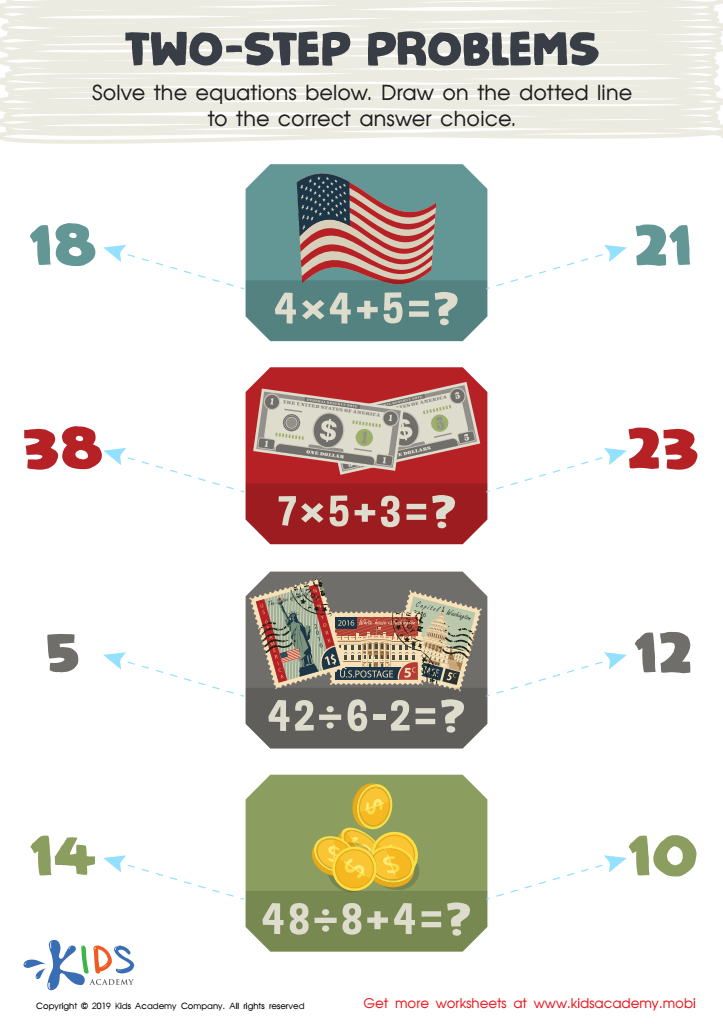
Two-Step Problems Worksheet
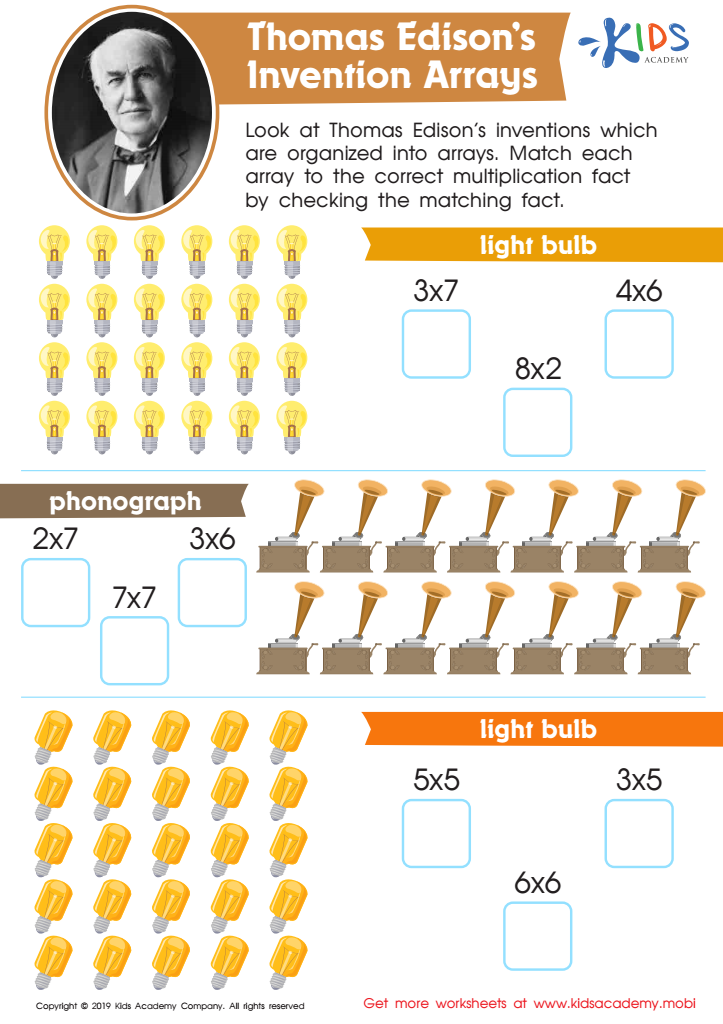
Thomas Edison’s Invention Arrays Worksheet
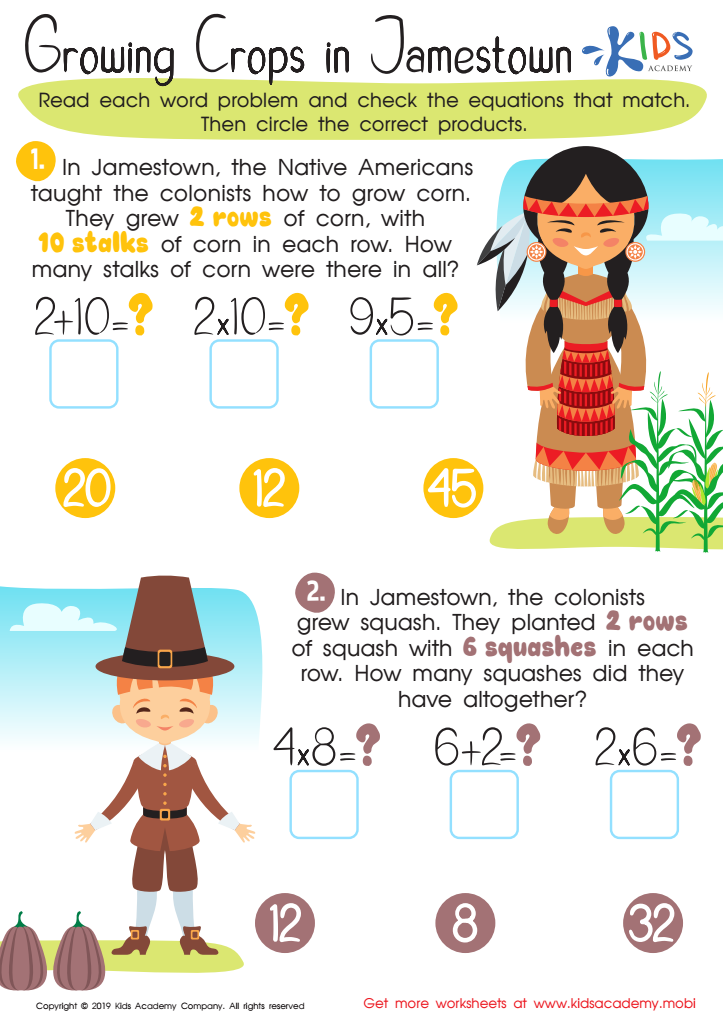
Growing Jamestown Worksheet
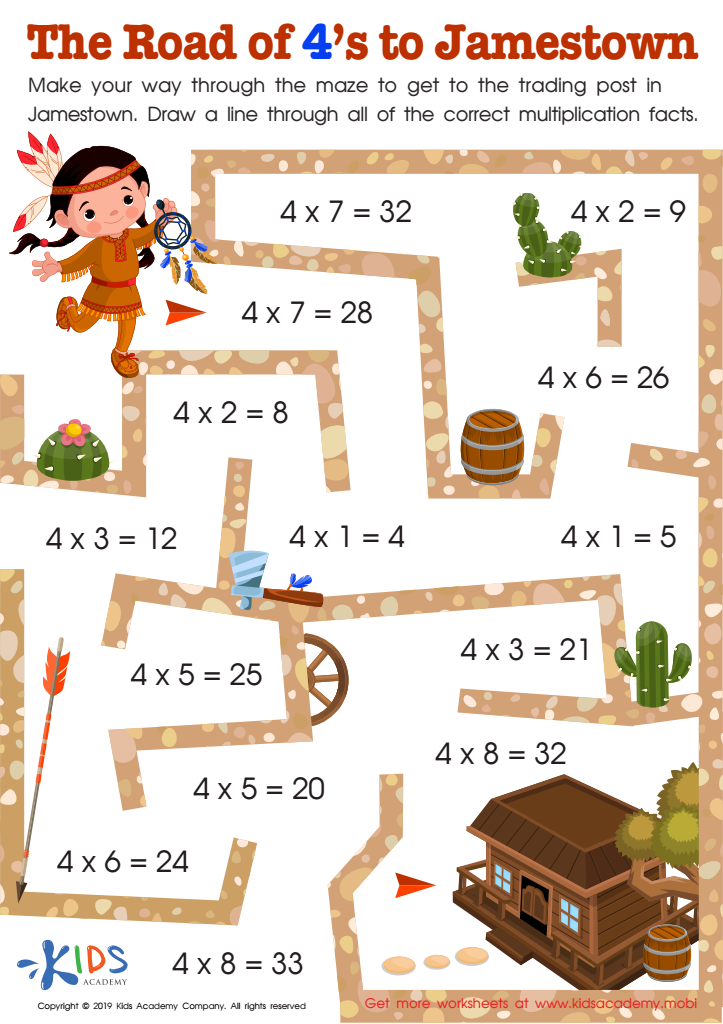
The Road of 4’s to Jamestown Worksheet








Critical Thinking Multiplication for ages 3-9 is essential because it fosters foundational skills that go beyond basic arithmetic. At this developmental stage, children's brains are exceptionally receptive to new information, making it a prime time to introduce concepts that encourage deeper cognitive engagement. Here are a few reasons why parents and teachers should prioritize this area:
-
Early Skill Development: Introducing multiplication through critical thinking helps children understand the logic behind numbers, which lays the groundwork for more advanced mathematical concepts.
-
Problem-Solving Skills: This approach encourages kids to think strategically and solve problems creatively. They learn that multiplication isn't just about rote memorization, but about seeing patterns and relationships, which are essential problem-solving skills.
-
Confidence Building: When children grasp complex ideas early, their confidence in their intellectual abilities grows. This sense of achievement empowers them to tackle future challenges with a positive mindset.
-
Life Skills: Multiplicative reasoning appears in everyday life, such as in situations involving shared resources, time calculations, and understanding spatial relationships. Early familiarity makes using these skills in real-life contexts more intuitive.
-
Academic Success: Students with strong critical thinking foundations in math tend to perform better overall in school because they apply logical reasoning across various subjects, thus making comprehensive learning connections.
By nurturing critical thinking through multiplication at a young age, you set children on a path to academic and life-long success.








