Reading Skills Multiplication Worksheets for Ages 3-9
3 filtered results
-
From - To
Our Reading Skills Multiplication Worksheets for ages 3-9 offer an exciting blend of literacy and math practice designed to help children thrive. Created by educational experts, these worksheets incorporate engaging multiplication problems and reading exercises to develop both number sense and reading comprehension simultaneously. Kids will delight in colorful illustrations and fun scenarios that make learning feel like play. Improve essential math skills while practicing reading activities suitable for early learners. Our comprehensive worksheets have been thoughtfully crafted to ensure age-appropriate challenges that inspire young minds to achieve their academic best. Revolutionize learning with our unique, multifaceted worksheets today!
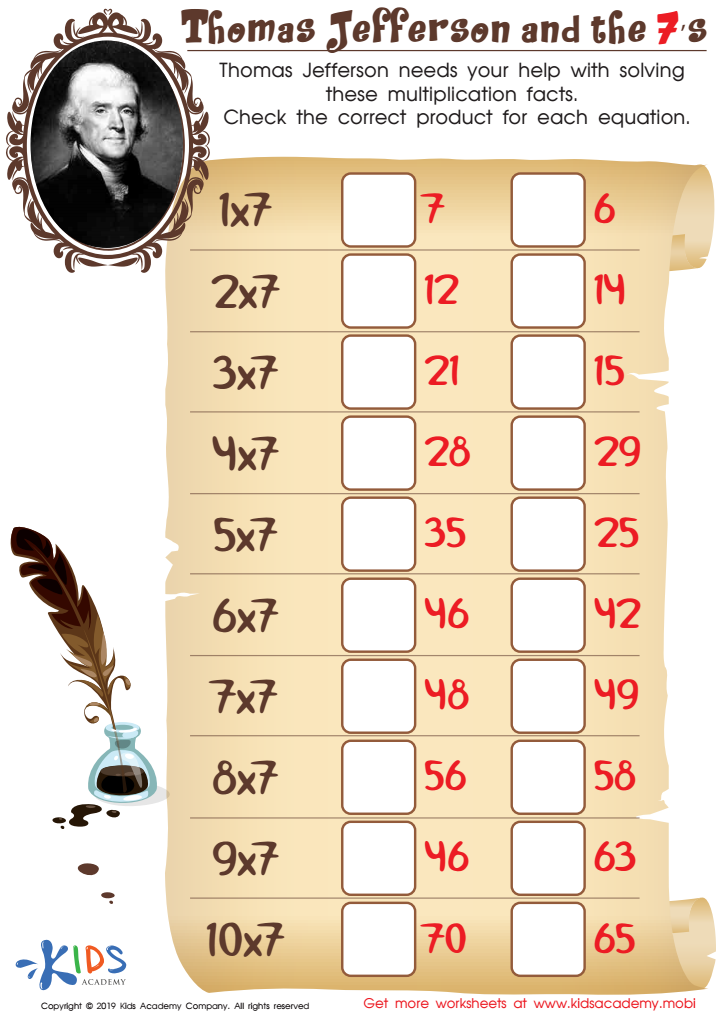
Thomas Jefferson and the 7’s Worksheet
 Assign to My Students
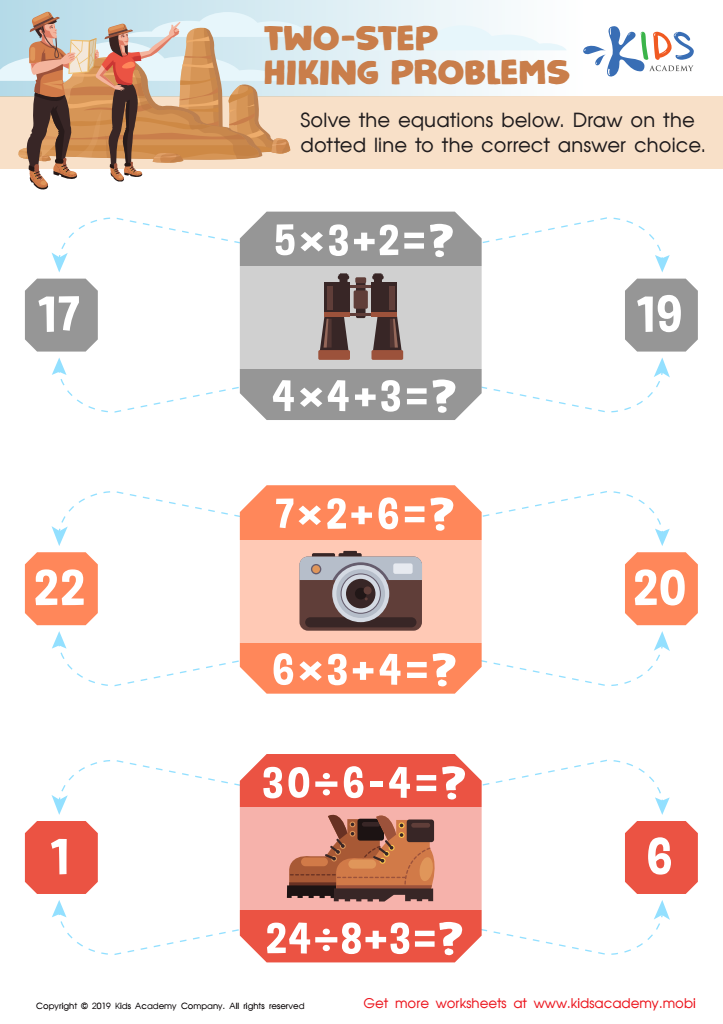
Two-Step Hiking Problems Worksheet
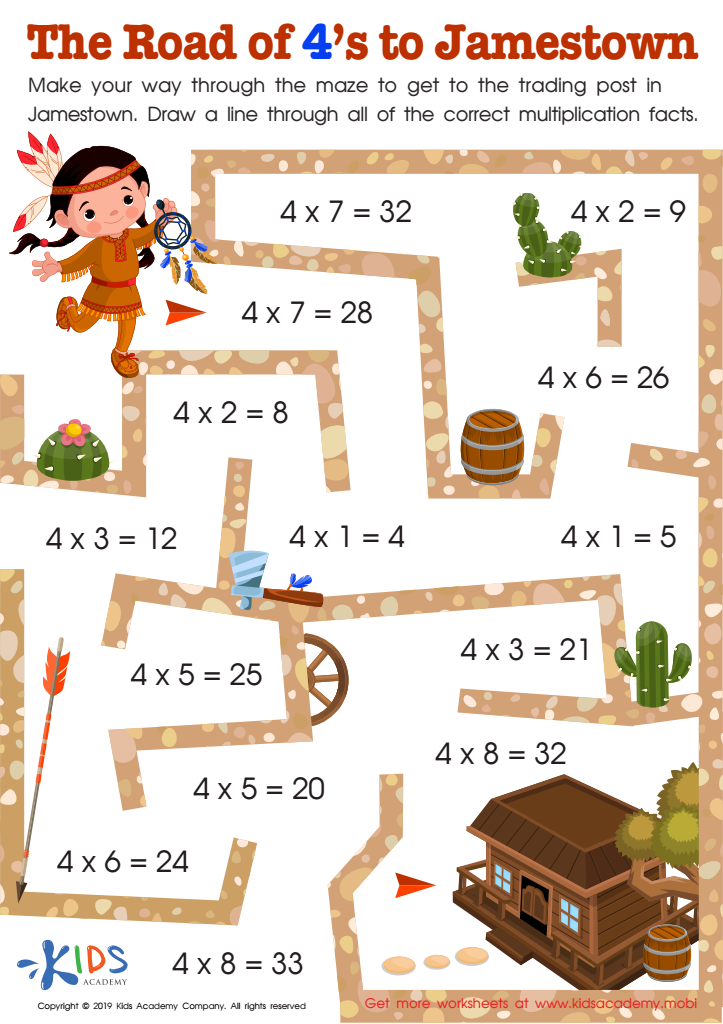
The Road of 4’s to Jamestown Worksheet








Reading skills and foundational math concepts like multiplication form essential cornerstones of early childhood education, and should be given considerable attention by parents and teachers of children aged 3-9. During these formative years, young minds are especially receptive to learning new skills. In terms of reading, fostering these skills early on enhances a child's vocabulary, comprehension, and critical thinking abilities, setting the stage for academic success across all subjects. Story time, phonics games, and interactive educational apps can captivate young minds, transforming learning to read into an enjoyable experience even in very young children.
Concurrently, introducing basic multiplication concepts to children as early as possible has notable benefits as well. At ages 3-9, children are developing cognitive abilities, such as pattern recognition and abstract thinking. Understanding multiplication facilitates problem-solving and can significantly simplify more advanced mathematical concepts they will encounter later. Equipping children with both reading and basic multiplication skills contributes to a more well-rounded, confident, and prepared learner.
Moreover, early development in these areas boosts self-esteem and encourages lifelong learning habits. Thus, it's crucial for parents and educators to invest in foundational skills, recognizing the far-reaching impact these early academic proficiencies have on a child's personal and intellectual growth.








