
Writing practice Numbers 0–10 Worksheets for Ages 3-9
8 filtered results
Difficulty Level
Grade
Age
-
From - To
Subject
Activity
Standards
Discover the perfect set of "Writing Practice Numbers 0–10 Worksheets for Ages 3-9" designed to foster foundational math skills in young learners. These engaging worksheets help children practice writing and recognizing numbers from 0 to 10 while enhancing fine motor skills and number sense. Suitable for kids between the ages of 3 to 9, each carefully crafted worksheet features fun activities and illustrations that keep learning exciting and enjoyable. Whether for classroom use or at-home practice, our worksheets are an excellent resource for helping your child build confidence and a strong mathematical foundation. Start their number journey today!
Favorites
With answer key
Interactive
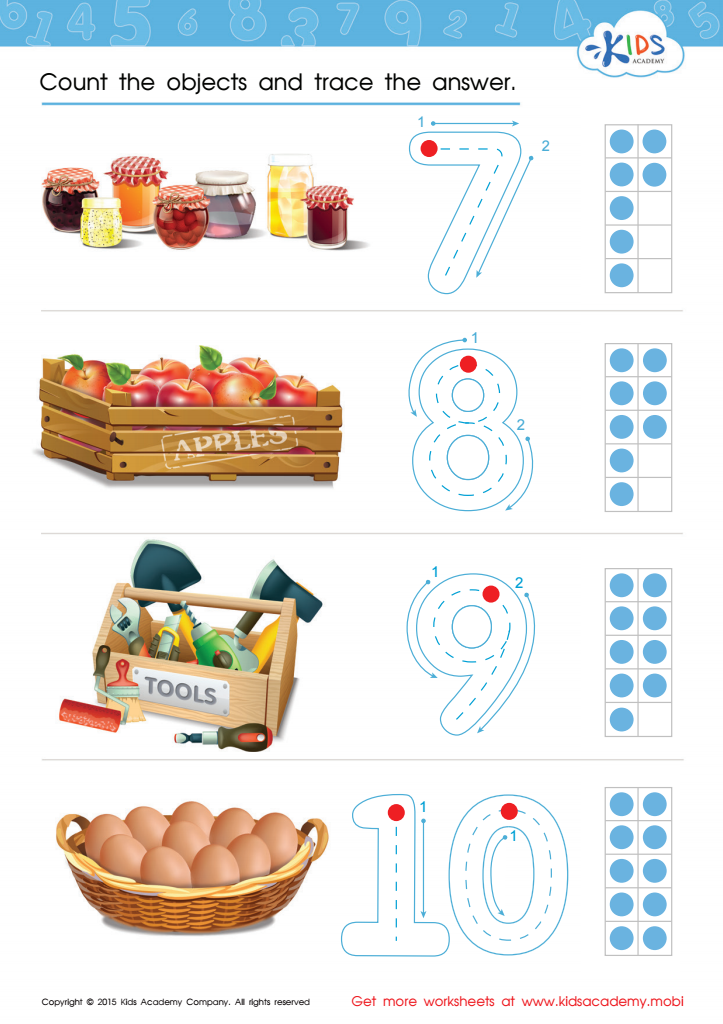
Count and Trace 7 – 10 Worksheet
Let your child develop a lifelong love of math with Kids Academy's printable math worksheet based on the innovative Singapore Math method. It uses funny pictures and graphs to help solve math problems. Check out our amazing collection of free printable math worksheets now!
Count and Trace 7 – 10 Worksheet
Worksheet
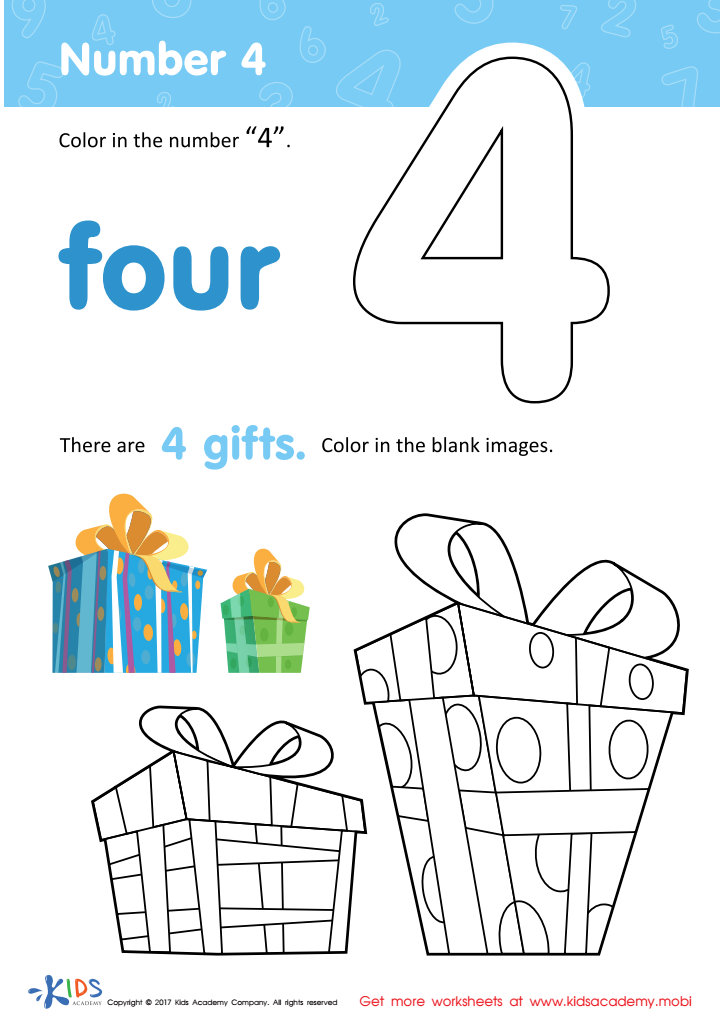
Number 4 Printable
Kids love gifts! Give your child a learning opportunity with this number 4 coloring page. As they design their own wrapping paper, they'll learn to read and recognize the number four. An exciting way to have fun and learn at the same time!
Download (PDF)
 Assign to My Students
Assign to My Students
Number 4 Printable
Worksheet
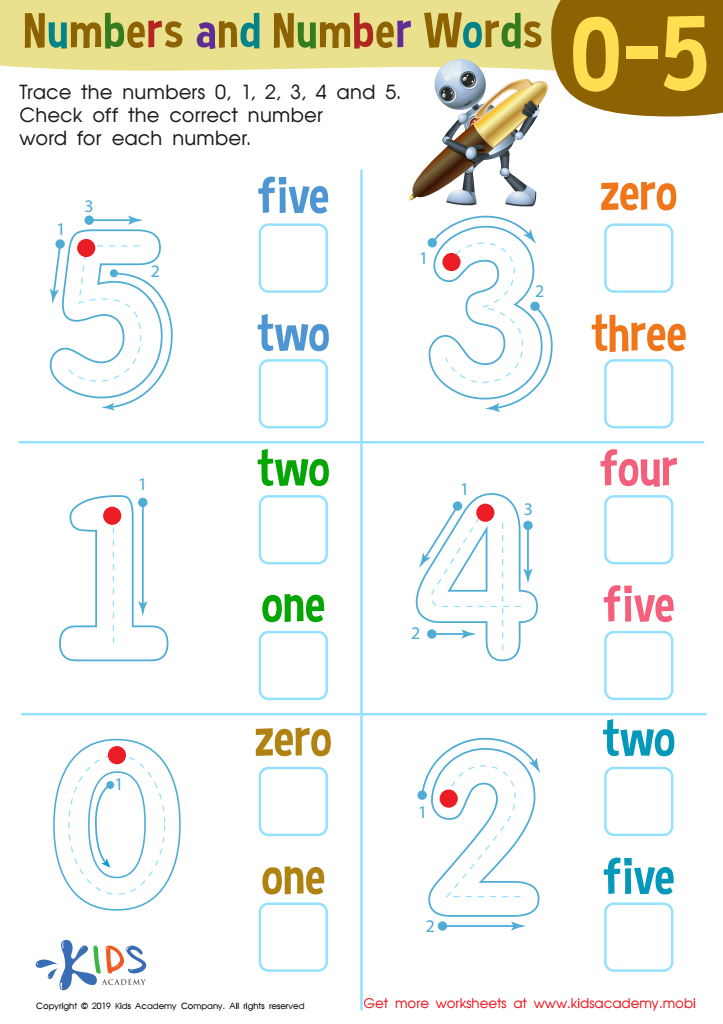
Numbers and Number Words Worksheet
Preschoolers can practice counting and recognizing numbers with this worksheet. Students trace the numbers zero through five and check the boxes next to each number to show the correct number word. Ideal for young kids, this printable helps them learn early math and number words.
Numbers and Number Words Worksheet
Worksheet
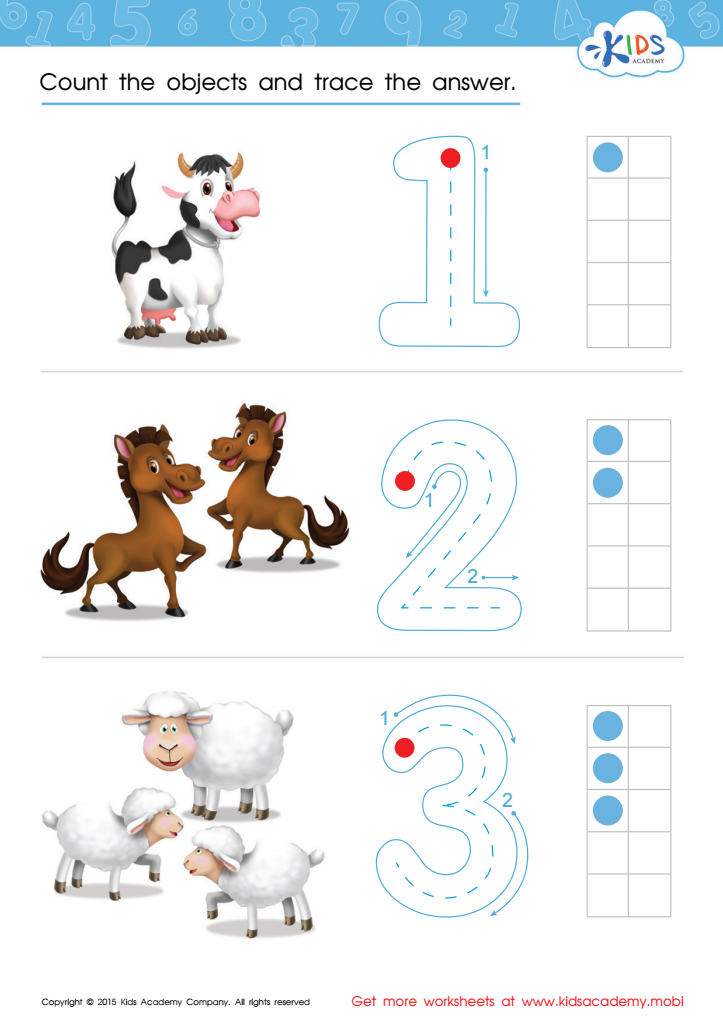
Count and Trace 1 – 3 Worksheet
Get your preschooler started on math with Kids Academy's newest worksheet! It's an enjoyable way for kids to learn how to count and trace numbers 1-3. Print it out and watch your learner have fun as they trace the lines. For more free math worksheets, click here.
Count and Trace 1 – 3 Worksheet
Worksheet
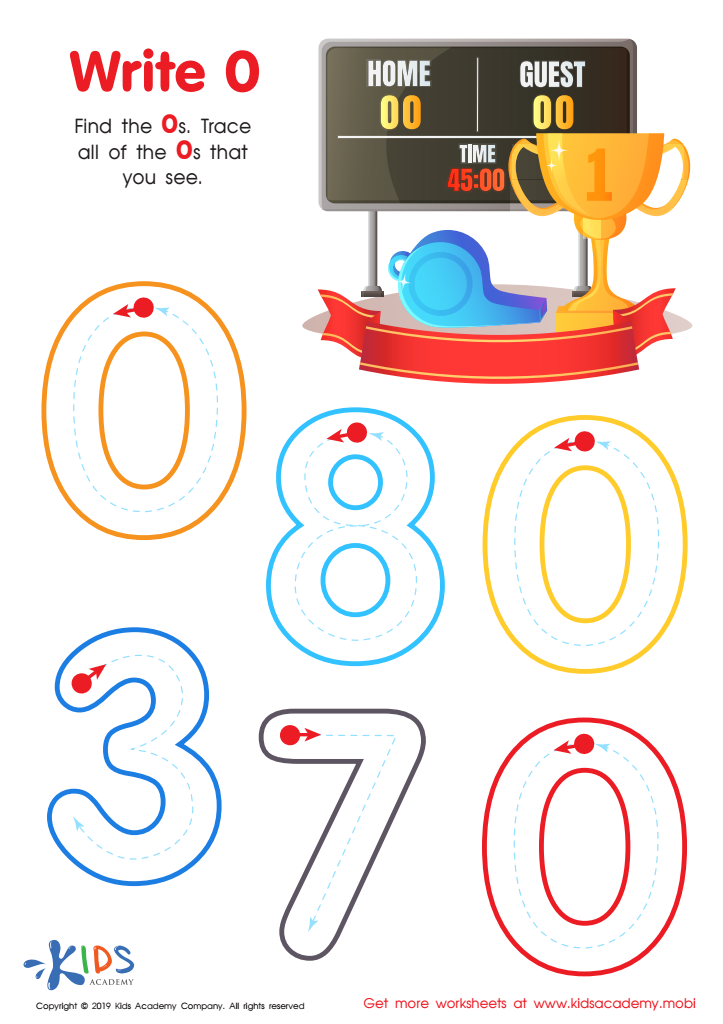
Write 0 Worksheet
Help your children become number pros! This worksheet will give them the edge they need to count, while also helping them practice writing the number 0. Have them find the 0s in the printout, then trace them. It's a great way to build a math foundation and get them ready to succeed with more advanced math concepts.
Write 0 Worksheet
Worksheet
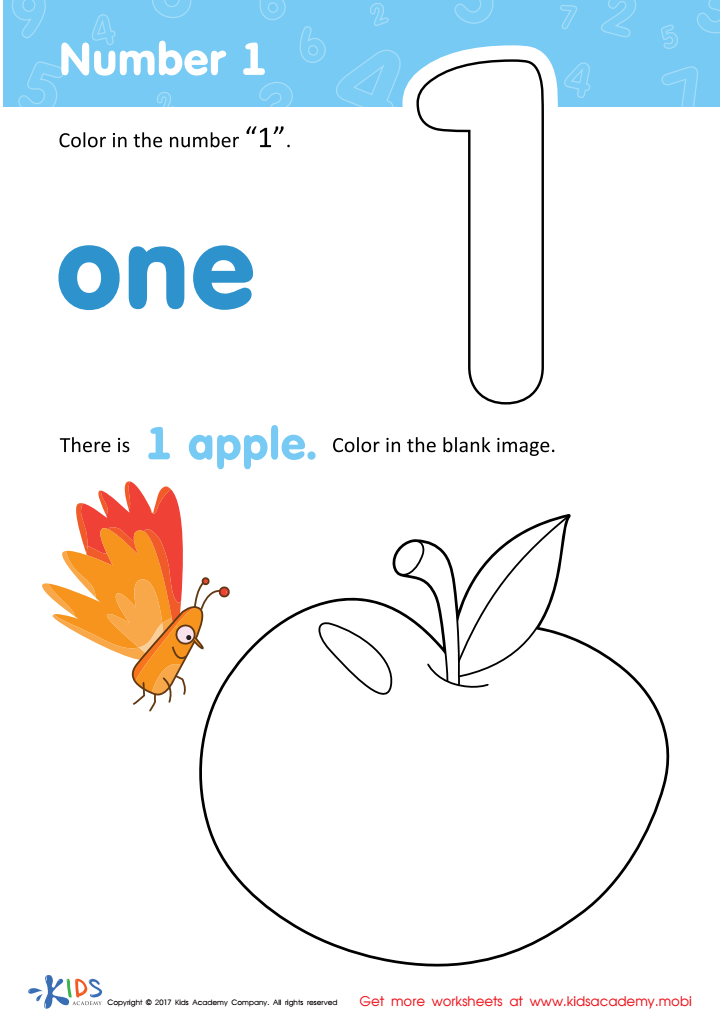
Number 1 Printable
An apple a day keeps the doctor away, but this coloring page can keep your child and the preschool teacher happy, too! Teach them to recognize numeracy with this cute page, featuring number 1!
Download (PDF)
Assign to My Students
Assign to My Students
Number 1 Printable
Worksheet
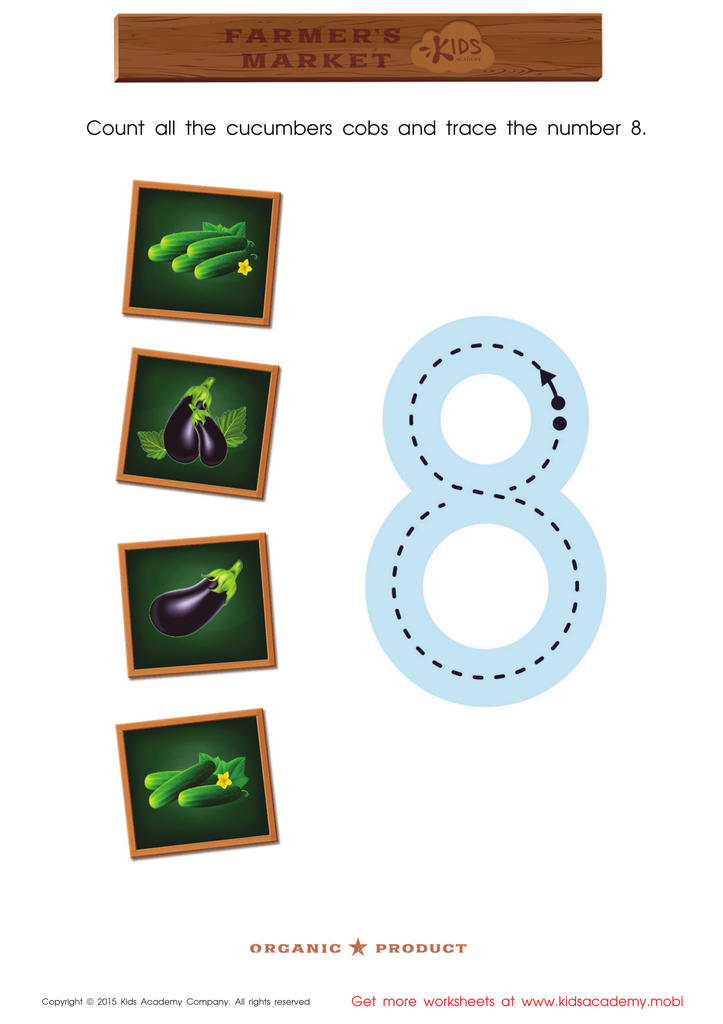
Count the Cucumbers and Trace the Number 8 Printable
Get your little learner to count cucumbers and trace the number 8 on a bright kindergarten worksheet. It's a great tool to help them understand how addition works and become a successful mathematician.
Count the Cucumbers and Trace the Number 8 Printable
Worksheet
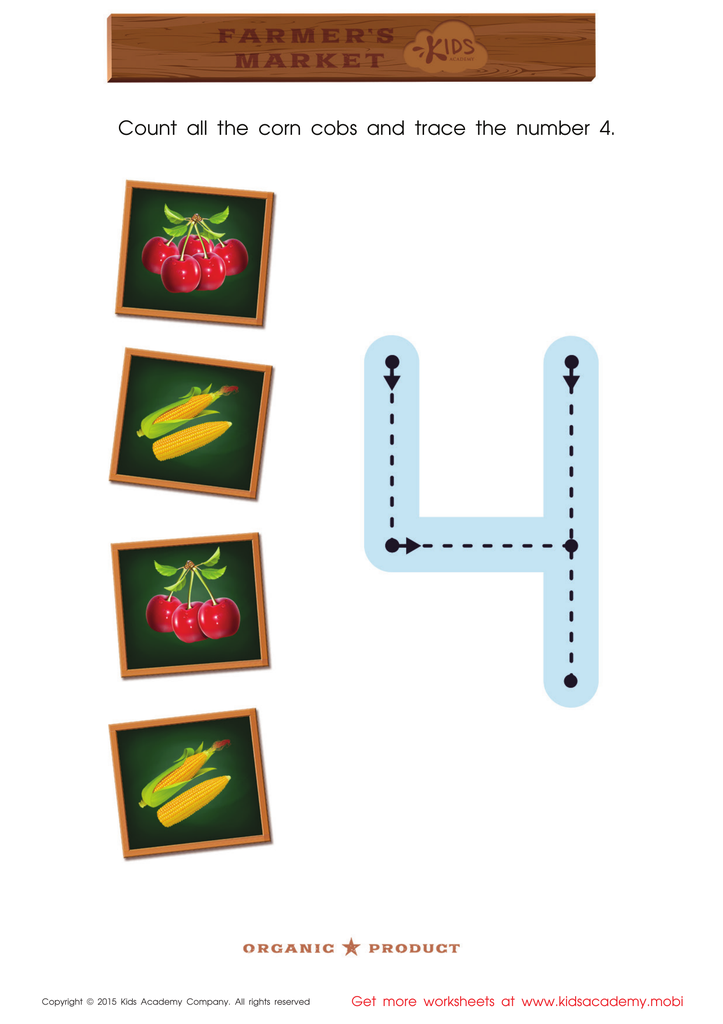
Count the Corncobs and Trace the Number 4 Worksheet
Download this free math worksheet to get your little mathematician counting, tracing numbers and practicing addition. The Singapore Math method is used to help visualize and solve addition problems. For more Kids Academy math worksheets, check out here!
Count the Corncobs and Trace the Number 4 Worksheet
Worksheet
Join Kids Academy for Free
Who is primarily going to use this learning content?








Writing practice for numbers 0–10 is fundamental for young children's development and learning for several reasons. For ages 3-9, these early years are critical windows where foundational skills are built.
Firstly, writing numbers strengthens fine motor skills. As children grasp pencils and form numbers, they develop the dexterity needed for not only writing but also tasks like tying shoelaces and buttoning clothes. These are essential skills for everyday independence and academic success.
Secondly, number writing reinforces number recognition and counting. Physically writing numbers repetitively helps solidify their visual memory and understanding of numerical order. This act of writing also supports learning the basics of math, such as simple addition and subtraction as children comprehend the concepts tied to each numeral.
In addition, these activities foster a sense of achievement and confidence. When children successfully write and recognize numbers, they feel more competent and are likely to be more enthusiastic learners. This enthusiasm often spills over into other academic areas, creating a more positive attitude toward learning in general which can lead to better overall academic performance.
Creating structured, engaging ways for children to practice writing numbers, such as through games, rhymes, or hands-on activities, can have long-lasting benefits, embedding an important skill set that bolsters both educational and personal development. Therefore, both parents and teachers should prioritize this practice to support a balanced, well-rounded early education.








