Logical Reasoning Two-step Word Problems Worksheets for Ages 3-9
3 filtered results
-
From - To
Enhance your child's logical reasoning skills with our engaging Two-step Word Problems Worksheets, designed for ages 3-9. These worksheets provide a fun and interactive way for young learners to develop critical thinking abilities while solving real-life scenarios in math. With varying difficulty levels, kids will tackle exciting problems that require them to process information, visualize solutions, and apply basic math concepts. Our printable resources are perfect for parents, educators, or homeschoolers seeking to foster problem-solving skills in a supportive environment. Encourage your child's confidence in math and reasoning through hands-on practice with our thoughtfully crafted worksheets!
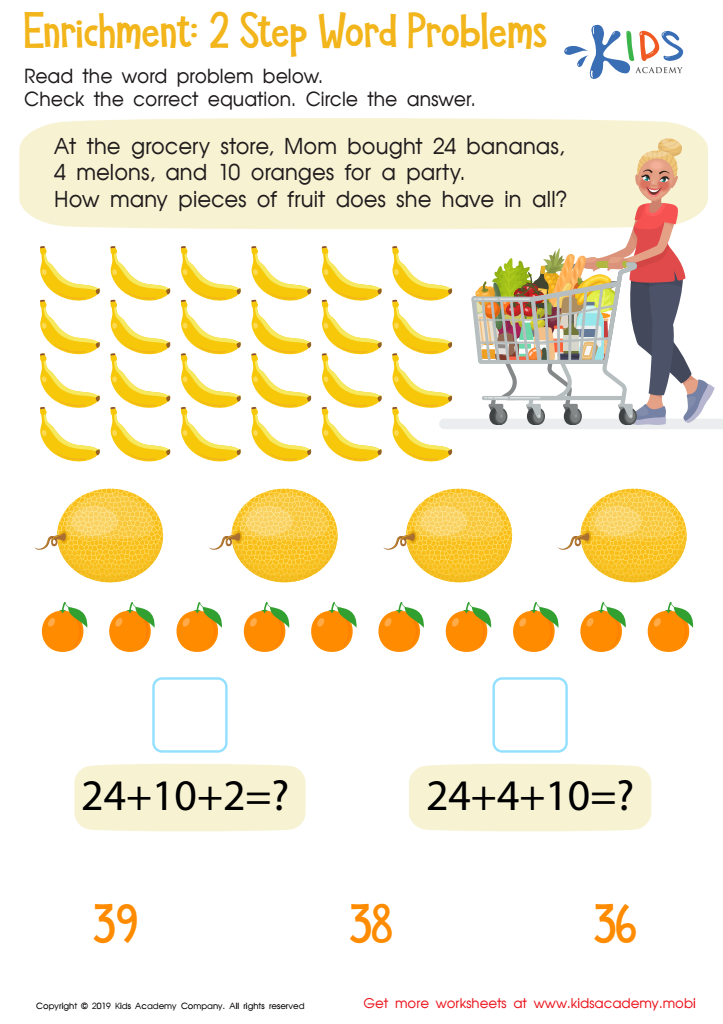
Enrichment -2 Step Word Problems Worksheet
 Assign to My Students
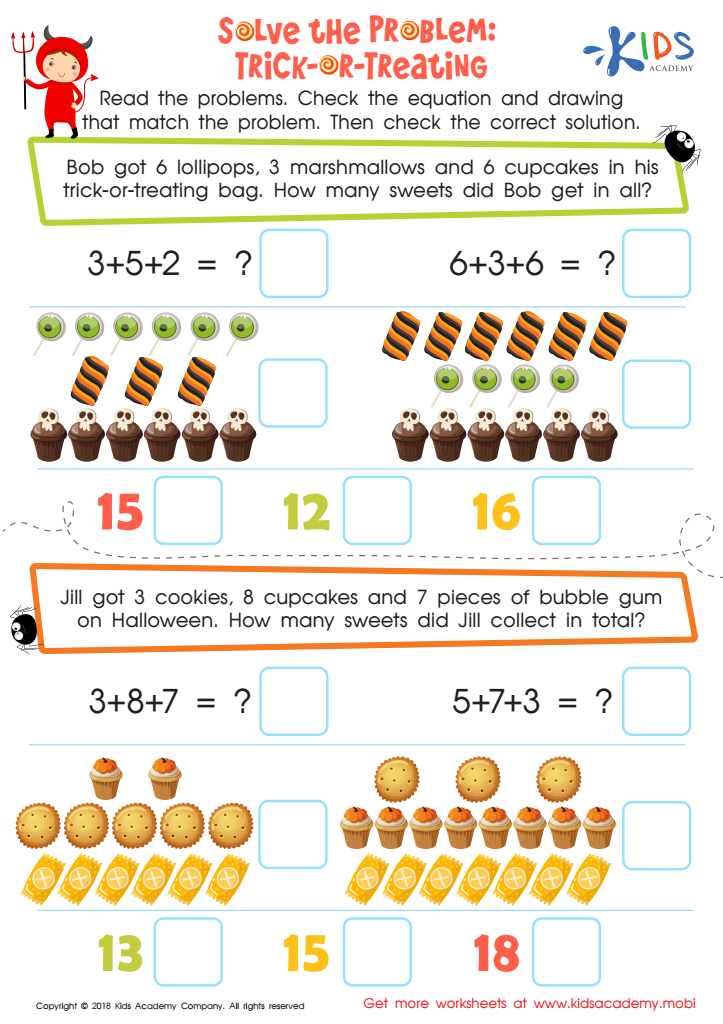
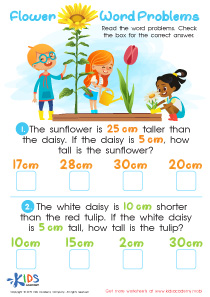
Solve the Problem: Trick–or–treating Worksheet
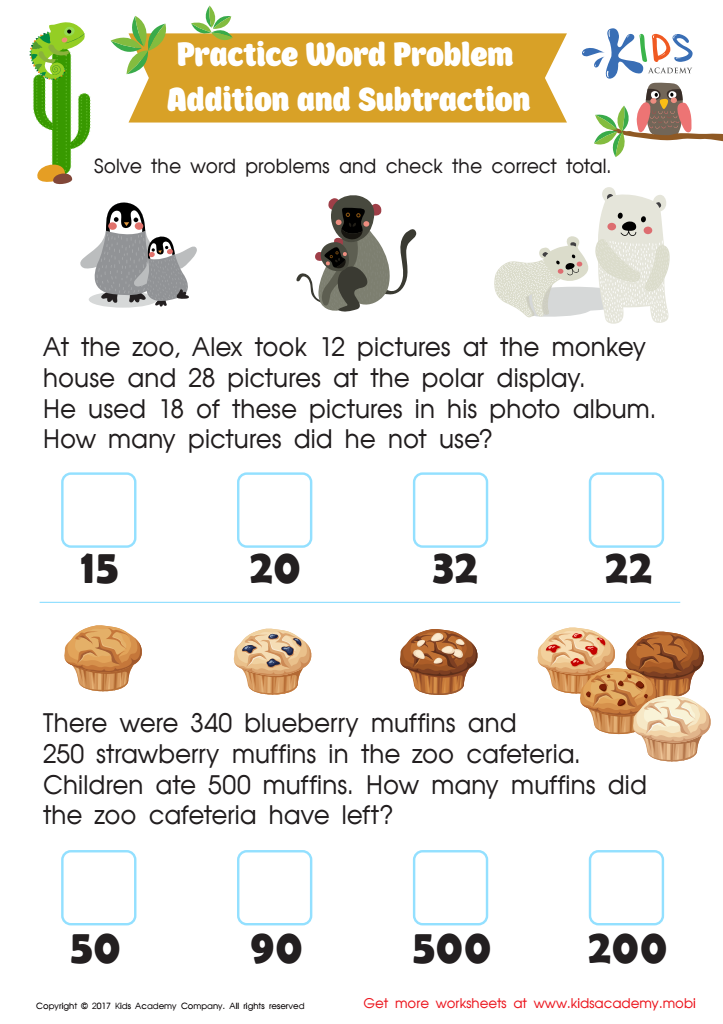
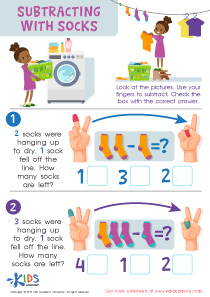
Addition and Subtraction: Word Problems Worksheet



Logical reasoning and problem-solving skills are essential components of early childhood education. For children aged 3-9, engaging with two-step word problems significantly enhances their cognitive development. These interactive problems require children to comprehend language, parse information, and apply relational reasoning to arrive at a conclusion. This boosts critical thinking capacities, which are vital for success in academics and everyday life.
Parents and teachers should care about fostering these skills because they lay the groundwork for more complex mathematical and analytical abilities in later years. Solving two-step word problems encourages children to think beyond the immediate task, teaching them to break down complex scenarios into manageable parts, which can be applied in various disciplines, including math, science, and social studies.
Additionally, these problems help children develop persistence and resilience. By facing challenges and working through them, they build a growth mindset. As students encounter and strategize through these scenarios, parents and teachers play a crucial role in providing guidance, encouragement, and necessary scaffolding. Ultimately, prioritizing logical reasoning through two-step word problems supports holistic development, preparing children not only for academic challenges but for real-world problem-solving as well.