Logical Reasoning Word Problems Worksheets for Ages 3-9
5 filtered results
-
From - To
Enhance your child’s logical reasoning skills with our engaging word problems worksheets designed for ages 3-9. These interactive activities foster critical thinking and problem-solving abilities through fun scenarios that stimulate young minds. Each worksheet is tailored to age-appropriate understanding, encouraging kids to analyze situations, make deductions, and draw conclusions. Ideal for classroom use or at-home learning, our worksheets promote cognitive development while ensuring children enjoy the learning process. Perfect for developing essential skills in early mathematics and reasoning, these logical reasoning word problems are a valuable resource for parents and educators alike. Discover the joy of learning through playful challenges!
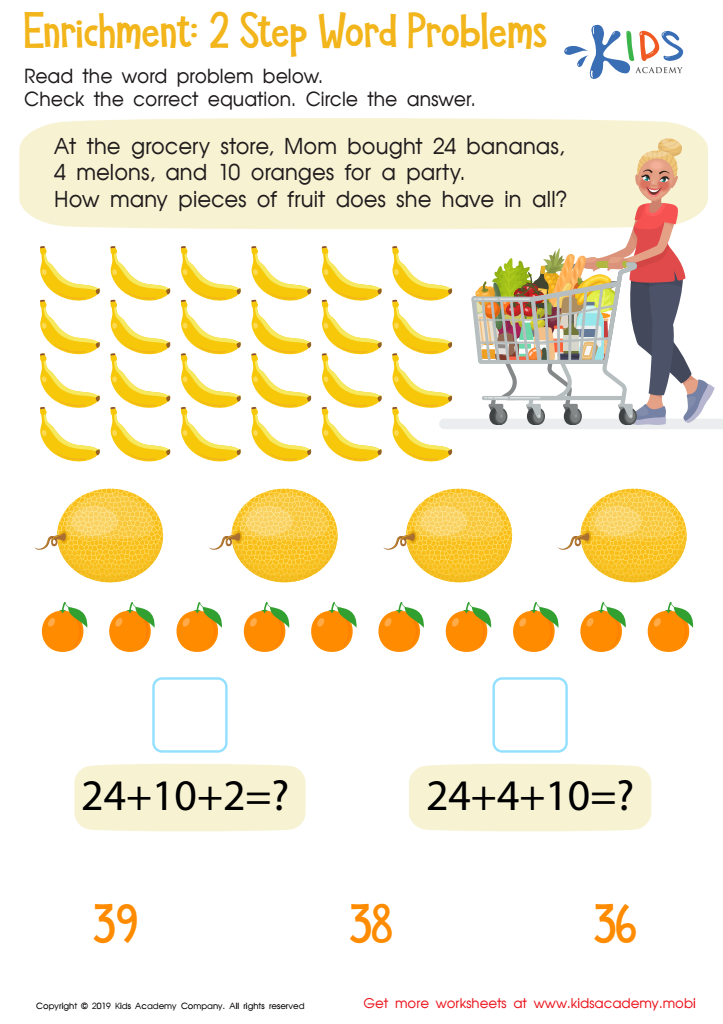
Enrichment -2 Step Word Problems Worksheet
 Assign to My Students
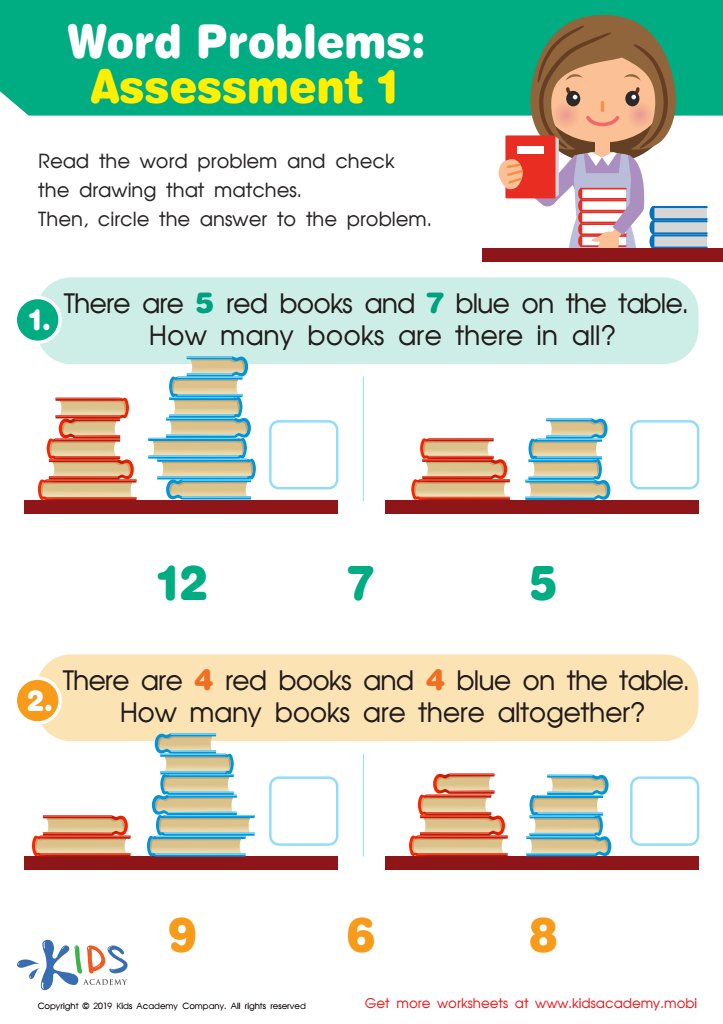
Word Problems: Assessment 1 Worksheet
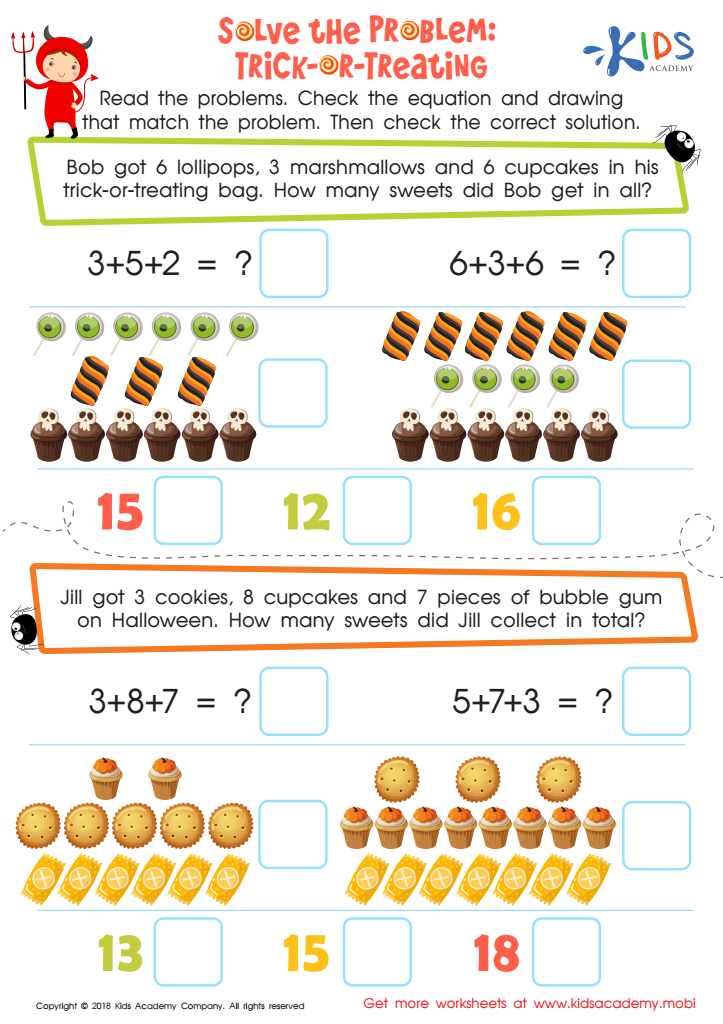
Solve the Problem: Trick–or–treating Worksheet
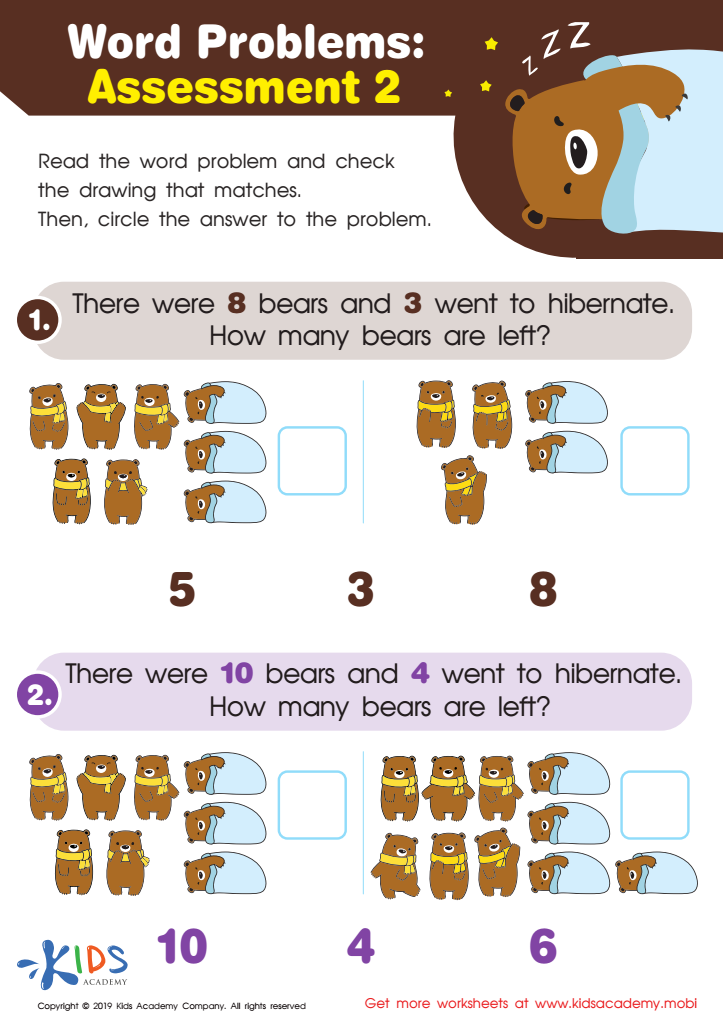
Word Problems: Assessment 2 Worksheet
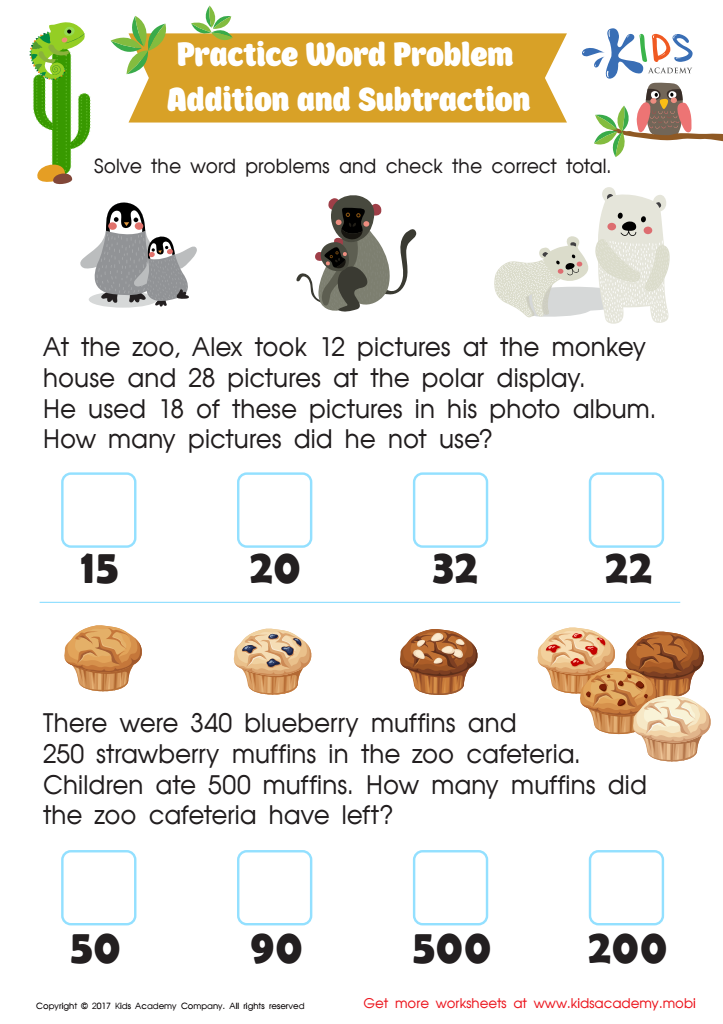
Addition and Subtraction: Word Problems Worksheet








Logical reasoning word problems are vital for children aged 3-9 as they lay the foundation for critical thinking, problem-solving skills, and mathematical understanding. At this developmental stage, children are naturally curious and eager to engage with the world around them. Introducing logical reasoning through word problems leverages this curiosity, helping them to make connections between concepts, vocabulary, and numbers.
These exercises encourage children to think analytically, improving their ability to identify patterns, weigh options, and arrive at solutions through sequential thinking. By regularly engaging with word problems, children learn to break down complex ideas into manageable steps, a skill beneficial not only in math but across various subjects.
Furthermore, logical reasoning promotes language development, as children learn to comprehend and interpret the wording of problems. This process enhances reading comprehension and communication skills. For parents and teachers, fostering these skills at an early age nurtures confident learners who can tackle academic challenges both in and out of the classroom. Additionally, reinforcing logical reasoning encourages a growth mindset, teaching children to view challenges as opportunities for learning. Ultimately, prioritizing these word problems empowers children with tools that not only support their educational journey but also their everyday decision-making and reasoning skills.








