Logical thinking development Word Problems Worksheets for Ages 3-9
3 filtered results
-
From - To
Enhance your child's logical thinking skills with our engaging Word Problems Worksheets, designed specifically for ages 3 to 9. These worksheets provide a fun and interactive way for young learners to tackle everyday scenarios through mathematical problem-solving. By working through age-appropriate word problems, children develop critical thinking abilities, improve comprehension, and build a solid foundation in math. Our resource encourages creativity and reasoning, making learning enjoyable and effective. Perfect for both home and classroom use, these worksheets will spark curiosity and confidence in young minds. Download our Logical Thinking Development Word Problems Worksheets today and watch your child's skills flourish!
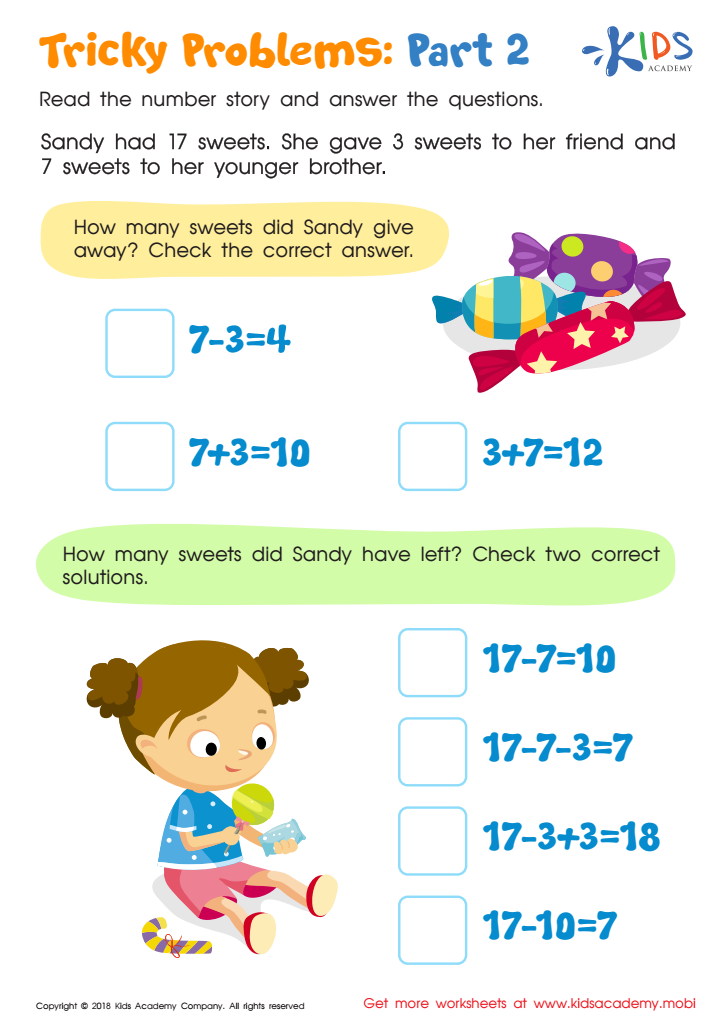
Tricky Problems Worksheet: Part 2
 Assign to My Students
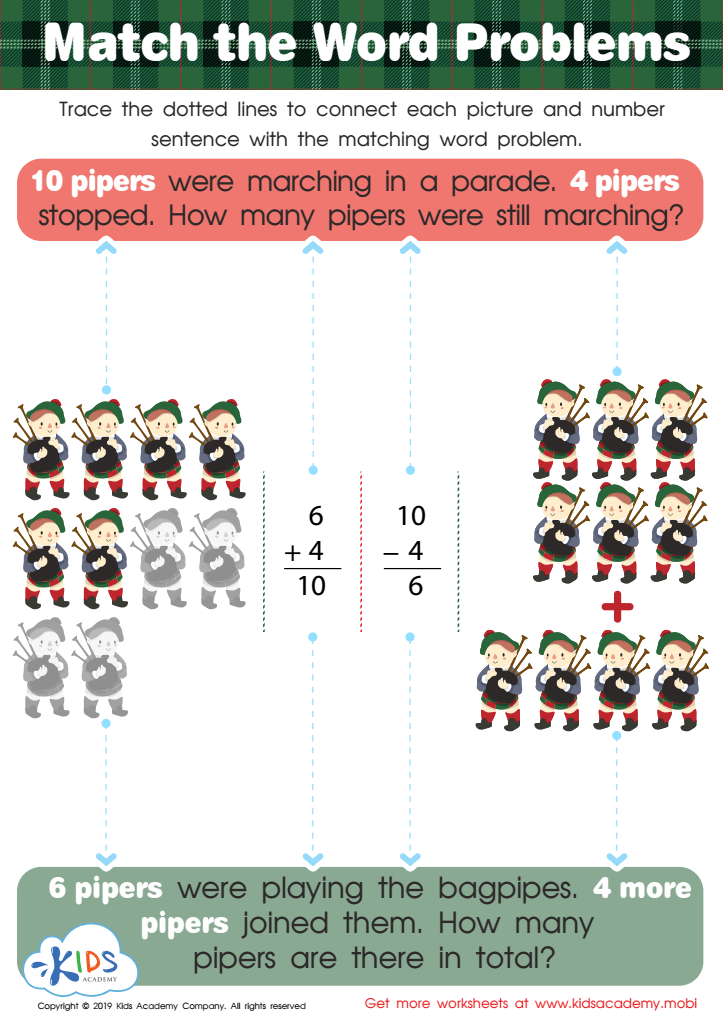
Match the Word Problems Worksheet
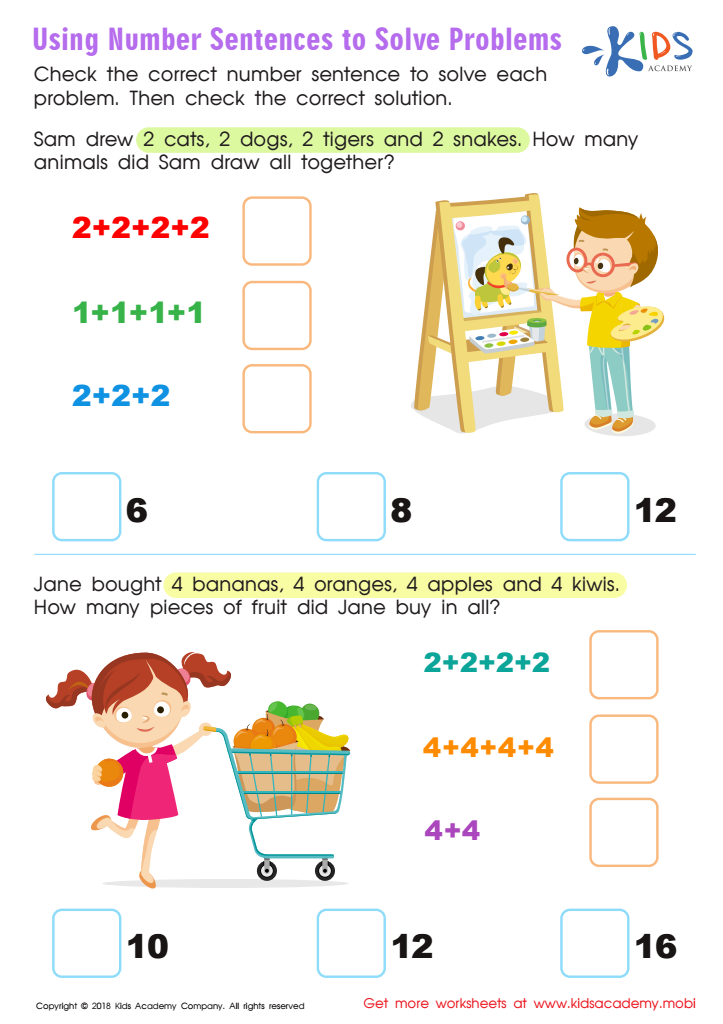
Using Number Sentences to Solve Problems Worksheet






.jpg)

Parents and teachers should prioritize the development of logical thinking through word problems for children aged 3-9 because this foundational skill plays a crucial role in their overall cognitive growth. Engaging with word problems encourages children to analyze situations, comprehend language, and identify relationships between different concepts. These activities help cultivate critical thinking skills, enabling children to problem-solve effectively in real-life situations.
Word problems also enhance mathematical understanding and literacy, teaching kids how to translate spoken language into numerical expressions. This ability is essential for later success in academics, as it lays a groundwork for more complex problem-solving in mathematics and science.
Additionally, addressing logical thinking through word problems can boost a child’s confidence. As they learn to navigate challenges and find solutions, they develop resilience and a positive attitude towards learning.
Lastly, collaborative exploration of word problems can strengthen communication skills and foster teamwork, making learning a more engaging and social experience. In a world increasingly reliant on critical thinking skills, early exposure to such practices prepares children not only for academic success but also for responsible decision-making in their daily lives. Thus, it is vital for parents and teachers to actively support and encourage this developmental aspect.








