Visual Learning Word Problems Worksheets for Ages 3-9
5 filtered results
-
From - To
Unlock the power of visual learning with our engaging Word Problems Worksheets designed for children ages 3-9! These interactive resources help young learners develop critical thinking and problem-solving skills through colorful imagery and relatable scenarios. Our worksheets present age-appropriate math concepts in a fun, visual format that captures children’s attention and makes learning enjoyable. Encourage your child to explore counting, addition, and subtraction with real-world examples that enhance understanding. Perfect for homeschooling or classroom use, these visual learning tools foster confidence in young mathematicians and set a solid foundation for future success. Download your worksheets today and watch your child thrive!
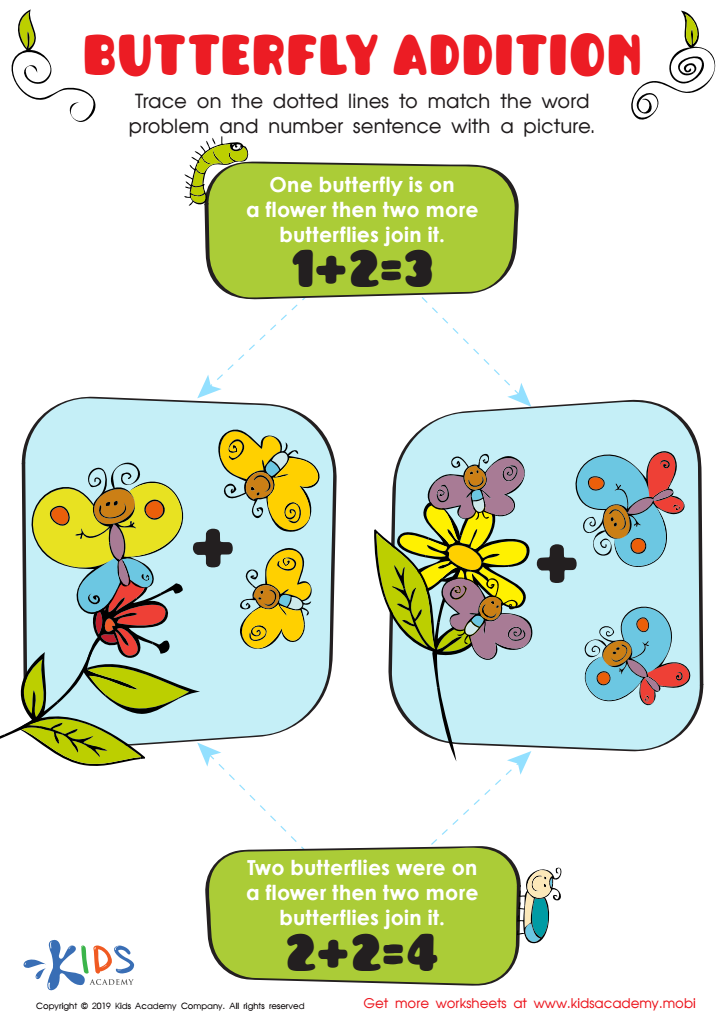
Butterfly Addition Worksheet
 Assign to My Students
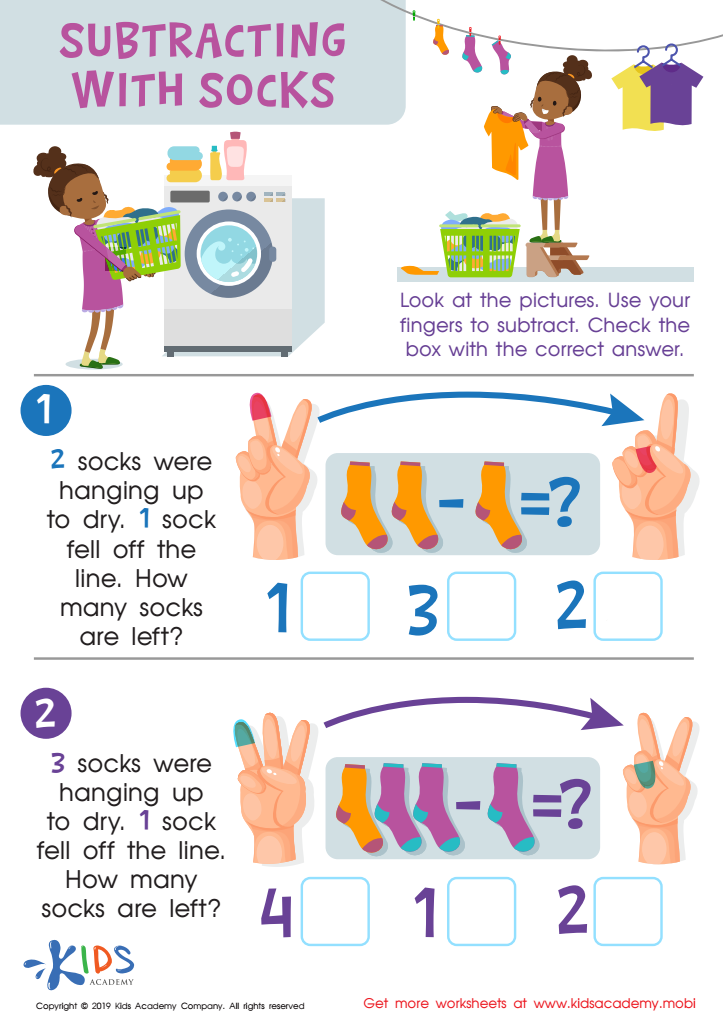
Subtracting Socks Worksheet
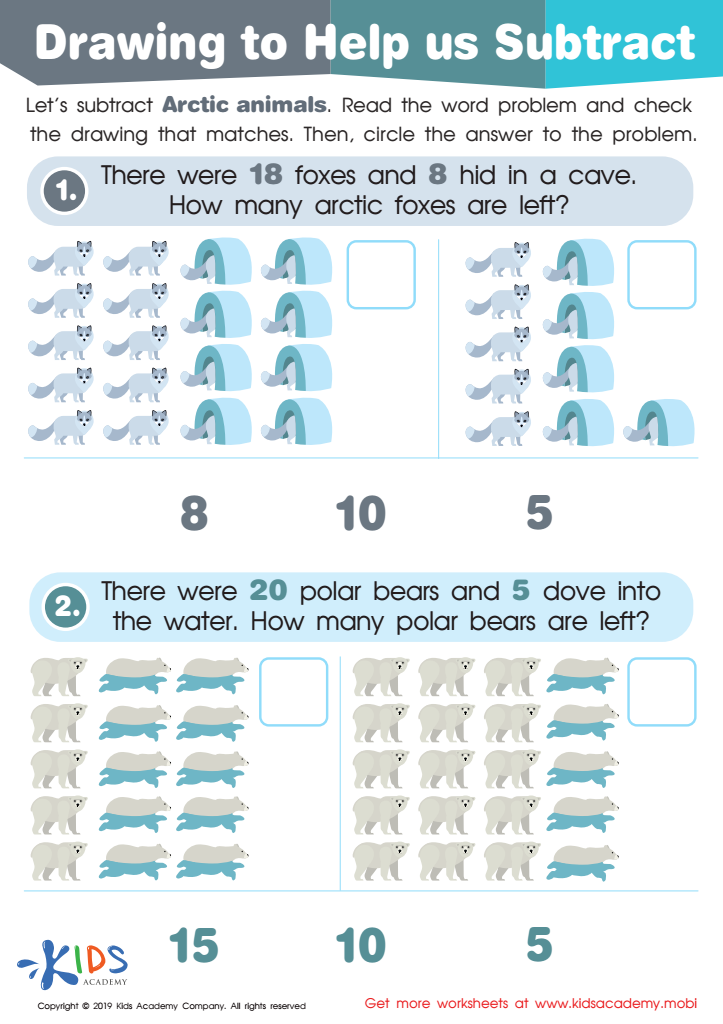
Drawing to Help Us Subtract Worksheet
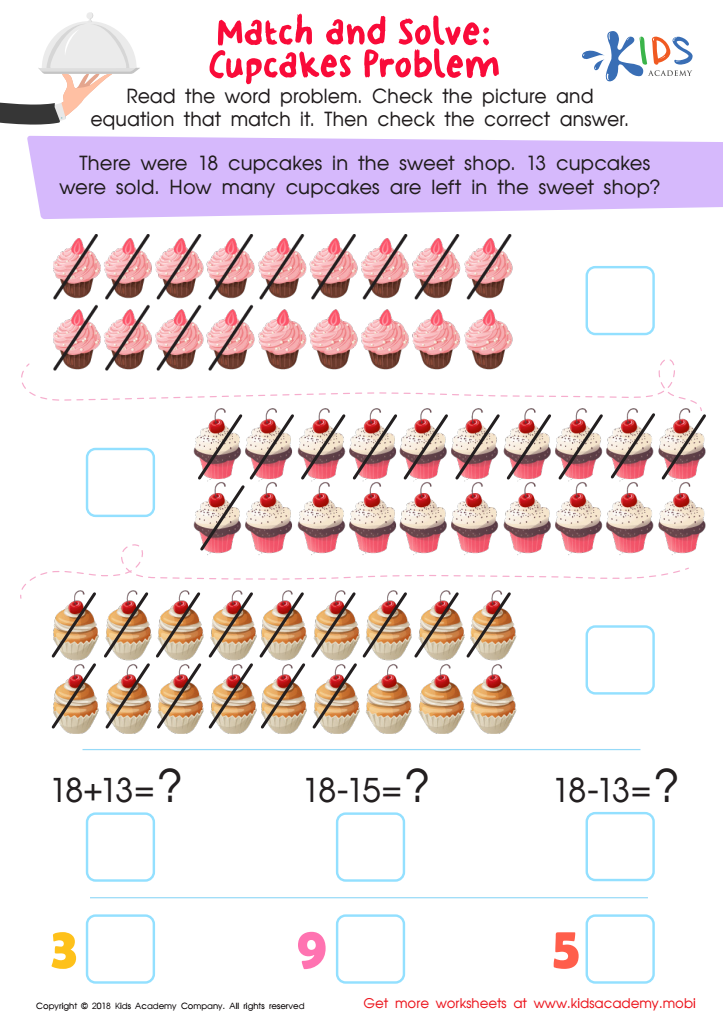
Match and Solve: Cupcakes Problem Worksheet
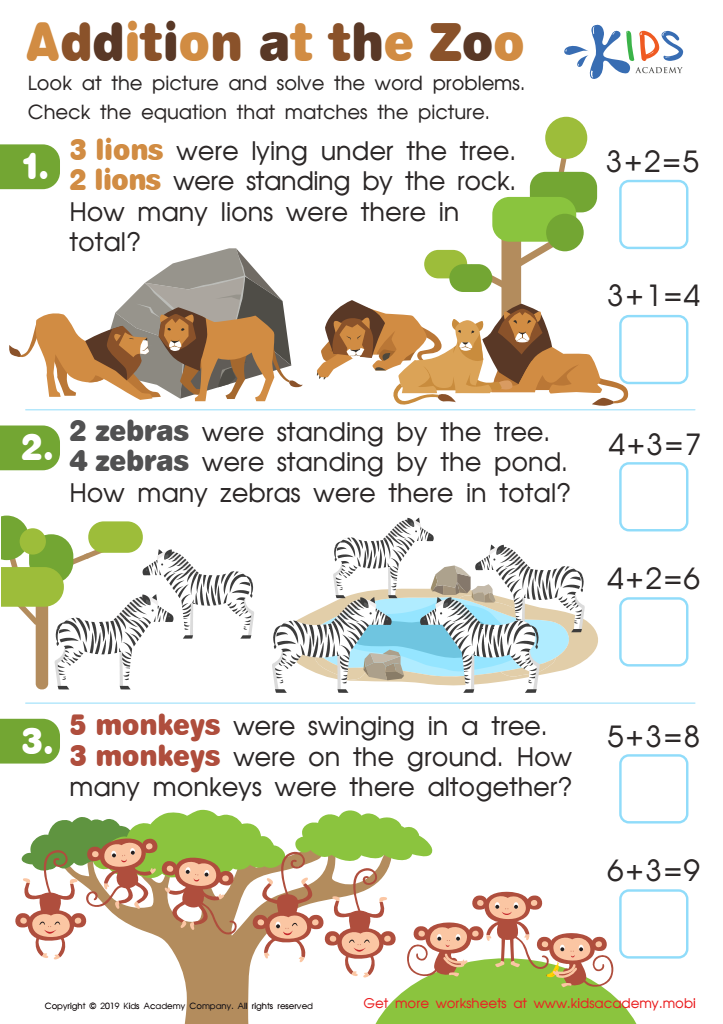
Addition at the Zoo Worksheet








Visual learning word problems are essential for children ages 3-9, as they integrate visual elements with mathematical concepts to enhance comprehension and engagement. At this developmental stage, children are naturally curious and rely heavily on visual stimuli to make sense of their world. By incorporating visual aids like pictures, diagrams, or objects in word problems, children can better grasp abstract ideas and develop critical thinking skills.
Teachers and parents play a crucial role in facilitating this learning style. Visual learning helps children to identify relationships between numbers and real-world scenarios, fostering a deeper understanding of math concepts. This approach also caters to diverse learning styles, engaging visual learners who might struggle with traditional text-only problems.
Moreover, visual word problems stimulate creativity and problem-solving abilities, equipping children with essential skills for future learning. They encourage collaboration and discussion when children work through problems together, enhancing communication skills. By prioritizing visual learning word problems, parents and teachers help nurture a positive attitude towards math, reducing anxiety and building confidence. Ultimately, this foundation in early education sets children on a path toward continued success in academics and everyday decision-making.








