
Hand-eye Coordination Building Vocabulary Worksheets for Ages 3-9
4 filtered results
Difficulty Level
Grade
Age
-
From - To
Subject
Activity
Standards
Enhance your child's hand-eye coordination and vocabulary skills with our engaging worksheets designed for ages 3-9! These fun, interactive activities seamlessly blend physical movement with language learning, fostering essential developmental skills. Children will enjoy practicing words and phrases while improving their fine motor skills through tracing, matching, and coloring exercises. Our thoughtfully-designed worksheets cater to various skill levels, ensuring every child can benefit from them. By incorporating playful elements into their learning experience, we help young learners build confidence in their vocabulary while mastering hand-eye coordination. Explore our collection today to support your child's journey toward literacy and motor skill development!
Favorites
With answer key
Interactive
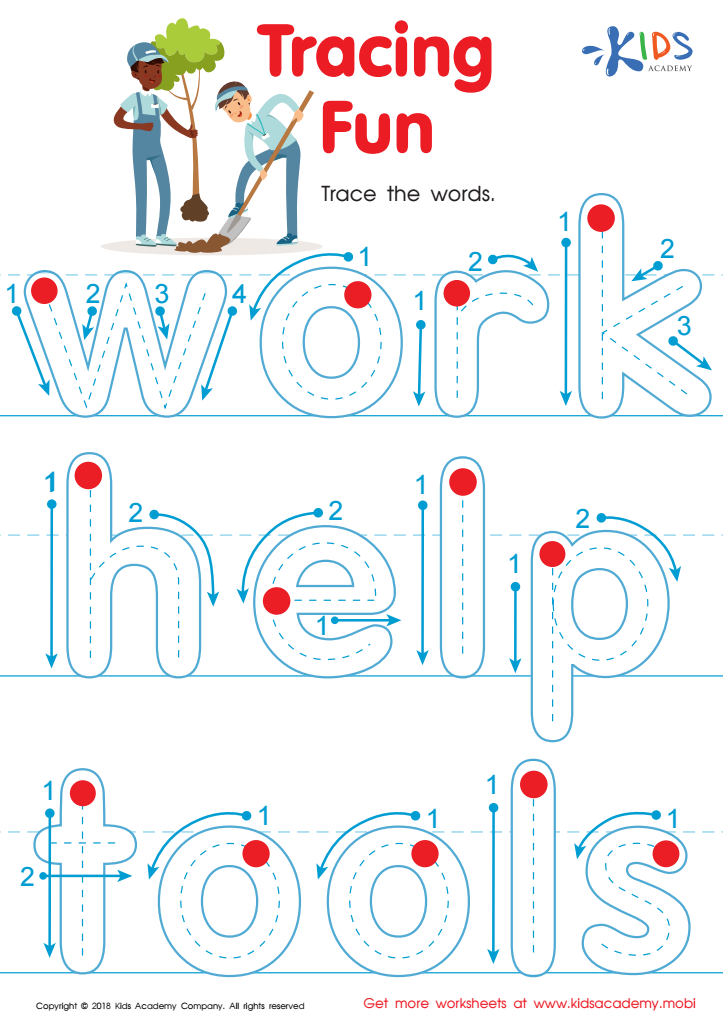
Tracing Fun Worksheet
Believe it or not, good handwriting helps with reading! Starting at the top left and writing legibly builds reading skills. This free worksheet helps little learners practice basic sight words. Red dots show them where to start and the words provide reinforcement without them realising. An enjoyable way to boost their reading and writing.
Tracing Fun Worksheet
Worksheet











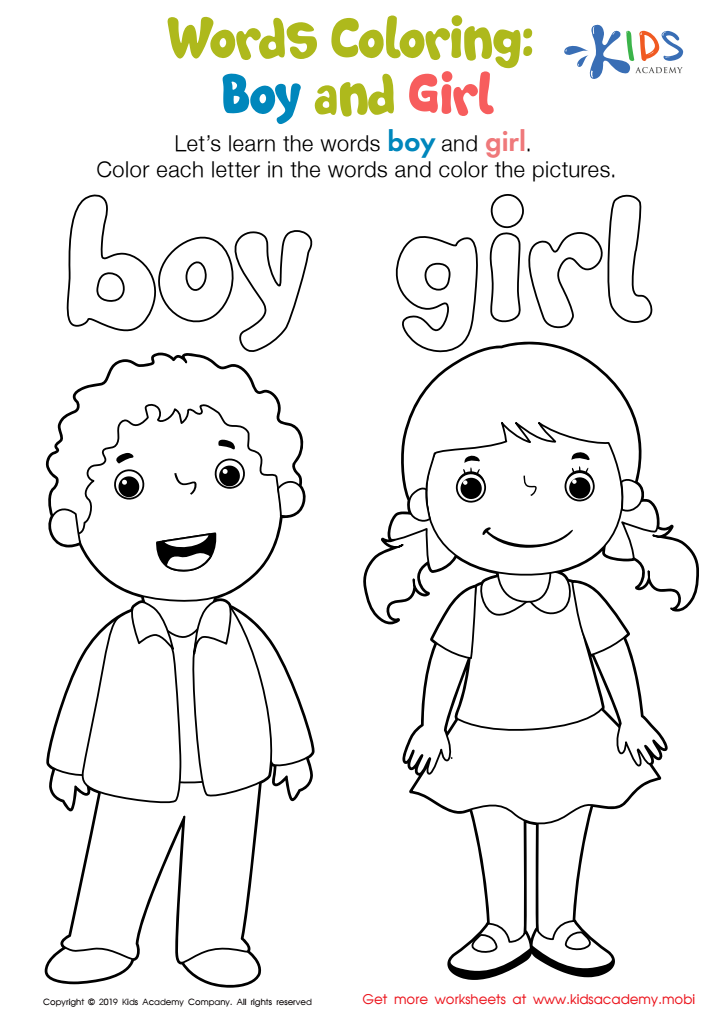
Boy and Girl Words Coloring Worksheet
Help your students build their sight word vocabulary! Early readers may not be able to sound out all words, so this worksheet teaches them to read two important sight words: boy and girl. They will color the letters and a picture of each, making it a fun and educational way to learn. Download the PDF now.
Download (PDF)
 Assign to My Students
Assign to My Students
Boy and Girl Words Coloring Worksheet
Worksheet
Join Kids Academy for Free
Who is primarily going to use this learning content?








Hand-eye coordination is a vital skill for young children as it influences their ability to perform everyday activities, from writing and drawing to participating in sports. Parents and teachers should prioritize building vocabulary around hand-eye coordination for children aged 3-9, as this age is crucial for developing both cognitive and physical skills.
Firstly, a well-developed vocabulary enables children to better express their understanding and experiences related to hand-eye coordination activities. When children learn specific terms—such as "catch," "throw," "balance," and "aim"—they enhance their ability to describe movements and actions more precisely. This linguistic growth also aids in following instructions during physical activities.
Moreover, incorporating diverse vocabulary in playful contexts, such as games or arts and crafts, makes the learning process enjoyable. When children engage in activities where they use their hands while simultaneously learning the relevant terms, they connect language to movement, enriching their understanding of the world around them.
Ultimately, by fostering awareness of hand-eye coordination and its accompanying vocabulary, parents and teachers support holistic development—cultivating fine motor skills, language abilities, and a stronger foundation for learning, all crucial for academic success as children grow.








