Improve vocabulary Building Vocabulary Worksheets for Ages 3-9
5 filtered results
-
From - To
Enhance your child’s language skills with our engaging "Improve Vocabulary Building Worksheets" designed for ages 3-9. These thoughtfully crafted resources support young learners in expanding their vocabulary through fun, interactive activities. Each worksheet encourages creativity and critical thinking while introducing new words and concepts. Whether it's matching words with images, filling in the blanks, or completing word searches, these exercises promote essential language development in a playful manner. Perfect for both home and classroom use, these worksheets make learning enjoyable, ensuring that your child builds a strong vocabulary foundation as they grow. Dive into a world of words today!
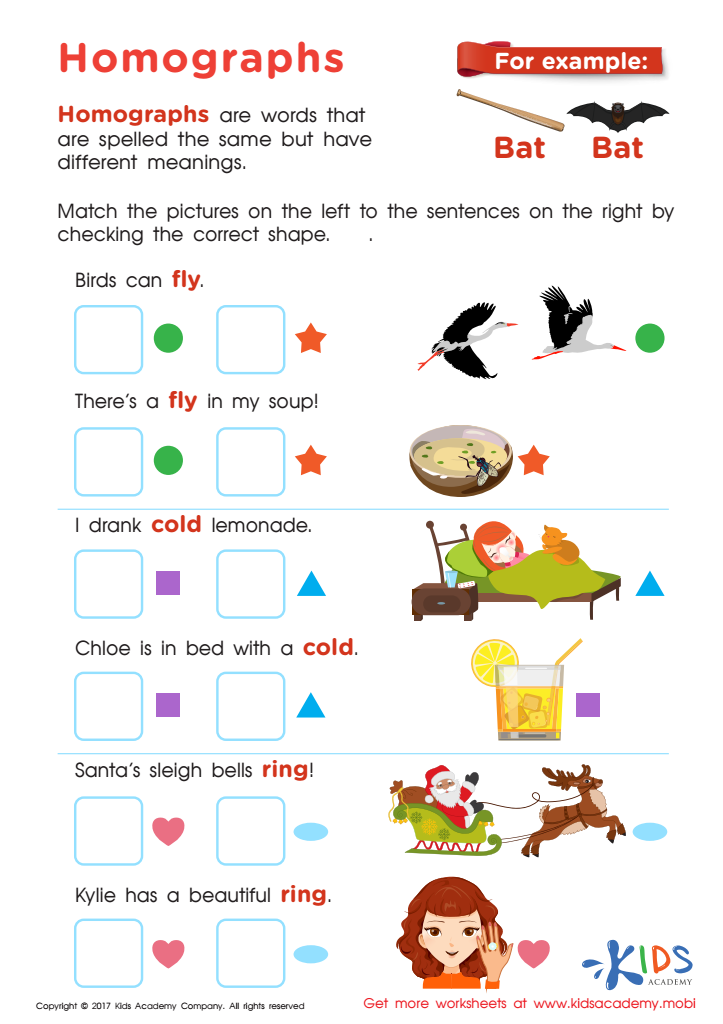
Homographs Free Printable Worksheet
 Assign to My Students











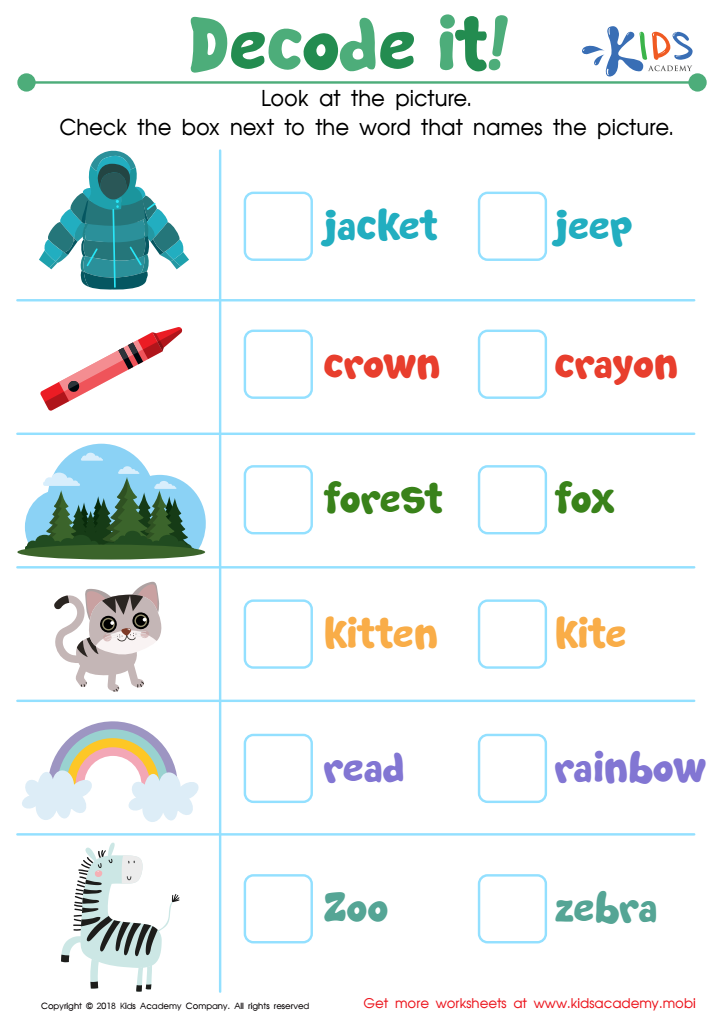
Reading: Decode It Worksheet
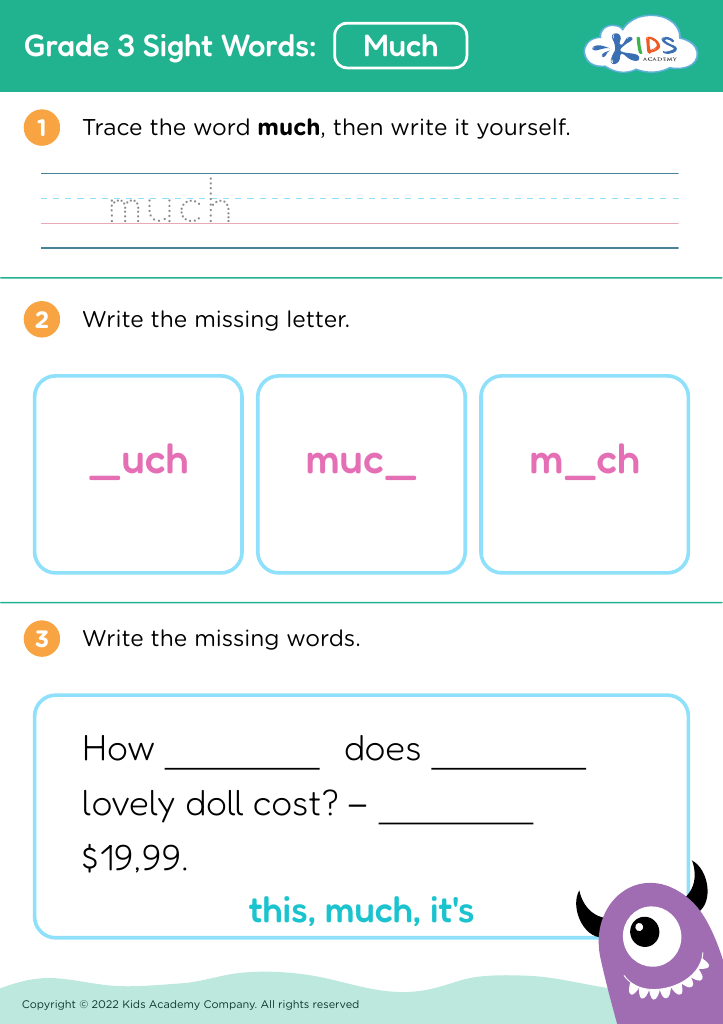
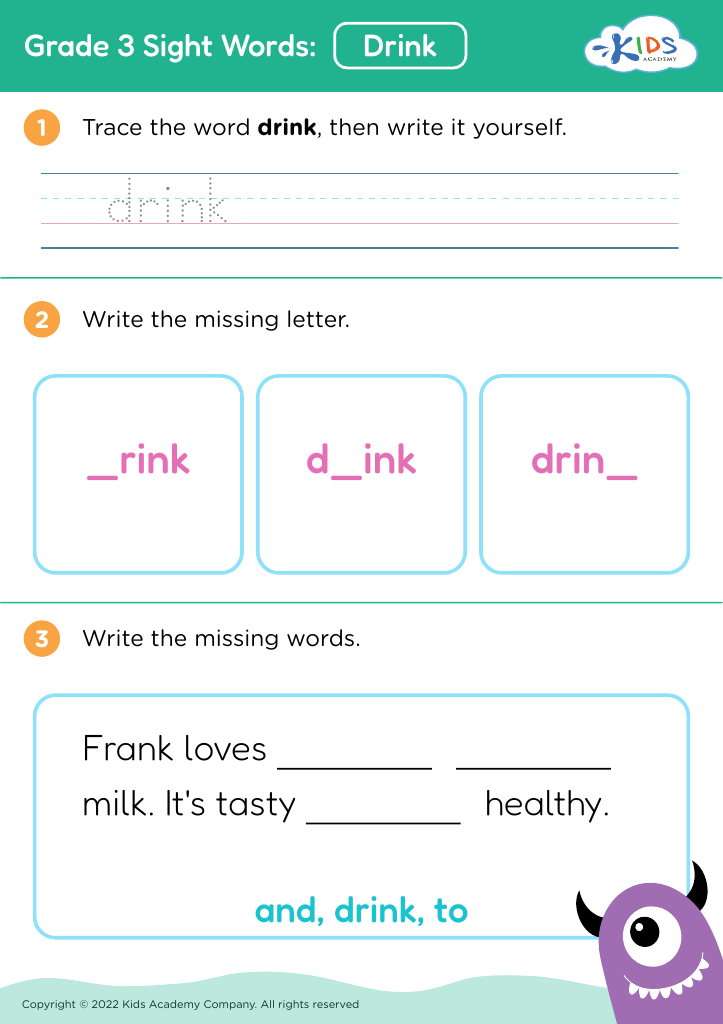
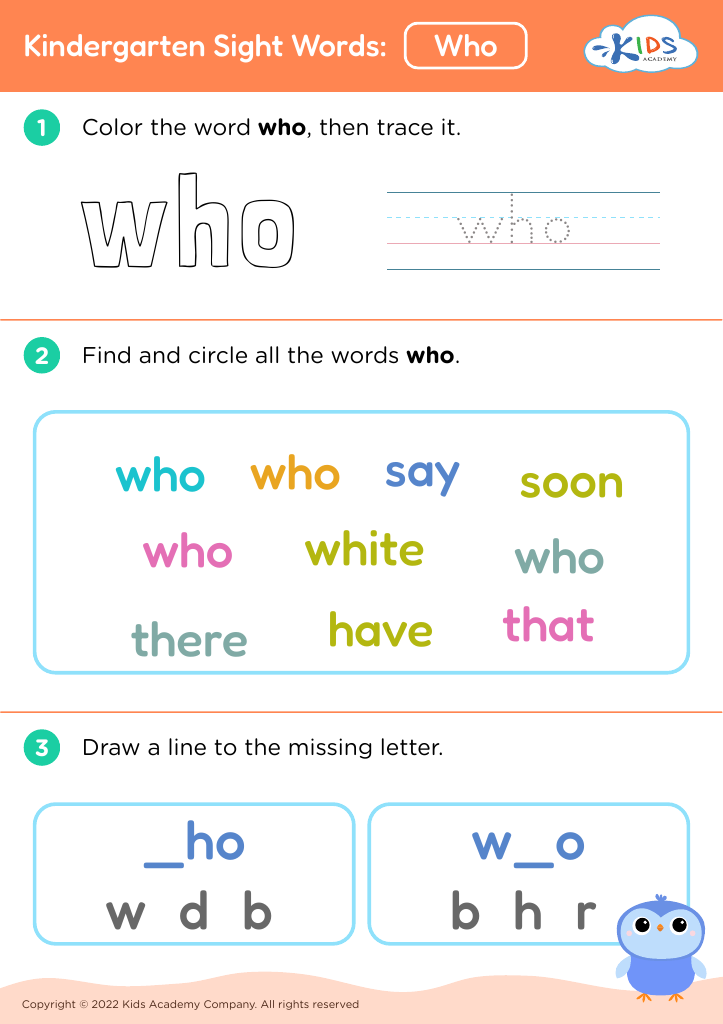








Building vocabulary in children aged 3-9 is crucial for their overall development and academic success. During these formative years, children are acquiring language at an astonishing pace. A strong vocabulary not only enhances communication skills but also boosts reading comprehension, which is vital for learning across all subjects.
Parents and teachers play a vital role in fostering vocabulary growth. By engaging children in conversations, reading aloud, and encouraging storytelling, adults expose them to new words and concepts. This interaction stimulates cognitive development and nurtures a love for language. Additionally, rich vocabulary can improve a child's self-esteem, enabling them to express their thoughts and feelings effectively.
Moreover, vocabulary serves as the foundation for more complex language skills, such as writing and critical thinking. With a diverse range of words at their disposal, children can articulate their ideas clearly and creatively, which is essential in an ever-evolving educational landscape.
Ultimately, prioritizing vocabulary building fosters a literate and confident generation, supporting lifelong learning and successful communication. For these reasons, parents and teachers should actively participate in nurturing vocabulary development to set children on the path to future success.








